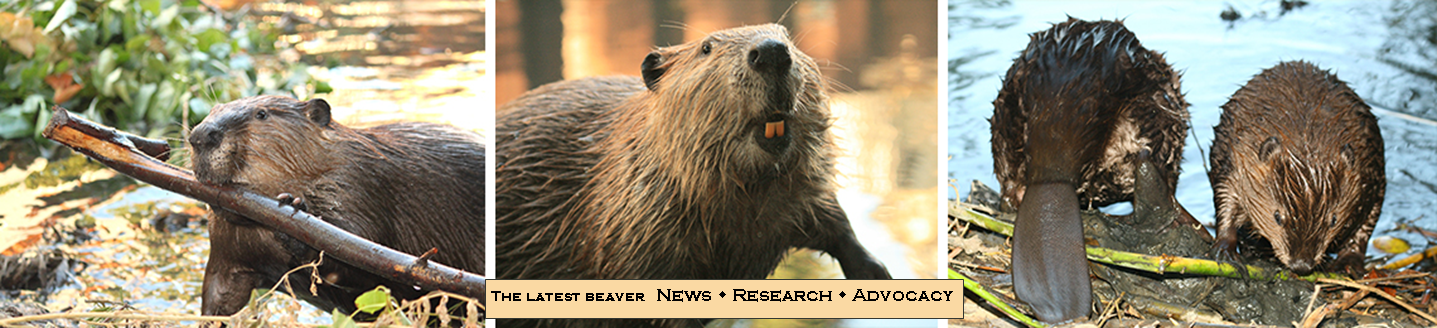
Because the beaver isn't just an animal; it's an ecosystem!

Tag: Skip Lisle


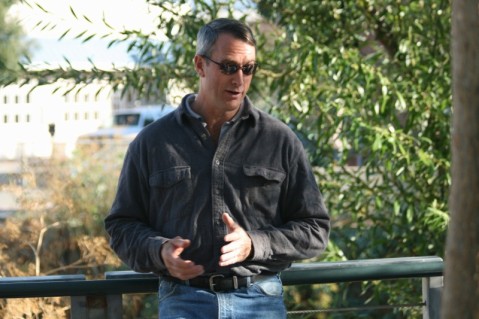
Skip Lisle instructing New Leaf Students at the beaver dam. 2008

Skip Lisle first came to Martinez in 2007 to pitch his skills at allowing coexistence with beavers. That was 19 years ago. I think he was 50 when he came to Martinez so and he had already been doing this work for twenty-five years. Lately I am feeling like an old beaver crone myself, but Skip is still going strong. Recently he teamed up with Patti Smith and Bev Soychak yesterday and made a big splash.

Beaver coexistence sought at Hinesburg Town Hall

Residents and biologists converged at the Hinesburg Town Hall on April 12 for a battle council. Biologist Skip Lisle and naturalist Patti Smith spearheaded the meeting, running a presentation on enemy hideouts, damage tolls and new weaponry to launch a counterattack.

The enemy in question: beavers. The ongoing battle stems from the inability to balance dam construction from beavers and people alike.

Beavers have been a nuisance to Vermont’s hydrology systems, accruing damages in flooding and infrastructure repairs, but remain a vital steward of the state’s wetland habitats. That’s why the Hinesburg Conservation Commission and the Vermont Beaver Collective, co-hosted “Beavers, Beavers, Beavers” to discuss more sustainable ways of parlaying with the semiaquatic rodents.

“Their habitats have tremendous value, so we want to try to fully exploit the values of beavers for the benefit of society and the natural world,” Lisle said. “But the only way we can do that is if we protect the infrastructure. We’re really kind of at war with beavers.”

It’s a war he has won many many times before, and one he has taught others to win. This article and others like it spread like wildfire across my beaver newsfeed last night so you know he got some press attention.

Beavers are considered both a keystone species and an ecosystem engineer because of the way they transform the landscape.

In Vermont, beaver dams create wetlands that filter pollutants before they reach Lake Champlain, slow floodwaters and provide habitat for many species. The longer a beaver wetland exists, the more diverse and beneficial it becomes, according to the Vermont Land Trust.

Patti Smith, a wildlife rehabilitator, highlighted some of those benefits in a video detailing two decades of her observations on the species. Smith raised orphaned baby beavers during the COVID-19 pandemic and said that beavers exhibit “playful and intelligent” behavior while building their dams.

“Beavers confer a whole host of benefits that make our world more livable for everybody and everything,” said Bob Hyams, a member of Hinesburg’s conservation commission. “Beavers make Vermont more resilient to the impact of climate change.”

Can’t argue with that. Where I will differ is in the name. The BEAVER DECEIVER is fooling no beaver. It’s obstructing them but not fooling them. The day our flow device became plugged and stopped working our father beaver rebuilt that dam higher.

He wasn’t fooled.

Lisle testified against that decision on April 10, 2025, in the House Committee on Environment and Energy, citing the financial and ecological costs of failed removal operations.

During the event, Lisle instead advocated for further implementation of the beaver deceiver, a device he designed to deal with beavers non-lethally. Lisle founded Beaver Deceivers International in 2001 and has implemented the devices across North America and parts of Europe.

“We spent years just building something, ripping it out, rebuilding it and the stakes were too high to ever give up,” Lisle said.

Each device is tailored to the physical characteristics of each dam site, and Lisle demonstrated their basic structure during his presentation.

A long pipe runs near the surface of the water and is covered with a square-shaped, fenced-in filter. The filter muffles the water flow as it runs through the pipe, subduing the sound that hinders beavers from continuing to build, Lisle said.

The devices allow water to keep flowing while the beavers are tricked into believing they’ve completed a job well done, while the beaver deceiver regulates water levels and damming behavior in a way that preserves the beavers’ habitats.

The Fish and Wildlife Department has installed more than 300 beaver baffles, devices similar to the beaver deceivers, across 3,000 acres of wetland habitat to protect beavers and minimize their damage, too.

Good for you Skip. There are enough beaver-savvy Vermonters to make this work

Bev Soychak, co-founder of the Vermont Beaver Association, encouraged community members to consider flow devices similar to the beaver deceiver rather than trapping, emphasizing that it’s possible to coexist with their wood-chucking neighbors.

“We’re here to encourage beavers to be able to thrive in their environments because of their benefits,” Soychak said. “Instead of killing that beaver, call us and let us do a beaver deceiver, and then you can build around it.”

I’d say with all of you hard at work on the problem your beavers have a fighting chance. If you can’t compromise in Vermont, where can you hope for peace?


After dropping the news of the 15th beaver festival yesterday its nice to remind ourselves of how it all began. With this handsome gentleman and all the secretaries pushed up against the glass in the county recorders office to get a closer look. (And maybe Steve Weir too,) I never heard that but I remember our Gazette editor joked about making a calendar out of all the great photos taken of the day.

Check out this cottager’s ‘beaver deceiver’

To humans it’s a culvert. But for beavers living near Todd Weiler’s Emsdale, Ont., driveway, it’s a poorly built dam with an 18″ hole, just begging to be plugged
with mud and sticks.

That’s why, on and off for almost two decades, when Todd cleared his blocked culvert, a new dam would soon appear. Trapping didn’t work, because new beavers replace the old ones. “If you’ve got the right geography,” Todd says, “beavers are going to find it.”

Rushing water is a trigger for the powerful dam-building urge in Castor canadensis, explains Glynnis Hood, a professor of environmental science at the University of Alberta and the author of The Beaver Manifesto. Plugging leaks is so instinctive, young beavers raised in captivity assemble dams near speakers broadcasting water sounds. When these compulsive putterers find a culvert, “they think we just didn’t finish the job,” Hood says.

Hood and Lisle together again, just like old times. If there’s a culvert to protect Skip is your man.

Todd ultimately fended the critters off with a homemade version of the “beaver deceiver,” invented by Skip Lisle in the 1990s for the Penobscot Nation in Maine. Similar to the “pond levellers” used by parks and transportation authorities, Todd’s version is a 4″ PVC pipe running from the mouth of the culvert to an area upstream, guarded by mesh cages at both ends. Hood recommends heavy-guage mesh—not chicken wire, which beavers can chew through—with 4″ to 6″ holes. The pipe channels water into the culvert, while the mesh keeps beavers from damming the culvert or plugging the pipe. Because the intake makes no sound, beavers don’t notice it. Meanwhile, water trickling into the culvert keeps them focused on the protective cage. “They can block up that downstream cage as much as they want, and as long as the pipe is flowing, the water goes through,” Todd says.

The Parks and Transportation Authorities in Ontario install pond levelers? Why doesn’t California? What the hell are we waiting for?

The system requires occasional maintenance, including clearing silt from the pipe and ensuring dam materials don’t crush the cage. During the culvert wars, “dam wasn’t the only expletive I used on the beavers,” Todd admits. “But now, it’s nice to see them.”

Todd seems like our kinda guy. I’m glad that Skip was able to fix your problem. He fixed ours too and it lasted for a decade.


I bet Skip Lisle has something to say about this.

Vermonters struggle with beaver-related property damage

JOHNSON, Vt. (WCAX) – Beavers are our neighbors across the region, but they aren’t always the best group to share property with.

Rob Maynard and Deb Ravenelle and their yellow labs have lived in Johnson for over 20 years. In that time, they’ve been sharing their property with a bundle of beavers. They say they love seeing the beavers, but the cute rodents don’t always make it easy when they build their dam on culverts.

“If they plug it up completely — which they will — it’ll wash over the top of the road and start to wash out the roads. So, when you’re here, it’s often a daily battle to keep the road clear,” said Maynard.

The couple says their driveway will flood every few years when the beavers move in. They have already set up shop this summer, so they have been clearing the culvert out every few days for a month.

So Skip would say that the devices installed by VFW fail at an alarming rate and its bad for people to  see their failure because then they think flow devices don’t work and that leads to more beavers being killed.

Maybe,

But stories like this mean a whole lot of people watching the news learn that maybe they CAN work. More than if just Skip was installing a better one somewhere else. Plus there are NEVER news stories that cover these installations not working. So maybe a handful of property owners and their friends think they don’t work, but many more people have heard of them. And that’s something.

I think it’s a  numbers game. And anyway, call me a cynic but I’d be THRILLED to the moon and back if California Department of Fish and Wildlife started installing flow devices – whether they worked or not.

It would probably be a major step in the right direction>

The Johnson duo know beavers are important but are thankful for a rodent reprieve on their property. “It’s often a daily battle to keep the color clean. So we’re happy for fish and wildlife to come up with a solution to keep the beavers here and keep our habitat,” said Maynard.

These devices still allow beavers to make dams while allowing water to flow freely. Vermont Fish & Wildlife says trapping should always be a last resort if no other solution is keeping beavers at bay.


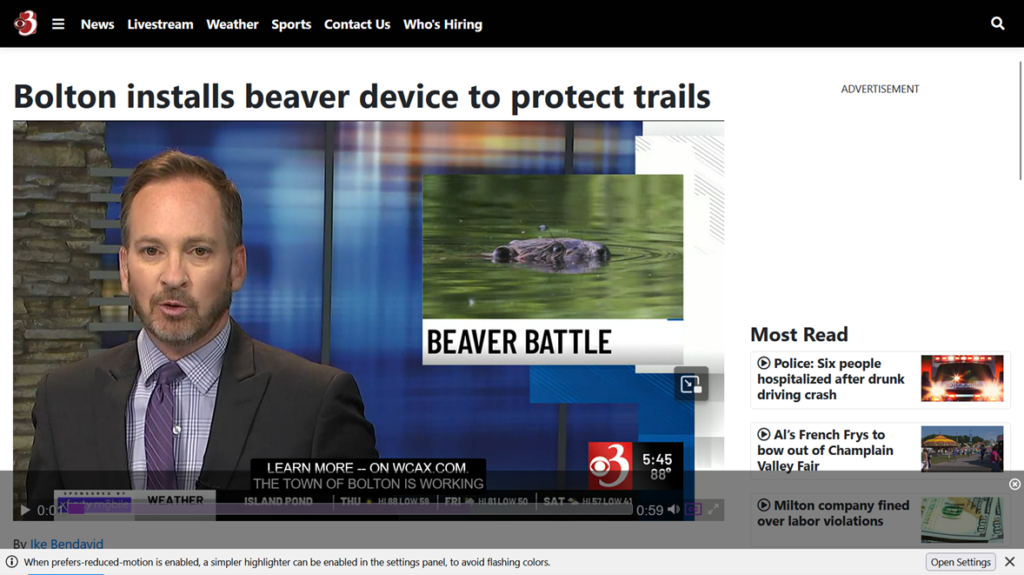
It was nice to see Martinez’ swarthy hero on the teevee this morning, doing what he loves best. Hurray for Bolton, Vermont which has solved a problem instead of trapping it! I can’t embed the video but if you click on the image you will go directly to watch the report. Say Hi to Skip when you do.


Bolton installs beaver device to protect trails

BOLTON, Vt. (WCAX) – The town of Bolton is working to battle beaver issues.

A public trail runs along Preston’s Pond in the Bolton Town Forest and beavers are building dams that occasionally flood the trail.

Crews Wednesday built and installed a Beaver Deceiver. The device controls the flow of the water so when it gets too high, it will drain while keeping the trail from flooding.
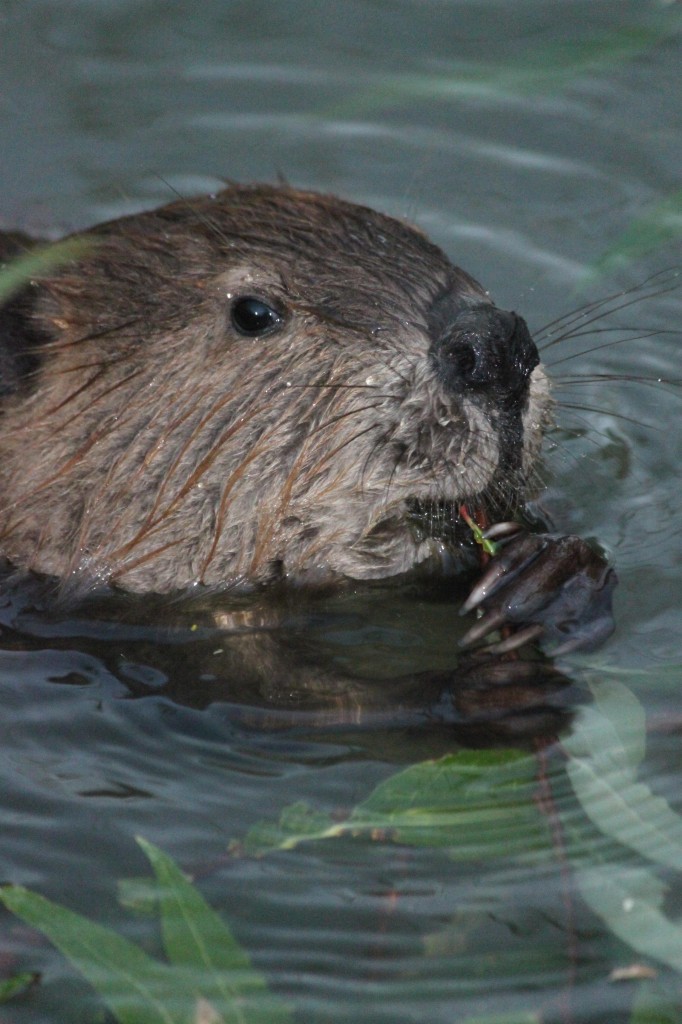


“For me, I’m just trying to keep live beavers in ecosystems. I’m trying to help people solve annoying problems — so, it’s the same everywhere in the world,” said Skip Lisle, who designed the device.

“It’s better to have a wetland here than a pasture, so that value you get, and you get to keep it without the trouble of beavers flooding your road or your culvert or whatever, by putting in a device like this,” said Rob Mullin, Bolton’s animal control officer.

The money for this project came from donations.

You bet it’s better to have a wetland than a pasture. Nice work Skip. It was better for Martinez to have a healthy lush creek filled with wildlife than it was to have a drainage ditch filled pollution too.

clear water in Alhambra Creek

I am old. The Martinez Beaver story is old. The entire drama unfolded more than 15 years ago. There have been three presidents since them. Change takes a long time coming. And as hard as it was we got the easy shift. Things were harder when Sherri Tippie was a twenty something and Enos Mills was saying ‘beavers matter’ and harder still when Grey Owl was saying stop trapping beavers.

Martinez has a solid place in the beaver story because there was soo much public interest it forced our city to hire the only famous beaver installer at the time who happened to live in Vermont. He made sure that what he installed worked in our creek which was unheard of in the west. Certainly in California. Since he invented the technology we became associated with the buzz of his invention.

You probably know the legacy. Long before Martinez Skip Lisle trained Mike Callahan. Who started a voluneer group to install flow devices then his own business then the beaver institute. Which is now famous for training professionals all across the nation.

It is all full circle now.

Skip Lisle: There’s enormous potential for beavers and flow devices

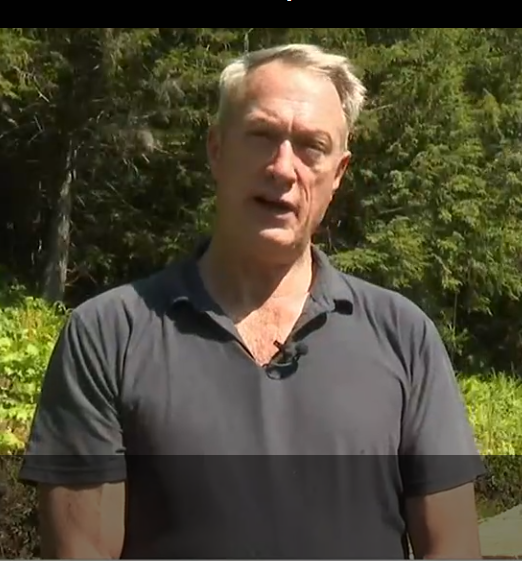
This commentary is by Skip Lisle, a resident of Grafton, a wildlife biologist and president of Beaver Deceivers LLC.

By some miracle, we have an animal called a beaver that builds, maintains and improves rich wetlands. However, damming behavior also creates challenging and sometimes expensive beaver-human conflicts.

Partly because of their rarity, which has been increased greatly by development, wetlands like those that beavers create have enormous value. They are critical habitat for thousands of species, including numerous game animals. They have hydrological functions such as water purification, sequestration of fine sediments and pollutants, groundwater recharge, and water storage (flood abatement). Beautiful and teeming with life, they also represent aesthetic or spiritual wealth. 

As an example of the importance of wetlands, the federal government sometimes pays hundreds of thousands of dollars per acre for manmade versions that are much less valuable and natural than those created by beavers.

Give that man a pen more often. Skip has been telling this story for a long, long time. To many different kinds of people motivated by many different kinds of things.

Beavers are mostly restricted to a tiny section of the landscape: low-gradient areas on small streams. In this beaver-damming habitat, they are able to create larger wetlands where their dams can survive high-water events. 

This is where most of the beaver-human conflicts occur, particularly when high-value properties like roads abut or intersect these zones. Tiny, easy-to-clog holes in large manmade dams (roads), culverts are the biggest problem of all. They are beaver magnets. 

Beavers are territorial. They typically do not tolerate the presence of unrelated beavers. Therefore, the number of beavers present in a territory, or at a given conflict point, might range from one to 10  with an average, perhaps, of three or four. Because of deaths from starvation, disease and predation (e.g., humans, motor vehicles, coyotes and bears), births and dispersal, this number is constantly changing.

When dispersing, they search for beaver-free zones, like conflict points where a kill-defense has been employed (double magnet). At a given point, therefore, overpopulation is never the problem, but underpopulation can be.

A little population management of adult beavers cannot eliminate a conflict. It takes only one non-kit beaver one night to clog a culvert. However, when all the adults are eliminated, any kits present will starve. Consequently, a little killing often leads to a lot of slow, wasteful and unconscionable dying.

So humans make the most inviting places for beavers to build a dam AND then humans kill off their competition so they can start fresh and plant nice trees for them to eat. We should never be surprised when a beaver disperser gets our party invitation.

To effectively protect a culvert by lethal means requires permanent extirpation. Just as the presence of beavers frequently leads to ecological miracles, their forced absence often has the opposite effect: Sterilization.

Loss of birds. Loss of fish. Loss of frogs. Loss of water.

A kill-defense at a given conflict point guarantees that the problem will persist in expensive, never-ending cycles. In addition, “killing” ensures that none of the wetland values that beavers symbolize will ever persist (dams decay in their absence) or develop in the general area of any conflict point.

On a broader scale, given the inordinate value of beavers, no responsible governing agency would ever allow the overall beaver population to become low. With concern for protecting the environment growing among the general populace, it may not be politically possible, either. Therefore, we can never rely on killing, either locally or regionally, to solve the conflict.

Hmm. Since I don’t know of any state in the country that monitors its beaver population I’m not sure  they would ever know when it got “LOW”.

Fortunately, there is a remedy: High-quality flow devices. These essentially control damming behavior by sneaking water away from beavers.

They are complicated engineering feats, and normally can be built successfully only by skilled specialists. When this is not the case, and flow devices have little design or structural integrity, they invariably fail. This often leads to a loss of confidence by the public in the general concept and to a doubling-down on killing.

At many places in New England and elsewhere over the last 25 years, high-quality flow devices have repeatedly proven themselves. They have saved society millions of dollars while indirectly creating thousands of acres of wetlands. High-quality flow devices can solve the problem at almost any site, generally need little maintenance, last for decades, rarely require killing, and pay for themselves many times over again. They are great investments.

Because of the limited geographical nature of the conflict, in a few weeks one competent builder with hand tools can eliminate the problem in any given town for decades. It’s thus easy to imagine beaver-proofing a small state like Vermont.

There is a tension in the world between saying ‘these problems are solvable’ and ‘any fool with a hammer and a pair of waders can solve them’. Bad flow devices are bad for beavers because they result in trapping and advertise that flow devices don’t work. But rare and expensive flow devices are also bad for beavers because they mean well-intenioned paces can’t afford them or install them and beavers die.

It’s an age-old  conundrum we’re getting a little better at solving.

The implementation of high-quality flow devices — mostly by contractors, and largely at the Penobscot Indian Nation in Maine and several New England states — has led the world. The two leading flow device companies are Beaver Deceivers LLC (mine, from Vermont) and Beaver Solutions LLC (Massachusetts). Both companies also offer presentations and workshops, as does a nonprofit, the Beaver Institute (Massachusetts).

Their willingness to share their knowledge represents an opportunity for government managers and budding entrepreneurs, among others.

Because of a past absence of high-quality flow devices and their builders, killing has long been a necessity to protect the infrastructure. Even today, it’s sometimes an important short-term solution. Along with predators, we should thank shooters, trappers and state wildlife managers for helping with this prior defense.

But beavers can’t be an eternal enemy. It is long overdue for society to begin to make a serious transition toward a more reliable, long-lasting, economical and ecologically friendly approach.


That’s what I call a closing argument.

BEAVER FESTIVAL XVII

DONATE

Beaver Interactive: Click to view

TREE PROTECTION

BAY AREA PODCAST

Our story told around the county

LASSIE INVENTS BDA

CONTACT US

URBAN BEAVERS

LASSIE AND BEAVERS

Ten Years

The Beaver Cheat Sheet

Restoration

RANGER RICK

Ranger rick

The meeting that started it all

Past Reports

May 2026
M T W T F S S
 123
45678910
11121314151617
18192021222324
25262728293031

Story By Year

close

Share the beaver gospel!