Did you ever go to camp as a child? I did twice. The first time I was so homesick i cried my eyes out when I got there. It turned out I loved every moment and cried my eyes out again when it was time to leave all my new friends and come back,
Well, now there’s another camp we should ALL want to go away too. This time it’s BEAVER CAMP! You read that right. BEAVER CAMP!!!
A two-day immersion in beaver ecology and river science, with a focus on the relationship between beavers, watershed health, and flood resilience. A combination of field trips, discussions, and classroom instruction, this retreat is for those who want to understand the complex role that beavers play in creating ecosystems, managing water, and sometimes causing headaches for humans along the way. Two full days of learning and exploring why beavers are important partners in towns dealing with floods. Instructed by Patti Smith of Bonnyvale Environmental Education Center, Skip Lisle of Beaver Deceivers International, and NorthWoods Educator Courtney Guinane. On-site camping available at NorthWoods – suggested $25 donation, available as an add-on during registration.
Camping with Skip and Patti! If I could pick out of all the world a brilliant, observant woman who had spent hours around beavers and knew all their secrets the author of the beavers of Poppel’s pond and an educator, artist and writer of highest regard, I’d pick Patti.
And Skip, well, who wouldn’t want to go camping with Skip and ask him questions under the stars? I think this is the perfect way to spend a weekend and I’m totally jealous of Vermont.
The glossy headline caught my attention but as I read through I found it had many righteous paragraphs I truly appreciated. That doesn’t often happen. Much respect, Corey Buhay.
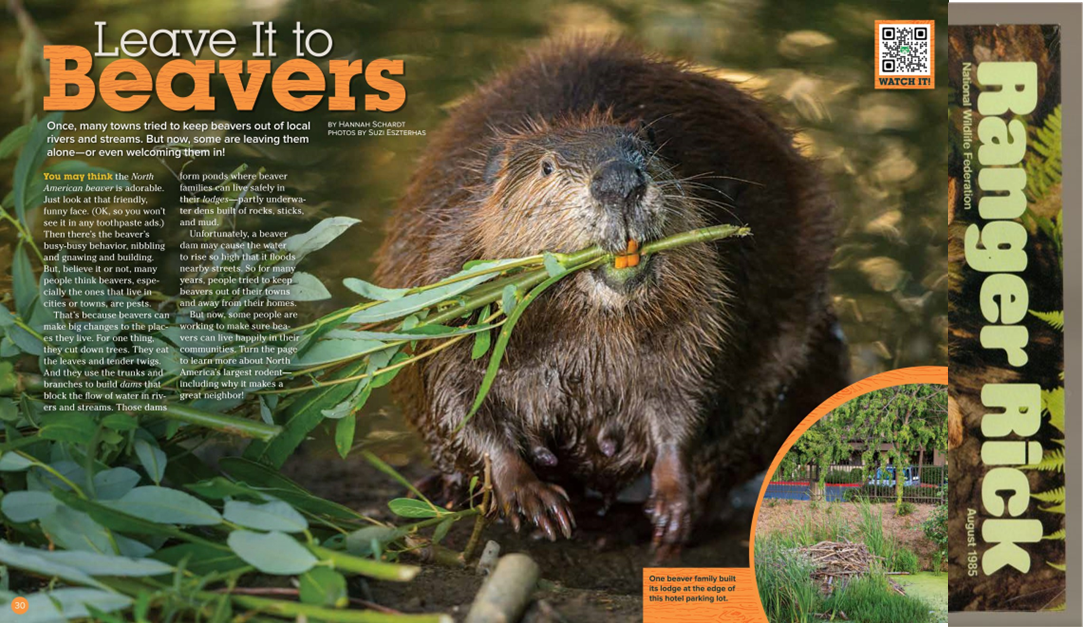
Long considered a nuisance, these furry construction experts are finally being appreciated for their role in healthy ecosystems.
Over the last 20 years, Oregon’s wilderness has suffered big time. Salmon have disappeared, wildfires have scoured the hills and drought has parched once-fertile soils. Years of small fixes — a little forest thinning here, a little fish-ladder installation there — have helped, but not nearly enough to keep up with the destruction.
By the start of the 2020s, Oregon had more ecologically impaired waterways than almost any other state, and environmentalists were ready for a serious solution. Something bold and risky. Something that would dramatically resculpt the landscape — and potentially correct decades of human development. In a word: beavers.
Ooh I just got a little shiver, didn’t you?
Around that time, scientists started to look for solutions, launching a frantic effort to figure out what, exactly, salmon needed — and what they were missing. A handful of Oregon State University scientists stumbled upon a clue: They discovered that regions with beaver ponds had vastly higher salmon productivity than those without. Further studies have echoed those findings.
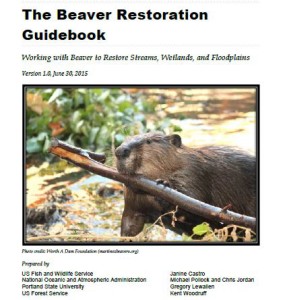
“Beaver ponds and alcoves represented only about nine percent of the habitat but accounted for 66 percent of the coho salmon found in the system,” land managers later wrote in Oregon’s Beaver Restoration Guidebook. Another study from British Columbia showed that the survival rate for young coho salmon that overwintered behind beaver dams was 60 percent or more — significantly higher than the regional average.
The research was compelling, but it took a long time to catch on. That’s because beavers in Oregon had to overcome more than a century of bad PR.
Ain’t that the truth!’
Beavers’ greatest strength is also their least-beloved characteristic. Masters of heavy construction, they’re constantly rearranging the landscape, whether or not their human neighbors approve. The critters have been known to flood roadways, submerge crop fields and decimate sections of forest. That’s a tough sell for most of modern humanity, which has gotten pretty used to controlling the environment.
“Beavers have been maligned for much of history,” says Maureen Thompson, a wildlife biologist and the program manager for Oregon environmental nonprofit Beaver Works. “For most of the last century, they’ve been considered a pest — even though they’re on the Oregon state flag.” In fact, beavers only became legally recognized as wildlife in Oregon in 2024. Prior to that, they were classified as a nuisance species.
True. Beaver were the cure we mostly didn’t want to take, as the Texas cattleman wrote a decade ago.
hat started to shift 10 to 15 years ago. Thompson says a number of the beaver advocates and volunteers she works with cite reading Ben Goldfarb’s 2018 book Eager: The Surprising, Secret Life of Beavers and Why They Matter. Around the same time the book came out, Oregon started grappling with more destructive wildfires and serious drought, which Thompson suspects was a wake-up call for many Oregonians.
Yeah Ben! Yeah Ben! Sometimes the science needs a little art to break through the noise.
“I would say we’re in the middle of a beaver conservation movement,” says Brian Sullivan, the coordinator of the Wetlands for Wildlife grant program at Colorado Parks and Wildlife (CPW). Ten years ago, Sullivan saw one or two grant applications for beaver-related restoration projects every year. Now, half of the applications he processes have to do with beavers or beaver dam analogs — logjams designed to kickstart wetland formation and attract beavers to an area.
“Those wetland habitats make up just two to three percent of the landscape in Colorado, but 80 percent of our wildlife species utilize them,” Sullivan says. “That makes the conservation of these habitats key to biodiversity.”
The article goes on to talk about the UK and the beaver enthusiasm going on there. I think it gets the sequence a little wrong because England was excited about beavers long before California. But not everyone is a beaver advocacy historian like us.
I LOVED this part especially.. I wish it was included with every single beaver aricle Like the warning label on cigarettes.
One of the most rewarding things about beaver reintroduction, says Bowen, has been that kind of enthusiasm — and the sense of problem-solving and collaboration that has come out of it. Beavers are constantly changing the world around them, which means conservationists and communities have to band together to mitigate the effects without getting in the beavers’ way.
Boom! That paragraph is everything I hope people take away from the Martinez story. It makes me so happy I might NEED one of those cigarettes.
And it’s working. Over the last few years, Oregon salmon populations have rebounded, in large part thanks to these kinds of habitat improvements.
“Beavers are on the upswing. People care about them, and there’s so much research showing that they benefit almost everything you could possibly care about,” says Thompson. “There are so many things in ecology that are demoralizing and depressing, but not beavers. Beavers are good news every day.”
A-n-n-d-d-d Scene. Perfect end to a perfect Article. Well done.
I knew about the story of Wishpoosh creating the cascades along the pacific, but I only just heard about Kluscap and the giant beaver known as K’chi-Quabeet. The tale comes from the Wabanaki people in the area of Maine and Vermont and beyond. The Penebscot tribe is part of them and that is where Skip Lisle began his work with the beaver and developed the famed beaver deceiver. So you can imagine how revered he was among the people.
(Apparently K’chi-Quabeet had no idea the paleontologists years later would learn he couldn’t build dams. fell trees OR slap water with his tail. Silly Rodent.)
The only time I’m really impressed by a BDA article is when the author makes it clear that the idea is that building these tiny dams with volunteer labor is only going to work if it convinces furry little flat-tailed labor to take over the job.
It is thought there are fewer than half the beavers in the Bighorn National Forest now compared to about 15 years ago, and to make up for their work, wildlife officials have built more than 150 artificial dams. It’s not clear why the beaver population is declining.
It is thought there could be fewer than half the beavers in the Bighorn National Forest now compared to about 15 years ago, and to make up for their work, wildlife officials have built more than 150 artificial dams, or “beaver dam analogs.”
The Wyoming Game and Fish Department and the U.S. Forest Service have also worked together to reintroduce beavers to the area.
It’s not quite clear why the beaver population has been declining.
Gee I wonder why. Maybe you could stop trapping and shooting them and give them a chance to do their jobs?
The recent decline in the beaver population is troubling, Cundy said.
“The beaver population in the Bighorns has experienced a decline over the past several years,” he said. “There is not a numerical population objective for beavers in the area, but Game and Fish is concerned about the decline and is working with the Bighorn National Forest and other partners to identify causes of the decline, conduct habitat improvement projects and increase the population where possible.”
Officials haven’t pinpointed a cause for the decline, but they have some ideas.
One might be the encroachment of conifers (such as pine trees) into riparian areas – the vegetation-rich habitats along creeks and streams.
“Increased conifers in an area can compete for sunlight, water and nutrients with more desirable riparian vegetation such as willows and aspens,” Cundy said.
Other factors might include long-term drought and grazing and browsing by livestock and wildlife affecting willow and aspen growth, he said.
Sure, It;s the trees and the drought. That’s what’s killing off your beaver population.
If there’s one thing I have no patience for its places that allow beavers to be killed and then try and move other beavers that might have been killed onto the landscape to try and make them do their job. Stop with the musical beavers already.
Deal with the ones you have and allow them to make the changes that can keep your landscape habitable.
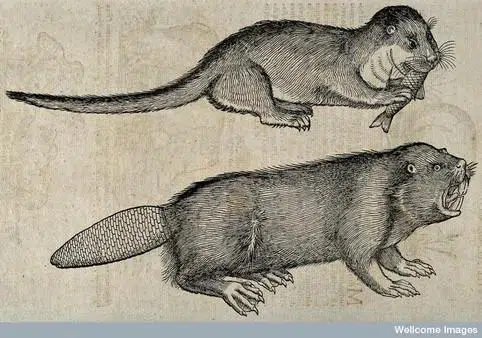
The reason I love this image is because it represents perfectly the rakishly unjust way in which these two species are regarded. The otter image is cute and coquettish with huge long eyelashes to invite you closer while it devours its tasty morsel.
The Beaver with its multiple rows if teeth is truly terrifying and could not be more ugly and unattractive. A giant tooth vagina lurking on the landscape.
If you had a big sister that everyone loved and thought was perfect and you were always treated like you were invisible or a second class citizen even though you earned a scholarship to Stanford and silver medal at the Olympics you can probably guess how beavers feel about otters.
Now beavers are already tasked with preventing droughts, halting wildfires, slowing floods and cleaning the earths liquid toxins, but now they’re apparently being signed up for another job.
Together, beavers and otters can create a more resilient, biodiverse river system
Did you know that river otters (Lontra canadensis) were once common in New Mexico, thriving in waterways across the state? In this era of otter abundance, otters played a key role in the Land of Enchantment as apex aquatic predators that helped stabilize food webs.
By feeding on overabundant species like crayfish and other non-native fish, otters can help reduce competitive pressure on native species like the Gila chub and spikedace. Their presence is also a signal of ecological health: otters need clean water and healthy fish populations to thrive.
)
In a tragic story all too familiar, overtrapping combined with man-made habitat modifications and degradation led to the sharp decline of the native otter population. With New Mexico’s last confirmed river otter sighting in the Gila River in 1953, these charismatic aquatic creatures vanished from the state’s waterways for more than 50 years – lost to the trapping trade as well as habitat modification and degradation.
Together they can make the river more resilient? Um. Okay. I will concede that otters help rivers by eating and pooping moving the nutrients around the ecosystem. I’m nothing if not reasonable. But no one is saying that;s anything like what beavers do, right?
When it comes to restoring rivers, river otters have a powerful ally: beavers.
In New Mexico, beavers are certainly having a moment. State leaders and wildlife advocates are becoming more and more aware of the benefits beavers bring to the environment – so much so that the New Mexico legislature invested $1.5 million in beaver restoration over the next three years. WildEarth Guardians and the New Mexico Beaver Project are hard at work to ensure that the investment succeeds in expanding beaver populations into areas where they will do the most good.
Beavers are ecosystem engineers that reshape riparian zones by building dams, which create deep pools and expand wetlands. Beaver ponds offer rich foraging habitat for otters, and otters will sometimes even move into abandoned beaver lodges, which offer them refuge from predators.
Okay, we’re in agreement so far. This sentence is the one that really got my attention:
In turn, otters help maintain balance in beaver-created habitats by controlling fish and invertebrate populations.
The bottom line is that beavers can make New Mexico a more lush, resilient, hospitable, and productive place for people and wildlife.
In turn? In turn? That makes it sound like otters are helping beavers. Which drives me completely insane. Otters are cute. they are way more popular than beavers. Otter appetites may get rid of certain kinds of fish or crayfish. But that doesn’t help beavers one bit.
Beavers don’t care what kinds of fish their ponds are full of.
Beaver populations across the country are rebounding thanks to increased protections and the decline of fur trapping, and the Gila is no exception. According to Guardians’ Greater Gila New Mexico Advocate, Leia Barnett, “I’d say there have been reports of increased beaver activity along key waterways in the Gila region, but the landscape could host a lot more. And especially in these times of increased fire activity and ongoing drought, having larger beaver-created wetlands provides really important refugia for species when wildfires burn.”
Together, beavers and otters can create a more resilient, biodiverse river system, one that better withstands drought, stores carbon, filters pollutants, and slows the flow of water across the landscape.
The benefits would extend to the whole of the Gila Wilderness: healthier floodplains, more water for wildlife and people, and stronger resistance to the impacts of climate change.
Ohhh puleeze.
Don’t get me wrong. I’m not against otter in the Gila. And I’m curious at suggestion that they can be relocated. But saying that otters AND beavers can improve rivers is like saying that firefighters AND paperboys can save neighborhoods.
One of them is doing all the heavy lifting and the other one is cute.





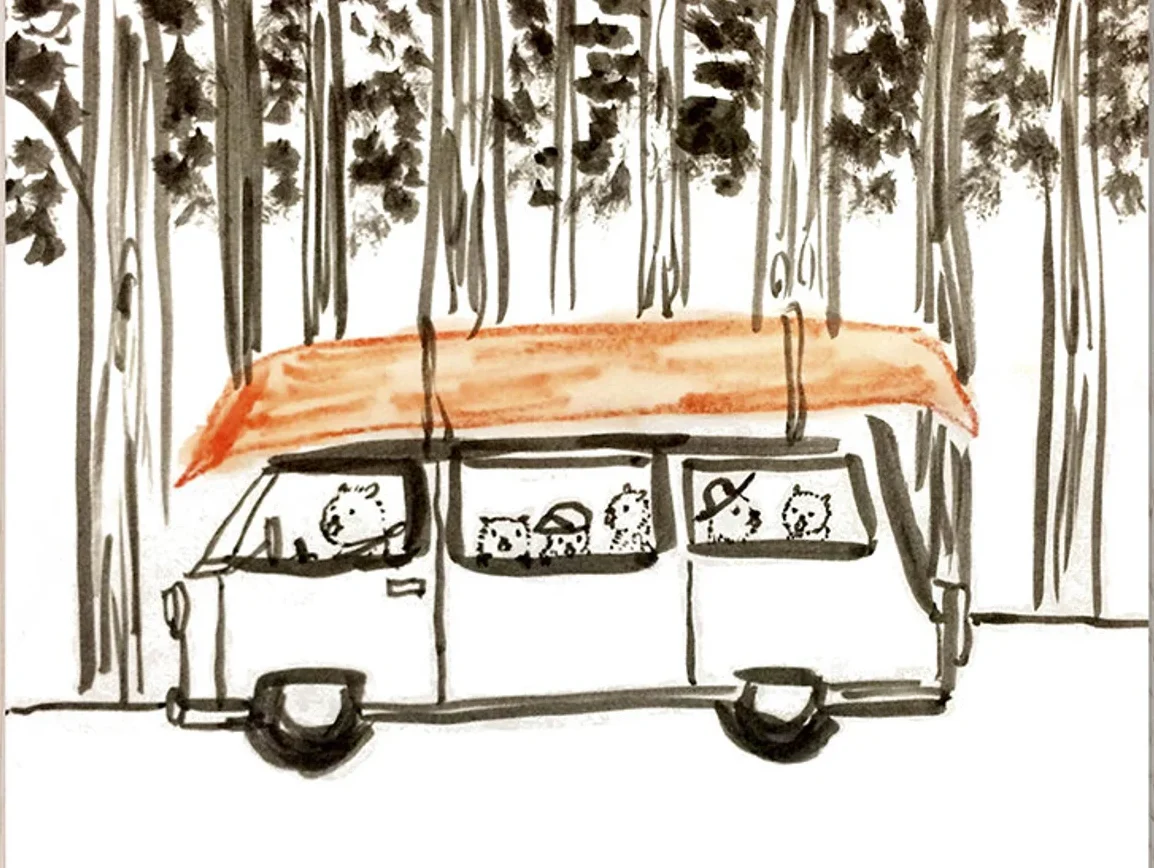
A two-day immersion in beaver ecology and river science, with a focus on the relationship between beavers, watershed health, and flood resilience. A combination of field trips, discussions, and classroom instruction, this retreat is for those who want to understand the complex role that beavers play in creating ecosystems, managing water, and sometimes causing headaches for humans along the way. Two full days of learning and exploring why beavers are important partners in towns dealing with floods. Instructed by Patti Smith of Bonnyvale Environmental Education Center, Skip Lisle of Beaver Deceivers International, and NorthWoods Educator Courtney Guinane.



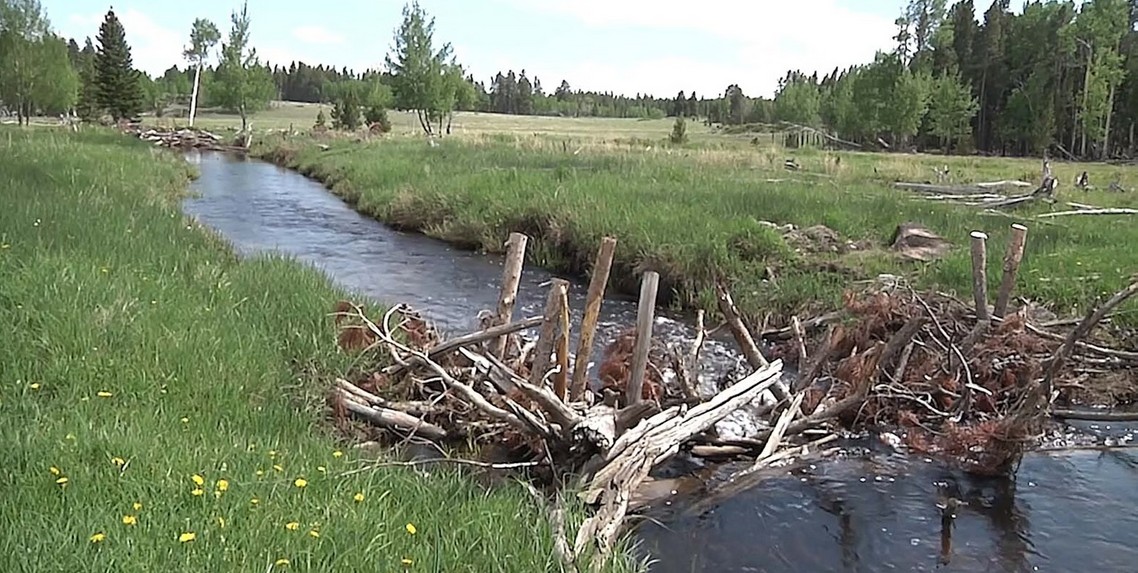 It is thought there are fewer than half the beavers in the Bighorn National Forest now compared to about 15 years ago, and to make up for their work, wildlife officials have built more than 150 artificial dams. It’s not clear why the beaver population is declining.