
 I am old. The Martinez Beaver story is old. The entire drama unfolded more than 15 years ago. There have been three presidents since them. Change takes a long time coming. And as hard as it was we got the easy shift. Things were harder when Sherri Tippie was a twenty something and Enos Mills was saying ‘beavers matter’ and harder still when Grey Owl was saying stop trapping beavers.
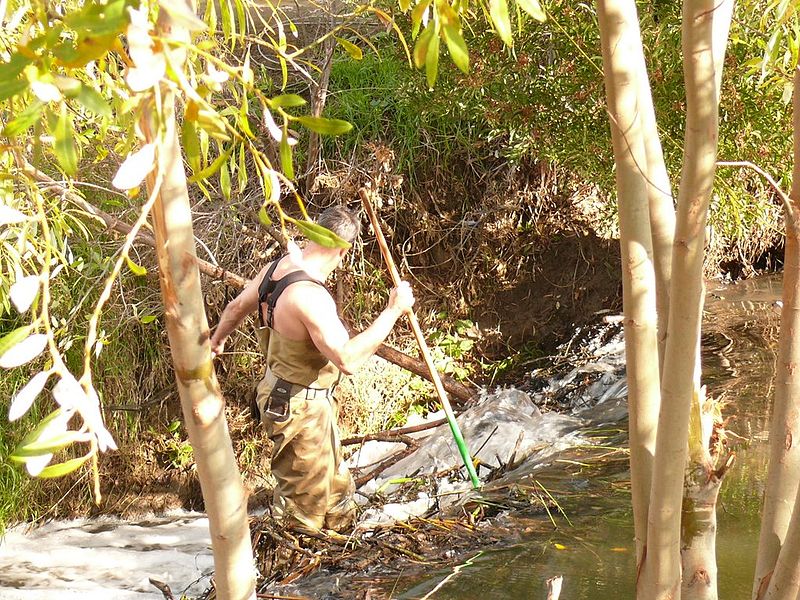 Martinez has a solid place in the beaver story because there was soo much public interest it forced our city to hire the only famous beaver installer at the time who happened to live in Vermont. He made sure that what he installed worked in our creek which was unheard of in the west. Certainly in California. Since he invented the technology we became associated with the buzz of his invention.
You probably know the legacy. Long before Martinez Skip Lisle trained Mike Callahan. Who started a voluneer group to install flow devices then his own business then the beaver institute. Which is now famous for training professionals all across the nation.
It is all full circle now.
Skip Lisle: There’s enormous potential for beavers and flow devices
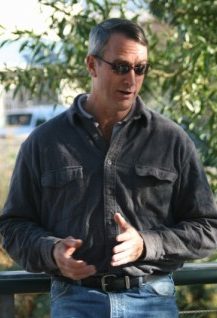
 This commentary is by Skip Lisle, a resident of Grafton, a wildlife biologist and president of Beaver Deceivers LLC.
By some miracle, we have an animal called a beaver that builds, maintains and improves rich wetlands. However, damming behavior also creates challenging and sometimes expensive beaver-human conflicts.
Partly because of their rarity, which has been increased greatly by development, wetlands like those that beavers create have enormous value. They are critical habitat for thousands of species, including numerous game animals. They have hydrological functions such as water purification, sequestration of fine sediments and pollutants, groundwater recharge, and water storage (flood abatement). Beautiful and teeming with life, they also represent aesthetic or spiritual wealth.
As an example of the importance of wetlands, the federal government sometimes pays hundreds of thousands of dollars per acre for manmade versions that are much less valuable and natural than those created by beavers.
Give that man a pen more often. Skip has been telling this story for a long, long time. To many different kinds of people motivated by many different kinds of things.
 Beavers are mostly restricted to a tiny section of the landscape: low-gradient areas on small streams. In this beaver-damming habitat, they are able to create larger wetlands where their dams can survive high-water events.
This is where most of the beaver-human conflicts occur, particularly when high-value properties like roads abut or intersect these zones. Tiny, easy-to-clog holes in large manmade dams (roads), culverts are the biggest problem of all. They are beaver magnets.
Beavers are territorial. They typically do not tolerate the presence of unrelated beavers. Therefore, the number of beavers present in a territory, or at a given conflict point, might range from one to 10 with an average, perhaps, of three or four. Because of deaths from starvation, disease and predation (e.g., humans, motor vehicles, coyotes and bears), births and dispersal, this number is constantly changing.
When dispersing, they search for beaver-free zones, like conflict points where a kill-defense has been employed (double magnet). At a given point, therefore, overpopulation is never the problem, but underpopulation can be.
A little population management of adult beavers cannot eliminate a conflict. It takes only one non-kit beaver one night to clog a culvert. However, when all the adults are eliminated, any kits present will starve. Consequently, a little killing often leads to a lot of slow, wasteful and unconscionable dying.
So humans make the most inviting places for beavers to build a dam AND then humans kill off their competition so they can start fresh and plant nice trees for them to eat. We should never be surprised when a beaver disperser gets our party invitation.
To effectively protect a culvert by lethal means requires permanent extirpation. Just as the presence of beavers frequently leads to ecological miracles, their forced absence often has the opposite effect: Sterilization.
Loss of birds. Loss of fish. Loss of frogs. Loss of water.
A kill-defense at a given conflict point guarantees that the problem will persist in expensive, never-ending cycles. In addition, “killing” ensures that none of the wetland values that beavers symbolize will ever persist (dams decay in their absence) or develop in the general area of any conflict point.
On a broader scale, given the inordinate value of beavers, no responsible governing agency would ever allow the overall beaver population to become low. With concern for protecting the environment growing among the general populace, it may not be politically possible, either. Therefore, we can never rely on killing, either locally or regionally, to solve the conflict.
Hmm. Since I don’t know of any state in the country that monitors its beaver population I’m not sure they would ever know when it got “LOW”.
 Fortunately, there is a remedy: High-quality flow devices. These essentially control damming behavior by sneaking water away from beavers.
They are complicated engineering feats, and normally can be built successfully only by skilled specialists. When this is not the case, and flow devices have little design or structural integrity, they invariably fail. This often leads to a loss of confidence by the public in the general concept and to a doubling-down on killing.
At many places in New England and elsewhere over the last 25 years, high-quality flow devices have repeatedly proven themselves. They have saved society millions of dollars while indirectly creating thousands of acres of wetlands. High-quality flow devices can solve the problem at almost any site, generally need little maintenance, last for decades, rarely require killing, and pay for themselves many times over again. They are great investments.
Because of the limited geographical nature of the conflict, in a few weeks one competent builder with hand tools can eliminate the problem in any given town for decades. It’s thus easy to imagine beaver-proofing a small state like Vermont.
There is a tension in the world between saying ‘these problems are solvable’ and ‘any fool with a hammer and a pair of waders can solve them’. Bad flow devices are bad for beavers because they result in trapping and advertise that flow devices don’t work. But rare and expensive flow devices are also bad for beavers because they mean well-intenioned paces can’t afford them or install them and beavers die.
It’s an age-old conundrum we’re getting a little better at solving.
The implementation of high-quality flow devices — mostly by contractors, and largely at the Penobscot Indian Nation in Maine and several New England states — has led the world. The two leading flow device companies are Beaver Deceivers LLC (mine, from Vermont) and Beaver Solutions LLC (Massachusetts). Both companies also offer presentations and workshops, as does a nonprofit, the Beaver Institute (Massachusetts).
Their willingness to share their knowledge represents an opportunity for government managers and budding entrepreneurs, among others.
Because of a past absence of high-quality flow devices and their builders, killing has long been a necessity to protect the infrastructure. Even today, it’s sometimes an important short-term solution. Along with predators, we should thank shooters, trappers and state wildlife managers for helping with this prior defense.
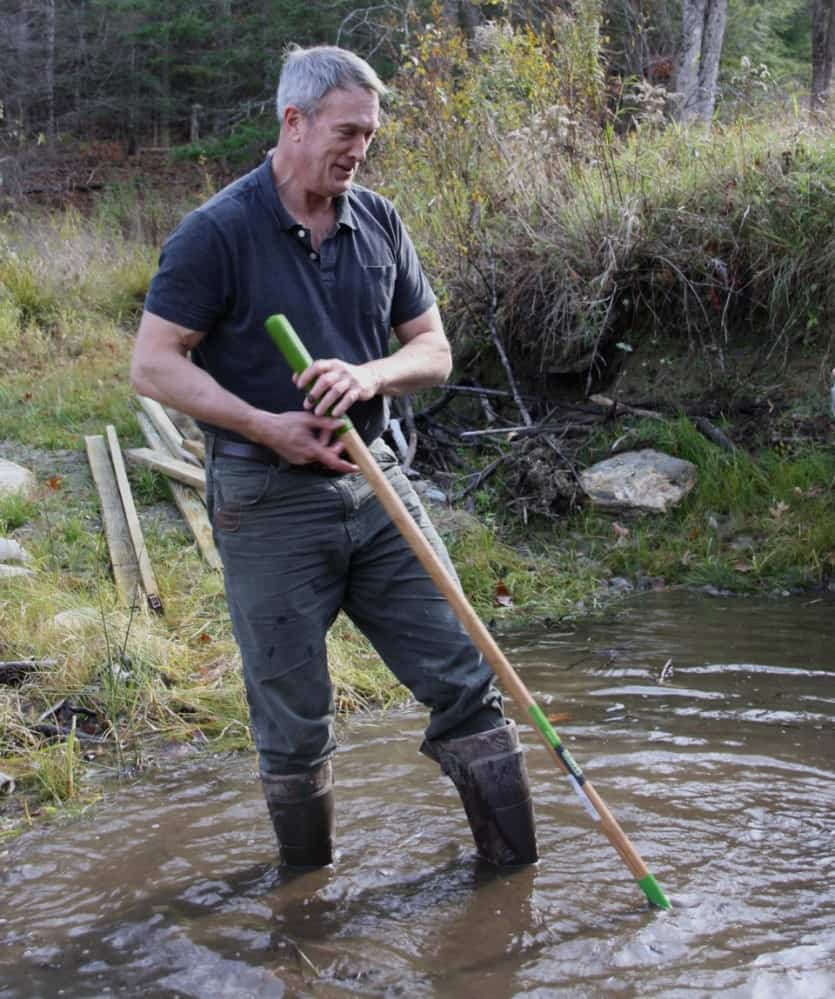 But beavers can’t be an eternal enemy. It is long overdue for society to begin to make a serious transition toward a more reliable, long-lasting, economical and ecologically friendly approach.

That’s what I call a closing argument.
 It feels like a million years ago that Skip Lisle came to Martinez to install our flow device. I think I have aged dramatically since that time, and I can barely remember the way it started. So many things were different. I was working. Jon was working. Martinez had a Gazette. We had a different president. The housing market hadn’t crashed. There was no covid.
 HALIFAX — Keystone species are those that have a disproportionately large effect on their habitats. “They help maintain biodiversity and there are no other species in the ecosystem that can serve their same function,” wrote Amy McKeever, for
  There are an estimated 6,000 to 10,000 beavers now living in Connecticut, according to the state Department of Energy and Environmental Protection, or CT DEEP. The return of these amazing rodents is a conservation success story, much like the great comeback stories of ospreys and bald eagles. But it didn’t come easily.
 Ahhh Patti! Sharing her great love with the good people of Guilford, If you haven’t yet picked up a copy of her book you really owe it to yourself to read her lovely tales in

 As we honor Earth Day 2021, the theme running through today’s KBOO programming is the impending climate crisis, and its affect on our home planet. And we’ll be introducing you to people and organizations who are working to protect our environment, and all its inhabitants.