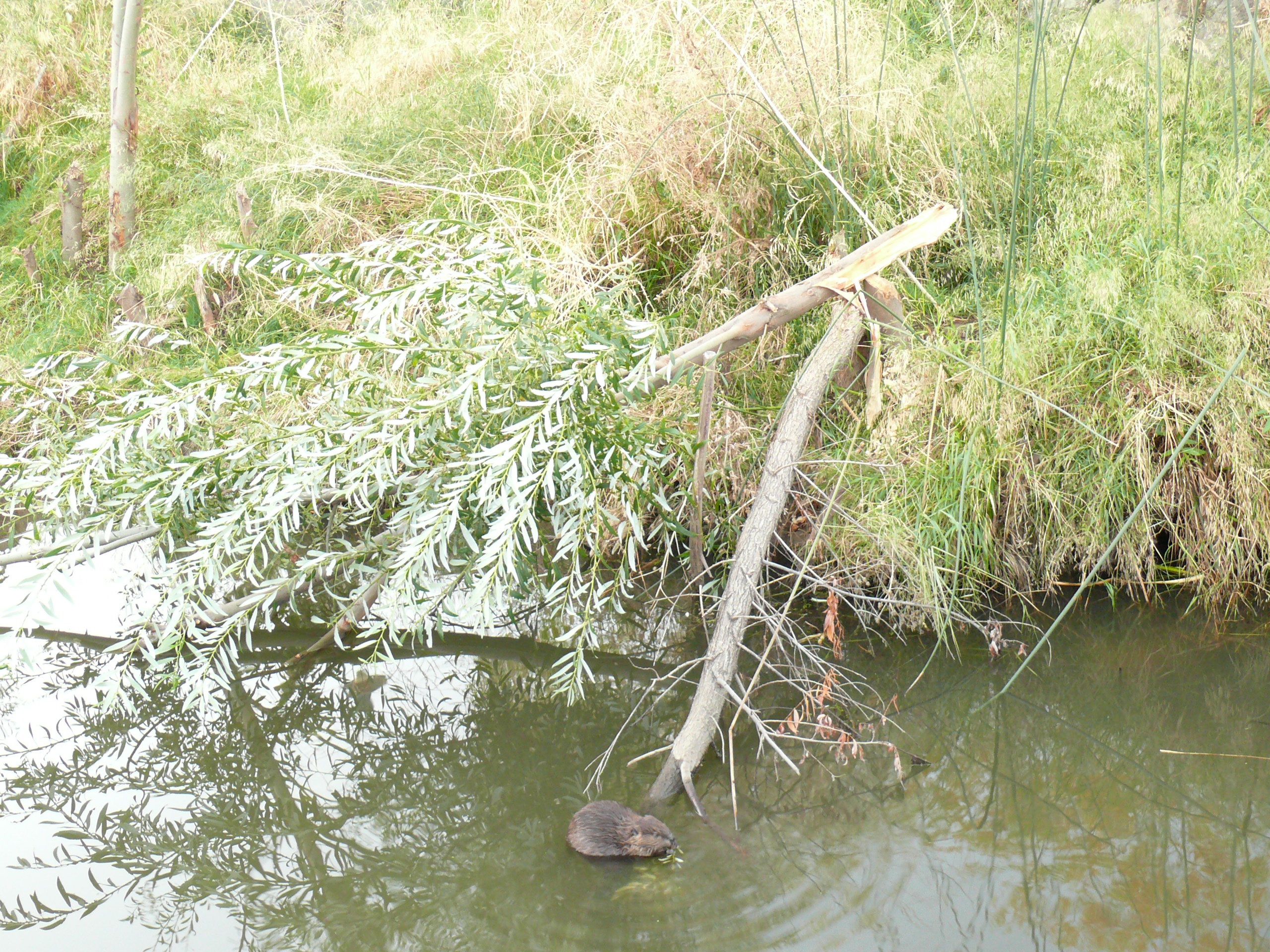



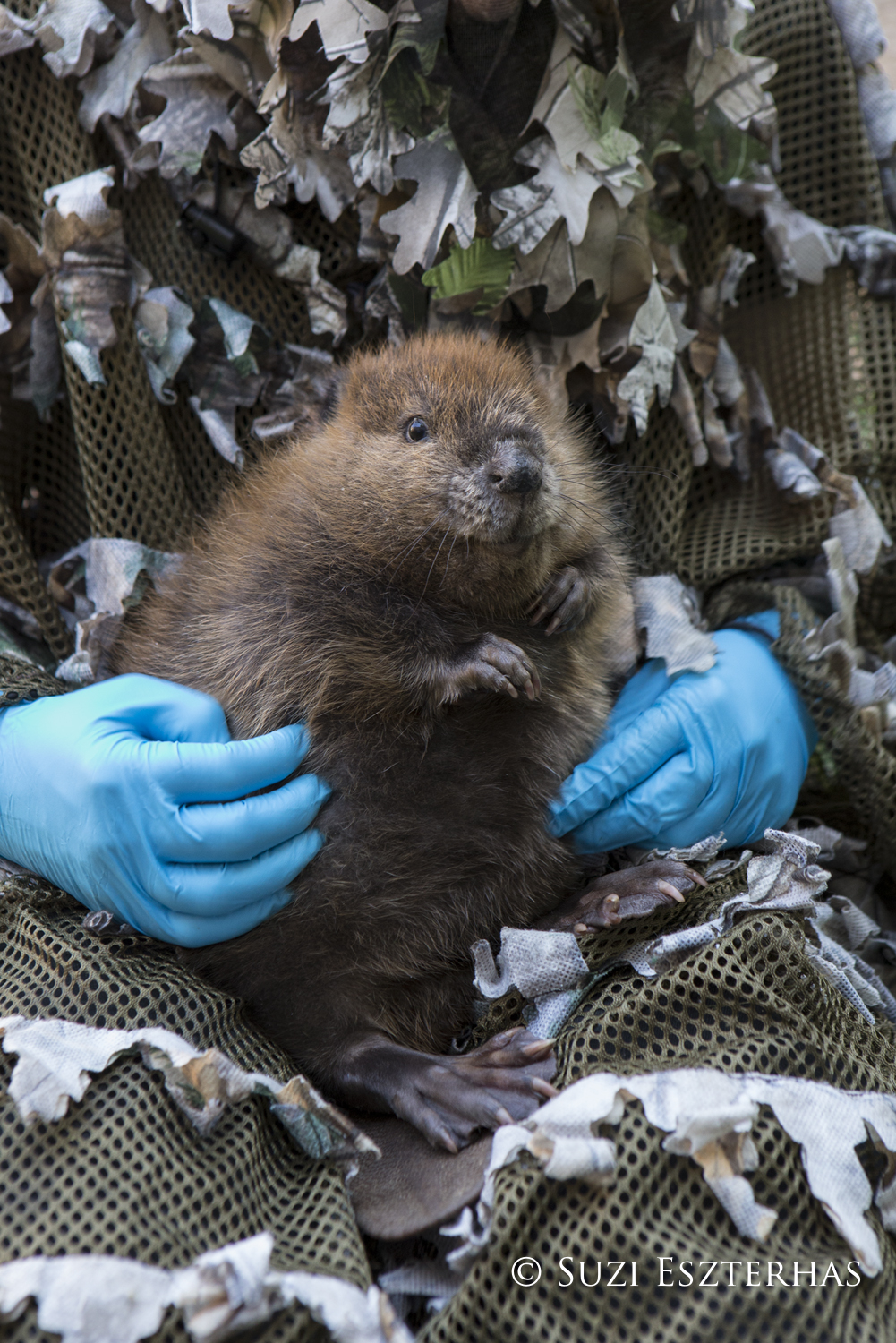
Because the beaver isn't just an animal; it's an ecosystem!


FacebookFacebook
email articleemail article

The glossy headline caught my attention but as I read through I found it had  many righteous paragraphs I truly appreciated. That doesn’t often happen. Much respect, Corey Buhay.

Beavers Are Having a Moment

Long considered a nuisance, these furry construction experts are finally being appreciated for their role in healthy ecosystems.

Over the last 20 years, Oregon’s wilderness has suffered big time. Salmon have disappeared, wildfires have scoured the hills and drought has parched once-fertile soils. Years of small fixes — a little forest thinning here, a little fish-ladder installation there — have helped, but not nearly enough to keep up with the destruction. 

By the start of the 2020s, Oregon had more ecologically impaired waterways than almost any other state, and environmentalists were ready for a serious solution. Something bold and risky. Something that would dramatically resculpt the landscape — and potentially correct decades of human development. In a word: beavers. 

Ooh I just got a little shiver, didn’t you?

Around that time, scientists started to look for solutions, launching a frantic effort to figure out what, exactly, salmon needed — and what they were missing. A handful of Oregon State University scientists stumbled upon a clue: They discovered that regions with beaver ponds had vastly higher salmon productivity than those without. Further studies have echoed those findings.

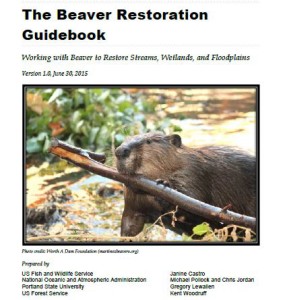
“Beaver ponds and alcoves represented only about nine percent of the habitat but accounted for 66 percent of the coho salmon found in the system,” land managers later wrote in Oregon’s Beaver Restoration Guidebook. Another study from British Columbia showed that the survival rate for young coho salmon that overwintered behind beaver dams was 60 percent or more — significantly higher than the regional average. 

The research was compelling, but it took a long time to catch on. That’s because beavers in Oregon had to overcome more than a century of bad PR.

Ain’t that the truth!’

Beavers’ greatest strength is also their least-beloved characteristic. Masters of heavy construction, they’re constantly rearranging the landscape, whether or not their human neighbors approve. The critters have been known to flood roadways, submerge crop fields and decimate sections of forest. That’s a tough sell for most of modern humanity, which has gotten pretty used to controlling the environment.

“Beavers have been maligned for much of history,” says Maureen Thompson, a wildlife biologist and the program manager for Oregon environmental nonprofit Beaver Works. “For most of the last century, they’ve been considered a pest — even though they’re on the Oregon state flag.” In fact, beavers only became legally recognized as wildlife in Oregon in 2024. Prior to that, they were classified as a nuisance species.

True. Beaver were the cure we mostly didn’t want to take, as the Texas cattleman wrote a decade ago.

hat started to shift 10 to 15 years ago. Thompson says a number of the beaver advocates and volunteers she works with cite reading Ben Goldfarb’s 2018 book Eager: The Surprising, Secret Life of Beavers and Why They Matter. Around the same time the book came out, Oregon started grappling with more destructive wildfires and serious drought, which Thompson suspects was a wake-up call for many Oregonians. 


Yeah Ben! Yeah Ben! Sometimes the science needs a little art to break through the noise.

“I would say we’re in the middle of a beaver conservation movement,” says Brian Sullivan, the coordinator of the Wetlands for Wildlife grant program at Colorado Parks and Wildlife (CPW). Ten years ago, Sullivan saw one or two grant applications for beaver-related restoration projects every year. Now, half of the applications he processes have to do with beavers or beaver dam analogs — logjams designed to kickstart wetland formation and attract beavers to an area.

“Those wetland habitats make up just two to three percent of the landscape in Colorado, but 80 percent of our wildlife species utilize them,” Sullivan says. “That makes the conservation of these habitats key to biodiversity.” 

The article goes on to talk about the UK and the beaver enthusiasm going on there. I think it gets the sequence a little wrong because England was excited about beavers long before California. But not everyone is a beaver advocacy historian like us.

I LOVED this part especially.. I wish it was included with every single beaver aricle Like the warning label on cigarettes.

One of the most rewarding things about beaver reintroduction, says Bowen, has been that kind of enthusiasm — and the sense of problem-solving and collaboration that has come out of it. Beavers are constantly changing the world around them, which means conservationists and communities have to band together to mitigate the effects without getting in the beavers’ way.


Boom! That paragraph is everything I hope people take away from the Martinez story. It makes me so happy I might NEED one of those cigarettes.

And it’s working. Over the last few years, Oregon salmon populations have rebounded, in large part thanks to these kinds of habitat improvements. 

“Beavers are on the upswing. People care about them, and there’s so much research showing that they benefit almost everything you could possibly care about,” says Thompson. “There are so many things in ecology that are demoralizing and depressing, but not beavers. Beavers are good news every day.”

A-n-n-d-d-d Scene. Perfect end to a perfect Article. Well done.


FacebookFacebook
email articleemail article

Every day there is more and more evidence that the beaver world has change and we’re not in Kansas anymore. But this ai article from the Economic Times takes the proverbial cake It discusses a recent study that somehow escaped my attention about beaver dams in urban creeks in Oregon. The study used modelling to examine their effect at mitigating flooding.

Yes, if you’re in Martinez and just cut yourself on the irony of that sentence, you are not alone.

The research proves that beaver dams in urban creeks can REDUCE flooding. Will someone please call our former mayor and let him know? I’ll be busy celebrating with friends.

In Oregon, beaver dams along Fanno and Bronson creeks stored hundreds to over 1,200 cubic meters more water during storms, slowing how quickly runoff moved downstream

Beavers don’t read engineering manuals, but it turns out their dams can do something engineers spend millions trying to achieve: slow down floodwater. A new U.S. Geological Survey study looked closely at two small urban creeks near Portland, Oregon, and found that beaver dams slowed down a significantly higher amount of water flow during storms than the same creeks but without dams. This did not stop the floods, but it certainly bought enough time to cope with the problem. For cities around the  ..

Urban beaver dams helping cities? Everyone told me they were just problems…

The USGS researchers chose two urban streams from the Tualatin River Basin: Fanno Creek, which runs through a park in Tigard, Oregon, and Bronson Creek, located in a rapidly growing area of the same county. Both of these creeks have beaver dams. Computer models were developed for each stream. Two different scenarios for each storm were then run. In the first scenario, the beaver dams remained, while in the second scenario, the dams were virtually removed. This way, researchers could look at the. same storm impacting the same stream twice with just one variable changed: the presence of the dams. It’s a clean way to see what the beavers were actually doing.

Hmm interesting. So what happened?

The largest and intermediate storms saw Fanno Creek’s beaver dams storing an additional 914 to 1,249 m³ of water at its peak as compared to the no-dam version of the same creek. A similar scene was noted for Bronson Creek, where an additional 716 to 818 m³ of water storage was noted at the peak flows. The report also found that during small storms, both creeks would store a bit more water relatively because the ponds behind the dams had more empty space to fill up.

The findings point to a pattern. Beaver dams showed the greatest hydraulic difference at low and moderate flows. But as storms increased in size, the creeks still flooded their banks, and the floodplains themselves began to soak up water, dam or no dam.

TLDR: Beavers are helpful but they’re not gods. Their dams can slow things down in small or medium storms but in big floods they don’t make a difference.

The report is careful to note that its results are based on two small urban creeks of about a kilometer in length and shouldn’t be extrapolated too far. Larger streams, longer stretches, or multiple dams working together might behave differently. However, the study provides strong, model-based evidence for what conservationists have been saying for years: that allowing beavers to build in urban and suburban streams can create more diverse, slower-moving water habitats even if it doesn’t dramatically cut flood peaks.

Nature-based solutions aren’t magic wands. They’re just one small piece of a much bigger puzzle. Beaver dams won’t replace stormwater drains or flood walls. But they do slow water down, spread it out, and create wetter, richer habitats along the way.

Oh my goodness. Beavers matter and their dams help urban streams but they’re not gonna fix everything. Some of it you need to do yourself. I can’t think of a message I wanted to read more.

Here’s the study:


FacebookFacebook
email articleemail article

Finally CDFW is spending its  money on the right thing. Click  on the image to go watch it on their site. I grinned like an idiot throughout this entire thing and kinda teared up at the end. We’ve come so far. Watch it. Share with your friends. Share with your enemies.. Watch it again.

More like this please.

THE BEAVERCORPS

from This American Land
Episode 4 – Season 14

The new hit Pixar movie “Hoppers” is raising awareness and creating enthusiasm about the vital role beavers play in creating and protecting healthy and diverse environments.

But if these are your favorite critters, you can do more than just enjoy a movie. There’s a growing community of beaver fans joining the BeaverCorps! We’ll go to California to see the vital work they do protecting beavers, experience firsthand the training they go through, and share how YOU can become a member.


FacebookFacebook
email articleemail article

Beavers have definitely adopted a 50 state strategy – well 49 anyway, Here’s some great work going on in Michigan.

Beavers are returning to Michigan and damming up the place. Oakland University came up with a clever solution that allows us to co-exist alongside them.

Wasn’t that inspiring? Honeslly the reporter was more of a beaver believer than the college representatives at the end there…they seemed to tap out after saying beavers belong here and there’s ways to deal with them. They forgot: beavers save water, improve water quality, prevent flooding, increase fish density and diversity, remove nitrogen, reduce fires, increase bird diversity, and improve overall stream health.

Next time call us, we can offer some pointers.

DONATE

Beaver Interactive: Click to view

TREE PROTECTION

BAY AREA PODCAST

Our story told around the county

LASSIE INVENTS BDA

CONTACT US

URBAN BEAVERS

LASSIE AND BEAVERS

Ten Years

The Beaver Cheat Sheet

Restoration

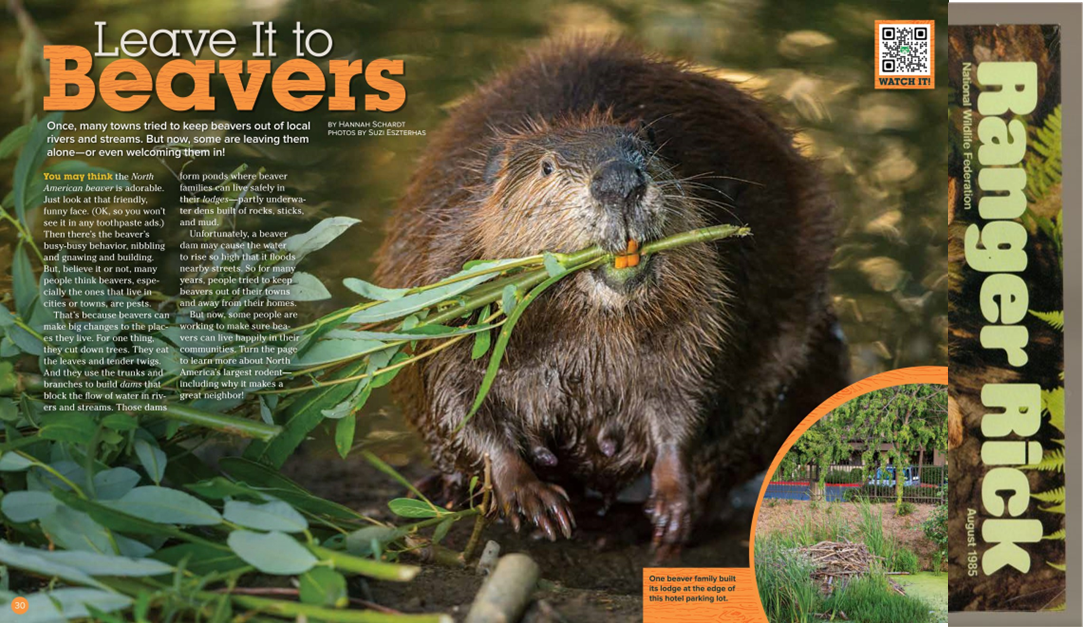
RANGER RICK

Ranger rick

The meeting that started it all

Past Reports

September 2026
M T W T F S S
 123456
78910111213
14151617181920
21222324252627
282930  

Story By Year