
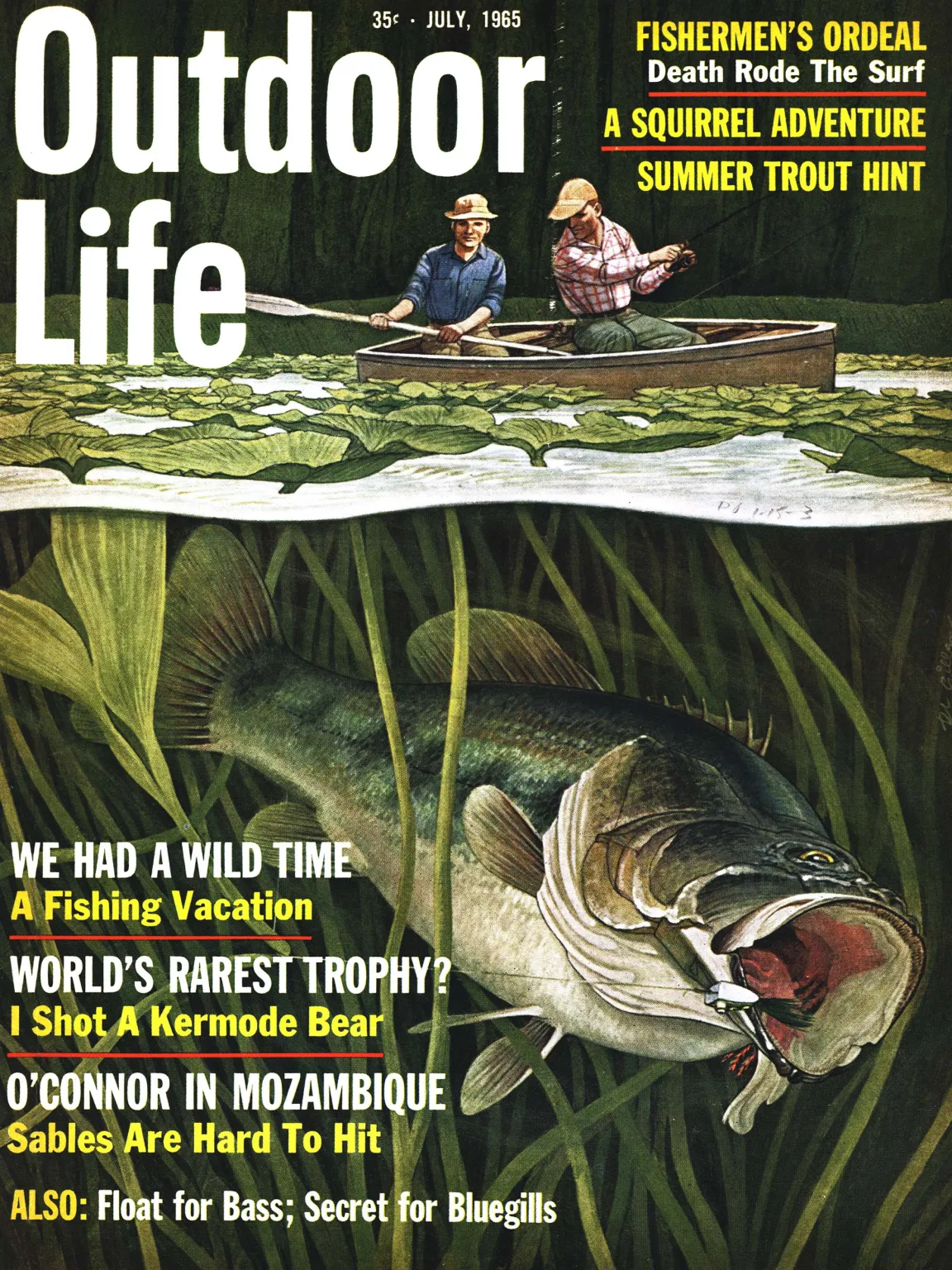
This fantastic article appeared in Outdoor life in the year of my birth. Coincidence? I will highlight it’s delicious references and at the end show you the stunningly obtuse caution label that was slapped on by some luddite editor that doesn’t grasp metaphor.
Beaver Ponds Are Still a Secret Spot for Catching Trout. Here’s How to Fish Them
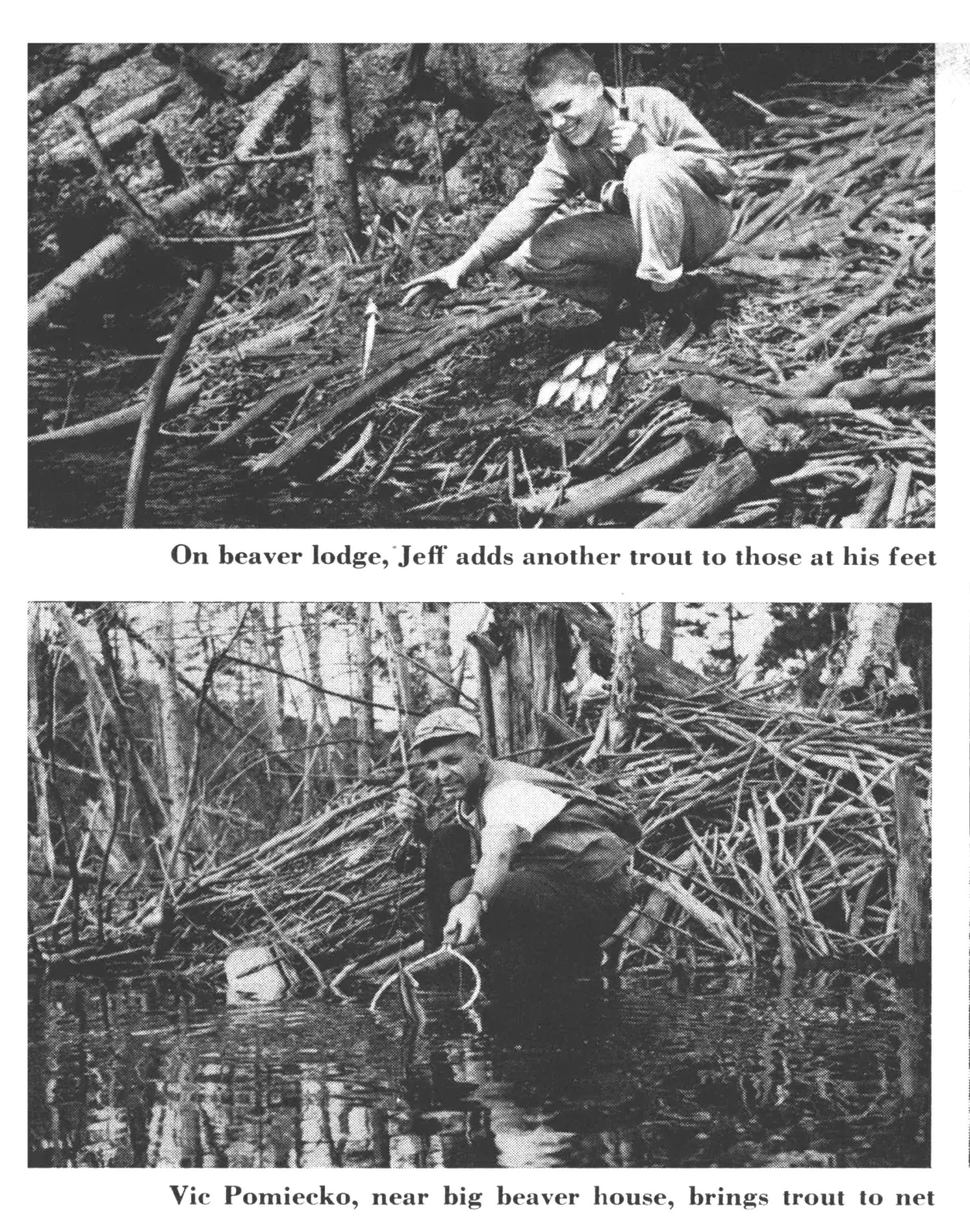
“Look at him, daddy,” Jeff cried. “He’s the biggest I ever caught. I’m going to get more.”
True to his word, he pulled seven more wild trout, all 10 to 11 inches, out of that hole.
I didn’t know it then, but that experience seven years ago infected me with a fever that returns each spring: A desire to find and fish beaver ponds on wild-trout streams. I’ve fished dozens of beaver ponds and have been successful about half the time. I wish I could say I discovered spots where trout were two and three-pounders, but that isn’t so. Most beaver-pond trout I’ve caught have been under 12 inches, but almost all were wild fish, fat and sassy, and extremely good eating
 There’s no substitute for exploratory trips into the woods. Keep it up for a few years and, in that time, your maps, with the beaver ponds you’ve marked on them plus notes on the condition of the ponds, will provide invaluable fishing information. But remember that beaver dams and beaver colonies aren’t permanent and that conditions that produce trout for several consecutive years may deteriorate.
I found out by accident but what do you know? Beaver ponds are really great fishing areas! Who knew?
Beaver dams often back up large bodies of slow-moving water-ponds of 75 acres have been recorded. The flooding water kills the trees, which means loss of shade and warmer water. The accumulation of silt in a beaver pond frequently smothers trout eggs. To spawn successfully, trout need water flowing over gravel. However, trout, if not trapped between dams, can run upstream to spawn. Studies have also shown that beaver darns are not an impassable barrier to trout. Some trout work their way through beaver dams, up or down, and, during spring run-off, they may go over the top.
 The type of stream a beaver pond is built on is relevant. If the stream is cold, rocky, and fast-moving, the beaver dam can be an asset. There is little forage for trout in fast mountain streams, and the cold water retards trout growth. A dam slows the stream. allows silt and aquatic insects to accumulate, and warms the water. A beaver dam on such a stream would probably assist the trout.
Well I guess way back in “1965 they didn;t know about hypoheic exchange.
In my research on beaver-and-trout relationships, I’ve found some interesting studies. One of the most informative is titled, Effects of Beaver on Trout in Sagehen Creek, California. This study covered the years from 1954 to 1957, and was published by Richard Gard of the Zoology Department of the University of California. The Sagehen study concentrated on one beaver colony of 14 dams and the resulting ponds. Trout present included rainbows, brookies, and browns.
Gard concluded that the Sagehen Creek trout benefited from the beavers. It is interesting to note that the 13-mile creek is different from some lower-altitude Eastern streams. Sagehen rises from two permanent, cold (37°) springs at an elevation of 7,400 feet and empties into the Little Truckee River at 5,800 feet, says Gard, adding that water temperatures over 78° in the main channel are rare.
The Sagehen study also produced valuable data on the feeding habits of brook, brown, and rainbow trout. Gard discovered that the trout were selective feeders, but each species in a different way.
“Brown and brook trout from the ponds,” states Gard, “contained an average of over two and four times as many bottom organisms, respectively, as did their counterparts from the stream. The reverse is evident with rainbow trout, since they contained over twice as many bottom organisms in the stream as they did in the pond. Perhaps this species difference in feeding accounts for the observation that brook and brown trout often do well in ponds, whereas rainbow trout usually do better in stream situations.”
Gard also found that the most numerous organisms in the pond bottom and in the stomachs of all trout were immature midges. Helgrammites were eaten mainly by brown trout in the winter and spring. All trout from ponds, except winter rainbows, Palpomyia larvae in fair numbers. Brook trout in summer made the most use of large caddis worms. Brown trout ate many Liriope larvae in winter and spring. In the stream, all species of trout made good use of the abundant Ephemerella nymphs. especially rainbows in the spring.
He really was up on the research of his day. This study wasn’t published until 1961. There are so many reference to Sagehen in modern research that you forget it was ever a discovery.
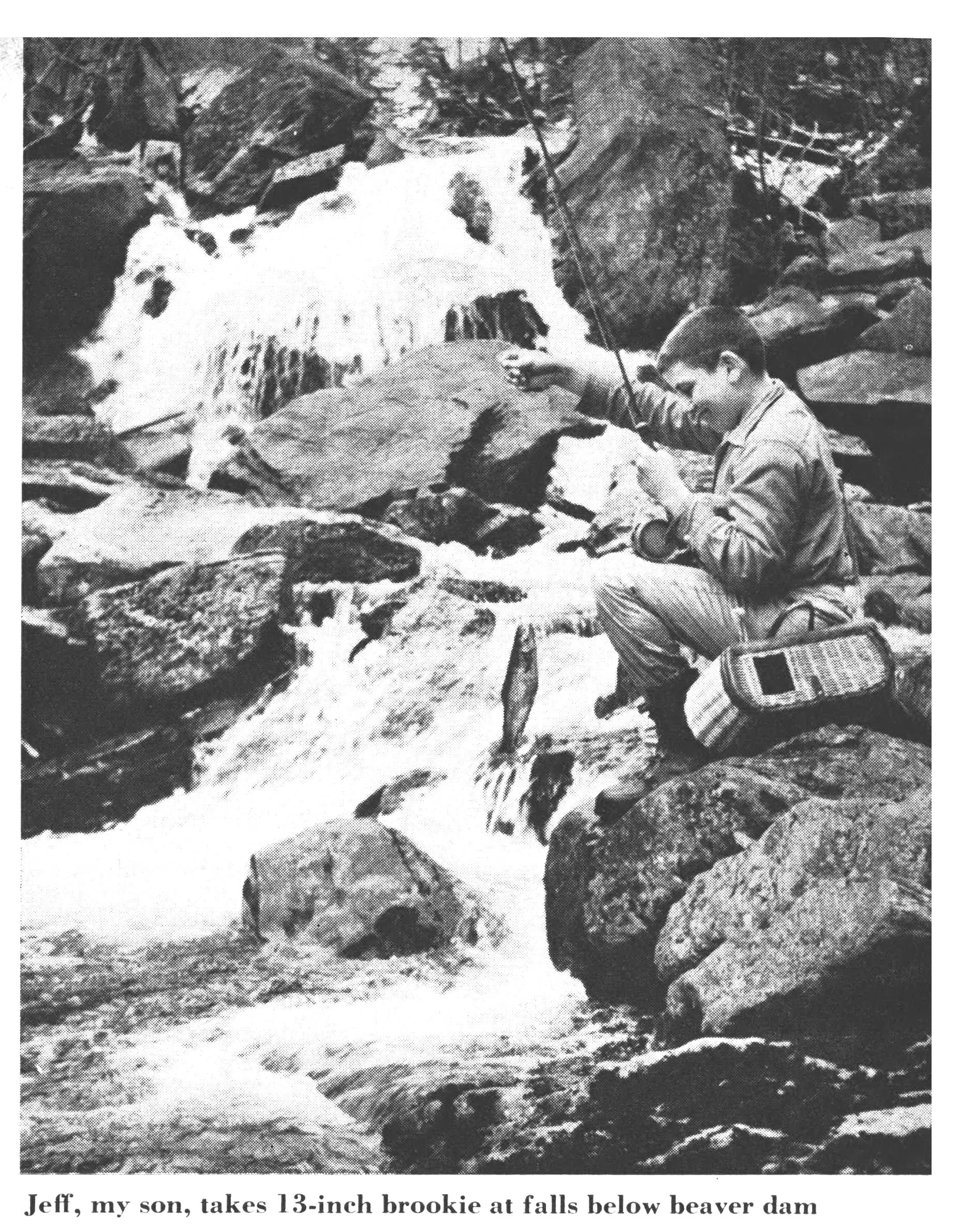
 If you’ve been getting good trout in a beaver pond one year and the following year discover that the spring freshets have broken the dam, don’t forget to try downstream. My son, Jeff, caught a nice 13-inch brookie while fishing the South Branch of the Baker River in Dorchester. The trout had apparently been carried downstream from a beaver pond.
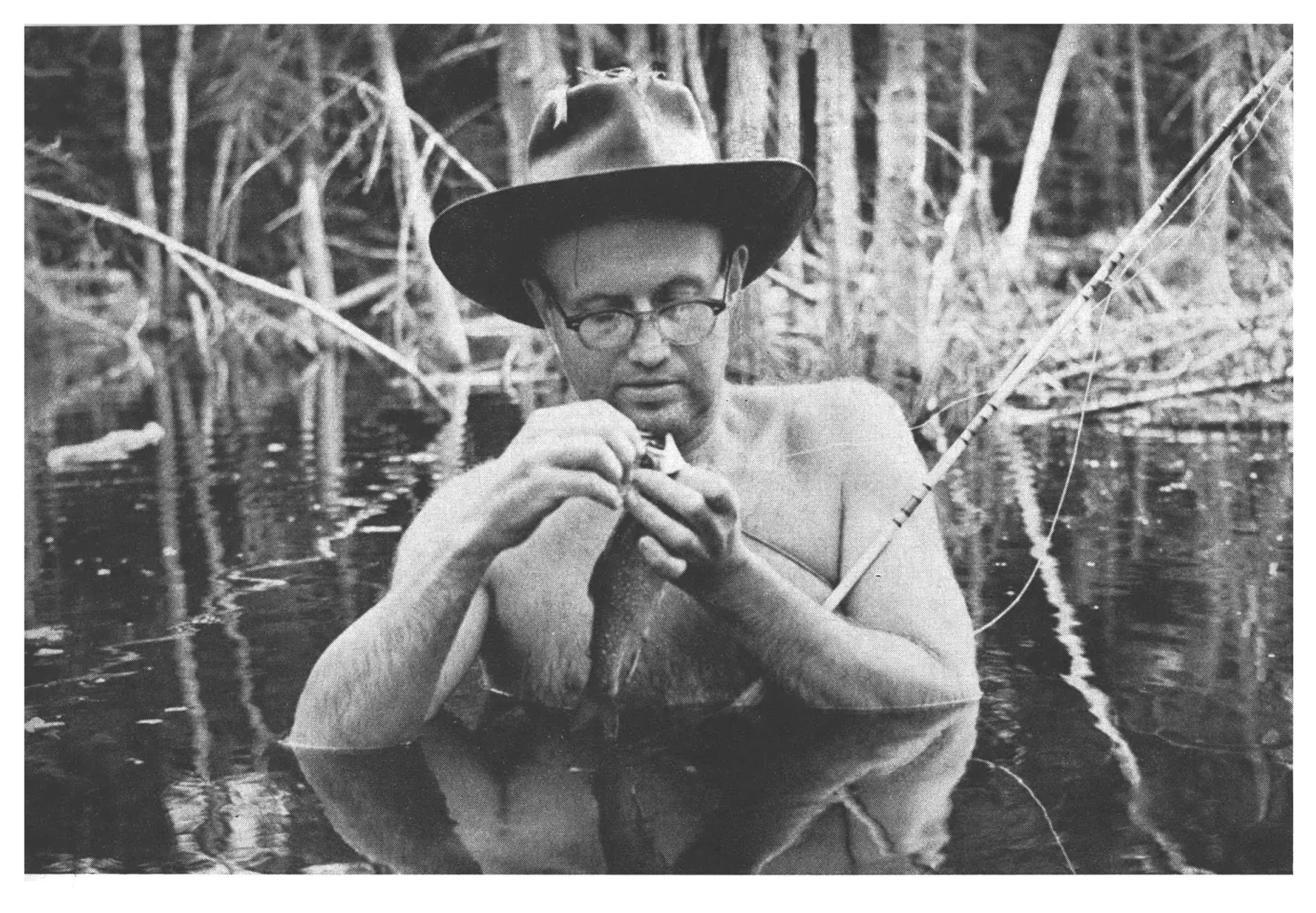
A word of caution on clothing is in order. Wear a long-sleeved shirt on your excursions and carry plenty of bug dope. If you don’t, the insects will drive you nuts. I even carry a headnet with me, especially during the black-fly season. But, if it isn’t the black flies. it’s the mosquitoes or some other buzzing, biting creature. A cigarette or a pipe will help to keep them away from your face. A cap or a hat is also an asset. It cuts down the area on which the bugs can feed. The best footgear is a pair of all-rubber boots. Don’t wear good leather boots. They’ll be soaked and caked with mud in no time and ruined by the end of the season. I sometimes think a pair of sneakers is a good solution, if you don’t mind walking in them. Usually, at some point, you’ll go in up to your waist, so you have to reconcile yourself to getting more than your feet wet.
What a FANTASTIC look at the underwater complexity of beaver ponds. There’s a dam good reason all those mosquitoes are hovering about and flies biting you. They hatched in the water and fed and fattened off all those nutrients trapped in the dam. Thank you so much Nelson for such an excellent description of beaver benefits.
And now for that PESKY editor comment:
“This story, “Bog-Trot for Trout,” appeared in the July 1965 issue of Outdoor Life. The annual “fever” the author refers to below might be giardia — we really can’t recommend wading in beaver –=- anymore.”

Okay you understand that when he said he had a FEVER it was a metaphor here and that beavers don’t carry giardia any more than deer or bear or toddlers, right? And that when Peggy Lee was signing in a cat suit about “you give me fever” it wasn;’t because she had to take antibiotics?
Sheesh.
My father—methinks I see my father.
HORATIO
Where, my lord?
HAMLET In my mind’s eye, Horatio.