




Because the beaver isn't just an animal; it's an ecosystem!


FacebookFacebook
email articleemail article

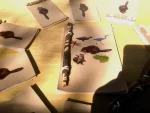
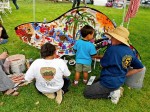
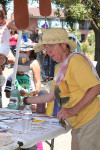
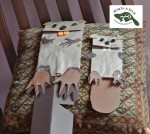
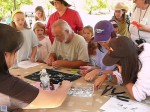
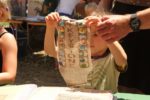
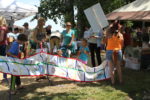
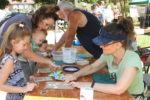
We worked yesterday on the map fragments for  the children’s treasure at the beaver festival, cutting the segments and separating each part into a little bundle that children will get from each participating exhibit. The little bundles contain a map fragment and a ‘clue card’ held together with a tiny wooden clothespin. After collecting all 8 pieces the child can go to the map-making station, put them all together and find the secret message on the back that will tell them where to find the lost key to the waters.

Here’s an example of a clue card. Collect all 8!

This means that there are 8 piece bundles times 100 kids which makes a lot of bundles. So far we’re half way done. Fingers crossed we can finish the other half today.

Just because we’re working hard doesn’t mean you should miss out on beaver stories.   Today there’s a nice follow up to the article a while back about Woodland lawn Preserve in New York. I gave them a little bit of grief for saying that it was necessary to trap beavers to save trees, and for arguing that people went to the park to find peace, not see beavers. Remember? I wrote the chair about flow devices and biodiversity and she wrote back that she felt the article had misquoted her and she was interested in other solutions. I’m still not sure she makes that clear,

Beaver problem in Preserve is complex

The beavers in the Woodlawn Preserve have generated concern over the past few weeks. We’ve heard from beaver supporters from as far away as California and local folks as well.

Gee, I wonder who that can be?

The pond in the Preserve is a municipal retention pond designed in the 1970s to control flooding in the Woodlawn neighborhood. The last few years were very problematic, with the city expending quite a bit of time, effort and money to keep the culvert that drains the pond clear due to increased beaver activity.

The state Department of Environmental Conservation was consulted, and its suggestions included breaching the dams on the Rotterdam side of the culvert, trapping to reduce the population, and replacing the current drainage grate with a different type of baffle.

The decision to reduce the population was made by the city (not the Friends of the Woodlawn Preserve) following recommendations and permits from the DEC. But a new flow-control device isn’t the only solution to the problems the beavers are causing.

Trees are a beaver’s food source, and besides chewing down a tree, they also strip it of its bark, resulting in tree death. Solutions include wrapping trees with wire or fencing off areas of trees to prevent them from being targeted by the beavers.

Knowing that the beaver population will again increase, the city is continuing to explore more options under the guidance of the DEC, and we will continue to advocate for a different type of flow device to better control the water level.

If you really care about the beavers and the Preserve, please join us in our efforts.

Janet Chen
The writer is the chair of the Friends of the Woodlawn Preserve.

Hmm. I wouldn’t say that’s the most open invitation to cooperating with beavers. (It’s a few rungs up from saying in second grade “if you love beavers so much why don’t you go marry them“.) But I guess if I lived nearby I would take her up on the invitation. It’s funny to me that people always think their situation is exceptional – sure you might have saved beavers in Martinez but our pond protects homes from flooding! Sure you might have wrapped trees in the past but beavers strip their bark and the trees die!

The problem we have is special and especially tricky to solve. We had no choice!

I’m sure with the right help and sufficient motivation woodlawn preserve could become friendly towards a family of beavers. Stranger things have happened.

The next story is a radio interview with Kate Lunduist and Taisha McKee on KMUD about beavers. Seems the host just finished Ben Goldfarb’s book and wanted to bring in some voices to help him understand more. The interview is very nice to hear, but the audio isn’t great. They were in the middle if a pledge drive so the interview starts around minutes in. I had to upload it to this site because there was a gateway error, but its a nice listen.

KMUD Interview with Kate Lundquist on the Benefits of Beavers

Love the hat, but can we please add this to the list of beaver props i’m really not comfortable with?


FacebookFacebook
email articleemail article

The sad story of Nevers park in Connecticut continues to be told. This article yesterday shows hown the town is struggling to blame miscommunication on social media for the confusion.

3 beavers gone as town, residents prepare for more

SOUTH WINDSOR — With the three Nevers Park beavers now gone, and town officials unsure if or when others will return, many residents are pushing for ways to coexist and avoid trapping or harming them.

Beavers were responsible for felling nearly 200 trees in the park last year, and Parks officials said trapping was an uncommon last resort to prevent further damage and public safety issues there.

Parks officials plan to hold a forum in the coming weeks with representatives from the state Department of Energy and Environmental Protection and a beaver specialist from Massachusetts suggested by residents upset over the way the town has handled the matter. The forum will discuss the damage caused by the creatures and how best to prevent future problems.

That’s Mike Callahan who will be explaining how to prevent flooding by using a pond leveler. Just for historical perspective out own beaver subcommittee meeting early on, maybe the second one, featured Skip Lisle talking about flow devices and how they work. He was on his way to New Mexico to do a training there, and said he could return when it was done. It was all so new to me that I can barely remember it all, but i know he stood at the back of the room, and was not invited to the podium.

Over 1,850 people have signed an online petition created weeks ago by Abbe Road resident Stephen Straight that calls for town officials to meet with the beaver specialist and implement his suggested solutions.

Straight said he is working to keep “the next beavers from being needlessly killed.”

Not all residents are on board, however.

One, who preferred not to be named as the issue has gone viral on social media, defended town officials and said the town had to make a tough decision to put residents’ quality of life first.

People spewing hate at town officials on Facebook seem to be misguided, he said, and they haven’t paid attention to the other methods of preventing tree damage and flooding that the town tried

“There were too many factors that affect public health, safety, and property in place to allow for the beavers to coexist” with Nevers Park activity, town officials said in a statement this month.

Ahhh the anonymous opposition. I remember that. At every beaver meeting there was a single dominating voice of a certain wealthy property owner who never even showed up to express his thoughts. He didn’t have to. He had made sure that ever single council member already knew them – and knew that they were intimately tied to his future campaign contributions. Money talks. Welcome to the family, looks like you got yourselves a horse race.

In an effort to dissolve misinformation about the trapping spread on social media, town officials clarified that the town did not spend any money to trap beavers, and the traps used are humane and meant to catch the animals alive without causing any injury.

Removing the beavers from this particular park was not an easy decision to make, officials said in the prepared statement, and they understand “the passion that residents have for animals.

We would have done the right thing it was easier. Honest. As it was we trapped the beaver with pillows and cotton candy so it wouldn’t hurt them one whit. Scouts honor.

Why do reporters let them say these kinds of things? Resident Steve Straight had this to say;

I believe the reporter did her best, but the article contains inaccuracies:

First, there is no way the beavers were captured alive. We have eyewitnesses, have photos of the actual traps used. (See below.) People spoke with the trapper at the time he was trapping. The wording makes it seem as if the beavers were caught unharmed and perhaps relocated somewhere. Relocating is illegal in Connecticut.

The wording of the first sentence is unclear: “Town officials unsure if or when they will return” is very misleading. Those beavers are dead. The only questions is, What will the town do when new beavers come to the pond? Have them killed, too? And what about the beavers after them? And after them?

The system Mike Callahan would install, for $1,575, would prevent ANY flooding. The pond is naturally four feet deep, and beavers only need three. (That money could easily be raised privately.) Trees could easily be wrapped or painted.

From the reporter’s point of view, I understand how difficult it is to be accurate, especially given what town officials are saying.

I urge the town to coexist with the next beavers instead of killing them. And the next ones. And the next ones.

Steve is kinder than I could be. But I will say this much. The town needs to learn to coexist – but not just with its beavers. With its residents. With all those 1850 voters who didn’t want the beavers killed. Coexist with them. City officials can’t make them disappear by blaming social media. And they can’t jeep telling them bedtime stories by saying the beavers ‘went to live on the farm“.

Here’s a friendly reminder courtesy of our own beaver meeting and Middlechild Productions  ‘Beavers las vegas‘.

Untitled from Heidi Perryman on Vimeo.


FacebookFacebook
email articleemail article

Back on my very own computer and my very own wifi, I may never stop talking at all this morning. Certainly there’s very good news on the beaver front. This week I found out that we received three of the four grant applications i made. The fourth we are still waiting on. The CCC board of supervisors met this week and decided to award our fish and wildlife grant for the treasure hunt at the festival, and the Martinez community  foundation is once again funding our art project. Fingers crossed we will hear good news from the city soon which, adding the grant from Kiwanis, will bring us to a full three thousand for the festival and with proceeds from the silent auction should allow us to break even for the event.

There’s some scattered good news from other states as well, including this report from Colorado.

Boulder County, city of Boulder analyzing best streams for beaver restoration as ecological health boost

Researchers over the past two years have been looking for the best spots to potentially reintroduce beavers into streams on Boulder County and city of Boulder public open spaces.

The county and municipal open space programs spent $10,000 apiece to fund a study led by Colorado State University researchers Ellen Wohl and Julianne Scamardo to help identify stretches of streams most able to successfully host beaver, if one or a family were to be placed in the given area.

“We awarded (the funding) to them because of our interest in beaver restoration and ecological restoration using beaver,” Boulder County Parks and Open Space Biologist Mac Kobza said, noting habitat for other animals and whole riparian ecosystems can be enhanced by the ponds resulting from beaver damming.

“Where beaver go in they tend to increase the biodiversity. Native species benefit from that, from trout, to native insects that live in the water to other native species,” he said.

Not only is Boulder investing money in reintroducing beavers to study, they’re even considering city open space locations! Be still my heart! Dr. Wohl is a powerful beaver force that often gets overlooked in the summation of how we know beavers matter. Her research has made much of the conversation were having today.

Yet, water storage across this thirsty state could actually be improved by the beaver’s tree-felling and damming habits, authors of a Colorado Sierra Club report argue, citing studies suggesting as much.

“Potentially the easiest, cheapest way to accomplish this end is to allow nature to regenerate where practicable to its previous state with the mighty ecosystem engineer, the American beaver, breaking the trail,” the Sierra Club writers stated.

What an awesome start to a study. I can’t wait to read all about it. Apparently Julianne Scarmado has the oral defense of her dissertation on monday, I for one can’t wait to read all about it. Good luck!

Speaking of Colorado and great minds, guess who finished her Ph.D. from CSU Boulder landed an excellent job as Assistant Professor in Environmental Resource Management at California State Channel Islands! I guess her explanatory stop motion video was a big success because this is that state where she wanted to end up.

So of course Dr. Emily Fairfax celebrated in the usual way.

California is lucky to have you in our state, yet another brilliant beaver researcher added to our ranks, I eagerly await great things.
One final bit of wonder I’ve been saving to share with you comes from Helen McCaulley, the seasonal ecologist from Scotland who patiently filmed this classic moment watching the Tay beavers. Make sure you watch until the end so you can see the pond maker reminding the otter just whose neighborhood he’s in.

FacebookFacebook
email articleemail article

This morning there are three items of interest. Two great photos and a reminder of what’ve beavers mean to salmon. Let’s start with cute.

I don’t know about you, but is I had to pick one animal to dedicate my life too, it would be THIS cute exactly. And if I got to chose who’s on my team, I’d pick Sherri first. Wouldn’t you?

Sherri is getting her well-deserved run of fame with the airing of Sarah’s film. And it couldn’t happen to a nicer girl. This photo appeared in a review in whoa magazine’s crush Wednesday. Awwww. I gotta crush on you too!

Now onto serious salmon-saving matters.

Increased Protections Sought For Coho Salmon In Oregon Coastal Rivers

Twenty environmental groups are calling on Oregon to protect imperiled coho salmon with more restrictions on logging and roadbuilding in coastal forests.

The groups delivered a rule-making petition Wednesday to the Oregon Board of Forestry. It calls for designated “resource sites” for coho salmon on state and private forestlands.

Sounds important! Gee I wonder what they could do to help salmon?

In their petition, environmental and fishing groups say these activities have degraded water quality, blocked fish passage and led to the loss of favorable habitat, such as rivers with large #wood debris, deep pools, and connections to off-channel waters that rearing salmon need, such as beaver ponds, lakes and wetlands.

Save the beavers, save the salmon! We know that. Let’s hope the message gets a little broader delivery in the coming months!

Now on to a wonderful photo from one of our favorite beaver photographers taken in. Vienna, by Leopoldo Kanzler in Nature Highlights.


FacebookFacebook
email articleemail article


Of course now that I restored service to the website at home. I’m not at home. I’m on my parents very old computer in the sierras because my travelling mac actually split its seams and ceased to function.

The good news is that there is an EXCELLENT news story from KUOW in (of course) seattle staring our good Bens (Ben Dittbrenner of beavers Northwest and Ben Goldfarb of everything else). If you don’t have time to listen this morning, book mark this for later. It’s THAT good. There’s even a discussion of the good urban beavers do!

Leave it to beavers, seriously


BEAVER FESTIVAL XVII

DONATE

Beaver Interactive: Click to view

TREE PROTECTION

BAY AREA PODCAST

Our story told around the county

LASSIE INVENTS BDA

CONTACT US

URBAN BEAVERS

LASSIE AND BEAVERS

Ten Years

The Beaver Cheat Sheet

Restoration

RANGER RICK

Ranger rick

The meeting that started it all

Past Reports

June 2026
M T W T F S S
1234567
891011121314
15161718192021
22232425262728
2930  

Story By Year