




 Just look at this beautiful website! Oh how i’ve missed you! I swear my journey back has taken three days, seven techs, two specialists and a new modem. It got so bad and i was on the phone with comcast so much that everyone knew and was talking about my problem. Apparently it had never happened before, and the specialist they sent out monday had spend hours searching for possible clues on the internet because he’d never encountered it. His hail mary pass was to install a new modem because he said sometimes there were tiny switches that got reset.
And what do you know, it worked!
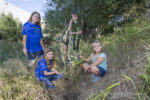
The punchline? When we finally got this website back up, he looked at the page of flat-tailed heroes and said, “there used to be some beavers in martinez on the news that were causing trouble and people saved them, did you have anything to do with that?”
Oh, a little, I smiled.
And just in time for the momentous restoration, there is a wonderful review of Ben’s book this morning AND a great article about Skip Lisle. Since I’m no longer on the ipad you can have both!
 Review: “Eager: the Surprising, Secret Life of Beavers and Why They Matter
Goldfarb is an environmental journalist who has trekked with “beaver believers” around the U.S., covering much of the North American Beaver’s (Castor canadensis) modern range. He also reports on three Eurasian Beaver (Castor fiber) reintroduction sites in Scotland and England.
“Eager” is this year’s winner of the PEN/E.O. Wilson Award Literary Science Writing Award. This honor goes to writing of literary excellence, which also communicates complex scientific concepts to a lay audience.
Goldfarb meets a couple of enterprising beaver advocates who have developed various flow devices to allow beavers and humans to better co-exist. They go by catchy names like beaver baffle, misery multiplier and beaver deceiver. Skeptics and frustrated municipalities have been won over by their success.
On the list of beaver blessings, water storage may be most beneficial to those requiring a purely practical reason to believe. In the chapter titled “California Streaming,” we meet an authority-activist who even created the beaver pledge: “One river, underground, irreplaceable, with habitat and wetlands for all.”
Sniff. That’s me! I’m so proud!
Aside from the gratuitous validation, this is an excellent review that really deals with the substance of why beavers matter. And being that it’s from beavers’ favorite state, I’m not at all surprised.
When beavers are allowed to set up housekeeping, streams spread out of their degraded, incised path to include side channels and ponds, holding precious water. And a stream in the desert, which includes beavers slowing it down, recharges low water tables, too.
Another benefit is the improved fish habitat resulting from beaver dams. In contrast to nearly impenetrable and enormous concrete dams, semi-permeable stick dams allow juvenile fish to meander through; slower flows and eddies provide resting areas and protection from predators. Fish evolved to co-exist and benefit from beaver meadows. Goldfarb delights in this truth found on a beaver believer’s bumper sticker: “BEAVERS TAUGHT SALMON TO JUMP.”
Yes they did, and we’re pretty happy Ben’s book is reminding folks of that fact. We also appreciate this well-written review by Amy Halvorson Miller who works for Inklings Bookshop. She definitely paid attention to all the right things.
Pausing again, to appreciate having this website back again. Ahhh
Now onto our second wonderful story of the day. This time about this city’s first very first beaver hero,Skip Lisle.
Beaver Deceivers: System protects animals, prevents flooding
 SARATOGA SPRINGS, N.Y. — Skip Lisle has a spent a lifetime trying to outwit beavers in an attempt to keep them alive, protect their habitats and save people millions of dollars.
His Graftton, Vt.-based business, Beaver Deceivers, employs a clever system he designed that allows the animals to build dams without causing flooding, which triggers expensive property damage.
“It’s essentially a way to control the problem non-lethally,” Lisle said. “There’s still a lot of beavers being killed out there, mostly because of clogged road culverts. This eliminates the need to do that.”“All kinds of plants and animals can live here because of these few families of beaver,” he said.
If beavers are killed off, their dams eventually decay and give way, which causes wetlands to drain and eliminate habitat for many different kinds of insects, birds, reptiles and mammals.
“Thousands of species depend on these wetlands,” Lisle said.
Yes, they do, and thanks to you Skip all these wildlife tenants have a shot. And the wildlife in martinez had a shot. You gave our beavers the chance they needed to make a difference and survive long enough to become chapter 6 of ben’s book and this website. There needs to be a million more Skip Lisles in every state in North America. So far we have 5,
It’s a long way to go, but we’re well on our way.

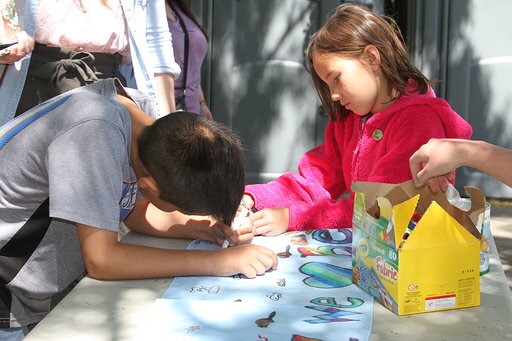


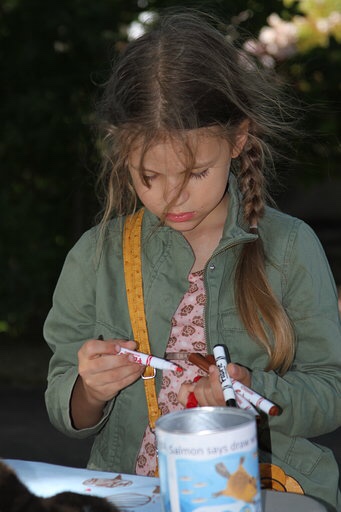
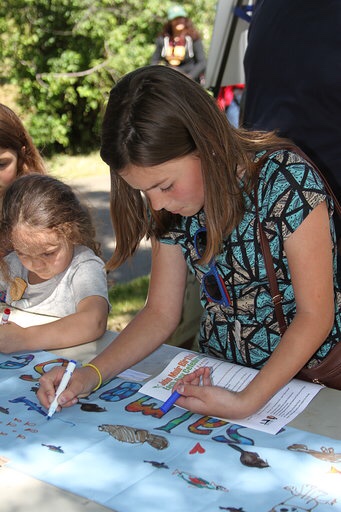
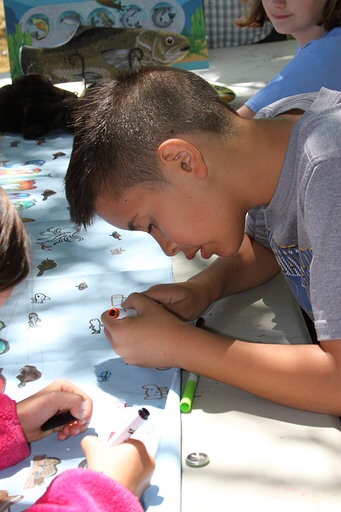




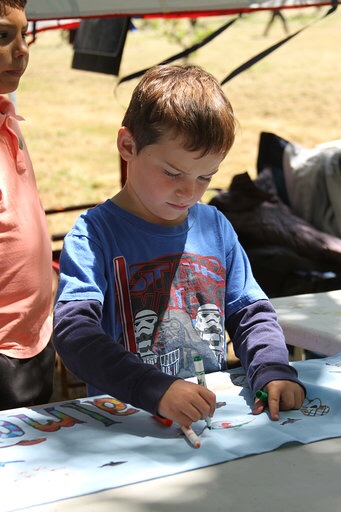
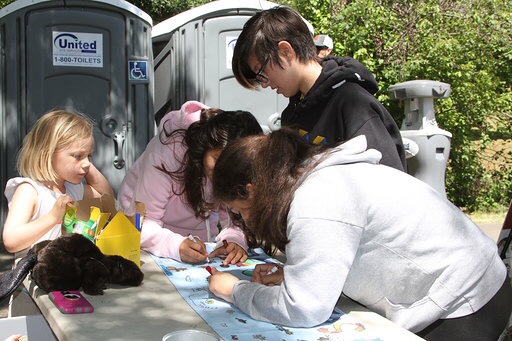


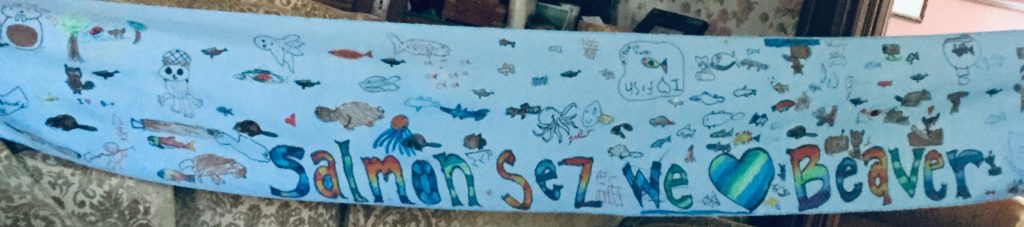
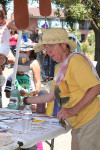
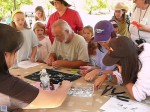
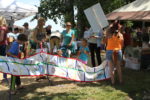
 Yesterday was splendid, and thanks to the fortunate help of two of Lorena Castillo’s awesome new leaf students, and the help of Susan and her two stalwart grand daughters everything came off without a hitch. No thanks to the weather of course, which was freezing and windy much of the day. So windy entire booths were blowing over and rangers came around with sand bags!


 “We have lots in store for you, whether you’d like to
  “Without the beavers to maintain dams, the barricades broke and decayed—and as a result literally millions of water catchments dried up. Ponds became meadows; meadows became forests or agricultural land.