




Because the beaver isn't just an animal; it's an ecosystem!

Category: Beaver Behavior


FacebookFacebook
email articleemail article

Oh lets read an article about someone who enjoins seeing beavers coming back to their city for a change. Anyone?

Natural Selections: News flash: Beavers in Roxborough!

One of the feel-good stories on the environmental scene is the rewilding of large cities like Philadelphia, where suddenly peregrine falcons nest in church steeples and on Delaware River bridges, bald eagles pull large fish out of the Schuylkill River, and coyotes amble down Domino Lane.

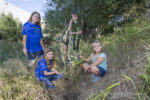
In that vein, members of the Roxborough-Manayunk Conservancy were somewhat startled to discover that the restoration plantings they’ve doggedly placed along the Schuylkill River have been devoured by… beavers! Wait, beavers in Roxborough?

Once extirpated– a fancy word meaning locally extinct – across Pennsylvania, hunted because their fur was remarkably valuable and because we did not appreciate their ability to rearrange landscapes to their own ends. But beavers have been returning to our state over the last century, and have been seen along Tacony and Pennypack Creeks since about 2008. And now they have taken up residence in the Schuylkill River and Manayunk Canal around Flat Rock Dam.

Now that’s what I’m talking about. Beaver perserverance and recovery where nobody would have suspected.And here they are, washing up on the Schuylkill River. Just in case you didn’t know lots of East Coast river names end in ‘kill’ because Kille is middle dutch for river. Got that?

“I first noticed beavers and their lodge in the winter of 2018,” observed Suzanne Hagner, Roxborough resident and member of the Roxborough-Manayunk Conservancy, “as I rode out the Schuylkill River Trail towards Shawmont. I could see where they had worn down a path into the woods on the far side of the trail and I guessed that was where they were going for food.” The lodge was near Flat Rock Dam, and they have been spotted– and photographed – as far down as Lock Street and as far up as past Shawmont Avenue, both in the canal and along the river.

Suzanne has become a regular reader and poster on this very blog. She recently met up with our other PA beaver friend to learn about protecting those trees the group is replanting. Because all roads lead to Rome.

They famously cut down saplings and trees with their chisel-like teeth, building dams and lodges with the branches, chewing the inner bark of trees as their favored food source. That tree-cutting, of course, can sometimes interfere with our own good work.

“Beavers have good taste in trees,” Tom added, tongue in cheek. “They ate over 60 trees we planted along the canal last year. But we adjusted. Last spring, we painted the uneaten trees with latex paint mixed with a lot of sand,” the grit distasteful to the large rodents. “Many of the damaged trees grew out again this summer,” he continued. “We wrapped those trees in cages this fall. We installed 130 cages along the canal near both sides of Fountain Street.”

Yup. That’s what happens. Someone who cares about the trees plants trees and someone who tends the creek eats them. It’s the way of the world.

The Conservancy recently hosted a walk-through of the area with a self-described “beaver believer” they brought in from central PA, and their takeaway was similar. “The other approach which I believe we will have to do,” continued Kay, “is to rethink our plantings. We need to put in more herbaceous plants on the impacted banks and see if we can add things like willows to the upper wetland areas to keep them in that area, which is better suited for them and for us.”

Yes please. Bring in willow. Because they are used to regrowing after beaver nibbles. And have done so for centuries.

Suzanne Hagner has been reading up on beaver, passing books along to Conservancy members. “They are amazingly skilled at creating waterways and irrigation systems that lead to ecological health,” she said. “Our consultant offered that the return of the beavers was a very good sign in our area, as the beaver is an ecological system in itself. I had lived in Washington state, and had heard that beavers were being reintroduced in eastern Washington to help curb the arid areas that are prone to wildfires.”

Anything else you’re reading, ahem, Suzanne? That helps you learn why beavers matter? I’m happy that there are more believers in Mayayunk and am looking forward to the people they persuade and educate in tern.

Pass it on.


FacebookFacebook
email articleemail article

My parents home in the mountains woke this. morning to the tiniest bit of snow, Not even a dusting really, More if a dusting that wilted during the night. Still it is kind if fun to know that just up the road they got a whole lot more. And up the highway still they had several inches last night./

There is a whopping headline from the Times today in the UK. It is almost horrific enough ti get pay to get past the firewall, but the first two paragraphs are bad enough Just look at this headline,

Shoot beavers if they spoil our fishing, urge anglers

Landowners and angling groups are demanding the right to shoot beavers if they cause too much damage after they were reintroduced to England’s prized chalk streams.

Last week Dorset Wildlife Trust released two beavers into an enclosure in a tributary of the River Frome, which is popular for trout and salmon fishing. Wildlife groups have ambitious plans to release dozens more to “rewild” many rivers.

It’s the photo that does it for me, Not only does it perfectly convey the exaggerate fears of anglers compared to the potential problems, by using image of a nursing mother with visible teats it means “Hey we deserve to kill mothers and babies because FISH!”

If anyway wants to spring for the account you can shoot me the rest of the article. I’m sure it only gets better from here. Although I like to imagine that somewhere in the staff of the times there is a graphic artist who knew exactly what he was doing with this photo and wanted to make the anglers look as bad as possible.

Richard Slocock, chair of the fisheries association, told The Times: “There are no apex predators for deer and there will be none for beavers so it’s up to mankind to cull them to keep them to sensible numbers.

He went on to argue that beaver dams would ruin fly fishing: “Instead of being a delightful, free flowing stream with lovely bright gravel and waving green weed and trout hanging around all over the place, you are left with a silty, semi-stagnant pond with minimal fishing interest.”

However, James Wallace, chief executive of the Beaver Trust, said damage caused by the animals could be managed without culling.

Hesalmon and trout had “evolved to jump over dams,” adding: “Beavers are native species, we have just forgotten about them. But salmon and trout haven’t forgotten about beavers. If they were in Norway they would expect to come across lots of beaver dams and once they have got over them there is a nice safe place for them to live.”

Slocock, chair of the fisheries association, told The Times: “There are no apex predators for deer and there will be none for beavers so it’s up to mankind to cull them to keep them to sensible numbers.

He went on to argue that beaver dams would ruin fly fishing: “Instead of being a delightful, free flowing stream with lovely bright gravel and waving green weed and trout hanging around all over the place, you are left with a silty, semi-stagnant pond with minimal fishing interest.”

However, James Wallace, chief executive of the Beaver Trust, said damage caused by the animals could be managed without culling.

He said salmon and trout had “evolved to jump over dams,” adding: “Beavers are native species, we have just forgotten about them. But salmon and trout haven’t forgotten about beavers. If they were in Norway they would expect to come across lots of beaver dams and once they have got over them there is a nice safe place for them to live.”


FacebookFacebook
email articleemail article

The Muskrat Council was upset by my post yesterday suggesting that the little rodents don’t engineer their environment as much as some might think. There was even objection on the beaver management facebook group where one muskrat believer posted a host of research arguing that muskrat alter the invertebrates of the watershed and provoke changes.

Okay. I’m willing to attest that muskrat varied diet results in muskrat droppings that contain fertilizers that change rivers. And I admit that sometimes swans nest on their little reed huts to lay their eggs in safety. Will that suffice? Yesterday the muskrat appreciation lobby was feeling so threatened by my post that they released this report:

Chewing underwater and the many feats of the magnificent muskrat

Can you close your lips behind your teeth? No, you can’t. Because you’re not a muskrat. Bet you can’t close your ears when you dive underwater either. There’s a lot more to the magnificent muskrat than meets the beady little eye. So much so that this is part one of a two-part series wherein Martha Foley and Dr. Curt Stager talk about muskrats.

Timing is everything. Let me know the name of your publicist, muskrats. Because we could use someone like you on our side.

In the meantime I’m just going to carry on appreciating the creatures we believe are worth a dam and post this lovely video by Sheri Harstein documenting her work with the sierra beavers.Turn the sound up and make sure you watch full screen. It’s that lovely.

[wonderplugin_video iframe=”https://youtu.be/F3nRZxqJDWM” lightbox=0 lightboxsize=1 lightboxwidth=960 lightboxheight=540 autoopen=0 autoopendelay=0 autoclose=0 lightboxtitle=”” lightboxgroup=”” lightboxshownavigation=0 showimage=”” lightboxoptions=”” videowidth=600 videoheight=400 keepaspectratio=1 autoplay=0 loop=0 videocss=”position:relative;display:block;background-color:#000;overflow:hidden;max-width:100%;margin:0 auto;” playbutton=”https://www.martinezbeavers.org/wordpress/wp-content/plugins/wonderplugin-video-embed/engine/playvideo-64-64-0.png”]

Did you watch the Mars landing yesterday? It was must see TV. And no finally we might get some answers to the question posed in this 1930 issue of popular science.


FacebookFacebook
email articleemail article

Last night I watched the news about the cold snap hitting much of the country. All of Texas and parts of Louisiana and Mississippi are under  a snow warning. Which has never happened. Many parts of the country are experiencing temperatures FIFTY degrees colder than usual. Stunning.

Which because I have a one track mind made me think about beavers.

That means of course that places where the stream never freezes will freeze and beavers that have never needed to cache their food will find themselves without a way to eat. And for how long? I mean places that are usually frozen in winter will be colder, I get it. And beavers can manage. But what about the places like Dallas and Santa Fe?

What happens to those beavers?

Let’s hope they either have lots of stored fat OR lots of rhisomes and roots to eat under the icein the meantime. And while we’re worrying about the beavers we should stop to worry about the humans too because that’s not anything they expected or signed on for. Frozen pipes and snowy roads are just not something you plan for in Corpus Christi.

For those beavers that can forage in the normal ways their are other obstacles to contend with. The Miistakis institute just launched a study to figure out the value of abraisive painting in keep a beaver from chewing trees.

I’m curious about what they will find, aren’t you?

[wonderplugin_video iframe=”https://youtu.be/iXc8cCFZqUw” lightbox=0 lightboxsize=1 lightboxwidth=960 lightboxheight=540 autoopen=0 autoopendelay=0 autoclose=0 lightboxtitle=”” lightboxgroup=”” lightboxshownavigation=0 showimage=”” lightboxoptions=”” videowidth=600 videoheight=400 keepaspectratio=1 autoplay=0 loop=0 videocss=”position:relative;display:block;background-color:#000;overflow:hidden;max-width:100%;margin:0 auto;” playbutton=”https://www.martinezbeavers.org/wordpress/wp-content/plugins/wonderplugin-video-embed/engine/playvideo-64-64-0.png”]


FacebookFacebook
email articleemail article

More research from the beaver-eating National Park. Apparently they just can’t get enough information about how wolves stalk and hunt beavers. It’s soooooooooooooooo fascinating. Recently they were started lo find out what any single human who has watched beavers in person for more than three nights figured out all on their ownsome.

Beavers can’t see very well! They mostly spot you by scent and hearing! Wow that’s surprising to everyone that isn’t us!

First Proper Analysis Of Wolf Ambush Behavior Reveals Beavers Are Really Quite Blind

New research published in the journal Behavioral Ecology has carried out the first-ever systematic analysis of wolf ambushing behavior, and the results have revealed new insights into these intelligent predators and the total lack of hazard perception skills among beavers. As part of a growing body of work from the Voyageurs Wolf Project, this new study continues to overturn long-held ideas as to how wolves hunt, showing that they’ve got more tricks in their arsenal than simply outrunning and exhausting their prey.

While pack hunting for large animals like moose and bison is common in winter, wolves in the dense boreal forests in North America and Eurasia capitalize on food availability in summer by hunting beavers on their own. As the video below demonstrates, beavers don’t have the best eyesight when it comes to spotting wolves-in-waiting, but an animal that spends so little time on land is still not an easy kill. So, how do the wolves do it?

Gee don’t tell me. Do wait up wind and get really really quiet? Even children visiting the beaver pond figured that one out.

Over 15,000 hours of field research and 962 attempted predation events later, the team had their answer. Of the total number of successful beaver hunts (214), 89-94 percent of the ambushing sites were downwind meaning the beavers had a very slim chance of picking up the wolf’s scent. What beavers lack in vision they make up for with their noses and ears, and previous studies have shown they use scent to keep a (figurative) eye out for predators. While most of the observations didn’t put beavers on the menu, this isn’t to say that most wolves were terrible at hunting them.

“We suspect that at most of these ambushing attempts, wolves never even encountered a beaver,” said lead author on the paper Dr Thomas Gable in an email to IFLScience. “Predicting where beavers will be on land at any given time is challenging and we suspect that wolves often waited in areas and never had a beaver come near.”

[wonderplugin_video iframe=”https://youtu.be/i9QppHDdf7o” lightbox=0 lightboxsize=1 lightboxwidth=960 lightboxheight=540 autoopen=0 autoopendelay=0 autoclose=0 lightboxtitle=”” lightboxgroup=”” lightboxshownavigation=0 showimage=”” lightboxoptions=”” videowidth=600 videoheight=400 keepaspectratio=1 autoplay=0 loop=0 videocss=”position:relative;display:block;background-color:#000;overflow:hidden;max-width:100%;margin:0 auto;” playbutton=”https://www.martinezbeavers.org/wordpress/wp-content/plugins/wonderplugin-video-embed/engine/playvideo-64-64-0.png”]

Well now that’s a kind of sweet video actually, I suspect the reason they didn’t leave the ‘decoy wolves’ out longer was that beavers would have hauled them away and used them it to stuff a hole in their dam.

“Imperious Caesar, dead and turned to clay,
Might stop a hole to keep the wind away.

Hamlet

When hunting beavers, it seems that the wolves appreciated that patience is a virtue as many would lay in wait for anywhere from four to 12 hours for a beaver to appear, with one determined wolf waiting for an incredible 30 hours. But when it comes to this particular breed of prey, success isn’t as simple as the element of surprise.

“While beavers might seem like easy prey to catch and kill, that is far from the truth,” Gable said. “Killing a beaver once it is on land is no easy feat. Beavers are basically football-shaped hunks of muscle with an incredibly powerful bite and sharp teeth. Not to mention, beavers rarely go far from water. All beavers need to do to evade a wolf is reach the water.” This, Gable explained, is a likely second contributor to the large number of failed ambush attempts.

Yeah well, you don’t bring down a TREE with a week jaw. Sheesh.

DONATE

Beaver Interactive: Click to view

TREE PROTECTION

BAY AREA PODCAST

Our story told around the county

LASSIE INVENTS BDA

CONTACT US

URBAN BEAVERS

LASSIE AND BEAVERS

Ten Years

The Beaver Cheat Sheet

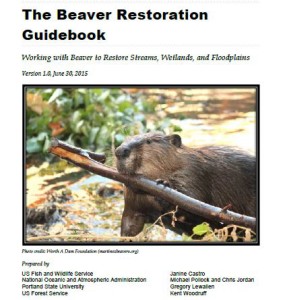
Restoration

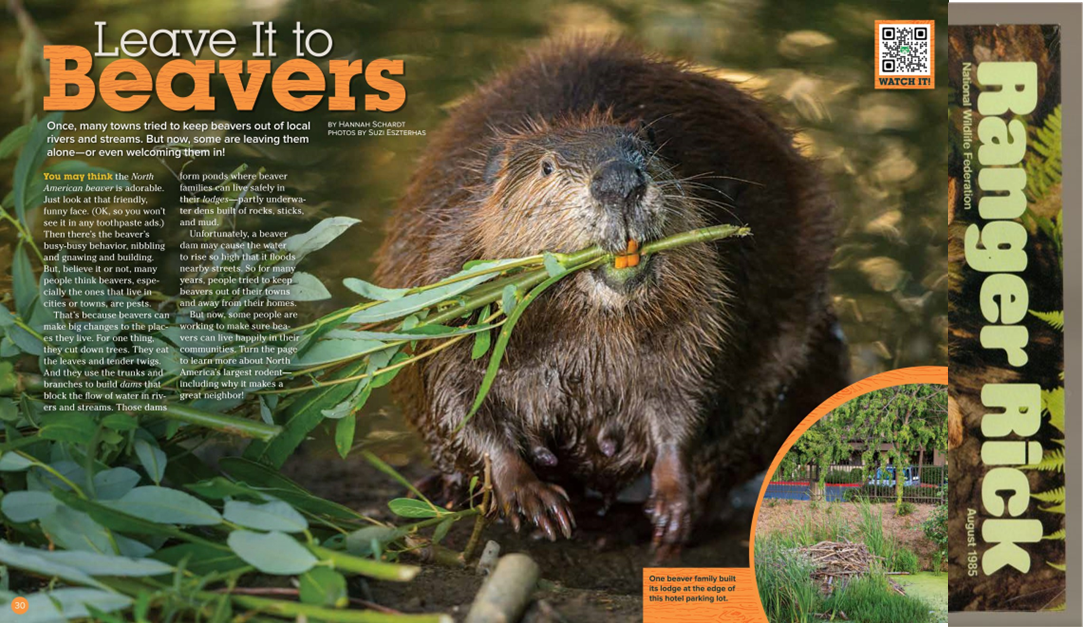
RANGER RICK

Ranger rick

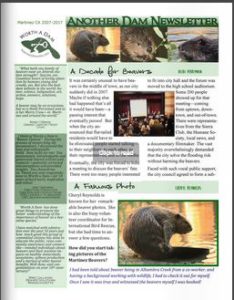
The meeting that started it all

Past Reports

October 2026
M T W T F S S
 1234
567891011
12131415161718
19202122232425
262728293031  

Story By Year

close

Share the beaver gospel!