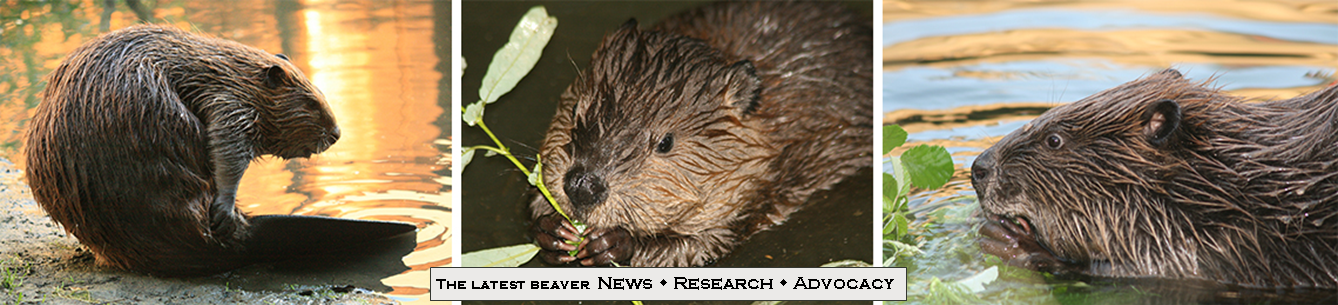




Because the beaver isn't just an animal; it's an ecosystem!


FacebookFacebook
email articleemail article

I”m thinking it’s time for another beaver hero article with good strong folks working to solve problems. Skip Lisle and Mike Callahan are both great, but they’re the old guard, bringing up the rear. Who’s new to the field and making waves?

Listening to the Land: Oregon’s threatened wildlife

For several years, wildlife biologist and Beaver State Wildlife Solutions owner Jakob Shockey has developed and implemented anti-lethal solutions to help property owners deal with beavers and the challenges they can present when they take up residence.

Shockey, who grew up on a farm in the Siskiyou Mountains, shared various ideas and solutions during his presentation “Resolving Conflicts with Beaver Using Natural Science and Design” at the Necanicum Watershed Council’s Listening to the Land event at Seaside Public Library on March 20.

Hurray for Jakob Shockley and Beaver State Wildlife Solutions! I remember the buzzing excitement of his recruit at the state of the beaver conference in 2013. Everyone was eager to see the torch being carried to the next generation and Jakob was more than up to the task. Plus we were grateful to finally have someone doing this work in Oregon.

Beavers can create problems for land owners in two primary ways: Building dams that block waterways and/or cause flooding, and tree mortality, or cutting down trees, in particular. To resolve these conflicts, land owners have a number of options, including trapping, relocating or killing them.

Shockey’s goal, however, is to help residents instead pursue predictive management, which includes working within the ecosystems of streams, rivers and wetlands and implementing long-term and cost-effective solutions that serve as alternatives to bullets and bait.

“If you’ve got beaver at your site, that means it is good beaver habitat,” he said. “If you open that niche up, there is going to be another population at some point. … You start getting on a treadmill of removal — doesn’t matter if it’s lethal removal or relocation. If you’re taking animals out of a territory that’s been deemed high-value by the animal, there are going to be more that come in.”

Well now doesn’t that sound reasonable? If a beaver is on your land it’s because it’s land that supports beavers. Killing one won’t solve your problem. Killing five won’t either. Identify the problem that needs solving and let the beaver stay like a kind of watch-beaver to keep others away.

When it comes to tree-cutting, Shockey said, effective solutions include surrounding the base and root collar with welded 2”-by-4” wire at least 30” inches above the ground and 24” above the snow line; and covering the surface of a tree base with a mixture of latex paint and clean, dry sand. For large areas, such as orchards or crop fields, land owners also can consider electric fences, as long as they maintain the vegetation beneath the fence.

To address flooding—the other primary conflict, which can cause impoundment and damage to urban infrastructure and cropland—Shockey suggests installing flow devices. They fall into three main categories: flexible pond levelers; trapezoidal culvert fences; and fence and pipe systems.

In all cases, the devices capitalize on natural science and beaver behavior to address potential negative ramifications of damming without relocating or harming wildlife. Shockey pointed out a potential issue with flow devices is property owners can be held liable if they alter a beaver dam and it causes flooding on neighboring property.

What a fantastic article. Jakob must be very good at explaining his case to reporters because the writer has picked up all the salient points. Use natural science to take on beavers, and get Jakob on your side!

The endeavor is worthwhile, in Shockey’s estimation, because beavers are a keystone species in the Pacific Northwest. Their dams create wetland ecosystems that provide nesting sites for birds and increase fish and waterfowl populations.

“There is a myriad of animals that depend on the systems the beavers build,” he said. With beaver being an animal whose presence is quantifiably proven to increase water supplies, suitable habitat and fish populations, he added, a question to ask is, “How can we kind of get out of their way and let that happen?”

WONDERFUL! We here at Worth A Dam are all about getting out of a beavers way. They bring benefits we just can’t and they do it for free. If we can let them do their job we will be the happier for it. I believe I said something like that myself.


FacebookFacebook
email articleemail article

Well, Mike Callahan confirms he did, in fact, do a training for the staff in London Ontario a few years back, but he has no speculation on the flow device where the outtake pipe goes uphill. Our filmmaker friend from Windswept, Doug Knutson says that London is the wildlife management ideal they’re working for in his city and shares this report. You can tell by the nutria on the over photo that Belleville  has a long way to go.

Councillor McCaw says Friendly City shouldn’t be killing wildlife

Belleville is delaying any move to adopt a new policy on how to deal with wildlife in the city, including beavers.

City council had called for a new policy, following an incident last fall, when residents in the east end rescued a beaver caught in a trap and drowning. The policy presented to council  by staff this week included rules that live traps should be used as a first step, and killing traps only as a last resort.

In public areas traps would be set in the evening and removed in early morning to avoid danger to the public and pets. The proposed policy indicated that when animals are found in live traps, they are to be humanely euthanized.

Did you catch that? Our old policy is that beavers would be trapped. But our new one is that beavers can either be trapped and killed right away or trapped and killed later.  The timing changes. The killing, you see, does not. In addition the city will remove the traps in the morning and post signs to warn residents.

Mighty white of you, says every beaver, ever.

This just isn’t good enough for Doug, who is still pushing for better options.


So the city will agree to take care of resident’s delicate fee-fees, but what about using a flow device or solving the problem without killing?

The city would evaluate the area for potential options such as Beaver Baffler or Beaver Cone, prior to any trapping activity. Councillor Kelly McCaw said she couldn’t support it, adding “We are a friendly city and shouldn’t be killing our way out of a situation.”

That’s the best part of the article. We love Kelly. There’s a scene in Hamlet where he’s trying to pry information out of his school friends that have been warned by his parents not to cooperate.  He innately senses that one of them is about to crack and zeroes in on that guy.

Hamlet: Be even and direct with me whether you were sent for or no.
Rosencrantz: (to his friend) What say you?
Hamlet: Nay, then I have an eye of you – if you love me hold not off!

Nov. 6, 2018 Councillor Kelly McCaw

And in my mind, even now, this phrase springs into my mind when I think I have found the proverbial weak link in the chain, and thus the way in. As I believe Doug very clearly has found with Ms. Kelly McGraw. I would stick by her side and feed her all the information she needs and maybe throw in some very cute photos of beavers as well. Maybe some kids drawings beavers too. You are welcome to any of ours.

Doug has bravely moved the train from “We’ll kill beavers whenever we like” up the tracks to “We’ll be thoughtful about public impact when killing beavers.” Which is hard to do. But if you want to force it to the next station, which is the hardest part of the climb, I would stay close to Kelly.

Because it all starts with a willingness to think that killing isn’t right and there should be a better way. And where it goes from there is up to people like us.


FacebookFacebook
email articleemail article

Sometimes in my travels I come across a beaver article that is confusing, even for me with everything I’ve seen over the years. I can’t decide if its the wisest most progressive policy in all the land, or a monstrous set of lies getting ready to justify some really nasty trapping, or some combination of them both. Well, brace yourself, because if a city like this REALLY exists, we might all have to move.

Busy beavers a challenge for London officials

Workers with the City of London and the Upper Thames River Conservation Authority (UTRCA) are being kept busy these days managing the beaver population. It’s important work if the city is to maintain its infrastructure and prevent flooding.

Now before you start getting confused we’re not talking about THAT london. This is London, Canada which is right across Lake Eerie from Cleveland. The river that flows through the city is called the Thames. It is about 170 miles long.

“I will say that the population of beavers that we’ve seen in London has grown exponentially over the last four or five years,” said Brandon Williamson, land management technician with UTRCA.

But, the city has a beaver protocol to ensure that beavers are “treated in a respectful and consistent manner, balancing the various needs to protect the beaver and [its] habitat; the overall environment; city infrastructure; people and property,” according to a city document detailing the protocol.

Right now, the city and UTRCA workers are aware of about 50 sites where beavers are living in the city.

Now, I’m scratching my head a little at that. I sincerely doubt that public works is close observers of every colony, knowing family size for example like we did. I’m not sure whether their gues-timate comes from seeing fifty lodges along the river? Fifty dams? Or fifty trees that have been chewed? I mean that would be a beaver colony every 3.5 miles and that’s a little hard to believe since they would ALL need to eat.

One way the city is trying to stay ahead of the beavers is to install so called “beaver deceivers.”  “It’s when they’re in our storm water management facilities or ponds in neighbourhood,” said Shawna Chambers, division manager of storm water engineering. 

It’s believed that if the water continues to flow, the beavers will move to a new location.

Um, no. The purpose of installing a flow device isn’t to drive them out like st patrick and the snakes. How did it happen that London is smart enough to install flow devices and still too stupid to know how they work?  I’m not sure whether the reporter is just confused or the entire public works chain of command is like one giant game of telephone and that’s the message that got through.

Looking at that photo is beyond confusing. The fencing looks right, right distance from the pipe and rounded top like Mike Callahan uses. But what’s it function of the fence? There’s no dam visible. And what is that board? Why is the pipe going uphill? Is there some understanding that if the pond gets very, very deep  then water will suddenly flow up hill hit the board, disturb the beavers and make them leave?

Another piece of the protocol is feeding the beavers, although not human food, of course. Instead, fast growing, inexpensive, native species of trees are planted in areas to provide food for the beavers.

“If you plant these trees, like a poplar tree, that’s really quick growing and a low value tree. The hope is the beavers will choose them over sugar maple and black cherry and hickory and some of the more desired trees that we have,” said Williamson.

Having said that, beavers still go for some of those more desired trees. When that is happening, steps are taken to protect the higher value trees by wrapping them in a wire cage, according to officials.

Something about this entire article is fuzzy. Like those cotton candy dreams where everything seems perfect but you find out it’s really NOT.  So an entire city plants trees for beavers to eat but can’t find time to protect the valuable ones until after their chewed? I’m starting to smell a fox in our hen house.

When asked if the city would consider a cull to reduce the beaver population and prevent damage or flooding, that isn’t the plan.

“Ever since the protocol has been enacted in the city we haven’t had to resort to those measures,” said Chambers. “We have definitely not been talking about anything to the extent of killing the beavers.” 

“I think in the future there may be some other ideas that we may have to look at because we can’t always put a flow device or a beaver deceiver in but before a cull is even considered there’s going to be lots of other options that we’ve got,” said Williamson. 

Suddenly I get the feeling that this entire article has been gently leading readers by the hand to this conclusion. We tried our best, they woefully say, installing flow devices and planting low value trees, but there’s just TOO many of them. There’s only one way out. And reasonable people will agree that unless we all want to be drowned in our beds, it’s time to reach for the trap.

Instead of killing the animals, there’s a commitment in London’s beaver protocol to increased public education.

“We need to let people know we’re trying to work with the wildlife and trying to live cohesively with wildlife to make sure that both sides are happy in this,” said Williamson.  “Beavers are known for being creators of wetlands,” said Chambers. “In nature it can be quite nice to set up that blockage and the water is dammed behind it. It creates biodiversity.”

“Education is huge,” he said. “We’ve got people who say [the beavers] are cutting all the trees down so we’ve got to get rid of them. Well that’s their food; that’s their habitat. They’re allowed to be there.”

I haven’t stopped scratching my head through this entire article. Do you have any people shouting “Why the hell is our city LETTING the beavers chop down trees instead of wrapping them?” Any action by beaver loving residents that was big enough to result in THIS policy I would know about. But I don’t. Unless it happened more than 11 years ago when a massive city protest resulted in huge changes, because it’s nothing I covered on this website. And there’s nothing written about it on the internet, I don’t know. Doing a beaver deceiver demonstration at earth day is remarkable and if a city were really committed to coexistence it would be a good idea. But I’m a naturally suspicious person and there are a ton of errors in their thinking. Could this be true?

Is London a beaver city on a hill?


FacebookFacebook
email articleemail article

Today we have guests coming associated with the Sequoia River Lands Trust because they want to ask questions about beavers.  They are hoping that hearing the Martinez story will encourage them on next steps. So Jon is making lunch for us and I am trying to be coherent.

Just in case you need a Geography lesson, the headquarters of the Sequoia River Land Trust is in Visalia, which south of Fresno and North of Bakersfield. Here’s their mission statement:

Sequoia Riverlands Trust is a regional nonprofit land trust dedicated to strengthening California’s heartland and the natural and agricultural legacy of the southern Sierra Nevada and San Joaquin Valley. The wealth, productivity and beauty of this land inspire our work to conserve it for future generations.

If the name sounds familiar its because years ago one of the designers of this website, Scott Artis, took a communications job with them and I was one of his references. Scott worked in the medical field and wanted to break into environmental biology, so used Worth A Dam as his credentials for a while – which was great for us, and I assume great for SRLT. Scott himself longed for the Bay Area and eventually moved onto the Audubon Canyon and I believe is working independently now. But beaver paths that cross leave deep tracks, as well you know. I’ll let you know how it all unfolds.

Mean while Sarah’s Beaver-Climate change documentary is on the front page Sunday news in Walla Walla.

Filmmaker finds hope in charismatic tree chompers

Sarah Koenigsberg is used to telling other people’s stories.

The Walla Walla resident has been all over the map in her role as owner of and producer for Tensegrity Productions. In 2013 though, Koenigsberg was ready to devote serious time to her own project, a longer piece that would require the right topic and level of commitment to bring it to fruition.

“Then I just happened upon multiple people in various fields of restoration … all espousing how beaver restoration could be a profound way to come at climate adaptation,” she said.

Beavers? Like the furry creatures who live in the river and build dams?

Yes, beavers.

Nice intro! Of course beavers. It’s always beavers. Around here anyway. Need help saving salmon or removing nitrogen of fixing a deeply incised bank? BEAVERS can do it. Prevent fires, recharge the ground table and save us from climate change? Why the hell not?

“The Beaver Believers” is whimsical — with those big chompers and twitchy noses, beavers look ready for prime-time comedy — but carries the urgency of climate change conversations.

The story revolves around an unlikely cadre of activists who share a common vision of rebuilding the population of the North American beaver, which Koenigsberg calls the “most industrious, ingenious, bucktoothed engineer” in the watersheds of the arid West.

Unlikely? Who are you calling unlikely? I’ll have you know I was voted most likely to save beavers in my graduating class of 83. Or would have been, if there was such a thing in the Reagan years. And honestly, twitchy noses? You are thinking of rabbits. Does this really look twitchy to you?


Then the Carlton Complex Fire in the summer of 2014 sparked the opportunity to get really visual. At the time, the Okanogan County inferno was the most massive, recorded wildfire Washington state had experienced, burning more than 250,000 acres.
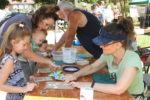
Her camera could capture the effect of the blaze blasting through beaver restoration areas, to record if the believers’ hypothesis would hold. That example of ecosystem resilience was “kind of gold,” she said, noting that functioning drainage systems are natural firebreaks.
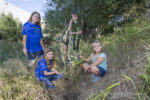
“Water doesn’t burn. It doesn’t take a Ph.D to know that water doesn’t burn.”

Oh no it doesn’t. This is just the right thing to be reminding viewers of. Although preaching to the choir was a phrase probably written specifically for the idea of showing a beaver documentary in Washington state.

“I’m getting flooded with messages from people across North America. They want to try all these things, plant willows, learn about local farms. There’s a whole ripple of ways people are trying to bring it closer to home in what they do.”

I bet she is, I bet she is, because I’m having lunch with strangers from Visalia for goodness sake! And not surprisingly, the premiere is sold out. Could you possibly go to Alabama or North Carolina next?


FacebookFacebook
email articleemail article

Expert analysis of the Mueller report.

BEAVER FESTIVAL XVII

DONATE

Beaver Interactive: Click to view

TREE PROTECTION

BAY AREA PODCAST

Our story told around the county

LASSIE INVENTS BDA

CONTACT US

URBAN BEAVERS

LASSIE AND BEAVERS

Ten Years

The Beaver Cheat Sheet

Restoration

RANGER RICK

Ranger rick

The meeting that started it all

Past Reports

June 2026
M T W T F S S
1234567
891011121314
15161718192021
22232425262728
2930  

Story By Year