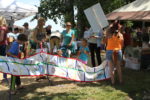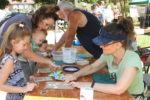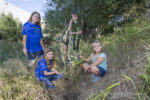





Because the beaver isn't just an animal; it's an ecosystem!


FacebookFacebook
email articleemail article

International beaver day did not disappoint. It produced an excellent article from Wildlife Defenders, some amazing video and one classically civic story that will reminds us all of our humble beginnings. Let’s start with the fun stuff for a change and end with the call to action.

Coexisting with Beavers

Today is International Beaver Day, so let’s celebrate my favorite ecosystem engineer and the ways that Defenders helps people coexist with beaver.

First, Why Beaver?


Beavers are an important part of a healthy wetland and forest ecosystem. Beaver cut down trees and shrubs, eat wetland plants, and build amazing dams and lodges. These activities raise water levels, slow water speed, and change water direction, creating a dynamic wetland complex. In doing so, they can increase a wetland’s area, biodiversity, and water quality, as well as maintain more stable water temperatures.

Isn’t that an amazing photo? Yesterday I looked at with adoring eyes and thought it probably wasn’t in a natural setting because the water under mom looks very shallow. It’s unlikely a beaver would put herself in such inescapable conditions if there were another option. I looked up the photo credit (Chris Canipe)  and found this video of beaver relocation which me smile very much,


So cute going to their new home, which means my theory about an ‘unnatural setting’ is likely correct. It’s a great article though so lets take in some more.

Beaver are an important ecosystem engineer and the habitats they create benefit many native species. In the west, for example, 90% of species are dependent on wetlands, such as those created by beaver, at some point during their lives. In beaver ponds, freshwater fish can find more food or a larger variety of food. They can also spend the winter in the deepest parts of a pond. The shallow pond areas are great for young fish to find food and shelter while they grow. Migratory birds can use beaver ponds as “stepping stones” while they migrate to and from summer breeding grounds. Each pond can also support several different kinds of birds with the large variety of habitats created by damming, flooding, and tree felling. In spring, beaver ponds are a nightclub for amphibians, whose eggs and young tadpoles like the warmer water temperatures and shelter provided by vegetation near the shores.

Beaver are so important and have so many benefits for other species, including many species that are now imperiled, that Defenders works to restore them to places where they will create and enhance habitat for all the other critters we also care about. In the Rocky Mountains, boreal toad and native cutthroat trout are some examples of the imperiled species benefiting from our beaver restoration projects.

Yes they are,  And given that fact and the fact that the title of this article is “COEXISTING WITH BEAVER” it would be a mistake to focus on relocation of the animals wouldn’t it? Even with live trapping instead of killing?

It’s not easy being a beaver in some places. In urban areas, such as cities or towns, beavers sometimes cause conflict by building dams which cause unwanted flooding, or by taking down charismatic trees which people value. In many cases these “nuisance” beavers are killed because of their actions, but sometimes simple tools can be used to prevent these conflicts, create more acceptance of their presence by people, and keep beaver where they are. For example, to prevent beaver from felling trees they can be wrapped in fencing or painted with a mix of sand and paint. Beaver, just like us, don’t like the “gritty” feeling of sand when chewing. To minimize flooding, flow-devices can be installed which limit the water level of beaver ponds by using a combination of pipes and fencing.


Oh alright then. I’m a very picky beaver consumer. But I do like happy endings and stories of beaver successes. Go read the entire article if you need more good cheer and I’m going to save one treat for last. Next up is a variation of the story we’ve all come to know and hate – this time in Schenectady NY.

Schenectady officials decide to trap beavers after Woodlawn Preserve flooding

Problems have steadily mounted over the past half-decade as beavers have set up stakes, including blockage of a drain pipe that ran underneath the railroad. City workers were being deployed nearly every other week to clean out the culvert. A series of beaver-built dams also led to elevated water levels in the basin.

Stakeholders met with beaver consultants, who recommended a trapping company.“

Trails were so flooded, people couldn’t fish,” said Janet Chen, president of the nonprofit Friends of the Woodlawn Preserve.

Oh no! You mean there as so dam much nature in your nature park that it is inconvenient to exploit it? Gosh, no wonder you called in the Friends Enemies of Woodlawn preserve use. Gee I wonder what the trapping company will suggest?

“We observed a very high amount of beaver activity in the preserve,” said City Engineer Chris Wallin. “It was determined we needed to trap the beavers.”

While the 135-acre site serves as a nature preserve — part of the Albany Pine Bush ecosystem — the site has more practical roots as a retention pond first constructed in the 1950s to alleviate flooding in the city’s Woodlawn neighborhood.

You know how it is. We never intended this park to have nature IN it. Just to provide somewhere for the water to runoff when it floods. Beavers are icky, and never mind that it’s spring and the family is having babies.

Trapping beavers is rare and largely ineffective, said Sharon T. Brown, a biologist and director of the Dolgeville-based non-profit Beavers: Wetlands & Wildlife (BWW).

I’m sure that’s a typo or miscommunication. She didn’t mean trapping is rare right?

“It’s often counterproductive, and will create a vacancy,” Brown said. “It’ll probably be re-settled unless they want a cycle of trapping over and over again.”

Water devices like the “Beaver Deceiver” — mesh enclosures paired with a series of pipes running under or through dams — are a better way to prevent flooding and avoid harming the creatures, Brown said.

“There’s no reason not to consider these.”

Good job Sharon, and congratulations to the reporter for getting her input. There’s no reason NOT to consider nonlethal solutions, is there? Oh yes there is! Beavers are icky! And we’re the enemies of the preserve! Just look at our outfits! Shhh wait, this is my favorite part!

Friends said the device was cost-prohibitive. Chen said the beavers haven’t historically served as a public draw to visit the site.

“People to go to the preserve generally go to take a walk in the quiet,” she said.

That’s right. People come to a park because of the QUIET!  Like Thoreau on the famously quiet Walden pond. They don’t want some icky rodent tail-slapping in the water and disturbing their solitude. They want peace! Something tells me Ms. Chen is going to get a letter to make her own life of quiet desperation  a little more interesting in the very near future.

And besides, people never visit a park just to see beavers.


Okay, I promised a treat if you  were patient and here it is. Chris  Carr from the beaver management Forum shared this yesterday taken with his night camera. This is why beavers need to carry around those few extra pounds.


FacebookFacebook
email articleemail article

Our friends Frances Backhouse, Glynnis Hood, Mike Callahan and Jim and Judy Atkinson on CBC Radio. Well worth a listen on a Saturday morning. If this sounds familiar. you’re not crazy. It first aired last November. It as so nice, they played it twice!

Rethinking the Beaver: Why beavers and humans have to learn to get along

Four centuries of fur-trade trapping nearly wiped beavers off the North American map. Now they’re back, big time, and we’re discovering that sharing the landscape with such tenacious ecosystem engineers isn’t always easy. We’re also learning that there are compelling reasons to try to coexist with this iconic species. Contributor Frances Backhouse explores how two control freaks — humans and beavers — can get along.

I especially love the discussion of the blackfoot mythology. It’s delightful to hear it explained by Eldon:

Eldon Yellowhorn  is a professor at Simon Fraser University in Burnaby, British Columbia, where he teaches in the Department of First Nations Studies and the Department of Archaeology. He is from the Piikani Nation in southern Alberta.

And of course our good friends Jim and Judy Atkinson! Listening to her talk about the community response to the beavers is like looking through our scrapbook. I especially love listening to her discuss vocalization of the young. But beavers aren’t just reruns, there are also new reports about their glorious benefits. This time from Planet magazine.

BUSY BEAVERS

Beavers in Washington state are being relocated to areas where they will make a positive impact on ecosystems.

Projects to relocate beavers to threatened habitats across the Pacific Northwest, such as the Methow Beaver Project, aim to restore and make such areas more resilient. New research indicates beavers and their dams may be a natural check against some impacts of climate change.

The goal of the Methow Beaver Project is to relocate beavers causing problems on private land in urban and suburban areas to the Methow Valley of Washington State, located along the eastern side of the North Cascades. Here, their architectural tendencies can be put to work. Beavers cause headaches by plugging road culverts, cutting down trees and flooding commercial orchards. A small number of beavers behind such problems are trapped, brought to the Winthrop National Hatchery, tagged, weighed, photographed and then wait there to be relocated.

More robustly kind things to say about the Methow project.  This one especially warming because of the attention to detail about the busy beavers themselves. I especially liked this:

“The beavers are very easy to work with,” said Nelson. “They are very docile, it’s like working with a dog or a cat. They all have personalities. Some of them will huddle in their lodges in the hatchery with their eyes closed like, ‘this is a horrible thing, it will all go away soon.’ And then some will just swim with great confidence like [they] own the place.”

One memorable beaver that Nelson encountered was dubbed “Half-Tail Dale” by the team. He came into the hatchery with half of his tail and one of his back feet missing.

“What a survivor, you know? He was a hearty fellow. We had great appreciation for him,” said Nelson.

Half-tail Dale! I sometimes get weary of the catching and caging of beavers in concrete, but this account observing individual personalities makes me quite a bit happier. I seem to remember a very famously scarred beaver tail that basically started this website.


FacebookFacebook
email articleemail article

Let’s start the weekend off right  with a fantastic letter to the editor from Moscow. Idaho that is! Where I know there happens to be some fine support for beavers and a recent effort to bring Ben Goldfarb out for a discussion of his book.

Looks like his reputation and information precedes him.

An important rodent

In spite of all the snow this past winter, dry conditions and little moisture are predicted for spring and summer in the Pacific Northwest. One way to slow runoff and conserve water is to reintroduce beaver, North America’s largest rodent. Beaver dams, comprised of willows, brush, mud and gravel, are so closely interwoven that little water escapes from the upstream pond. Weight of the water is sometimes pressed deep in the ground, recharging aquifers for use by farms and homes downstream. More water is often channeled to the water table below the surface than above it.

Isn’t that an amazing start to a letter to the editor?  I mean no “stop sign needed on geary street” or “too many potholes” for Moscow. Just straight in for one of the BEST beaver letters ever written. Shhh, there’s more.

1. Beaver are identified as a keystone species, an animal on which other species largely depend, such that if it were removed the ecosystem would drastically change. Beaver shape the landscape, create wetlands and alter the physical, chemical and biological condition of running water. This rodent enables the existence of many other species to include aquatic plants and invertebrates, amphibians and wetland-dependent birds and mammals. Remove this keystone and the ecosystem collapses.

Wow, what a paragraph. Something tells me the author has a book of his own that needs writing. Idaho isn’t exactly the ecological capital of the world either, so it means something to read these words coming from one of its citizens.

Beaver also provide habitat for fish. In a study of beaver ponds in southwest Colorado, large numbers of small brook trout occurred in ponds having a stream inlet where gravel beds enabled the fish to successfully spawn and reproduce. In time, overpopulation of these fish reduced available food items so the individual trout grew poorly. In a few older, seepage ponds, abandoned by the beaver, gravel beds became silted over. Unable to spawn under these conditions, ample food existed for a few larger fish. Based on this research, the Colorado Game and Fish Department set a liberal bag limit of 50 brook trout for headwater stream beaver ponds containing this species.

The beaver deserves respect for its role in slowing runoff and conserving water, creating habitat for a multitude of other species and providing a site used by recreational fishermen.

Fred W. Rabe

Great letter Fred! Enos Mills himself would be impressed by this letter!  The author Fred W Rabe is such a succinct advocate I had to look him up. Turns out he’s a retired biology professor from the University of Idaho, and after retiring wrote a few books of his own.

Retired UI prof still teaching through photos, books

While Fred Rabe has been retired for more than a decade, his work ethic as a University of Idaho professor in ecology, invertebrate zoology and biology has remained.

“After I retired I thought I was sort of bored, and I had done my Ph.D. work on high mountain lakes, so I thought why not just start off in northern Idaho and go all the way to New Mexico and do some work on the ecology of high lakes,” Rabe said.

So Fred went from teaching biology to preaching beaver benefits. Makes perfect sense to me. He’s a natural naturalist and destined to become a friend of ours. I’m sure Ben Goldfarb will want to meet you and share a beer when he comes to Moscow. Like minds deserve companions.

I admit the headline of this letter made me snork a bit. An important rodent. It doesn’t exactly raise expectations of grandeur. That might not be Fred’s title, but  I suppose the editor knows his readers.

And the beaver is, in fact, an important – no, THE most important – rodent.

Oh and guess what was spotted yesterday morning headed up the creek below the arch bridge at the Marina?

Photo by Patricia Casparian


FacebookFacebook
email articleemail article

Just three days ago I wrote that Nevers park was “bringing in the calvary” and hiring Mike Callahan rather than trapping beavers. I said that because Steve Straight told me that because he had been relieved to hear it from councilwoman Brittany Poster said to him. But it turns out that both Steve and Brittany were lied to. Mike was never contacted and a trapper came and dispatched three beavers the next day. The whole thing was on local news last night and in the local papers this morning.

Beavers trapped, possibly killed after causing issues at South Windsor park


If you’ve been following at home for a while you might remember that the most egregious beaver lies – the real whopper -, are always handed down by the city administrator. Maybe because he’s hired and not elected and will never have to face voter outrage. In Martinez the beavers lead to our cycling through three city administrators. The first famously said that a flow device couldn’t work in our creek AFTER he first said he’d never heard of them. The second asked what “John Muir would have to say about planting trees for beavers” when the eagle scout asked for permission to plant willow, And the third – well, we’ll let you know.

It looks like the South Windsor city manager got stuck delivering some doozies. Beavers, apparently attack people in parks. Didn’t you know? Matthew Galligan is just doing his job to protect the community (and the mayor).

Beavers removed from SWindsor park over community protests
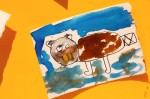
When beavers are trapped, the trappers licensed through the state Department of Energy and Environmental Protection determine their fate, Town Manager Matthew Galligan said. They may be relocated, but will more likely be euthanized, since beavers are overpopulating the state, Galligan said.

“There were too many factors that affect public health, safety, and property in place to allow for the beavers to coexist” with Nevers Park activity, town officials said in a written statement Tuesday. Another concern is the possibility of beavers attacking humans who come too close to their young.

Mosquitoes, fish, disease, drinking water. You know the drill. At this stage the city council just throws every possible concern at the all and sees what’s going to stick. At our big November meeting Mike Mensini talked for a half an hour about salmon even though there never were salmon in Alhambra Creek. Because  when you’re in charge you get to say ridiculous un-examined things until you run out of breath and never get interrupted with questions.

At least concerned residents did their part.

Many residents who wished to leave the beavers to their business continue to disagree that removal was the best option, however, and criticized Galligan on social media.

One resident, Stephen Straight of Abbe Road, maintains that town officials were wrong to trap the beavers before bringing in an expert to reassess other options, including methods of tree protection and controlling water levels. The beavers did not pose any threats, he said, calling the yellow tape closure of the trail “a stunt.”

Straight and another resident spoke up at Monday’s Town Council meeting to urge officials to reassess the situation. Both residents and council members were unaware that the beavers had already been removed until Galligan informed them that night.

Good for you Stephen. You gave it your all and these beavers deserved better, As we learned in Martinez it takes every last voice to save beavers, and even then it might fail. Here’s what turned out to be our game-changing meeting. but we didn’t know what would happen at the time. It was part luck and part circumstance and part sheer stubbornness. Without councilwoman Janet Kennedy going on vacation at the time. It all could have ended very differently.

Instead of the Middlechild Productions Documentary “Beavers Las Vegas“.

BEAVER FESTIVAL XVII

DONATE

Beaver Interactive: Click to view

TREE PROTECTION

BAY AREA PODCAST

Our story told around the county

LASSIE INVENTS BDA

CONTACT US

URBAN BEAVERS

LASSIE AND BEAVERS

Ten Years

The Beaver Cheat Sheet

Restoration

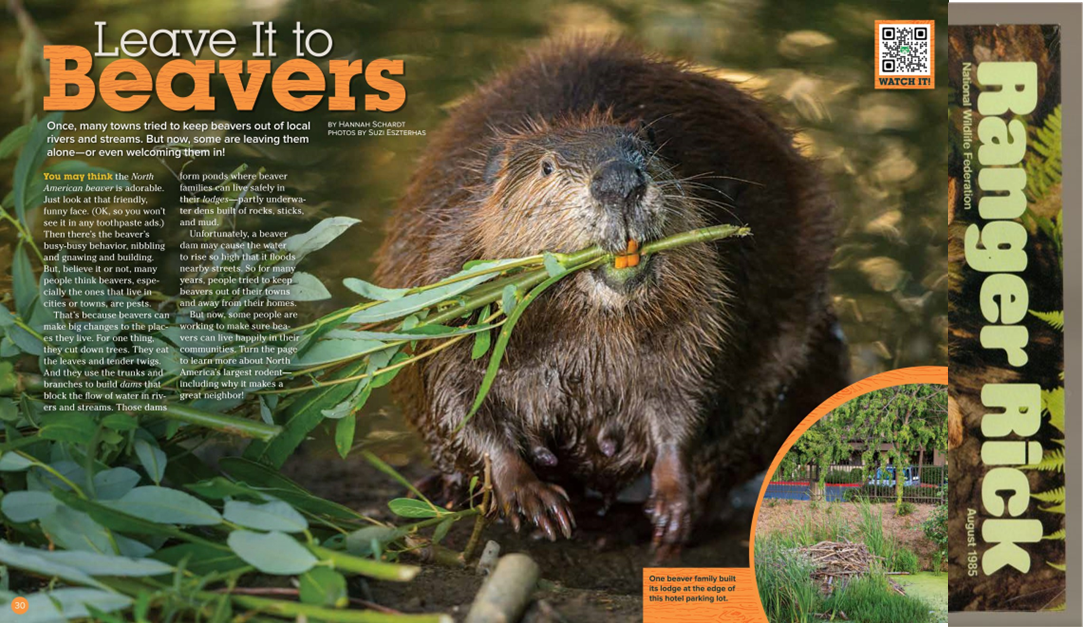
RANGER RICK

Ranger rick

The meeting that started it all

Past Reports

June 2026
M T W T F S S
1234567
891011121314
15161718192021
22232425262728
2930  

Story By Year