




Because the beaver isn't just an animal; it's an ecosystem!

Category: Beaver Behavior


FacebookFacebook
email articleemail article

I thought I’d share a little about the odds and ends that followed my last few postings. One was about the water week events in Whatcom WA. You might remember that the paper said there’d be a showing of the film “Beavers in the Ecosystem” which I wanted to find out about. Turns out the paper got it wrong, it wasn’t actually a film but an event lead by the North Sound Baykeeper for Clean Water Services, Lee First. I got in touch with Lee through our friend Ben Dittbrenner of Beavers NorthWest. Seems Lee contacted Ben looking for properties with beavers on them that might allow a tour for his guided event and talk.

Lee impressed me right away with this response to my letter:

Hi Heidi, it’s not a film, it’s a site tour.  I’ll take photos during the tour, and I’ll probably write a little story about the tour.  I love beavers!

As far as I know there are two people in all the world who collect a city salary and love beavers. And now I know both of them! There surely aren’t any such people in Martinez.

The other follow up comes from my column on the story accusing the Welsh beavers of ruining the sequel film date. I got an email from Alicia Leow-Dyke of the Welsh Beaver Project thanking me for the graphic.

movie starThank you Heidi, that means a lot. I was so annoyed when I read the original article, beavers being blamed without any evidence! Someone has to stick up for them!  I love the graphic!! That’s brilliant! Would it be OK for me to use that graphic in our talks or on our website? I also love the beaver cushion that has been sent to you from the Ukraine. I am going to have to buy one for myself!

best baby everI told her of course she could use it, and showed her the photo of our kit where it’s from. Graphic Designer Libby Corliss didn’t work with us long, but the silhouettes she made that summer from Cheryl’s photos have been a lasting treasure I rely on again and again.

Onto the treats of the day, this time Parks and Recreation Department of Calgary, which is about 400 miles north of Montana across the Canadian border. Seems they just updated their beaver webpage and WOW they did an amazing job. Even when I read it the third time this morning, I was still surprised and impressed.

BeaversCapture

Beavers have found an inviting home in Calgary, with its two rivers, abundant green space, and lack of predators. In recent years, their population has grown, with lodges in various locations along the Bow and Elbow rivers, in storm water ponds and wetlands.

Beavers are good for our environment

Beavers play an important ecological role in Calgary’s waterways. Their dams can create ponds that provide habitat for other wildlife and help surrounding vegetation to flourish. The ponds and wetlands are very good at storing water, and can help reduce the effects of smaller floods and hold water during droughts.

Water flowing through dammed areas is naturally purified, and after a dam has broken, fertilizer created from the decomposing material in the dam will spread downstream.

I promise I haven’t embellished this or edited to make it look better. This is the ACTUAL website for Calgary and it starts by describing how lucky we are to have them. Then it gets around to talking about problems, but in a pretty reasonable way.

Beavers also present some challenges

Because conditions are so good, Calgary’s beaver population has grown in recent years. This can cause problems for our forested areas, infrastructure and property, and the beavers themselves.

A single adult beaver can cut down about 200 trees in a year. With each lodge housing four to six beavers, wooded areas can be devastated in a short period of time. This is harmful to other wildlife that rely on the trees for habitat. Beaver dams can also cause flooding that affects property, and in some cases, can damage storm drains and weirs that can be very expensive to repair.

Okay, that’s most reasonable. People can legitimately have concerns about these animals. There’s only a single sentence I take issue with.

“Without natural predators, beaver populations can grow to be unsustainable.”

Ahh Calgary, you were doing so well up until them. Did you never read that beavers were territorial? Did you never think that when the streams were full of beavers the new ones would have to look elsewhere for a place to call their own? I would be disappointed in them,  but they quickly redeemed themselves.

The City’s approach to beaver management

The City’s practice is to try and strike a balance between health of the surrounding areas and the wellbeing of the beavers.

When required, The City uses different measures to protect trees and property to make our river parks unappealing to beavers. Depending on the situation, we may use a combination of the following:

  • Placing metal wiring around tree trunks.
  • Planting varieties of trees along the shore that are less palatable.
  • Placing under-dam drains to control water levels.

surprised-child-skippy-jon

We consider all other options before turning to trapping. However, in some cases it is required. When we do remove beavers, we use traps that are designed to kill instantly. The traps are placed under water for the protection of dogs, park users and other wildlife, and are checked daily.

There’s a final paragraph on why they can’t relocate beavers that are causing issues instead of trapping them, but honestly this is ALL I WISH from any city beaver management policy. Protect trees. Plant Willow. Install flow devices.

Consider it my version of “Eat. Pray. Love.”

If every city tried to do these things before trapping I would be over the moon with joy. Honestly, this is the best and most sensibly proactive policy I have ever read.

They even have a video teaching how to wrap trees. Be still my heart.

I expect a mass exodus of beaver supporters moving to Calgary right away. Honestly, my bags are nearly packed.


One more present for Heidi in the Odds and Ends category. This lovely website I came across in my travels is called beaverlikemammals.com, with the actual tagline “A friendly place to post sightings of beaver-like mammals” which she dubs BLM’s.

Really.

CaptureBLM
abbreviation
Beaver Like Mammal.

Everyone wants to make a contribution to society, to leave their own little mark on the world. This website is my mark. It provides a public space where people can post sightings of beaver-like mammals (BLMs). Did you spot a BLM at the corner of 10th Street and West Main? Does a BLM emerge from the bushes by your back porch every evening around 6pm? Did you catch a glimpse of a BLM out of your car window on the way home on Thursday night? Submit your sighting to beaverlikemammals.com!

There is a page for submitting a sighting and your observation will be listed by your state. Most of the entries she has look like woodchucks with the occasional squirrel. I don’t see any actual beavers since back in 2007. But she definitely gave me a gift.

From now on, the next photo of a nutria I see on a news article about beavers I’m calling it a BLM.


FacebookFacebook
email articleemail article

camilaHere’s two very nice ways to get a jump start on the weekend. The first is news that our good friend Camilla Fox of Project Coyote is now working with the Center for Biological Diversity to sue Fish and Game. Here she is with a volunteer working at the beaver festival in 2012. We always like days that start out like this.

State wildlife agencies sued over commercial trapping program

Two national nonprofit advocacy groups sued the California Fish and Game Commission and the state Department of Fish and Wildlife this week, claiming the two agencies have improperly managed and illegally subsidized the state’s commercial trapping program.

The Center for Biological Diversity and Project Coyote claim thousands of coyotes, foxes, badgers and other fur-bearing animals are trapped in California every year so their pelts can be sold overseas.

The advocate groups claim in their lawsuit that the California Fish and Game Commission and state Department of Fish and Wildlife have illegally diverted up to $500,000 since 2013 to subsidize commercial fur trapping in the Golden State.

The California Fish and Game Commission and the California Department of Fish and Wildlife are two separate entities. Established in 1870, the California Fish and Game Commission is billed as the first and oldest wildlife conservation agency in the United States, predating even the U.S. Commission of Fish and Fisheries.

I didn’t even know that there was a State Fish and Game Commission. They are the folks at the county level that gave us our grant last year. In fact they’re hosting a bbq this weekend that Cheryl is attending to show off what we did with their money. I can’t tell from the article how they’re saying the agencies subsidized trapping but I’m very interested in this idea. Wait, there’s a clearer article in the LA Times yesterday. They say the taxpayers end up subsidizing because the fees for trapping licences are so low. They’re saying if they charged trappers what it actually cost the system, the fur trade would die in California. Hmmm that’s interesting.

Lawsuit aims to end commercial fur trapping in California

“We hope the filing of this lawsuit will be remembered as the moment California said goodbye to the handful of people who still kill mammals so that their pelts can be auctioned off in foreign markets and then made into slippers and fur-trimmed coats,” she said.

It may be unpopular, but I’m not going to invest a lot of energy in fur trapping. That is not the cause of the overwhelming number of beaver deaths. Depredation is the BIG killer in California. I would spend money suing the the state over that.

(I’m having a fantasy right now about what it would be like to have enough money to sue CDFG in a drought year after counting all the beaver depredation permits and calculating how much water they would have saved if they had been allowed to live!)

Of course my favorite lawsuit against CDFG involved beavers, was won at the appellate level and happened 18 years ago with our friend Mitch Wagoner in Riverside county. Ahh Memories!

Meet the Baby Beavers, Squirrels and Ducklings Saved During Harvey

The second treat to start the weekend is this from the Wildlife Center of Texas, who has its share of rescues after hurricane Harvey. The article is definite eye candy and you should check it out, but I thought this was particularly wonderful.

The good volunteers at WCT are working hard at the moment so go here to donate.

beaver-duo
Kits dislocated by Hurricane Harvey: Wildlife Center of Texas

FacebookFacebook
email articleemail article

Yesterday Martinez had an Irma sympathy pang. In the evening it got muggy and humid, and then it started to rain! First a few drops at a time, and then a veritable short storm, complete with booming thunder. It was very unlike California in September but I mention it because at the exact moment it started to rain the mail was delivered and happened to contain a very special package all the way from the Ukraine. It was actually the first donation to next year’s  beaver festival from an Esty shop called Sho2Shop by Andrey Shokoto. He wanted to help but wrote back too late for this year. His design was such an irresistable pillow I had to buy one myself for a bday present.

He calls it “It’s raining beavers“.

pillowIsn’t that adorable? It’s well made too, with a neatly disguised zipper so you can wash it or tuck in the cushion of your choice. Obviously, with this arriving the exact same moment as the very unusual storm, with the beavers moving in a block from my house, and with articles like this guaranteed to amuse me, I am starting to believe in beaver fate. Or as Hamlet said “There’s a divinity that shapes our ends”. You tell me if someone upstairs wasn’t thinking of Heidi’s feelings when he wrote a headline like this.

Beavers are no longer under suspicion for delaying the filming of the Twin Town sequel

Beavers are no longer under suspicion for delaying the long-awaited Twin Town sequel, with the blame now falling on an unknown group of teenagers. The cameras were due to begin to start rolling last week for the filming of the first scenes of the follow-up to director Kevin Allen’s cult ’90s original.

But the location earmarked for filming ended up submerged under four feet of water. Director Kev Allen was originally told that a rare colony of Carmarthenshire beavers were to blame.

It was thought they dammed up a contributory stream, causing water to swell onto the film set. Mr Allen said last week: “It’s the oddest thing I’ve come across in 20 years of movie starfilm-making. Having spent months building one of the key sets for the movie, it has taken a bunch of beavers to screw up my filming schedule.

If there’s one thing I’ve learned about beavers in 10 years, it’s that they are notorious for ruining film schedules. And the Welsh beavers – well they’re just the worst. Cluttering the set with all their chewed mossy sticks and vowel-less consonants!

But beaver experts were quick to call foul on the accusation.

Alicia Leow-Dyke, Welsh beaver project officer for Radnorshire Wildlife Trust, said: “Whilst the film set might be flooded, beavers are not to blame, I have worked with beavers for almost a decade and I am very familiar with beaver ecology.


No beavers have been reported living near Kidwelly. We have also been to investigate ourselves and found no evidence of beavers in the area.

“Beavers have characteristic field signs and beaver dams are easy to spot. If they were present it is extremely likely we would have found these field signs.

“The only beavers living in Carmarthenshire are in an enclosed area, upstream of

Kidwelly and on a different catchment that is nowhere near Kidwelly. The dams created by these beavers did not cause  flooding to the Twin Towns film set.

“It is also well evidenced that beaver dams actually decrease the risk of downstream flooding.”

Oooh snap! Dam straight! You tell ’em Alicia!

Director Mr Allen now believes a group of teenagers caused the damage.

He told WalesOnline: “We have actually learned over the weekend that it was in fact a group of teenagers who had built the sabotaging damn and not in fact beavers after all.

“Whoever blamed these lovely woodland creatures in the first place must have been unaware that beaver has been pretty hard to come by in Kidwelly for quite some time. I personally blame the parents.”

Hahahaha…Me too! I blame the parents too! Ohhh I dearly love this article and the fact that the troubled director in his fancy car actually calls the beavers lovely woodland creatures. I love Alicia’s defense and love the refreshing idea of blaming the parents instead of the beavers. Honestly, if I were dreaming I couldn’t have asked for a better story.

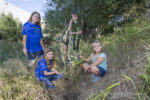
Speaking of getting what you wished for, here are some of Cheryl’s wonderful photos from Sunday’s labor. I especially love the tippytoed beaver, but they’re all perfect. And see how those rascally parents are helping their children cheat?

IMG_9265 IMG_9239 IMG_9242 IMG_9204 IMG_9213

IMG_9161

IMG_9175 IMG_9188 IMG_9191 IMG_9195


FacebookFacebook
email articleemail article

This is a great photo from Kentucky. You know why it’s great? Not because of that cool dam or the fact that you can see it’s leaky because water flows through it. No. Because that culvert is SO damaged anyway, with road collapse and erosion. Look at those dents!  It looks about ready to flatten, but the county isn’t worried about that. They are worried about ONE thing. And we all know what that is.

Beavers costing county, landowners Animals threaten roads, crops, timber

They’ve cost the county nearly $100,000 since 2015. They damage cropland and timber. They cause flooding and threaten roads. They are beavers, and they are a growing problem in Hopkins County. Now, a working group under the commissioner of the Kentucky Department of Fish & Wildlife Resources that includes state and federal agencies as well as state and local elected officials is studying the problem.

“They stop culverts up. They stop drainage areas up with sticks and mud,” said Jeff Browning, Hopkins County public works director. “The water backs up and causes damage to roads, crops and woods.” “We start trapping every day, for eight hours a day, in December,” he said. This season, which ended in early spring, county trappers caught 168 beavers, significantly more than the 125-130 they usually get.

“We’re not gaining on it,” Browning said. “And I think it’s getting worse.”

He said his staff is researching multiple approaches, including looking at what other counties and states do, the possibility of setting up conservation-type districts to fund beaver eradication and working with the Corps of Engineers and Division of Water on the legalities involved.

“What I pledged to the group is that I can facilitate finding a solution and working with the counties and Legislature,” Johnson said, adding he expects to have initial information in about 60 days.

Prunty, R-Belton, said she reached out to Johnson after getting multiple letters from constituents in her home county of Muhlenberg. Damage to roads and cropland are not the biggest issue there. Instead, she said, it’s more of a case where former landowners liked the beavers because they created wetlands that attracted waterfowl, which was good for hunters. Now, some landowners want to harvest timber, but can’t because of the flooded land.

“It’s an economic issue for my constituents,” she said. It used to be profitable to trap beavers for their pelts.”There’s no end to it,” Wedding said.”We’ll never eradicate them,” said Browning, the public work director. “I just want some funding help.”

That’s not likely, said Prunty and Embry, R-Morgantown, given the state of the commonwealth’s budget.”I personally don’t see us allocating funds for that,” Prunty said.Embry agreed. Getting new funding “is always difficult,” he said.

Fish & Wildlife Commissioner Johnson said finding funding help is part of his group’s mandate.”We’ll look for other sources of funding that may or may not exist,” he said, indicating some federal help may be available through the USDA. But money won’t solve the problem, which is “how do you keep them under control for the long-term,” Johnson said. “It’s hard to fight those little suckers.

And as we all know, if something isn’t working or showing signs of success, what you need to do is do it more frequently and faster. Hire more people to kill more beavers because eventually you know it will work right? I mean it’s not like there are these PROVEN tools that will let them protect the roads and culverts and allow the beavers to remain so that they can keep away other beavers right? It’s certainly not like we did it our selves in Martinez for a decade. Better to keep setting the mousetraps over and over and bill the citizens for it. Forget all those disappointed duck hunters.

More complaints from the city of Bristol in Wisconsin where those crazy beavers are just tiring them out.

Beavers causing DAMage in Bristol

Dam(n) it: The phrase describes the beavers’ instincts to build, and with the added ‘n,’ area residents’ reaction to the problems that the large rodents’ work causes in the Dutch Gap Canal.

The dams, removed for decades by residents, were identified at the Bristol Village Board meeting this week as a factor contributing to flooding in the Lake George area.

“We’ve got to get someone out here to trap them,” resident Scott Shannon, said. “It’s a friggin’ nightmare. I’ve taken probably 100 dams out with my (backhoe).”

 It is not only a problem in Bristol. Residents in Paddock Lake and Wheatland have also experienced the damage beavers can cause. Longtime residents in all three communities said the beaver population is on the rise.

“Tenfold,” Shannon said. “This is just wearing me out.”

Gosh darn those wicked beavers and their sneaky ways. Why doesn’t killing them work anymore? Don’t tell me there’s another way to solve this problem, because my back hoe is so much fun!

Marty Johnson, wildlife biologist with the State Department of Natural Resources, confirmed that the beaver population is increasing.


“There are more beavers out there,” Johnson said. “The trapping presence over time has lessened, so the population is on the uptick. We have been getting more complaints.”

Johnson said the DNR recently hired the U.S. Fish and Wildlife Service to blow up dams in the public hunting grounds in Wheatland. He said beaver activity at Richard Bong State Recreation Area has increased as well.

Paddock Lake administrator Tim Popanda said beaver were causing problems in the canal that leads to the lake a couple of years ago. There, the village obtained permission from the DNR to trap beaver on DNR property out of season.

The DNR website also offers suggestions, such as putting culvert pipes through the dams, to help mitigate the problems.  One such system, called the Clemson Beaver Pond Leveler, was developed at Clemson University in South Carolina. Made mostly from PVC pipe, it allows water to flow through a beaver dam or plugged culvert.

“We are trying to figure out if there is something we can do to minimize it,” Kerkman said.

To that end, the Village Board approved spending $17,600 for an engineering study by Strand Associates to determine how water flows in the neighborhood and identify possible solutions. The study will assume beavers will continue to occupy the Dutch Gap Canal.

I have an idea. Give ME the 17,000 dollars and I’ll tell you how to solve this problem. And it isn’t with a 30 year old invention that will get clogged in a minute. Hire Mike Callahan or Skip Lisle or Amy Chadwick to install a flow device and have them teach you how to do it so you can handle the next 30 yourself. Them sit back and watch your water levels safely maintained and your roads clear and your fish and wildlife population thrive as your beaver population stabilizes.

I’m glad we’ve had this little chat.


FacebookFacebook
email articleemail article

From WBRZ in Louisiana comes the weather report we’ll be wondering about for years to come. There is something in the writing that seems very what we called in my trade ‘word-salad‘ – maybe it was computer generated? It’s hard to believe anyone ever transitioned from talking about Harvey to talking about beavers, but who knows? They’ve been blamed for many ridiculous things before.

Pat Shingleton: “The Storm and Beavers…”

CaptureOur weekend intentions are extended to the folks in Texas.

In closing, the second largest rodent in the world is the beaver.  The engineering of their dams, canal and personal lodges not only protect them from predators but provide still pools for floating food and building materials.  When startled, beavers are also able to initiate an alarm on those quiet pools by energetically smacking the water with their broad tail; forwarding a message to others.  Stockpiled sticks provide a food source and an insulation of snow prevents water from freezing around their homes.  Examples of beaver complications include the Lawrence, Massachusetts, Conservation Commission’s report that additional flooding was caused when residents removed a local beaver dam. The water release overwhelmed a smaller beaver dam, exiting onto local roads.

The Eagle-Tribune reports that the undisturbed dam would have minimized two road washouts.

That’s why we don’t let google translate bots write copy for the news. Some jobs should just be performed by humans, you know? But okay.  This is a fine opportunity to mention that if more beaver were allowed to build dams in more streams backing up more water across the state there would be more wetlands to soak up storm events and everyone would benefit.

Just sayin’. Although this is we more  typically get with some human-generated word-salad.

Beavers create flooding problem at Colona

COLONA — Beavers have contributed to the plugging of a 15-inch culvert at the southwest corner of the city. As a result of beaver activity, trees and logs have jammed up the tube, and flooding has affected residents on 10th Avenue.

The property isn’t in city limits, and aldermen voted Monday to contact Colona Township to ask if they will assist the city in fixing the problem. “The problem is the city equipment is not able to do what needs to be done. We need larger equipment,” said Mayor Rick Lack.

“We need an excavator, not our backhoe,” agreed public works director Rick Crew. Ald. Tom Jones, 3rd Ward, said the city should ask the township or the county to maintain the culvert. “It would be better for our residents to have a solution than a bureaucratic circle,” said Ald. Tristan Tapscott.

Okay, that part makes sense.  Beavers block culverts, we all accept this. And if there’s one thing we ALL KNOW it’s that boys like to say they could solve any problem if they just had bigger equipment. And if you chose not to install a beaver deceiver to protect a culvert, you need to spend time cleaning them out.

(See how I’m delicately avoiding mentioning their bureaucratic circle [jerk] because that’s just the kind of sensitive woman I am? )

But this is what confused me.

Alderman Mike King said duck hunters occasionally fire close to homes there, and the floodwaters displace coyotes, exacerbating that problem.

?????????

Mr. King said if it were zoned as a conservation area, the city could have control over letting people hunt, suggesting coyotes could be hunted there.

???????????????????????????

Now you might think I’m editing out the context of this paragraph to make it sound more confusing. But go look at the article yourself if you want. The paragraph is context-free. I’m still trying to find it. So if the gunfire and flooding hadn’t pushed them out the coyotes would eat the beavers and fix our problem? Or if the coyotes were around to eat the ducks there wouldn’t be so much hunting there? Or maybe  the duck hunters could shoot beavers? Or just shoot out the culverts?

Or maybe I just wanna shoot coyotes so I’m changing the subject?

You aren’t making any sense, Mike. But, fortunately for you it doesn’t seem to matter much in Colona, IL whether you make sense or not. Your colleagues or constituents don’t seem to mind, and the reporter writes it down and reports it as if you actually contributed. Good job.

You might be mayor soon.

BEAVER FESTIVAL XVII

DONATE

Beaver Interactive: Click to view

TREE PROTECTION

BAY AREA PODCAST

Our story told around the county

LASSIE INVENTS BDA

CONTACT US

URBAN BEAVERS

LASSIE AND BEAVERS

Ten Years

The Beaver Cheat Sheet

Restoration

RANGER RICK

Ranger rick

The meeting that started it all

Past Reports

May 2026
M T W T F S S
 123
45678910
11121314151617
18192021222324
25262728293031

Story By Year

close

Share the beaver gospel!