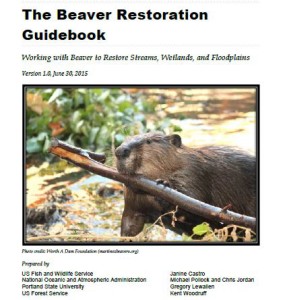
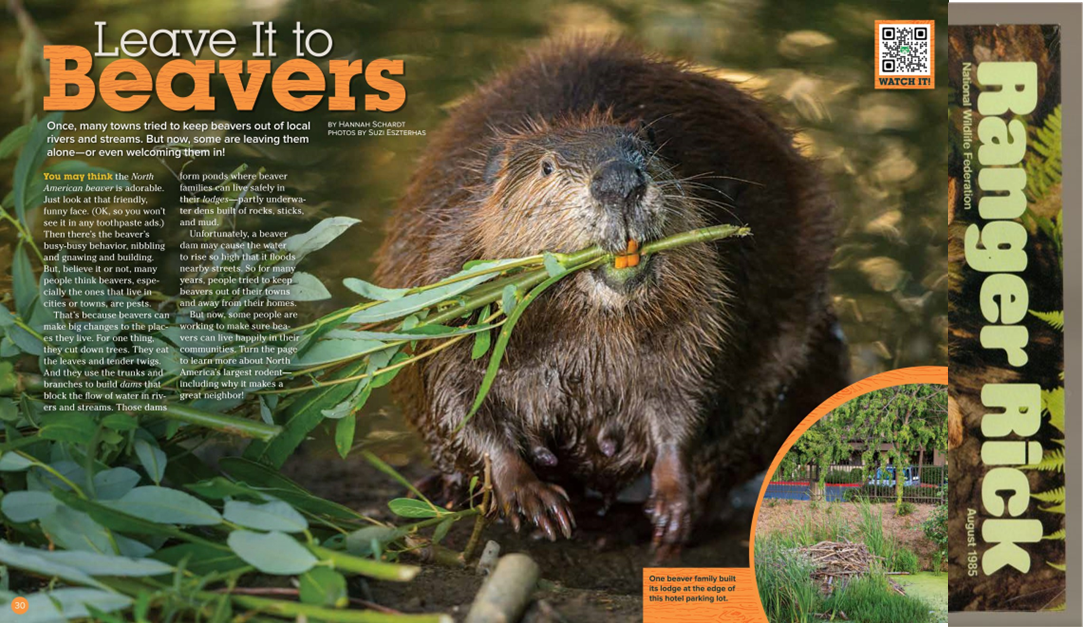
Beavers have probably been more influential than humans in altering the Kabetogama Peninsula ecosystem in northern Minnesota, writes South Dakota State University Professor Carol Johnston. She examined how beavers have impacted the peninsula which is home to Voyageurs National Park near International Falls, Minn., in her newly released book, “Beavers: Boreal Ecosystem Engineers.”
“This book is about a place and the science of how beavers shaped it,” said Johnston, who has been conducting research on beavers for 30 years. She wrote eight of the book’s 10 chapters based on her National Science Foundation-funded beaver research.
The text book is listed as a pricey 137.00 at Amazon, but shows the following drool-worthy pages of contents. It takes a second to load but trust me it’s worth it. There isn’t a single chapter I’m not eager to read. It’s maddening to think of all the text books I shelled out major cash for and never really read more than I needed to, (or frankly, even that) and this one that is sooo delightful-looking now that I’m not a student!
Taos is a historic and artist mecca in the upper middle of New Mexico. With an elevation of nearly 7000 feet, you will definitely feel the visit all the way down to your lungs. There’s plenty to keep you busy whether your hiking, painting or meditating. But save some free time tomorrow evening because Ben Goldfarb will be talking at the Harwood Museum about beavers and his new book.
Environmental writer Ben Goldfarb will spend his October residency at the Aldo & Estella Leopold Cabin putting the final touches on a manuscript about the importance of beavers in restoring ecosystems.
Goldfarb holds a master’s degree from the Yale School of Forestry & Environmental Studies – the same school that Aldo Leopold attended and was among its first graduates. And the Leopold Cabin sits across the valley from the historic seat of the beaver pelt trade in the early 1800s at Taos Pueblo.
“I can’t think of a better venue at which to complete my present project, ‘Song of the Dammed,’ a book about the ecological and hydrological benefits of North American beaver restoration,” said Goldfarb, who spent last summer surveying ranchers, scientists and public land managers about beaver restoration. “Northern New Mexico plays in integral part of the story I want to tell. And I’m happy to be invited to U.S. Forest Service property, as that is an agency that gets the importance of beavers the most.”
Ooh that’s so exciting! I wrote Ben yesterday to see if someone will be filming or taping the talk so the poor souls not in Taos could see it. He said he wasn’t sure and corrected that the books title is now “Beaverland”.
Goldfarb will present elements of his book, including a history of beavers in North America, the ways beavers influence restoration, and several case studies that support his findings at a presentation planned Wednesday (Oct. 4), 7 p.m., at the Harwood Museum of Art, 238 Ledoux Street in Taos. The presentation is free and open to the public.
The Aldo and Estella Leopold Residency began in 2012 as “an inspiring retreat for writers to reflect and create in the home where Aldo and Estella Leopold first lived as newlyweds from 1911-12,” a press release states. “Now in its 6th year, the Leopold Writing Program selects one to two writers for one-month-long residencies, depending upon funding. Participants receive a $500 stipend to help defray travel and living expenses. In exchange, residents give a public presentation of their work in Taos.”
Past residents include Courtney White, John Hausdoerffer, Bonnie Harper-Lore, Leanna Torres, Gavin Van Horn, Tovar Cerulli, Priscilla Solis Ybarra, Andrew Gulliford, Maya Kapoor, Andrea Clearfield, and Ariana Kramer.
Could Ben be in better company than the spirit of these great writers? I don’t think so. He asked me what I thought of “Beaverland” as a title and I said it was nice maybe kind of similar to “Beaver World” and Enos Mills territory? My personal inclination would be more to something about the way they are an extremely unappreciated resource that gets ignored. Like “Untapped” or “Unsung” or more specifically focused as to their function, “Water-Savers”.
I also tossed out the notion I had been toying about thinking of beavers as “Stream-catchers” (playing off the idea of dream catchers being the Ojibwe belief of the woven hoop you place near the infants crib to keep out the bad dreams) Maybe the beaver dam itself is the web? Keeping out flooding and drought, and the stream that it brings are the ‘good dreams’ vibrant with fish and full of life?
Ben liked that idea and thought it might become a chapter, so we’ll see what happens. In the mean time I’m excited that beavers get a book and Ben gets to talk about it tomorrow night.
Since their near eradication in the early 20th century, beavers have made a surprising comeback. Today, beavers have returned to many streams and waterways of Seattle, including Yesler Swamp in the Center for Urban Horticulture’s backyard. Come join us as we discuss beavers, tour their work, and potentially view some busy beavers in action. , Ben Dittbrenner (UW School of Environmental and Forest Sciences), will provide a presentation on beaver life history and ecology. Samantha Everett, local beaver expert, will lead a tour through Yesler Swamp, stopping at active beaver areas with some potential beaver viewing at dusk.
If you are interested in the tour portion, please bring a flashlight!
Doesn’t that sound enormously fun? I first met Ben when he joined me and Mike Callahan for a quick lunch at the state of the beaver conference before we presented that afternoon in 2011. At that time he was working as a watershed Steward in Sonomish County in Jake Jacobsen’s old job in Sonomish. Beavers were definitely on his mind and he knew they were the direction he was headed.
Now he is Executive Director of a beaver nonprofit called “Beavers Northwest” and operates a website and relocation project in Washington. Jake who was one of our very first beaver friends back in the drama, is on the board as Treasurer.
Meanwhile I received an alarm call from Cheryl yesterday who stopped by the Concord Dam on her way home from work. A not very appreciative homeless woman was ripping out the dam with her crutch. Seems too many people were stopping to look at the dam and giving them less privacy for their encampment. So she got rid of the attraction.
Of course the beavers will rebuild and it will all happen again, but it’s frustrating. It was such a beautiful dam.
One of my favorite segments of Sesame Street when I was a child wasn’t cookie monster or oscar the grouch. It was the silly attention Bert paid to pigeons, treating them as if they mattered and were worth attending to. He collected jokes and stories about them and even watched a favorite media segment called in an echoing broadcaster voice saying “Pigeons In The News!“.
I can’t imagine why that pops into my head now.
There’s local beaver business to report first. Our two little dams near Susanna Street were ripped out last week by Wednesday morning. I’m not sure by whom, but Moses left a note on my door when we got home from vacation, and when we went to look it was sure enough torn out, although not by heavy equipment. No word on what happened to our beavers but I have contacted folks to find out.
Stay Tuned!
Also I got an email from our old friend Glenn Hori who used to photograph the Martinez Beavers and spied a beaver dam in Concord near 680 and Willow Pass Rd. He couldn’t get a glimpse of actual beavers last night but that lovely dam isn’t maintaining itself.
Concord Beaver Dam: Photo By Glenn Hori
This is right near the Willows so one images the name might have attracted them?
Meanwhile newslines are abuzz this morning with the story of valiant beavers being brought in to save English cities from flooding. I always get nervous when beaver promises are made, but we better just enjoy this while it lasts.
In 2012, the center of Lydbrook, a village skirting the Forest of Dean in Gloucestershire, England, was deluged with several feet of water. The flash flooding, unleashed by torrential rainfall across the region, sparked a mandatory evacuation and left badly damaged homes and businesses in its wake.
This wasn’t the first time this bucolic burg has been devastated by rapidly rising waters. Nestled between the River Wye and one of its tributaries, the flood-prone Greathough Brook, Lydbrook and surrounding parishes in the Wye Valley have long been vulnerable to inundation. In 2015, villagers collectively breathed a sigh of relief when it was announced that a section of an aging culvert meant to tame the flow of water through the village would be replaced as part of a flood defense overhaul costing 290,000 pounds (nearly $400,000).
Now, two years later, the Forestry Commission has decided to bring in the big guns to further prevent flooding: beavers.
As the Guardian reports, a scheme to release a family of Eurasian beavers within an enclosed area at Greathough Brook has been embraced enthusiastically by villagers and, most importantly, received a governmental go-ahead despite one report that it was blocked by a minister at the Department of Environmental, Food and Rural Affairs.
The idea is that once released, the clan of industrious semiaquatic rodents will get to work doing what they do best: constructing an intricate network of dams, ponds and canals that, in this instance, will slow the flow of Greathough Brook and prevent upwards of 6,000 cubic meters (1.6 million gallons) of water from rushing into the valley-bound village below.
While a qualified team of engineers that don’t have webbed hind feet could be brought in to dam the stream, the beaver is, well, cheaper and can get the job done in a swifter and less intrusive manner.
What’s more, there’s the chance that the beavers’ presence could be a boon for eco-tourism in the region as the animals, hunted into extinction across Britain and now being strategically released back into the wild, are still a relatively rare sight. A village that’s reintroduced beavers and put them to work to help prevent catastrophic flooding certainly could draw wildlife lovers to this sleepy northwestern section of the Forest of Dean.
Here’s a nice look at the Devon beavers from back in 2012. I shared this 5 years ago but it’s worth watching again.
It isn’t just any day that you wake up to find whopping beaver mistake coming out of Portland of all places, but this is a doozy. You see Westmoreland is one of the most desirable sections of Portland. It’s victorians and craftsman homes are some of the wealthiest places to live in the region. So they of COURSE have enough money to know better or at least hire someone to correct their mistakes.
Crystal Springs Creek becomes an urban salmon sanctuary; city council proclaims Sunday ‘Salmon in Our City Day’
What happens when humans build and develop without much consideration for other species. Well, sometimes it means using millions of dollars to go back and correct mistakes.
In Portland’s case, it meant spending $16 million to backtrack and widen culverts — the circular or square piping that sometimes runs through streams —at Crystal Springs Creek so that salmon could adequately pass through them.
The nine manmade culverts that support roadways and pass through the sparkling, 2.5-mile long creek, which snakes through Southeast Portland’s Westmoreland Park, until last year were too small, impacting salmon’s ability to spawn and swim through them and ultimately migrate to the ocean.
So far so good. A wealthy community spending money to fix its culverts and protect salmon. Having a festival to create awareness. That”s a good thing, right? Ahh but its when they talk about WHY salmon matter that we get interested.
But why are the salmon important at all? Turns out, for a lot of different reasons. It’s not going to be a food source for people from that creek, but it will be for other animals, including beavers and other critters. Additionally, according to Karl Lee, co-chair of the Crystal Springs Partnership and retired hydrologist for the U.S. Geological survey, they’re a “giant package of nutrients.”
The Crystal Springs Partnership is a lush coalition of agencies and advocacy groups working to protect the waterways in the fanciest way possible. (Did I mention that Portland is the city in the US with the highest density of nonprofits per square foot?) Well you’d think that ONE of them would explain that beaversdon’teatfish, wouldn’t you?






 Taos is a historic and artist mecca in the upper middle of New Mexico. With an elevation of nearly 7000 feet, you will definitely feel the visit all the way down to your lungs. There’s plenty to keep you busy whether your hiking, painting or meditating. But save some free time tomorrow evening because Ben Goldfarb will be talking at the Harwood Museum about beavers and his new book.
 Environmental writer Ben Goldfarb will spend his October residency at the Aldo & Estella Leopold Cabin putting the final touches on a manuscript about the importance of beavers in restoring ecosystems.