Skip to content
Worth A Dam

Because the beaver isn't just an animal; it's an ecosystem!

Menu
  • HOME
  • OUR STORY
  • EDUCATION

    • Teachers
    • EDUCATIONAL BEAVER GRAPHICS
    • California Beaver Summit
  • RESEARCH

    • THE ECOLOGICAL BENEFITS OF BEAVERS
    • PEOPLE ARE TALKING ABOUT BEAVERS
    • The history of beavers in California
  • SOLUTIONS

    • Protecting Trees
    • Protecting Culverts
    • California Beaver Help Desk
    • NATIONAL SOLUTIONS & BEAVER HELP
  • OUR BEAVERS

    • PHOTOS
    • VIDEO

Category: Beaver Behavior

EXCITING BEAVER TIMES

heidi08 Beaver Behavior, Beaver Book, Beavers, Festival June 4, 2019
FacebookFacebook
email articleemail article

These are exciting times in the beaver-verse. Ben Goldfarb addressed the Exeter University panel of 400 people gathered for the three day beaver conference. Derek Gow posted a 360 shot of the impatient crowd last night, and the Times is running an article this morning.

I wish I knew how to embed it but here’s the link so you can go see for yourself – it’s cool to look around the room and see them hanging from the rafters to hear about beavers, but try this link

A FULL HOUSE

I hope we get some rumors soon about how its all going and you can be sure I’ll pass them along.It’s what I do. The Times article is behind a firewall and I’m too cheap to be able to share, but here’s a taste of what we’re missing.

How CS Lewis gave beavers a bad press

David Sanderson, Arts Correspondent

June 3 2019, 12:01am, The Times

If only CS Lewis had not had Mr Beaver sitting at a hole in the ice until he had “whisked out a beautiful trout”.

The author of The Chronicles of Narnia has been lambasted for giving generations of schoolchildren the misleading impression that beavers are pescatarians.

The writer Ben Goldfarb said that it had directly led to widespread opposition to the reintroduction of the species in Britain, including among anglers, who he said had been “miseducated by CS Lewis”.

Instead of blaming Mr. Lewis how about naming the thousands of trappers that hunted beaver to extinction on every corner of the UK and Europe so that the Brits spent 400 years not knowing the animal or knowing what they ate?

In other exciting news the beaver festival made the cover of the June Diablo Gazette, which of course we are very happy about. Amy’s photo is so inviting I’m tempted to be there myself!
Such a great photo! Her husband really captured just the right image don’t you think?


USFS SAYS BEAVER DAMS HELP SCOTTS VALLEY

heidi08 BDA's May 24, 2019
FacebookFacebook
email articleemail article

I received the most interesting email from the forest service yesterday. Something tells me you’ll be interested too. But I’ll let you decide. Just check out that title.

Artificial Beaver Dams Hold Promise as a Restoration Tool in California

 North American beavers were once so plentiful in the Scott River Basin of northern California that the area was referred to as “Beaver Valley” by the first Euroamerican fur trappers who travelled there in the early 1830s. But heavy trapping of the fur-bearing rodent—one historical record reports 1,800 beavers trapped by a single man in one month in 1836 along the two forks of the Scott River—ultimately caused the species to rapidly decline in number. As beavers departed the landscape, so, too, did their trademark dams, which played a critical role in shaping the hydrology of the Scott River and its tributaries. Beaver removal, along with activities like mining, deforestation, road construction, and agriculture, have had major impacts on the Scott River Valley watershed over the past 150 years.

Fast forward more than a century, and the Scott River basin and beavers are, once again, intertwined. In 2014, the Scott River Watershed Council, an independent nonprofit organization, launched an initiative to reintroduce the benefits of beaver dams to the basin by building “beaver dam analogues,” also known as BDAs. These structures, which are made of wooden posts woven with vegetation and sediment, are strategically placed in streams to mimic the effects of natural beaver dams. The streams included in the project flow through private lands and are important habitat for federal Endangered Species Act-listed southern Oregon/northern California coast coho salmon. The council installed the BDAs with the goals of improving instream habitat for salmon, raising groundwater levels, and reducing stream channel incision.

Ohh do you hear that? That’s as near as you’re going to ever get to hearing the USDA singing our song. Savor this moment. Shh it gets better.

To date, 20 BDA structures have been installed at six sites and the council has plans for more. Beavers have been active, or have taken over maintenance, at all of the sites, and agency personnel and landowners feel that beaver populations in the Scott Valley are increasing in number.

“Most of the private landowners involved in this project are ranchers who also grow hay and who have largely positive views of beavers and beaver dams, so long as they do not interfere with irrigation infrastructure,” said Susan Charnley, a Pacific Northwest Research Station research social scientist and author of a case study on the project. “Monitoring data and interviews with stakeholders indicate that BDAs are starting to achieve their goals and are benefitting both landowners and fish.”

The case study report includes a detailed description of the pioneering restoration project – the first of its kind in California – and the experiences of partners and stakeholders involved in it – as well as a discussion of the lessons learned.

Although this watershed restoration project was the first in California, results are showing promise, and other California groups are starting to use this restoration technique. The project offers important lessons for undertaking beaver-related restoration on private lands across the west. 

Read the California case study online

Tadaa!!! The Forest service is installing beaver dams and thinking they do REMARKABLE things for the watershed. And hey once humans start these dams actual beavers come and take them over! Saving water, helping salmon, preventing floods, and will you look at that, raisin the water table so all those hay farmers can water their crop!

BEAVERS STAND UP FOR THEMSELVES

heidi08 Beaver Behavior, Beavers, Video May 19, 2019
FacebookFacebook
email articleemail article

It’s Sunday and high time for another round of only good news. It’s been a hell week of root canals and abortion laws so we all deserve this. We have the festival planning meeting today and I wanted to share my idea for the children’s parade so we put a protest sign together to demonstrate.

Jon makes an excellent protestor.

Someone on facebook corrected that it should be ‘fewer’ not ‘less’ – but I’m not sure that beavers would actually use correct grammar. (Plus there’s only so much room on a protest sign.) Thinking about it I’m sure if beavers were going to protest they would carry a sign just like this. Only there’s be chew marks all over it…hey that gives me an idea…

Then Robin Ellison of Napa found this excellent commercial and passed it along. There is so much going on I had to watch it twice and slow down the action. Remember to keep an eye on your work when there are beavers around.

See what i mean? Isn’t that delightful? And here’s  a nice look at what beavers use all that wood for after they snagged it away.

Chris Carr of New Hampshire posted this recently to the beaver management forum. Check out this over-achieving beaver! Look how tall that lodge is already.

Beavers work so hard. i think humans are enormously lazy by comparison.
Except maybe these humans.

ABOUT DAM TIME!

heidi08 Dispersal May 3, 2019
FacebookFacebook
email articleemail article

There have been so  many slow beaver new days that I’m delighted to say today is BURSTING with beaver stories. Finally! And they hit all the right notes, from serious, to endearing to comical. Have I told you lately that I love you Google? Let’s start with this great piece about Torrey Ritter’s work.

Eager beavers: Biologists study what drives big rodents to colonize

It was looking for answers to the questions of how beavers select habitat, and what humans might do to encourage them to colonize, that earned Torrey Ritter his master’s degree from Montana State University last year. Now a nongame biologist for Montana Fish, Wildlife & Parks, Ritter and others radio-tagged 55 beavers in southwest Montana to track their movements and learn more about what appeals to the animals when they search for new habitat.

“There were two main components: following them through the dispersal process, looking at new habitats they want, but also the trials and tribulations it takes to start a new colony,” he said. “There’s significant interest in using beavers in (wetland) restoration, establishing them in areas they’ve not been in, and we wanted to figure out how they select new sites in the wild.”

How do they pick a homeland? I’m curious! I mean how did our beavers decide to settle in brackish water next to a train, traffic and garbage trucks. I’d love to know.

While beavers removing trees and causing flooding may damage infrastructure in some cases, they play the role of habitat creators for a variety of wildlife while also altering streams to provide water storage and recharge groundwater.

“We were doing beaver surveys … and I started to realize there’s a huge number of species we were only seeing in beaver habitat,” Ritter said, which included varieties of waterfowl, songbirds, shore birds and amphibians. “They really create a diverse habitat and (create) all those little ecological niches.”

You’re kidding! You mean beavers make habitat for species that only congregate in beaver habitat? And so killing beavers is like killing all those other species too? It’s almost like you’re saying beaver lives matter. That’s incredible!

“There’s a lot of interest, and people’s first reaction is to start moving beaver everywhere, and that’s not the solution,” Inman said. “If the willows aren’t there, they’re going to move, and if the structures aren’t there to prevent flooding they’re likely to get removed. So the benefits that beaver can provide is not a matter of moving beaver, it’s a matter of preparing the habitat to have beaver come naturally.”

Ritter and others found through the research that when beavers do migrate from their home range they prefer to take up residence in areas already modified by beavers. In areas beavers have not previously occupied, building artificial structures such as lodges or dams can keep beavers from quickly leaving the area.

So they want to settle in suitable habitat. That’s a shocker! And when they see some other beaver has settled there they decide its suitable. Another shocker. Hmmm that gives me an idea, maybe we should build a beaver dam in Alhambra Creek right by a nice bridge. Do you think the mayor would mind?

The longest dispersal in the southwest Montana study was 27 miles while one of the tracked beavers made nearly 15-mile nightly journeys.

“The main takeaways are that beavers are really good at dispersing and finding habitat to occupy, and areas without beavers may not indicate there are not enough beavers but that habitat may not be readily available,” Ritter said

Which is why they move into Martinez. Excellent. Remind me to go hang an ‘occupant wanted sign” downtown, will you?

And now, at LONG LAST, you all knew this was coming.

The hilarious, extremely convincing proposal to make a beaver emoji.

You might not realize it, but there is a whole host of texting scenarios in which you might require a beaver emoji. A text to your friends in Canada, for example, to express your mutual admiration for their national animal. Or an invite to a fellow enthusiast of nocturnal semi-aquatic mammals to rendezvous at the nearest state park. (Alas, there is no dam emoji.) Or—why not?—a euphemistic missive to a consenting fellow sexter. Beaver emojis: probably very useful!

You’re kidding. There’s been NO beaver emoji all this time? What on earth do all you people text about?

If any of those examples apply to you, you’re in luck. Come October, the beaver emoji will be among this year’s class of new emojis, though it may take a whole year after that for the bucktoothed rodent to hit your phone. The proposal to include the beaver emoji comes thanks to a cadre of Canadians, lesbians, semi-aquatic mammal enthusiasts, and emoji specialists who wrote an extremely convincing and rather hilarious proposal, which in March was submitted to the Unicode Consortium, the nonprofit responsible for standardizing text and emoji across devices.

Just how much would you like to read that convincing and rather hilarious proposal?  I dare say rather a lot. The important thing is that the beaver emoji is on its way. Coming soon to a phone near you.

GOOGLE BEAVERS

heidi08 Dispersal April 29, 2019
FacebookFacebook
email articleemail article

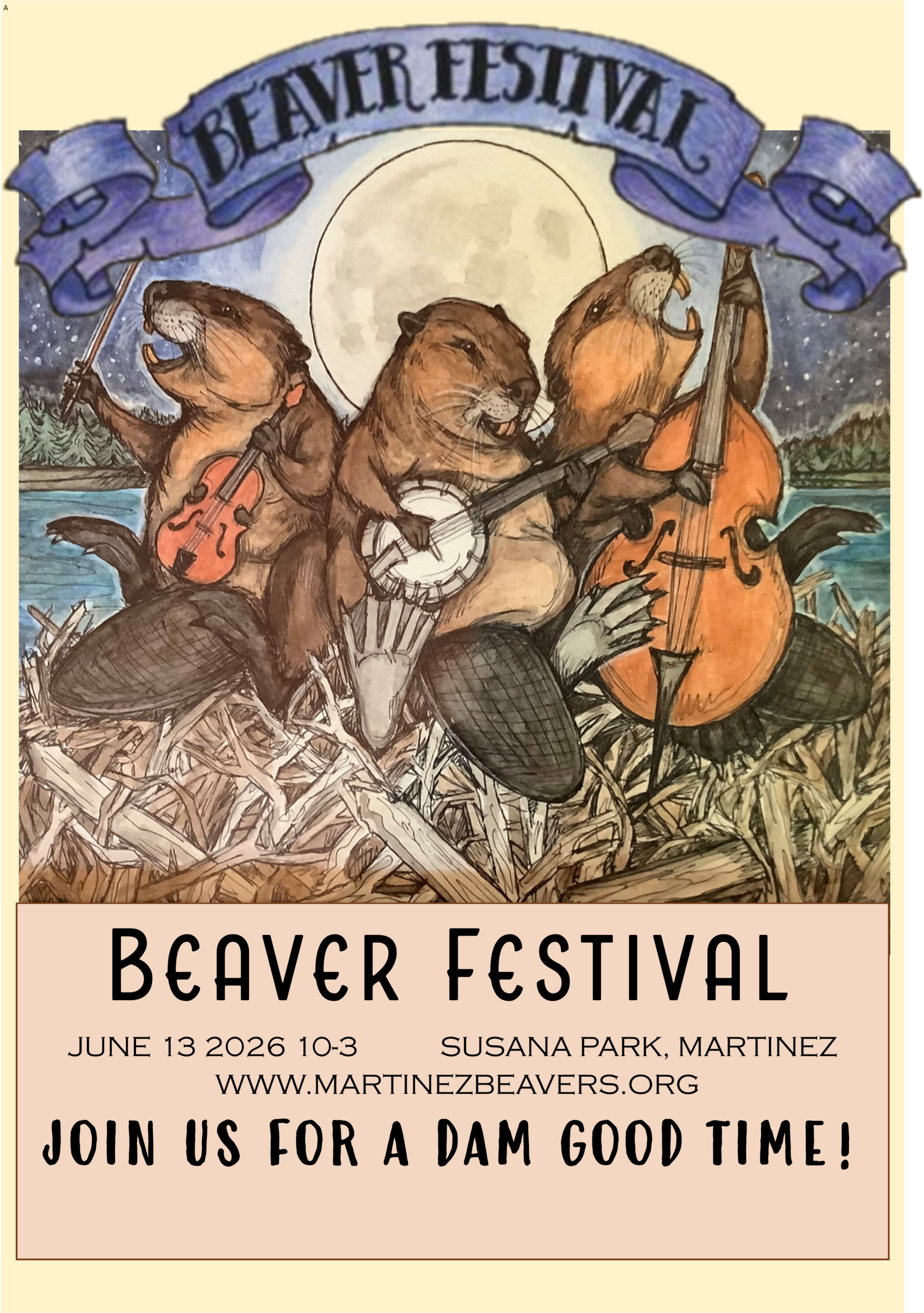
Well, well. well.  Things are start to take shape in festival land. I’m thinking we’ll be back down to around to around  40 exhibits this year which means they’ll be room for everyone to be on an interior lane. I think that will give the event a snugger feeling. Also lots of opportunities for folks to pass thru the middle and see Amy’s art progressing, so I’m okay with the smaller numbers.

Here’s my thinking so far…

Rick included me this morning  in an email about a beaver spotted in sunnyvale, our first ever. and this out by moffett gateway, (which btw was recently leased by Google, because of course there are beavers in Google!)

This photo courtesy of Romain Kain.

Sunnyvale beaver; Romain Kang

Yikes! Poor little disperser looking for his new home. I wonder how far he is from water? I wonder how many souls end up that way, looking for a start in life and a way to pay back student loans and find themselves trapped on a Google campus. Silicon Valley is a hard place to leave. I once called a tech about something ordered (a beaver bumper sticker) and the tech got quiet and then said carefully, “I think you might be my aunt!”.

(Which of course I was, one of my sister’s youngest daughter back then was working at Zazzle to help pay for her tuition. Small world. Now she’s working at that beaver campus.) I hope that little guy connects with water soon!

 Finally, a weird article this morning reminds us why beavers have to be careful around cars.

Roadkill Cuisine: Can You Eat That?

More than 300,000 animals are hit by vehicles in the road each year, according to a  study by the Federal Highway Administration, and the figure is believed to very under-reported. While an estimated 200 people die from these collisions in the U.S. every year, it’s mostly the wildlife that get the raw end of the deal.

Which brings us to the issue at hand. If you accidentally kill something on the road, can you eat it?

Beaver

If you’ve struck and killed a beaver, you should feel guilty. Once among the most widely distributed mammals in North America, beavers were eliminated from much of their range in the late 1800s because of unregulated trapping and loss of habitat, according to the California Fish and Wildlife. These brilliant engineers of the animal kingdom build dams and create wetlands that are among the most biologically productive ecosystems in the world, according to the Beaver Institute. Their ponds promote biodiversity, repair eroded stream channels, and promote salmon and trout recovery. Beaver is considered a game animal in some places, and there is no shortage of YouTube videos on how to cook it.

How is it that an article about roadkill says more nice things about beaver than most of the beaver articles we report on? Recognizing the difference they make for salmon and trout. Surely if The Street has enough time to dig up the info from the beaver institute, Jim or Becky in timber falls Wisconsin can do it when they write some article explaining why the city needs to trap them.

Right?


← Older Entries
Newer Entries →

Search Past Stories

Hit enter to search or ESC to close

BEAVER FESTIVAL XVII

DONATE

Beaver Interactive: Click to view

TREE PROTECTION

BAY AREA PODCAST

Our story told around the county

LASSIE INVENTS BDA

CONTACT US

URBAN BEAVERS

LASSIE AND BEAVERS

Ten Years

The Beaver Cheat Sheet

Restoration

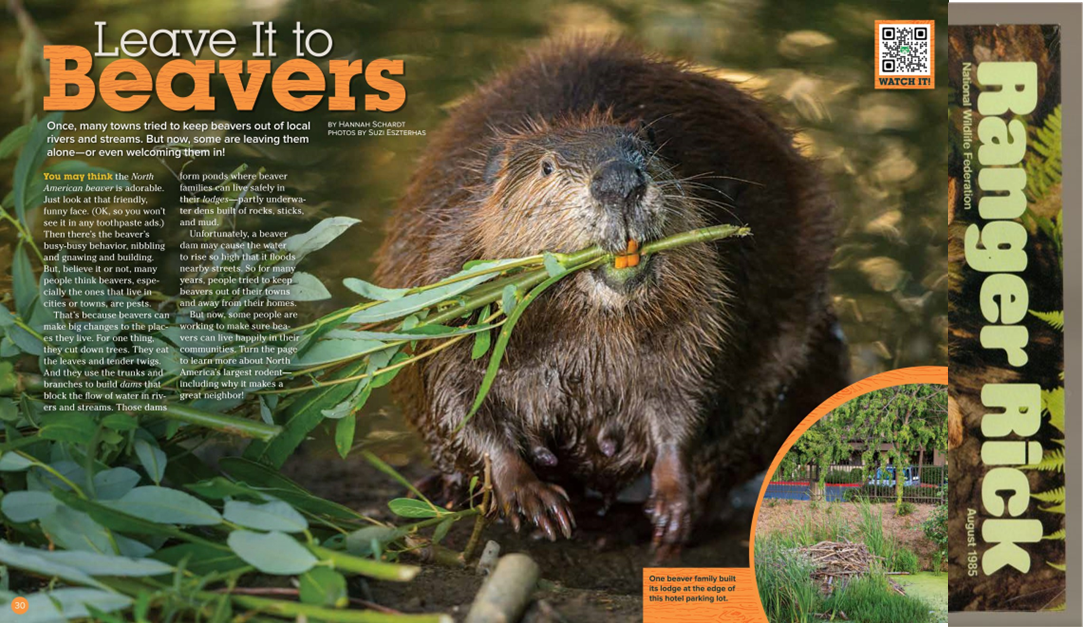
RANGER RICK

Ranger rick

Educate & Engage

Tattoos Journal
Kids Painting
Beaver Sketch

The meeting that started it all

https://vimeo.com/241579193?loop=0

Beaver Sites

  • Animal Protection of New Mexico
  • Beaver Ambassadors
  • Beaver Celebration
  • Beaver Deceivers, LLC
  • Beaver Insights
  • Beaver Institute
  • Beaver Solutions
  • Beaver State Wildlife Solutions
  • Beaver Trust
  • Beaver Trust
  • Beavers & Brush
  • Beavers Matter
  • Beavers Northwest
  • Beavers Wetlands & Wildlife
  • Bob Arnebeck’s Beavers
  • Bring Back Beaver – OAEC
  • CA Working Beaver Group
  • Corvalis Beaver Strike Team
  • De Rios y Castores
  • Ecosystem Engineers
  • Fairfield Beavers
  • Fox Creek Oregon
  • Grand Canyon Trust
  • Human – Beaver Coexistence Fund
  • Iowa Water Project
  • Methow Beaver Project
  • Norwegian Institute for Nature Research – Beavers
  • Partnering with Beaver: Utah
  • River Otter Beavers
  • Romance of the Beaver
  • Scottish Wild Beavers
  • Seventh Generation Institute
  • Sierra Wildlife Coalition
  • Southland Beaver
  • Stittsville Beaver Lodge
  • Superior BioConservancy
  • Taylor Creek Beavers
  • The Feasibility and Acceptability of Reintroducing European Beaver in England
  • The Fretful Porcupine
  • The Lands Council
  • Unexpected Wildlife Refuge
  • Watershed Guardians

Past Reports

May 2026
M T W T F S S
 123
45678910
11121314151617
18192021222324
25262728293031
« Apr    

Story By Year

Customized by Shoutreach Media

Worth A Dam is a fiscally sponsored project of Inquiring Systems Inc | Copyright © 2007-2025

WordPress Di Business Theme

close

Share the beaver gospel!

  • FacebookFacebook
  • email articleemail article