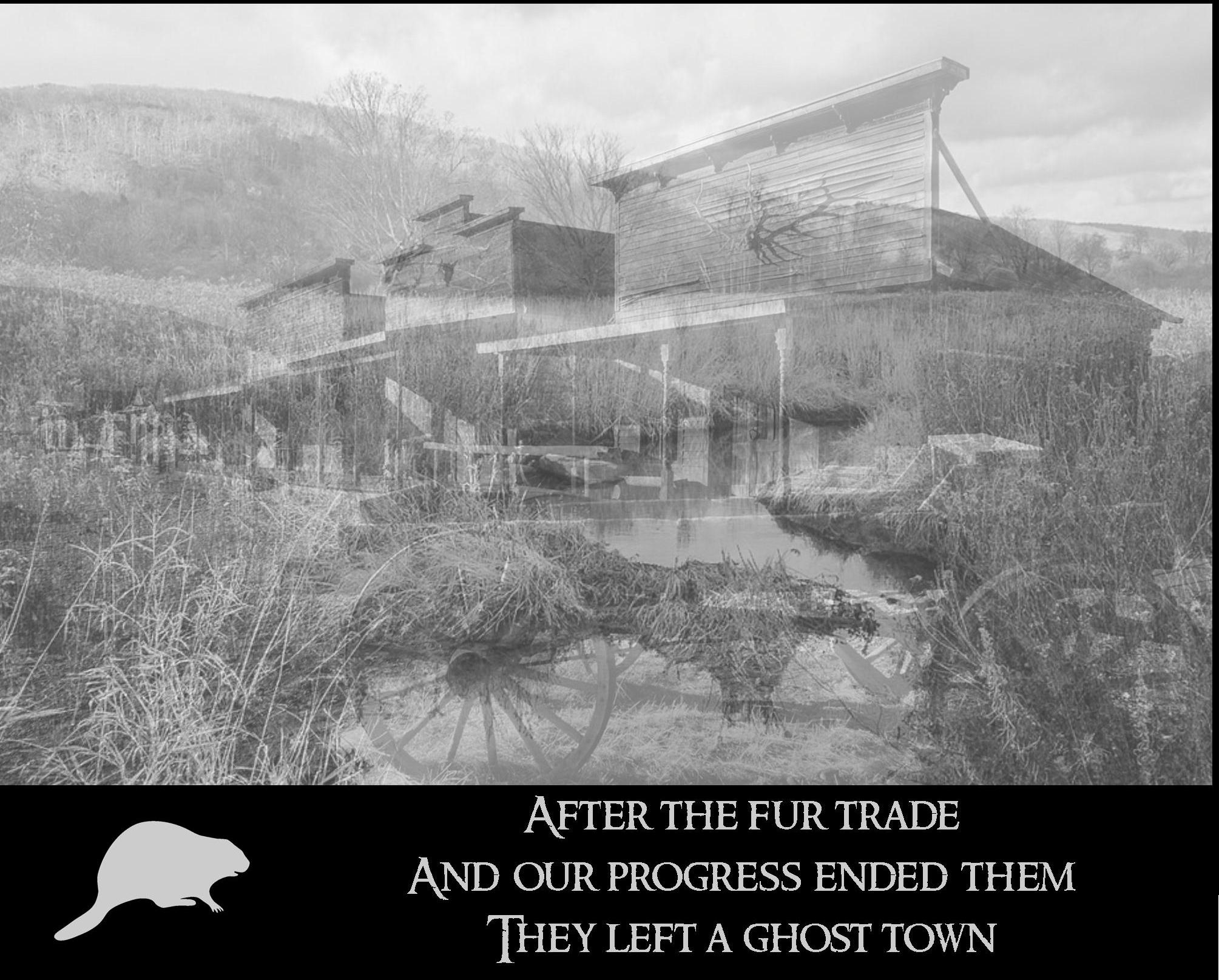
I’ve been trying to work on a composite image to use as a puzzle in next year’s festival. The beaver in the center of course is from Amelia and a festival brochure, but everything else is collected and patched together to match. I thought you might want to see how it’s coming along.I want to use this company to make a tray puzzle for children to solve next year. I received a sample that was beautifully made. I like idea of children collecting the bird piece from Audubon and the Salmon piece from NOAA etc, and getting the tray from me to put it all together.And the price is reasonable.
“Beavers are the missing piece that every creek needs.”
Beaver news today from Skagit Island in Washington state where neither the county nor the land trust wants to be responsible for beaver damage. Both think that beaver and habitat are GOOD but that flooding and spending money is BAD.
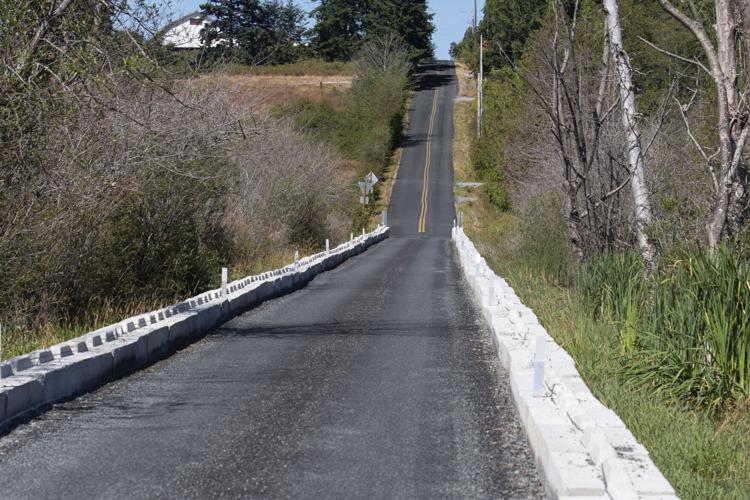
Guemes ISLAND — Arguments over liability have brought to a standstill negotiation regarding a Skagit County-owned Guemes Island road that’s surrounded by 90 acres of wetlands, and regularly floods during the winter.
Edens Road is a primary east-west route on the small island north of Anacortes, and residents are worried that continued flooding could cut off access to the most populous part of the island.
Stakeholders are considering installing in the wetlands a device called a pond leveler, which would allow water to flow through adjacent beaver dams along Cayou Creek and control the size of the wetlands that flood the county-owned road.
Both the property owner and Skagit County are on board with installing the pond leveler. But neither thinks it should be their responsibility to pay the cost, or to accept liability, if something goes wrong.
What a bunch of Washington sissies. They know better than we EVER did in Martinez why beavers matter an how flow devices work. There is even a grant promised from TU to pay for professional installation BUT they’re afraid cuz maybe the dam will wash out a they’ll be liable for the damage.
David Clifton, whose mother-in-law owns the property, said he’d gladly allow a pond leveler to be installed. And the nonprofit Ducks Unlimited has received a grant to pay for installation.
But whenever you mess with a beaver dam, there is always the possibility of it bursting, Clifton said.
He doesn’t live on the island full time, and can’t guarantee he would be available to maintain the pond leveler on short notice.
Flooding from the wetlands affects only Edens Road, and the county should be willing to protect it, Clifton said.
That’s like telling your daughter she shouldn’t ever get married because if she has a son he might grow up to be a serial killer. That’s like never learning to drive because you think that if you do you might get a traffic ticket. That’s like deciding to never have sex so that you have zero change of contracting aids.
You can’t reverse engineer your way out of risk without also preventing some pretty dramatic rewards.
“If you don’t have that full buy-in from the county, it feels a little precarious,” he said.
But Skagit County leadership says there’s no room for negotiation on the issue of liability. County Commissioner Peter Browning said it’s not fair for the taxpayers of Skagit County to pay to fix a road that gets damaged as a result of inaction of one property owner.
“If one person can make a decision that impacts those 135,000 (county residents), is that right?” he said.
If Clifton is concerned about maintenance, he should hire people to be on-call if emergency repairs are needed, Browning said. If the road floods again, with or without a fix, the county will hold the property owner financially responsible for repairs, he said. The county will employ “whatever means necessary to get compensated,” he said.
So if Clifton does nothing, he will be held accountable if Edens Road floods again. And if he installs a fix, he will be held accountable in the event of a burst dam.
And if Clifton traps the beavers to eliminate the risk will he be liable for the loss of salmon that follows or the shrinking water table that dries neighbor wells next year? Or the reduced avian population that means all the audubon visits are cancelled and no one buys coffees from the nearest starbucks?
He won’t? Wow. It’s almost like landowners are only expected to pay for damage when beavers bring changes, not when the death of beavers bring changes. Huh.
Molly Doran, executive director of the Skagit Land Trust, said the county’s position stands in the way of preservation of habitat. The trust owns property adjacent to Clifton’s, and has a conservation easement on Clifton’s property in order to preserve the natural
But the easement grants the owner the freedom to manage parts of the property in such a way that would protect other’s land and infrastructure. Doran’s organization supports the installation of a pond leveler, but like Clifton, won’t accept legal liability.
By Doran’s reading of state law, Clifton’s family can’t be held liable for a natural occurrence on their property. “(The county is) saying if you protect natural habitats and natural things happen, you’re held responsible,” she said.
Since 2010, the county has paid to raise the road three times in an attempt to keep it from flooding, at the cost of about $250,000, according to a letter sent Aug. 11 to the property owners from the three county commissioners.
How many l.awyers live on this island anyway? Yes Martinez was worried about liability. That’s how the whole beaver drama started and what brought the lovely sheet-pile wall into existence. But counties are also responsible for what they take away. And remember that CDFW and metro power had to pay all the court costs for the friends of lake skinner case because they trapped out beaver that should have been left to improve things.
A 2019 preliminary study commissioned by the county indicates diverting Edens Road out of the wetlands is complicated, because the county would have to acquire property to the north.
CK Eidem, regional biologist with Ducks Unlimited, said he’s inspected the dam and a pond leveler is “definitely feasible” there.
“But the downside is it’s a beaver dam, and those can still blow,” Eidem said. “It’s a lot of liability for the landowner to take on without support from the county.”
Ducks Unlimited has a grant to put in the pond leveler, and has volunteers lined up to help. But that’s as far as things have gotten with the potential fix.
“That’s the sticking point,” Eidem said. “We have this little bit of money, we’re excited to test it out, but we don’t want to put the landowner in a bad spot.”
The nature of Cayou Creek presents a chance to experiment with limited risk, so he’s hopeful Ducks Unlimited has the chance to put in the pond leveler.
“We could teach the community how to build and maintain this, and it could avoid problems in the future,” Eidem said.
Despite the current disagreement, Doran said she believes there is room for compromise.
Ultimately, climate change will continue to change our natural environment and threaten man-made infrastructure. This sort of thing will keep happening throughout the county, and will force the hand of policymakers sooner or later.
“We just have to realize that’s the future,” Doran said.
What a bunch of beaver sissies! Afraid to fix things because they might be liable for the improvement if they are ruined. By the way, exactly how many beaver dams HAVE blown out because a professionally engineered flow device was installed? What’s that you say? Zero? Maybe your cousin Pete tried something once and it caused flooding but that’s not the same thing.
I will tell you a mystery. Listen closely. Martinez had a very very very flashy creek. And the very first day Skip Lisle put the flow device in it blew out from the flooding. And then he realized whoa, we need to anchor the hell outta this thing. So he did by double staking metal stakes all along the pipe and the filter.
And once he did that it NEVER blew out.
In fact. his flow device was so secure that it actually held the entire dam in place. Sometimes in high flows it was the ONLY thing that held it in place.
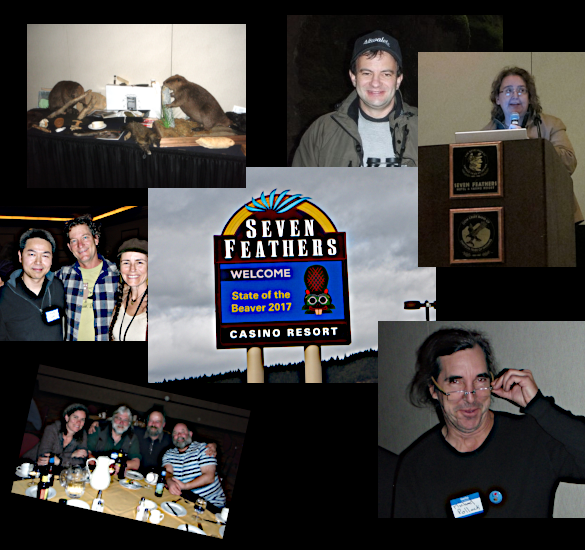
It all started here. Mary Obrien, Glynnis Hood, Kent Woodruff. the founding fathers of beaver doxology. I attended the second one still in its infancy and was blown away. It’s where Mike Callahan first met Jakob Shockey and Ben Dittbrenner This November it’s back. It’s where the dream of the beaver Institute was first formed. It’s where plans for beavers in the UK really took off.
And it’s back.
Theme: The Path Forward
The focus of the 2023 conference will be on the future of beavers across the northern hemisphere and the best management strategies for both humans and beaver.
Subtitle: Winds of Change
At no time in history has the plight of the beaver been so illuminated, authors, filmmakers, and the media have shone the international spotlight upon an unlikely hero, the humble hardworking champion of our aquatic ecosystems. Across the Northern Hemisphere beaver ecology is one of the fastest-growing fields in restoration ecology, this event highlights the actions of all whom work in this arena.
This is the right place AND the right time. For all the right reasons.
Satellite imagery from NASA has revealed some surprising and encouraging information about beavers. But these aren’t space beavers — rather, they are beavers that were “banished” to a remote Idaho valley and have since transformed it into a “lush wetland” that protects against wildfires, as Yale Environment 360 reported.
Beavers have often been viewed as a nuisance, as they chew down trees and build dams that can flood fields. In the 1930s, officials began trapping them and relocating them to remote areas where they could, in theory, do less harm.
Instead of doing harm, the beavers did a lot of good, as their activities led to a sort of natural irrigation that promoted the growth of grasses, shrubs, and other vegetation that in turn supported many types of wildlife.
Now, people like rancher Jay Wilde are working with researchers to intentionally reintroduce beavers to their land in order to make it more fertile and enhance biodiversity.
Well, well, well. Who would have guessed? (Us) Who could have imagined that something so frustrating could produce such a dramatic benefit? (Anyone that was paying attention).
While it may seem like an iffy idea to introduce a species to an area that it previously did not inhabit, researchers have explained that prior to the rise of beaver hunting and trapping, the animals were ever present, meaning that reintroducing beavers is simply bringing population levels back to their normal.
“Prior to beaver trapping, beaver dams were just about everywhere in the West,” Wally Macfarlane, a researcher at Utah State University who co-developed the Beaver Restoration Assessment Tool, said in a NASA report. “So what we’re attempting to do is to bring beaver dam densities back to historic levels where possible. In doing so, we’re building important drought resiliency and restoring stream areas. I think there’s a lot of foresight by NASA realizing how these things connect.”
In addition to adding drought resiliency and increased biodiversity, the beavers have had the effect of helping to guard against wildfires. In one area where beavers were reintroduced, a 2018 wildfire left the parts where the beavers had settled untouched, Yale Environment 360 reported.
Shocking! Not only do beavers do good things they also used to do them all over the united states. Gosh we must have really screwed things up when we killed them all.

 I want to use this company to make a tray puzzle for children to solve next year. I received a sample that was beautifully made. I like idea of children collecting the bird piece from Audubon and the Salmon piece from NOAA etc, and getting the tray from me to put it all together.And the price is reasonable.