Every day, from here to there
Beaver things are everywhere.
Glancing up and down the pacific coast you realize the world has definitely changed. Oh I’m not saying the tide is turning or its a new day for beavers or anything inspiring like that, but there are sure a lot more voices in the theater than there used to be.
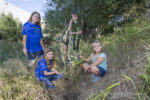
Why Metro Vancouver is planting trees near the Meadow (beavers, it’s because of beavers)
 As beavers chow down trees in Crippen Park, they plug streams, build dams and reshape the area. “It’s part of a natural process and [the resulting] wetlands are really great,” says Robyn Worcester, a natural resource management specialist at Metro Vancouver Regional Parks. The problem comes when an area flooded is just grass, like the Meadow. “There wasn’t anywhere for the riparian edge — the plants and trees along the edge of the stream — to expand.” (more…)
 One month into 2020’s shelter in place order, Virginia Holsworth and her family decided to change things up by walking in the opposite direction of their usual daily stroll through suburban Fairfield. That’s when she first encountered the amassment of sticks blocking the path’s adjacent creek, Laurel Creek.For the next few months she watched cormorants and blue herons among the cattails and tules. Supposedly the creek even contained so many rainbow trout, a member of the community — illegally — caught 40 of them. The way the beavers and their dam had changed the landscape and reinvigorated the habitat enthralled Holsworth, and she became devoted to preserving them in her community.
  Communities across California, as well as many Western states, are searching for ways to fire harden urban interface zones and buffer areas. One emerging concept — that seems new but is actually rooted in millions of years of habitat and wildlife evolution — is that encouraging the North American beaver to return or to be reintroduced to historic habitat areas may have a positive impact in terms of fire resistance.