
Because the beaver isn't just an animal; it's an ecosystem!

Tag: Patti Smith


Folks were apparently surprised by yesterday’s post. It got shared by our friends in the Netherlands and commented on by our buddies in Idaho.  I guess it’s surprising to see it laid out in black and white, which explains why CDFW doesn’t do it themselves. Easier to keep granting permission for endless killing one at a time. I thought you might all need comforting this morning, which works out because everything Patti Smith writes comforts me. This especially so.

Patti Smith: A time for reflection under the Porcupine Moon

I know of no tribe who have called the February full moon the Porcupine Moon, but I think that from now on I will. Last week, when the full moon rose, I set out on skis to visit the ancient beaver, Willow. On the way, I would stop to see if the ridgetop porcupine den had an occupant.

The fresh snow muffled my approach to the den on the ridge, a cavity created when a red maple toppled, pulling its roots away from a vertical ledge. A roof of roots, soil and snow sheltered a spacious cave, just right for remodeling by a hobbit or a porcupine. I found it while tracking a porcupine I have known for several years, part of my winter census of local porcupines. Intriguingly, I had seen the tracks of a very small porcupine along with the tracks of the large porcupine on my last stop at the den. When I leaned down and shined my light in, I heard a whiny “Wah! Wah-wa-WAH!” I thought it possible that this complaint was directed at me, but given my previous interactions with porcupines, it seemed more likely that the wee track-maker objected to the movements of the adult porcupine. I left a couple of apples to make up for my intrusion and headed home.

If you ever, in your life, get an opportunity to go wandering with Patti Smith at night, drop everything that you might have been planning instead, forget about sleeping or doing the laundry and GO. Whether it’s to carry her notebook, bring her coffee or just hold her umbrella. She is a national treasure. Ben Goldfarb is still glowing from her treasure-laced journey. The rest of us will just have to live vicariously through her translucent writing.

As I looked around for a sitting spot where I would not be intruding, I noticed the muted eye-shine of a porcupine in the main chamber of the den. This porcupine was not going to wait for me to make myself scarce, he was too interested in the smell of the apples. I sat down near the entrance to the den and talked to the little fellow. I have had many conversations with porcupines in what I like to think is their own language. They hum when greeting each other or when maintaining contact with a friend. The hum is very nasal and is modulated to express mood and interest in precisely the way we modulate our own speech. As a foster mother to several porcupettes, I can vouch for this. The same is true for their squawking vocalizations. Like human squawks, they express complaints, from mildly disgruntled to outraged.

Porcupines appeal to me. They touch a similar chord as beavers. Their vocalizations. Their chewing. The problems they bring to dog owners. Did you know that there are only two animals in the world where young females in the species disperse for longer distances than the males to start out their new lives.?

Beavers and porcupines. Of course.

I needed a little porcupine therapy that night. I had just read the New York Times article on the insect apocalypse, one of many articles that have come out in response to research in Germany, research documenting a 75 percent reduction in flying insects over the past 30 years. A reduction of flying insects might sound good if you think of insects as pests, less good if you think of them as food, as nearly all birds do when they are raising their young. Such a loss is also less good if you think of the myriad services insects provide to keep life on this planet humming. The great unraveling is underway.

There is good news too. We finally have a group of politicians who understand the magnitude and urgency of threats to our planet and are responding accordingly. Children around the world, inspired by Greta Thunberg, the Swedish teen, are walking out of school to protest adult inaction on climate change. Girded by the courageous young heroes of our times, we have a last chance to redeem ourselves.

For some reason, Patti feeling hopeless is comforting to me.  Her writing is often so idyllic I  feel our wildlife experiences are on separate planets. What does she know about depredation permits or fighting city hall? But she’s on our planet in this passage. And it’s thrilling. Buckle up.

I coasted off on the ski-anywhere snow through the dazzling night toward the beaver pond. I wish I could say I felt only hope and tranquility but there remained a sense that I moved through beloved remnants of a besieged world. Perhaps these are not times for tranquility — these are times to act — to create a civilization worthy of our beautiful planet. My ideal future will have fluffy porcupines that waddle out of hobbit holes beneath the Porcupine Moon.

Amen! Let’s ring the bells and wake the townfolk. The world is on fire and we need beavers to help put it out. We need Patti too, because she can breathe new life into the one we preserve.

Thanks Patti.

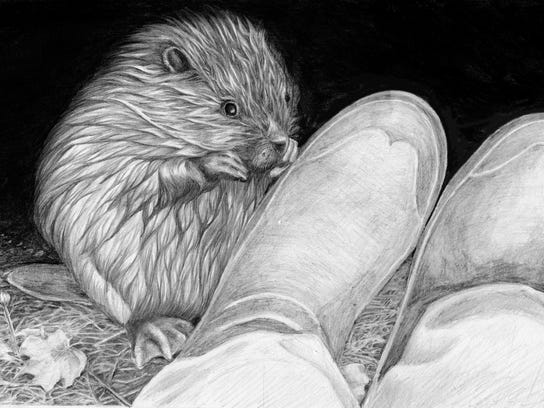
Snowberry and my boot. Patti Smith


Image result for beavers of popples pond
Patti Smith

If there were a single newspaper I trusted to cover beavers kindly it would be Vermont’s Brattleboro Reformer. They have dedicated beaver fans writing for them like Patti Smith, and even when they write about difficult beaver problems they are sure to include a positive voice.

And today is no exception.

Patti Smith: Heifer Hill: A New Year for beavers

On Tuesday evening I set off on skis to bring New Year’s tidings to my friends, Dew and Charley, at a remote pond. Those of you at lower elevations may be surprised to learn that there is still enough snow for skiing in Marlboro. The storm that delivered this bounty dropped the densest snowfall I can remember, ripping down branches, trees and powerlines. As I clambered through downed treetops in the topsy-turvy forest, I found myself visited by gloomy visions of future weird storms and the warm wet winters climate change will bring.

Fallen trees were not the only obstacles. Halfway there a new stream blocked my usual route to the pond. When the beavers relocated during the summer, their new dam shifted the stream into this new, more easterly drainage basin. This obstruction provoked no gloomy thoughts. I had just finished reading Ben Goldfarb’s book, “Eager: the Surprising Secret Life of Beavers and Why they Matter,” so I applauded the beavers’ contribution to the complexity of the stream system. In “Eager,” Ben writes vividly of the influence of beavers on the precolonial North American landscape. He describes a land of spongy, messy, complex waterways teeming with fish and wildlife. Because beavers were trapped out before European settlers began domesticating the wilderness, most landscape histories fail to imagine the richness of a beavered continent. I imagined such a primal place as I picked my way along the new flow to the pond.

Oh my goodness. All my favorite things in one place. How is this possible? I better drink some coffee slowly and savor this moment. I advise you to do the same. Patti Smith is writing about Eager!

I brought Ben out to meet Dew and Charley when he was in Vermont interviewing Skip Lisle for the book. Skip is a beaver habitat evangelist and has dedicated his career to developing solutions to beaver/human conflicts. Skip suggested Ben might like to meet my beavers while he was in the area, so the three of us met up one evening and hiked out to the pond. When we arrived, Dew, the matriarch, swam over to enjoy the apples we brought for her. The yearling, Charley, arrived a bit later, making his endearing squeak-whine greetings. We humans admired these two fine rodents and talked of the good works of beavers and the trials they face. We only got a little lost on the way home. I hope Ben’s wife forgave him for getting home so late.

Ahh again with the idyllic. So lovely to read. Such a charming way to understand beavers. I first read about Patti way back in 2011. Patti took the reporter on an a lovely expedition which she described thusly

As we walk, Patti and Luanne look for carnivorous sundew plants. Patti, who spends about two weeks camping near the beavers each summer, moves easily, sees the small treasures of the wetlands quickly, yet she lets her visitors make their discoveries in their own time. It is clear that, just as she visits the beaver’s house, we are in her house, and she is a gracious host.

Hearing her idyllic experience led me to contrast my own. I had to offer a rendition with some of the writing I remember most fondly on this website in over a decade, Here is my Martinez parody;

As we walk, Heidi and Cheryl  look for carnivorous homeless while Jon stuffs  the most noxious trash furtively into a plastic bag. No hypodermic needles tonight, and there is a feeling of cheer among the crowd to notice that there are three whole trees the city hasn’t yet  vindictively trimmed into oblivion. A fight breaks out in the brew pub and the argument is briefly reflected on the water in a patch of rainbow oil. As the sun begins to set the wind stirs the smell of stale urine from beneath the bridges and raccoons emerge to pick through containers of abandoned cat food.

Ahhh I don’t mean to boast but  I love that paragraph dearly. It brings back SO many memories of urban beaver watching. One time a homeless couple walked right by me and commented “She just sits here every morning, looking at the creek. Just talking to god.” I realized in that moment I had become a kind of ‘beaver shopping bag lady’. Whose quirky habits were even recognized by the homeless. HA! When I wrote the above paragraph I added  at the time that it was too much fun and I had to stop myself. It was true. Even now I’m tempted to add a line.

No. Let’s just stick with Patti.

The changes we humans impose on this good planet cause irrevocable damage to its life-generating and -sustaining capacities. The changes beavers make enrich habitat for countless other species and mitigate the damage we cause. Which species has the higher claim to a disputed site? I know who I’d vote for. If you read “Eager,” I think you’ll agree.

https://www.gannett-cdn.com/-mm-/dd1e9b6ea7418ef8158d71434b950dfe4b5c5e80/c=1012-0-7988-3924/local/-/media/Burlington/2014/04/25/-bur0422beaverdewberry.jpg20140423.jpg?width=3200&height=1680&fit=crop
Patti Smith

Lovely letter this morning from Caitlin Adair of Vermont about how property owners can help save water and mitigate storm damage. When I looked her up I saw that she was friend and neighbor of Patti Smith, which makes a lot of sense. (Patti is the wonderful artist and writer behind ‘the beavers of popple’s pond.) Caitlin’s letter is full of great suggestions that you should read and implement, but obviously the last one is my favorite.

Individuals can help make area more flood-resistant

What can we do, as individuals, to turn all the rain that a big storm brings into an asset rather than a disaster? You can look at your property or backyard and see what you might do to stop or slow the flow of water into nearby rivers. A few sandbags placed along a natural pathway for water runoff could prevent erosion and slow flooding. A more permanent solution might include building earth berms in these places or directing roof or driveway runoff into a rain garden.

Finally, beaver dams and beaver ponds also help rainwater to stay where it falls, soak in slowly, and restore aquifers. Beavers are the original wetlands engineers. Let’s support their work for the benefit of all.

Well said, Caitlin! And a great time to say it when folks are thinking about the effect of storms. From now on you are officially a friend of Worth A Dam.


Yesterday I was asked by Michael Howie of Fur Bearer Defenders to do a webinar presentation of our story for their Compassionate Conservation Week at the end of next month.
This unique event replaced our traditional Living With Wildlife conference by utilizing webinar technology that can bring together speakers from around the world, with audiences from around the world. Anyone with a computer and an internet connection can attend or participate as a speaker (though speakers will need a microphone, which is quite inexpensive). Each day we will showcase two to three webinars from a variety of speakers, all of which help wildlife advocates, researchers, students, and animal lovers get their communities on track with the concept of compassionate conservation.

We talked about my doing it last year but the timing was a problem. This year things look better so I agreed. I haven’t done a powerpoint presentation since my early days on the subcommittee, so I will need to do a little work to get ready, but I’m happy to help. We are heading for a vacation at the coast next week and I’m hopeful that some ideas can come together along the way. If it all works out, I’ll give you the specifics so you can attend or listen later. Stay tuned!


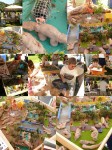
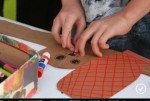
Every now and then some new gadget or technology catches my eye and I can just see how this could be incorporated into a wonderful activity. Two weeks ago it was the sticker books from Moo printing, which I must have seen on another website looking for information about children’s crafts. Each book contains 90 stickers printed according to your instructions. Everyone could be different if you like. And the entire set costs just 10 dollars.

I thought I’d try one out just to see if I liked it.

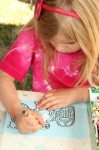
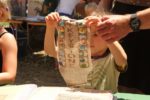
How  remarkably cute is this little book? The stickers are the size of postage stamps. I know what you’re thinking. How does this relate to beaver education? I’ll tell you how. Suppose each sticker book is a different species, birds, fish, dragonflies, frogs etc. And suppose kids had to ‘earn’ each sticker from the exhibitors by learning how beavers helped that animal. And suppose kids were given a card printed with an inviting keystone image on which to place their gathered stickers. A ‘Keystone Keepsake’ let’s call it. Like this for instance.

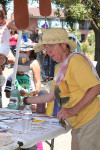
The physicality of placing that sticker on the card does a lot to really make the ecosystem connection. As you can see the possibilities are practically endless. I talked with Mark Poulin last week about reusing his very fun images he did as buttons one year. He gave permission and thought it was a great idea. Then I pulled together a keystone image with the fun illustration of Jane Grant Tentas, and it all came together. We could do 15 species for 150 dollars for 90 children, and I bet if I poke Moo a little bit I might get a bit of a donation because look how I’m plugging their adorable product!


Scotland visits our friends in Vermont to learn how to coexist with beavers.
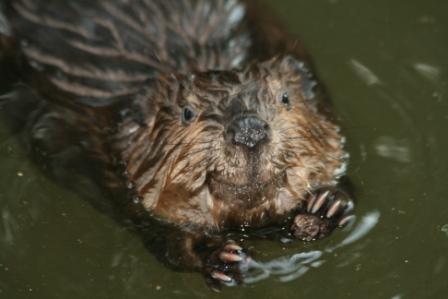
The View from Heifer Hill

Willow, the beaver whose life I have been documenting in this column for many years, had a visit from a special guest a couple of weeks ago, Roisin (pronounced RoSHEEN, she’s Irish) Campbell-Palmer, Field Operations Manager for the team working on the reintroduction of beavers to Scotland.

The project in Scotland has been one of the most carefully controlled reintroductions of a native species anywhere. Over the course of the five-year study period, five family groups from Norway were released in a forested area in the center of Scotland. These beavers were introduced as a trial, and their probationary period ends this year. Roisin and the other researchers involved have demonstrated that the beavers can survive in the landscape of modern Scotland, and bring the many blessing beavers bring, including a greater variety of habitat types, greater numbers and types of plants and animals, and increased economic revenue from beaver watchers. With flood and drought becoming increasingly common, beavers are also valued as an ally in retaining water on a landscape, and reducing the impact of floods.

While this carefully monitored project was going on, an illicit beaver reintroduction occurred in another part of Scotland, a more agricultural area. Roisin is now also part of a team studying the impact of beavers there, and because the beavers in the farmland have not been as welcomed by the locals, she travelled to Vermont to find out how we manage conflicts with these industrious creatures.

Illicit beavers! Somhow I kinda doubt that there could be a population of 150 if it had only happened during the sanctioned trial. Don’t you? Still it’s nice to read about our beaver friends from the other side of the world visiting the other side of the nation.

Naturally, she sought out Skip Lisle of Grafton, proprietor of Beaver Deceivers International. Skip has been solving beaver conflicts for years, and has learned how to modify beaver works in ways that allow them to do their wetlands restoration without causing undue damage to human property.

I joined Skip and Roisin on a visit to one of Skip’s job sites—a picturesque site with an old red cape, a striking view to the south, and cows grazing tranquilly on the hillsides. The three of us agreed that the best part of the scene was the series of beaver ponds tucked into the middle. When we arrived, we watched one of the resident beavers towing a bundle of fresh plants to the lodge, a good indication that kits were inside. We went down to the roadway to inspect the device Skip installed to keep the beavers from damming the culvert. All was working as expected, and not only kept the beavers on the landscape, but saved hours of time and headaches for the Halifax road crew. As we admired the scene, a mink loped past us, another of the beneficiaries of the work of Skip and the beavers.
At dusk we hiked into the woods to visit Willow. Because it is Roisin’s job to trap, measure, weigh and take samples from the beavers in Scotland, she had never met one that was happy to be with people. She was delighted to meet old one-eyed Willow, who flopped down beside us to eat an apple and offer herself for comparison to the Eurasian beavers.
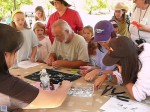
Now, back in Scotland, Roisin is awaiting the final decision on whether or not the beavers will be allowed to stay. Willow and I are optimistic. In fact, I can almost hear the ceremonial bagpipes welcoming the beavers back to their ancestral lands.

How exciting to read about Roisin’s visit with Skip and Patti! I’m sure the solutions to Scotland’s disgruntled farmers won’t be hard to find. The funny part is that there has always been a weird, salty competition between Skip Lisle of Beaver Deceivers Int’l (Vermont) and Mike Callahan of Beaver Solutions (Massachusetts). Even though they started as buddies, and Skip trained Mike, things went wrong somewhere along the way when Mike either helped or stole a client (depending who you talk to) and now the two most important men to the beaver-saving campaign can barely stand each other. This is how Martinez  (in the middle of nowhere) found itself so quickly in the middle of everything (because Skip was our hero in person and installed the flow device and Mike was our virtual hero online and gave us tons of advice along the way). It probably was no accident the two coincided, since both happened to be interested in the high profile case of the other.

I don’t know the much about original grudge, Suzanne Fouty at the beaver conference last year was ready to try an ‘Intervention’ to get them to shake hands and be friends – for the sake of the beavers if nothing else!  I’m thinking its entrenched by now like Gaza or the beginning of Fiddler on the Roof. The shouting crowd of ‘Horse’ ‘Mule’ is the defense of the people who have stood on one side or the other. We are all the ‘villagers’ and now the feud has extends overseas because our friends of the Tay invited Mike out to do a training in Scotland, and our friends at the official trial went to Skip to learn the trade. Tradition!

Never mind though, because my position has always been that we all need to get along. There aren’t enough beaver defenders in the world, I always say, to pick and choose the ones you ‘like’. We all have to get along and do our part if this is going to have any chance of working, right?

Happy Fourth of July from the beavers, btw from our forefathers. Play safe out there! Ameribeaver
I always am eager for an excuse to post this, which I think represents a window between technology and legislation that opens once in many lifetimes.


Great News! We have a date! The beaver mural is finally on the city council agenda for 7:00 April 6! That means that only 6 months after I originally met with the artist and proposed the idea we can find out if its possible! Any and all supporters who want to come should attend because it would help to show public interest in the project. Mario’s coming by next week with his latest edits of a fish and a frog in the two birds mouth, and I’m starting to feel like this can actually happen.

More great news! Another beautiful article from naturalist Patti Smith in the Battleboro reformer. You may remember her as the author of “The Beavers of Popples Pond“. Her writing style is so calmly affirming I love to read about her beaver visits. They are nothing like the train-whistle blowing, swearing homeless-drinking visits we enjoyed in Martinez. But ohhh they’re nice to read.

The Beavers of Poppels Pond: Patti Smith

The View from Heifer Hill: A tough break for the beavers

In the middle of January I gave up on waiting for snow and set out on foot to check on the beavers. I had not been to the pond since late November, but felt optimistic that the old one-eyed Willow and her new mate would be doing well; on my last visit I found that the two had built a small lodge and had quite a fine cache of branches piled up outside their door in the pond — their food supply for the winter. Their lodge still needed some work, but they had plenty of warm weather and open water in December to finish sealing things up.
Willow and her suitor had moved to this downstream location last summer and patched up the large hole Tropical Storm Irene had blasted through an old dam. Behind their repairs arose a fine pond, perfectly acceptable habitat for a pair of beavers. I arrived on that January day expecting to find the beavers tucked into their lodge and living beneath the ice, instead I found their pond was gone — the dam had broken in one of the heavy rain events of this weird winter.
Woebegone, I walked upstream to the lodge. The entrance was well above water, fully accessible to predators and therefore no longer suitable for beavers. Their food supply sat like an untidy haystack in the middle of the brook, most of it above the level of the water. Beavers prepare for such emergencies by making bank lodges, simple burrows dug into the bank of a pond. I suspected these beavers had moved into a bank lodge in a small pond just upstream. I could see a few openings in the ice above the intact dam of this pond, and from one of these a slide led down the face of the dam into a plunge hole in the ice at the base. Dusk settled — time for the beavers to become active. Sure enough, a beaver’s head appeared in the water above the dam. I said hello to Willow. She climbed onto the dam and slid down into the beaver-sized hole below. She reappeared downstream at the old food cache and came up through the ice for an apple. She appeared as calm and unruffled as usual. She had not seen the weather forecast — a deep cold would seal the ice on their pond within a few days. She and her mate would have no longer have access to their food supply.

Oh NO! A destroyed dam, exposed lodge and a food supply gone to waste! Poor Willow! How will she manage all winter long without food?

Since then, I have been keeping an eye on the weather for her. Whenever the beavers exit holes freeze, friends and I have hauled a sled load of poplar and beech to the pond, whacked a hole in the ice with a maul, and shoved the beaver food into the water. Our altruism has been doubly rewarded; not only do we suspect how welcome our deliveries are to the hungry beavers, but this wild stream valley is especially beautiful in winter. We have never seen the beavers on these delivery missions, but our offerings always disappear within a few days.

smile-again-1I wish that everywhere there was a beaver there was a Patti Smith to look out for it. This article gives me immense joy and the ending of it is worth reading. I won’t tell you what happens because you should go read it for yourself here. Robert Browning’s Pippa Passes offers a clue.

God’s in His heaven
    All’s right with the world!

BEAVER FESTIVAL XVII

DONATE

Beaver Interactive: Click to view

TREE PROTECTION

BAY AREA PODCAST

Our story told around the county

LASSIE INVENTS BDA

CONTACT US

URBAN BEAVERS

LASSIE AND BEAVERS

Ten Years

The Beaver Cheat Sheet

Restoration

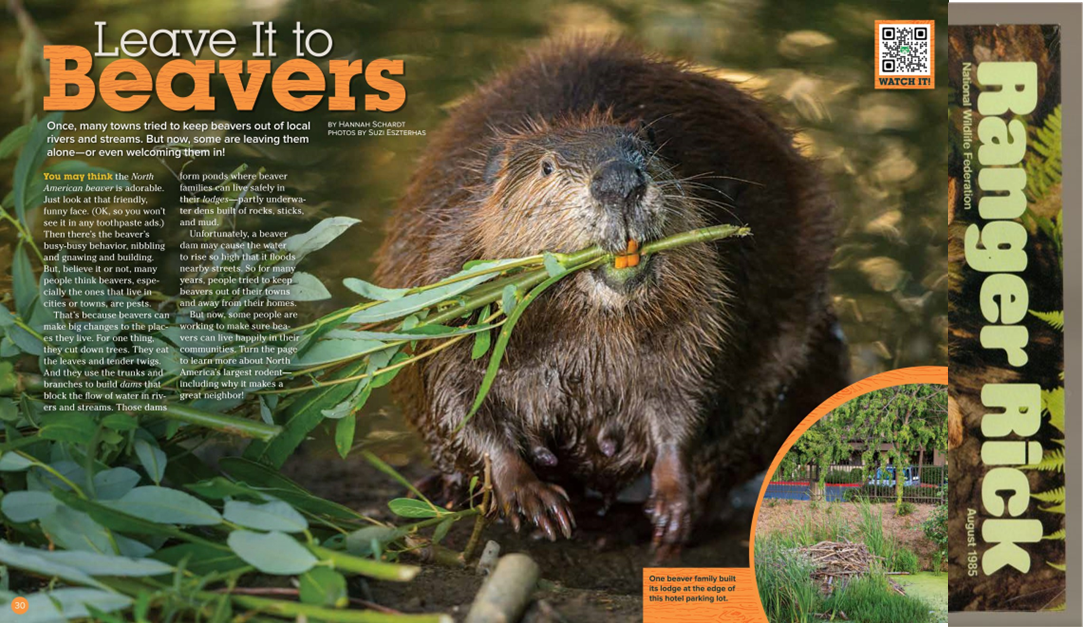
RANGER RICK

Ranger rick

The meeting that started it all

Past Reports

May 2026
M T W T F S S
 123
45678910
11121314151617
18192021222324
25262728293031

Story By Year

close

Share the beaver gospel!