




 This morning’s title is the actual header of the mortified email sent to me yesterday by famed and familiar author Ben Goldfarb who had always considered Ted Williams a kind of conservation legend.
Ahh, how the mighty have fallen. Over beavers, of course.
Thinking Like a Trout Stream
A case in point is its inability to accept biological realities of beaver overpopulation.
The causes of ecological damage by deer and beaver are identical. Wolves, the major predator of both species, have been extirpated or severely reduced in most deer and beaver range. Heavy logging in deer and beaver range has replaced poorhabitat old growth with deer and beaver candy such as aspen and willow.
Beavers in natural abundance have usually been good for native ecosystems, trout included. In much of the Pacific Northwest, beavers are depleted, and managers are rightly attempting recovery.
You can see right away where this is going. The argument is that numbers of beavers when controlled by wolves and mt lions are helpful. But the number we have NOW! Oy vey! He starts by quoting the praise of beavers given by Oregon and Washington fisheries.
Beavers .. . create reservoirs of cool water that salmon need to survive,” report the Northwest Treaty Tribes of western Washington State in a news release titled “Beavers Relocated to Improve Salmon Habitat.”
Such assertions are accurate in Oregon, Idaho, and Washington, at least on most high-gradient streams. But when they’re cited as alleged evidence that all beaver populations are great for all species in all states, they’re flat wrong; and they hurt the cause of native ecosystems. Do a Google search for beavers and trout, and almost all you’ll find are effusions about the alleged value of beavers everywhere and excoriations of fisheries managers who attempt to modestly control gross irruptions.
 Oh those little NOAA scientists and their crazy ILLUSIONS! Obviously what you do in the Pacific states doesn’t matter because they’re already insane anyway. But what here in Wisconsin or Massachusetts we’re OVERRUN with beavers.
BUT BEAVER BLIGHT IN THE EAST IS MILD COMPARED TO THAT IN THE MIDWEST. Angler/photographer Len Harris of Richland Center, Wisconsin, describes the pre-hangover high that comes with the discovery of a new beaver pond: “It’s smile-producing at first because of bigger trout. But the flooding cycle cleans out that dam and all the barren bank. The streams widen and increase in temperature. . . . My home waters have warmed by at least four degrees in the last twenty years. This is from a combination of beavers not being kept in check and climate change. Warmer water, resulting gill lice, and resulting competition from brown trout have stacked the deck against the natives. Humans need to limit beaver expansion near our brook trout streams. Thankfully, a new regime is in place in Wisconsin as of 2019. Science will be back on the books, and our DNR will once again be staffed with caretakers of the streams, not climate-change deniers.”
So wait a minute. You’re equating beaver believers with climate change deniers? Because they’re both on teams you dislike? That’s so entirely provoking I’m not even sure what to do with you. Ben says you’re revered and I’m sure [Brutus is an honorable man} so I won’t write what I’d like to. But maybe you could spend five minutes in an actual trout stream with an actual beaver dam before you accept funds to write something ridiculous like this again? Or hey maybe snorkel in it and see all the baby trout swimming around? He goes on to describe several “misguided” environmental groups that think beavers have any value. I’m just sorry he didn’t mention US.

“There are a lot of people in our organization who really value the beaver ponds as something that attracts wildlife and increases biodiversity,” the group’s chair, Corlis West, told the Lake County News Chronicle. “Not just beavers, but for moose and mink and waterfowl and frogs and turtles.”
“They [beaver ponds] provide special habitat,” added retired University of Minnesota Duluth geology professor John Green. “They’re wildlife magnets for breeding and migrating birds. All kinds of wildlife like them, and people enjoy those.”
Notice how he goes after the little guys like beaversprite not NOAA fisheries and their years of data. He knows exactly what he’s doing here. When a giant like Ted Williams writes a giant amount of BS like this, it’s going to take another giant to knock him down. David and her little GIFs aren’t going to do it. But good LORD this is irritating. Does he really truly believe that there are MORE beavers now than there were in 1730? Even knowing the numbers of pelts reported? Really? Even knowing all the economies they funded?
Does Ted secretly know a story about the great native american salmon famine of 1630 that all of us don’t?

SALMONIDS BENEFIT FROM BEAVERS IN MUCH OF THE WEST; but beaver irruptions are nuking lots of coldwater habitat even there.
Wildlife advocates need to keep two different thoughts about beavers in their heads simultaneously. Beavers in moderation can be good for coldwater species. What’s bad for coldwater species is not beavers; it is too many beavers—unnatural proliferations caused by human activity, such as clear-cutting and wolf eradication. “Letting nature take its course” doesn’t mean sitting on our hands after we’ve disrupted natural balances.
The funniest part of this ENTIRE article, and believe me there are several, is that he presents the “pro-beaver” lobby as if we were SO powerful. As if we had frightened Fish and WIldlife in Nevada and California so that they’re afraid to do all the killing that’s required. As if we had scared people away from killing all the beavers they need to kill!
As a woman with her toes on the very front lines of beaver defense allow me to offer a counterpoint after reviewing 10 years of depredation permits in California alone:

You’re so funny, Ted. I think maybe you and Ben are going to have a dynamic discussion some day soon. And maybe Michael Pollock will want in on it. Worth A Dam will pay for the beer. I’ll just be over here. Trying to get over the giggles.
“It’s unlikely that managers will ever be able to restore more than a tiny fraction of trout streams destroyed by beavers. But, as Leopold wrote in a 1946 letter to his friend Bill Vogt: “That [a] situation appears hopeless should not prevent us from doing our best.”
Just a final thought. The famous Leopold and his famous son who inspired this article was famously ignorant about the importance of beavers. Neither of them had any idea how important beavers are to streams or fish. And I’m quoting two of the most knowledgeable voices I know on this matter. Aldo was a visionary voice who knew and understood many, many things. But beavers wasn’t one of them.
So it’s perfect that you frame this entire argument around him,
 Beaver: A Willing Ally in a Drying World
 Aaron recently visited Taos speaking to the Rio Fernando de Taos Revitalization Collaborative — a collective of elected officials, agencies, groups, and individuals working to bring a New Mexico river back to life — about living with beavers. Why? Because beaver are vital to healthy and resilient ecosystems. Where there are beaver, there are plenty of other native wildlife. Beaver, North America’s largest rodent, are truly an ecosystem engineer, creating wetlands, ponds, and meadows, filtering water, trapping sediment, and mediating flashy streams into more consistent flows. All they need is water, trees, and time to be busy, as the saying goes.
 Landowners in the Taos, NM area are realizing the potential benefit of beaver, but also know that there are possible downsides. Beaver are busy, and part of that busyness includes felling trees to use in their construction projects and as a winter food source. This also includes flooding areas which humans may or may not want to be flooded. This conflict is sometimes problematic and often results in beaver being killed and removed. Defenders’ goal is to work with interested groups, such as the Rio Fernando de Taos Revitalization Collaborative in Taos, to promote more beaver on the landscape through mitigating their impacts. Trees can be fenced, flow devices can be installed to minimize flooding, and education and outreach can help promote positive attitudes about beaver, water quality, water quantity, and habitat for other species such as fish and amphibians.

 The term “Press gang” applies to the British custom of seizing unsuspecting eligible men with force and depositing them on ships to work as hostage-sailors. It was used largely in war time but regularly through the 16th, 17th and 18th centuries. It represents the very opposite of the term “All volunteer army.” And usually happened to poor or unimportant men that no one was likely to miss.
 Blanding’s turtles were once common in much of Canada but are now endangered. They happen to be of interest in longevity research, as they show little to no
 Hope for Wildlife has been caring for the animal, which likely has a head injury from a car crash It’s hard to picture a more Canadian start to a news story: the Mounties getting called out to help an injured beaver in a Lower Sackville, N.S., mall parking lot.
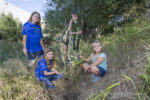
 HAMPTON FALLS — A local teen is working on an Eagle Scout project to alleviate the flooding problems beaver dams are causing to the town’s culvert system.
 The pipes will also eliminate the creation of unwanted wetlands, as well as minimizing flooding by promoting continuous water flow of the Taylor River. Furthermore, he said, this method of dealing with beavers is “conservation-minded” and has proven successful nationwide.