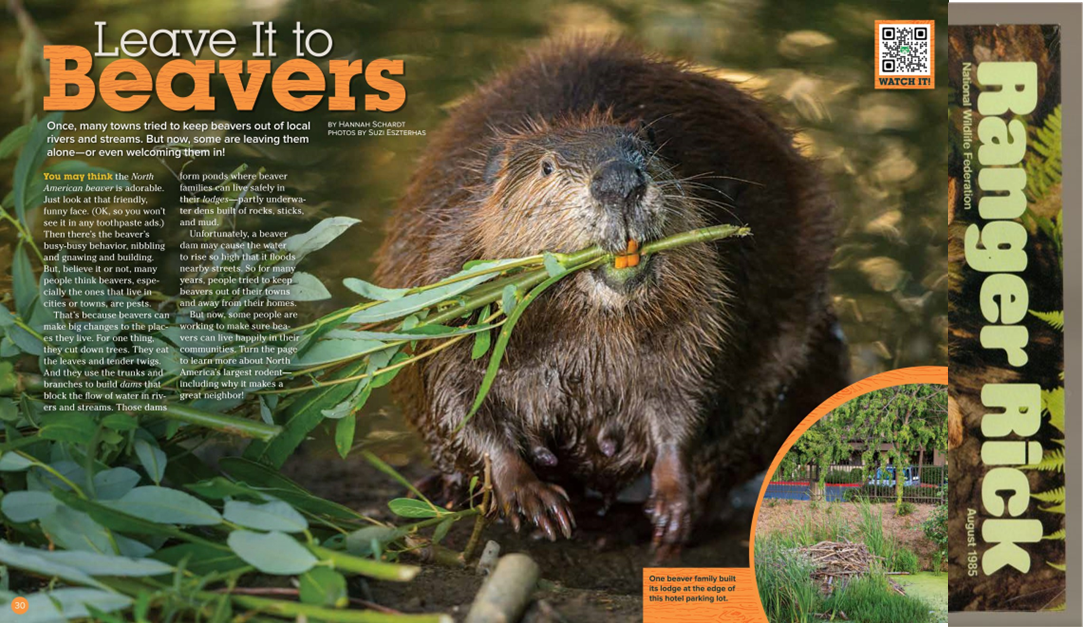





Because the beaver isn't just an animal; it's an ecosystem!


FacebookFacebook
email articleemail article

Do you remember that kid in third grade that got the best toys and the best clothes and went to Disneyland every summer? Their family seemed to have infinite funds and their mom was always driving a new car that was so clean it twinkled when she dropped them off at school. Maybe there name was something like Susie or Biff but admit it, you hated/envied/admired them. They had everything you wanted and never had to work for it.

Well that’s how I feel about Washington state.

Pikes/Pines | Stop giggling and consider the urban beaver on the shores of Lake Washington

Beavers have a way of getting under our skin. Some people despise them, others think they are panacea, and cute as a button to boot. Beliefs and feelings often intermingle inextricably with facts, which is why I believe beavers are amazing creatures, and a landowner with a flooded yard might have different thoughts. And yet, we’re all talking about the same creature.

Now you’re reading this, thinking to yourself: “There aren’t any beavers on Capitol Hill.” On top of it, certainly you are right. However, a quick trip down to the water nearby yields obvious signs of their presence, regardless of our actually seeing a beaver.

Most importantly, beavers are keystone species, meaning that entire ecosystems are reliant on their presence or absence. For birds, plants, and fish they mean life, and luckily many an ecologist, land manager, and tribal nation have acknowledged this in their work more and more often these days.

It isn’t very often that I want to excerpt the entire article and repost it here, but this one by Brendan McGarry is nearly perfect in every way. It talks about Ben Dittbrenner’s excellent urban article and Ben Goldfarb’s excellent beaver book and hardly leaves any good stuff out.

in a 2017 paper published by Dittbrenner and colleagues titled “Reintegrating the North American beaver (Castor canadensis) in the urban landscape,” there is explicit support for beavers in the city of Seattle and other urban centers. It calls for landscape design to consider the beaver, and highlights the success of some recent projects around town. Dittbrenner said that despite the fact that they can be problematic, “there is no question that beavers are increasing diversity.” When we desperately want species like Chinook salmon in our streams, it makes sense that beavers, with their ability to create refugia for young fish and their food, should be welcomed into places like Thornton creek.

The human task is to try to figure out ways to interact that don’t require lethal trapping. From Dittbrenner’s perspective, more beavers are inevitable in urban Seattle. The question is, can we accommodate them for the ecosystem services they provide? Goldfarb’s “Eager” makes it clear as well: beavers will return. We can either waste a lot of time and money to be rid of them, or learn to coexist. I’d like to think we can find ways to get along too, because hell, I just think they’re fun.

I know which one I pick.  Hell, I think they’re fun too. Go read the entire article if you want a cheerful boost to your morning. It describes how the author has been trying to photograph elusive beavers for years. As we could tell him Martinez, summer evenings is usually the best,

Of course one nice beaver article doesn’t make Washington a spoiled brat. That takes two fantastic article on the SAME exact day to earn that title.

Check It Out: Check out ‘Eager,’ join ‘beaver believers’

This is without a doubt the most persuasive book I have ever read. If you need any amount of convincing that beavers are absolutely essential (that’s right — not just essential but absolutely essential) to our planet, check out Ben Goldfarb’s book now. Informative, witty, eye-opening, “Eager” has turned me into a complete “beaver believer.” Aside from noting a beaver dam or lodge during outdoor excursions, I hadn’t given beavers much thought. The sum total of my beaver knowledge before reading this book went something along these lines: beavers have paddle-shaped tails that are good for slapping on the water; they make dams and lodges; their fur was highly prized during the fur trade; they’re good at felling trees; and around here a “beaver fanatic” equals an avid college football fan not a lover of rodents. Now that Goldfarb’s ode to the Castor (that’s the genus of this species) has expanded my castorid awareness, don’t be surprised if I go all fangirl at my next beaver dam sighting. Squee!

The most persuasive book you’ve ever read. That’s quite an opening line. What a compliment! Ben will think of course its his considerable prowess with the pen that is so convincing, but you and i know better. It’s the subject matter of course. When he knocks off his next book about Capybaras or road ecology people will like it but I’m going to go out on a limb and say that no one will call it the MOST CONVINCING BOOK they ever read, It’s the beavers themselves that are convincing.

Learning about beavers and their habitat has never been so delightful. While “Eager,” the winner of the 2019 PEN/E.O. Wilson Literary Science Writing Award, is full of scientific information, not once did I feel book-weary with facts and stats. Goldfarb turns what could be a dry treatise on science and nature into a fascinating and charming account about our tree-gnawing neighbors. When Goldfarb interviews a biologist and the conversation turns to predators of the beaver, specifically the grizzly bear, the biologist says that in the grizz’s eyes the beaver is a “fat, slow, smelly meat package” — descriptive and accurate. Did you know that a select group of castorids sky-dived their way into a new habitat thanks to a special beaver named Geronimo? Oh, I could go on and on about these paddle-tailed wonders, but I’ll stop because what I really want to you to do is read “Eager,” and become a “beaver believer” like me.

By all means, go read the book! And thank you Jan johnston, for the excellent review. More people should read Eager I agree, but maybe not more people in Washington state. I think of beaver wisdom in the western states as a kind of raft floating over the sea of ignorance that runs through our nation. A lot of smart people are already piled up on the Washington corner. The whole thing is starting to tip to one side. What we need is smart beaver minds spread equally across the states.


FacebookFacebook
email articleemail article

Yesterday was a pleasant mix of adults who had heard about our beavers on the news, or grown up with others on the east coast, or were just pleasantly curious about the story. The day was neither too hot nor too cold and for once large gusts of wind didn’t blow our belongings over or off the table. There were plenty of people who had enjoyed the presentation at Audubon and i was once again grateful it went as well as it did. The last presentation before the festival will be at Safari West in 2 weeks and then it’s serious buckling down for the big day.

In the mean time there’s lots to discuss, starting with this excellent article from the website “Resilience” which discusses the array of benefits rewilding can have in slowing the devastation of climate change,

The Wild Way to Rapid Transition – How Rewilding can Slow Climate Breakdown, Protect from its Worst Effects and Improve Biodiversity

Even as they fall under increasing pressure from human activity, the restoration of natural habitats like forests, is a key component of rapid transition. Not only is it a vital defence against climate breakdown, but it also protects the web of life and is beneficial for human well-being too. This ‘rewilding’ has caught the public imagination…

Charismatic animals like the Lynx, the wildcat and the wild boar are all candidates for reintroduction in the UK, but the humble beaver is currently the key species leading the way: its incredible engineering skills create a diverse range of habitats for birds, insects, fish, small mammals and plants; slowing down water flow; preventing flooding downstream; and storing water for use locally. Beavers are native to the UK but were hunted to extinction for their highly prized fur. In 1789, the last bounty was paid in Britain for a Eurasian beaver skull; today they are thriving again – some as part of highly controlled, fenced and monitored trials and some from unregulated releases.

Are you implying that beavers aren’t charismatic? Beavers? You know of course that they’re specifically described as such by numerous researchers. Besides, come on! They make infant bath towels and socks with beavers on them. Why on earth would that be true if beavers weren’t charismatic?

The beaver is native to the UK and made itself quickly at home; positive effects have been reported on water catchments and biodiversity in very short periods of time. Beavers are so good at water engineering, they have been proposed as a tool for implementing the EU Water Framework Directive.

Rewilding proves how good nature is at bouncing back to abundance, given the opportunity to thrive without human interference. This gives us hope for a future in which human populations could live in a more diverse environment, where the balance of nature helps mitigate our more destructive tendencies. Beavers had all but died out across Europe by the 18th century, but are returning successfully to manage waterways, ponds and whole water catchment areas. Most ponds used to be made by beavers, but are now man made. In the Devon Beaver Project site, one family of beavers made over 10 ponds in just three years, benefitting a huge array of dragonflies, birds and amphibians. The 10 clumps of frogspawn laid in 2011 increased to 370 clumps by 2018.

That sounds pretty impressive to me. At least the frog spawn thinks so.

The finances are important because rewilding is often predicted to be a costly effort, causing the loss of productive land for food and the death of livestock by large predators. However, for a fairly small amount of money and in the right place, big changes can happen that can offer enormous benefits downstream – literally. Research by the UK’s Environment Agency suggests returning England’s water bodies to a good ecological condition could generate benefits worth £21 billion over a 37-year period. Beavers could be part of this solution, restoring wetlands, boosting water reserves and slowing down flood water. Beaver dams also act as a filter capturing pollutants such as agricultural fertilisers.

The National Ecosystem Assessment highlighted that 30% of ecosystem services – the benefits and services nature provides society and the economy, such as clean water and flood alleviation – are in decline, and many others are impoverished compared to historical baselines. Soil degradation is estimated to be costing England and Wales £1.2 billion per year. The causes include: erosion, compaction, loss of organic matter, loss of soil biodiversity and contamination. Rewilding may be the fastest, most effective way of undoing some of this damage.

Yeah, beavers can help with that too.  In between preventing flooding and species loss. And they do it all with SO much charisma! I can’t tell you!


Happy Mother’s Day to all the Grandma’s. Mom’s and about-to-be Mom’s out there. Of course we will never forget the amazing mother who started this all.

June 29, 2010

Honestly when I went down this morning I purposely decided not to bring a camera because I thought it would just be too sad, but I wish I had filmed it so you could all see how completely calm and unpanicked mom was. she just was in no condition to react, and if we had left her alone she was in such a visible part of the creek that people would have intervened and/or called animal control. This way she was completely protected by us and not at all agitated or frightened. It was almost like she knew we wouldn’t harm her, and it certainly felt right, after everything we have been through and all the mornings I have spent with mom to have her riding peacefully in my subaru. We will be out tonight to make sure the kits are feeding and happy. It was becoming clear that the family has already transitioned and the kits have been relying on the yearlings care more and more, which is just like we’d hope.

I’m very grateful for everyone’s help this morning, and grateful that mom gave us the easiest possible decision about whether, when and how to intervene. The saddest part for me is thinking about how hard she must have worked to stick around and care for those three new lives. We can all be grateful for her remarkable parenting and the 15 live births she allowed us all to enjoy.

I thought this morning of this quote from one of my favorite books ever written. It is an amazing tale of a young girl during the holocaust, fearlessly and compassionately narrated by “Death”.

Lastly; the Hubermans

Hans.
Papa

He was tall in the bed and I could see the silver through his eyelids. His soul sat up. It met me. Those kinds of souls always do – the best ones. The ones who rise up and say, “I know who you are and I am ready. Not that I want to go, of course, but I will come.” Those souls are always light because more of them have been put out. More of them have already found their way to other places. This one was set out by the breath of an accordion, the odd taste of champagne in summer, and the art of promise-keeping. He lay in my arms and rested.

Markus Zusak: The Book Thief

Come tonight if you want to see reassuring beavers and comfort your hearts. Thank you all for your caring and concern. I will make sure to update as soon as we know anything about mom’s health.

Heidi


FacebookFacebook
email articleemail article

Every now and then there is a friendly beaver story in the news accompanied by an amazing photo or two, and if its not from Martinez or Napa, or Vancouver or Port Moody, it’s from Spring Farm Cares in New York.

Spring Farm Nature Sanctuary home of preserved and restored native wildlife

Spring Farm CARES has a reputation for rescuing and caring for injured and sick farm animals and household pets, and serves as a place for them to stay for the remainder of their lives. But a “hidden gem” is the conservation work and care given to the natural wetlands and wild animals that make the 260-acre property off Route 12 their home at the Spring Farm CARES Nature Sanctuary.

The sanctuary is staffed by Naturalist Matthew Perry, who is Spring Farm CARES’ Conservation director and nature sanctuary manager. He is recognized throughout the region as an authority on wild birds, their habitat and behavior. Among his specialties are neo-tropical songbirds and Peregrine Falcons.

Perry said there is care taken in the decision of what trees and shrubs are planted on the property to help create a self-sustaining and thriving ecosystem. Certain trees, flowers, seeds and nuts provide food and sustenance for the wildlife habituating the area, such as the beavers, mink, muskrats, frogs, geese and bird varieties. Tamarack and Pussy Willow, for example, are loved by beavers, in addition to the sweet potatoes Perry feeds them. Those furry “friends” of his actually do the natural work in providing the rich, watery habitat for other mammals, fish, turtles, frogs, birds and ducks.

“They work for us, so we need to work for them,” Perry said about building and restoring the wetlands. “And if you’re going to do a wetland project on the cheap, beavers are good to have on your side.”

Yes, they are. Mighty good indeed. It’s nice when folks appreciate their neighbors. Here in Martinez for instance, we counted ourselves pretty lucky that we were able to live with beavers for a decade. And of course the creek felt lucky because it got more fish, birds and otter when the beavers made things comfortable for them.

Speaking of making things nice and comfortable, we’re off today for our friends at Wildbirds Unlimited in Pleasant Hill for their always entertaining Mother’s Day Event and wildlife day. If you’re in the market for some birdseed or a special gift, come by and say hi because they always have plenty of exhibits and the best sales today.


FacebookFacebook
email articleemail article

This morning there’s an excellent article about the power of beavers to change their environment and how it can save us from extinction. Well. no it doesn’t specifically say that but it comes pretty dam close if you know what I mean.

Giant beaver’s diet likely led to its demise, Western study finds

The giant beaver’s diet may have been the reason it died out in the last ice age, a first-of-its-kind study by Western University researchers says.

Researchers studied chemical tracers — stable isotopes of nitrogen and carbon — in the beavers’ fossilized bones and teeth to learn more about their diets. The study authors found the 100-kilogram rodents dined on underwater plants and therefore required wetland environments to survive.

“We did not find any evidence that the giant beaver cut down trees or ate trees for food,” lead study author and former Western graduate student Tessa Plint said in a statement. “Giant beavers were not ‘ecosystem-engineers’ the way that the North American beaver is.”

“When you look at the fossil record from the last million years, you repeatedly see regional giant beaver populations disappear with the onset of more arid climatic conditions,” study co-author and Western earth sciences researcher Fred Longstaffe said in a statement.

Well, well, well. Not so much of a NUISANCE beaver now, am I? Adapt and change, that’s our motto.If you don’t like the way the pond looks today, get up and change it tomorrow. That’s the beaver way. And if you don’t take our advice you’ll go extinct and end up with some grad student studying the isotopes in your useless teeth.

The smaller beavers’ diet and behaviour, especially chewing through trees to build dams, might be the reason their descendants are still around today, researchers say.

“The ability to build dams and lodges may have actually given beavers a competitive advantage over giant beavers because it could alter the landscape to create suitable wetland habitat where required. Giant beavers couldn’t do this,” Longstaffe said in a statement.

So wait a minute. Wait just a doggone minute. Hold everything.
Are you telling me that the very thing that annoys and frustrates folk most about beavers, their damming streams and chewing of trees, the very reason we HATE and trap them and complain about them, is the EXACT same reason they survived the last big climate change crisis?

No reason, just asking for a friend.


FacebookFacebook
email articleemail article

You know how it is, you rack your brain thinking up some bright idea and if you’re lucky by the time the clock hits 3 in the morning you get an inspiration. And you think, hey that might work. It might work really well. You get up your courage and tentatively launch it to the world and immediately everybody wants to borrow it.

Yesterday we got our beaver ‘yard signs’ back from GLT for the festival and were loving how they looked. I shared one photo and the incoming director of The Methow project already asked if she can use them.


My goal this year was to expand beaver education to the adult audience. I think this does it. Those are going to look so cool in the grass around the stage!

Then Fur-bearers launched their latest awesome podcast whose title you just know was a brain child of our own very original name.

Defender Radio host Michael Howie spent four days in Belleville, Ontario, where a nearly year-long process to protect beavers after one was found in a trapped reached its conclusion. The interviews included in this episode were recorded in the field with local residents, political leaders, and the inventor of the Beaver Deceiver himself, Skip Lisle. Read more and see photos by clicking here.

It’s a great interview with Doug, Skip and some other locals. My favorite part remains the shocked horror with which Doug and his neighbors greet the discovery that in this modern day and age that beavers are still brutally trapped.

I just love hearing the shock in his voice.

Oh and I’m not worried that ideas are borrowed or appropriated. The more people talking about the neat things beavers do the better, They can use, alter or window dress my ideas however they like.

Something tells me I’ll make more.

BEAVER FESTIVAL XVII

DONATE

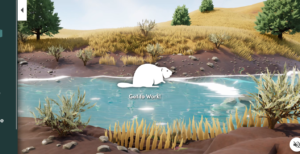
Beaver Interactive: Click to view

TREE PROTECTION

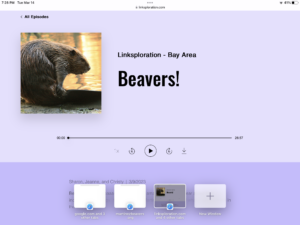
BAY AREA PODCAST

Our story told around the county

LASSIE INVENTS BDA

CONTACT US

URBAN BEAVERS

LASSIE AND BEAVERS

Ten Years

The Beaver Cheat Sheet

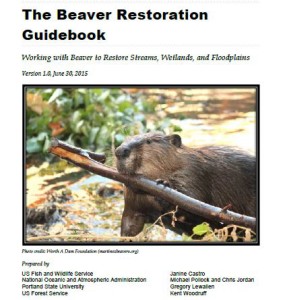
Restoration

RANGER RICK

Ranger rick

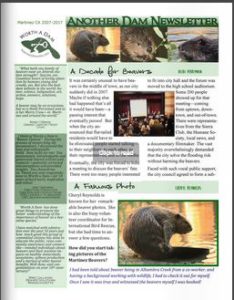
The meeting that started it all

Past Reports

June 2026
M T W T F S S
1234567
891011121314
15161718192021
22232425262728
2930  

Story By Year