
It isn’t very often anymore that the headline of a beaver article astonishes me, but this one took my breath. It’s an excerpt from author Ryan Huling and his book “The Hidden Nations of Animals”.
Beavers Don’t Just Build Dams, They Build Nations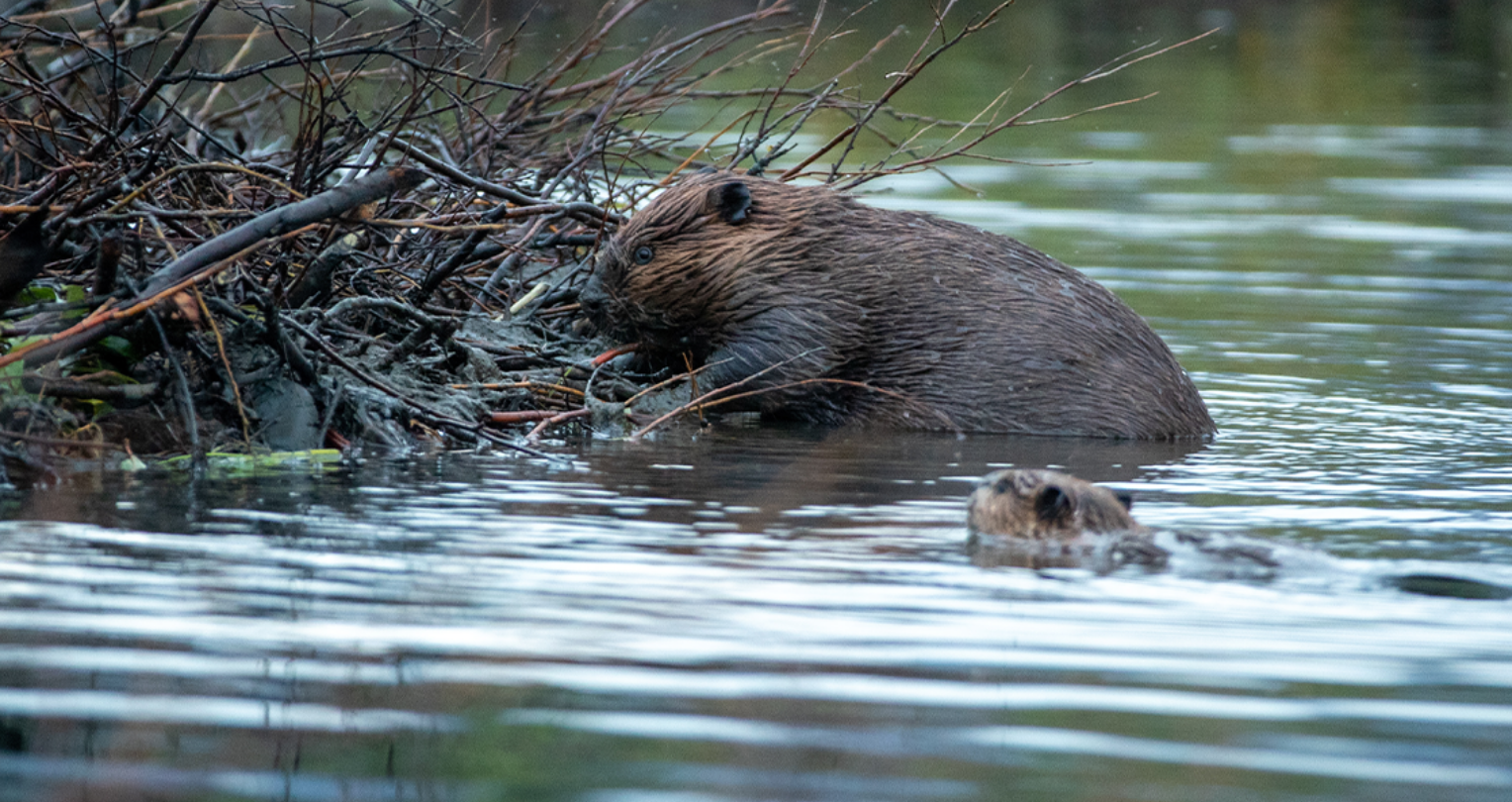
Settlements are commonly understood to be places of fixed inhabitation, often motivated by a strategic location, perceived absence of safety threats, or proximity to natural resources. It’s a fraught term frequently hurled at those seen as invaders, but at its most basic level, a settlement is simply a place where at least one person lives.
When humans decide whether to settle in a new place, we often take some basic criteria into account. Will we have reliable sources of food and water? What are the limits to how far we can travel? Perhaps a different group of humans (or other animals) lives nearby that we know to be aggressive. Are the risks of raising our family near that potential threat outweighed by the advantages this area provides to us? And if we do decide to stay, who’s going to do what to make sure that our community thrives?
These are manifestations of what philosophers refer to as worlding—the process of creating one’s own world. It involves a series of steps, such as identifying landmarks, drawing spatial boundaries, assessing the ecological context and vital contributions others are making to it, and establishing our interactions with the fabrics of the planet, which collectively form the world as a group of individuals understands it. These life-sustaining practices continually shape and reshape the narratives and mental maps we carry with us everywhere we go—and a growing number of experts now believe humans are not alone in enacting this process.
I can’t think of a single species that does this more than beavers. Is the water deep enough? Where could I and my family get food? How fast is the flow? Can I slow it down?
Maybe with beavers it is not conjecture, but trial and error that answers these questions. If it works I stay. If I can’t change it I move on and look for someplace I can change.
Maybe the beaver’s version of the Serenity Prayer looks more like
“God grant me the persistence to keep working until I change things, the humility to give up on things I cannot change and the Wisdom to know the difference”
When beavers are scouting a possible location for their dam, one of the first points they consider is where they hear flowing water. Gentle creeks and rivers are more appealing than, say, white-water rapids, which would swiftly overpower them. Given the choice, beavers are partial to places just downstream from plateaus and foothills, because in the springtime, snowmelt from higher elevations brings with it huge bounties of runoff sediment, mud, and sticks. For a beaver, that’s like having their groceries and home-maintenance supplies delivered to their doorstep.
Once a suitable location has been selected, construction can begin in earnest. Aided by up to a half dozen family members, the beavers will harvest branches and logs from the surrounding forest under cover of nightfall, carrying and shoving them one by one into the floor of mud and rock. This structure is then interwoven by a dense mesh of twigs and vegetation, which plugs holes and creates a solid barricade capable of retaining water and flooding the landscape. This hydro-engineered beaver pond forms the foundation of their world.
As the water rises, the beavers will select a spot, usually in the center of the pond, to build a lodge. The water around the lodge has to be deep enough to form a moat, providing defensible space from predators who might wish them or their family harm. Made of branches and mud, these domed structures will ultimately serve as their primary housing, complete with secret tunnels, underwater doorways, and several interior chambers for living and sleeping.
 I especially liked this part because it came as close as I could imagine to beavers thinking ahead.
Equally important to the beavers’ survival is the creation of an intricate maze of navigable canals, which can extend hundreds of feet into the surrounding forest. Wood is much easier to drag in water than on land, so these channels create glide paths to replenish their supplies. Such infrastructure is largely invisible on modern-day maps because canals have historically been equated only with human-made creations. From a cartographer’s perspective, animal-made canals may as well have been birthed by nature itself, like a creek, when in reality both versions were painstakingly dug with transit in mind.
Once built, animal constructions can last a remarkably long time. When researchers took a fresh look at an 1868 map drawn by anthropologist Lewis Henry Morgan of what he described as “a beaver district” in Michigan’s Upper Peninsula composed of 64 dams and ponds, surveyors found that 75 percent of the dams were still standing—or perhaps had been blown out and rebuilt in the same spot—150 years later. The dams, Morgan wrote, “have existed in the same places for hundreds and thousands of years,” and “have been maintained by a system of continuous repairs.”
It’s funny, but in my mind our matriarch beaver was always the one that looked at Alhambra Creek with all its noise, traffic and human interference and decided, “This will do“. Her much more private mate might have preferred a forgotten cove on grizzly island but she thought urban life could serve a family and she was right.
27 kits were born in the middle of a city and that changed my world. for sure.