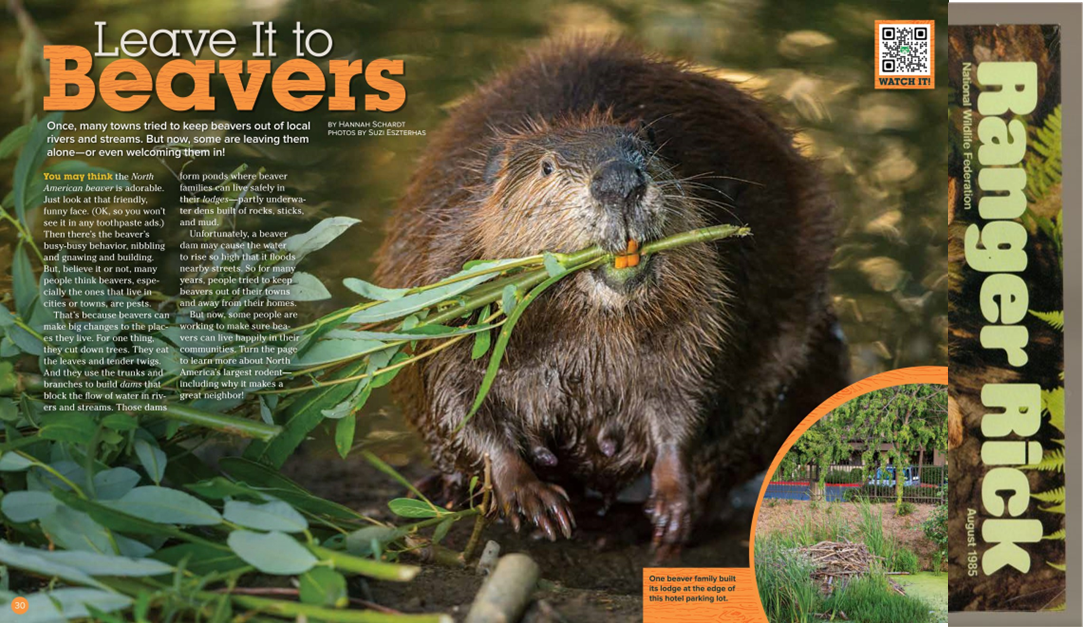





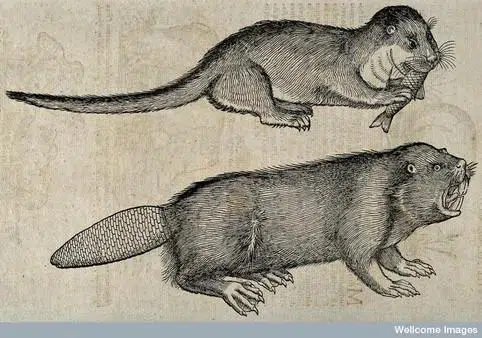
The reason I love this image is because it represents perfectly the rakishly unjust way in which these two species are regarded. The otter image is cute and coquettish with huge long eyelashes to invite you closer while it devours its tasty morsel.
The Beaver with its multiple rows if teeth is truly terrifying and could not be more ugly and unattractive. A giant tooth vagina lurking on the landscape.
If you had a big sister that everyone loved and thought was perfect and you were always treated like you were invisible or a second class citizen even though you earned a scholarship to Stanford and silver medal at the Olympics you can probably guess how beavers feel about otters.
Now beavers are already tasked with preventing droughts, halting wildfires, slowing floods and cleaning the earths liquid toxins, but now they’re apparently being signed up for another job.
Returning river otters to the Gila and how beavers can help
Together, beavers and otters can create a more resilient, biodiverse river system
Did you know that river otters (Lontra canadensis) were once common in New Mexico, thriving in waterways across the state? In this era of otter abundance, otters played a key role in the Land of Enchantment as apex aquatic predators that helped stabilize food webs.
By feeding on overabundant species like crayfish and other non-native fish, otters can help reduce competitive pressure on native species like the Gila chub and spikedace. Their presence is also a signal of ecological health: otters need clean water and healthy fish populations to thrive.
)
In a tragic story all too familiar, overtrapping combined with man-made habitat modifications and degradation led to the sharp decline of the native otter population. With New Mexico’s last confirmed river otter sighting in the Gila River in 1953, these charismatic aquatic creatures vanished from the state’s waterways for more than 50 years – lost to the trapping trade as well as habitat modification and degradation.
Together they can make the river more resilient? Um. Okay. I will concede that otters help rivers by eating and pooping moving the nutrients around the ecosystem. I’m nothing if not reasonable. But no one is saying that;s anything like what beavers do, right?
When it comes to restoring rivers, river otters have a powerful ally: beavers.
In New Mexico, beavers are certainly having a moment. State leaders and wildlife advocates are becoming more and more aware of the benefits beavers bring to the environment – so much so that the New Mexico legislature invested $1.5 million in beaver restoration over the next three years. WildEarth Guardians and the New Mexico Beaver Project are hard at work to ensure that the investment succeeds in expanding beaver populations into areas where they will do the most good.
Beavers are ecosystem engineers that reshape riparian zones by building dams, which create deep pools and expand wetlands. Beaver ponds offer rich foraging habitat for otters, and otters will sometimes even move into abandoned beaver lodges, which offer them refuge from predators.
Okay, we’re in agreement so far. This sentence is the one that really got my attention:
In turn, otters help maintain balance in beaver-created habitats by controlling fish and invertebrate populations.
The bottom line is that beavers can make New Mexico a more lush, resilient, hospitable, and productive place for people and wildlife.
In turn? In turn? That makes it sound like otters are helping beavers. Which drives me completely insane. Otters are cute. they are way more popular than beavers. Otter appetites may get rid of certain kinds of fish or crayfish. But that doesn’t help beavers one bit.
Beavers don’t care what kinds of fish their ponds are full of.
Beaver populations across the country are rebounding thanks to increased protections and the decline of fur trapping, and the Gila is no exception. According to Guardians’ Greater Gila New Mexico Advocate, Leia Barnett, “I’d say there have been reports of increased beaver activity along key waterways in the Gila region, but the landscape could host a lot more. And especially in these times of increased fire activity and ongoing drought, having larger beaver-created wetlands provides really important refugia for species when wildfires burn.”
Together, beavers and otters can create a more resilient, biodiverse river system, one that better withstands drought, stores carbon, filters pollutants, and slows the flow of water across the landscape.
The benefits would extend to the whole of the Gila Wilderness: healthier floodplains, more water for wildlife and people, and stronger resistance to the impacts of climate change.
Ohhh puleeze.
Don’t get me wrong. I’m not against otter in the Gila. And I’m curious at suggestion that they can be relocated. But saying that otters AND beavers can improve rivers is like saying that firefighters AND paperboys can save neighborhoods.
One of them is doing all the heavy lifting and the other one is cute.
\t