




Another look at the beavers in Palo Alto. This one suggesting that years of inbreeding might have weakened their immune responses.
Experts push for creek naturalization after rare beaver died in Palo Alto
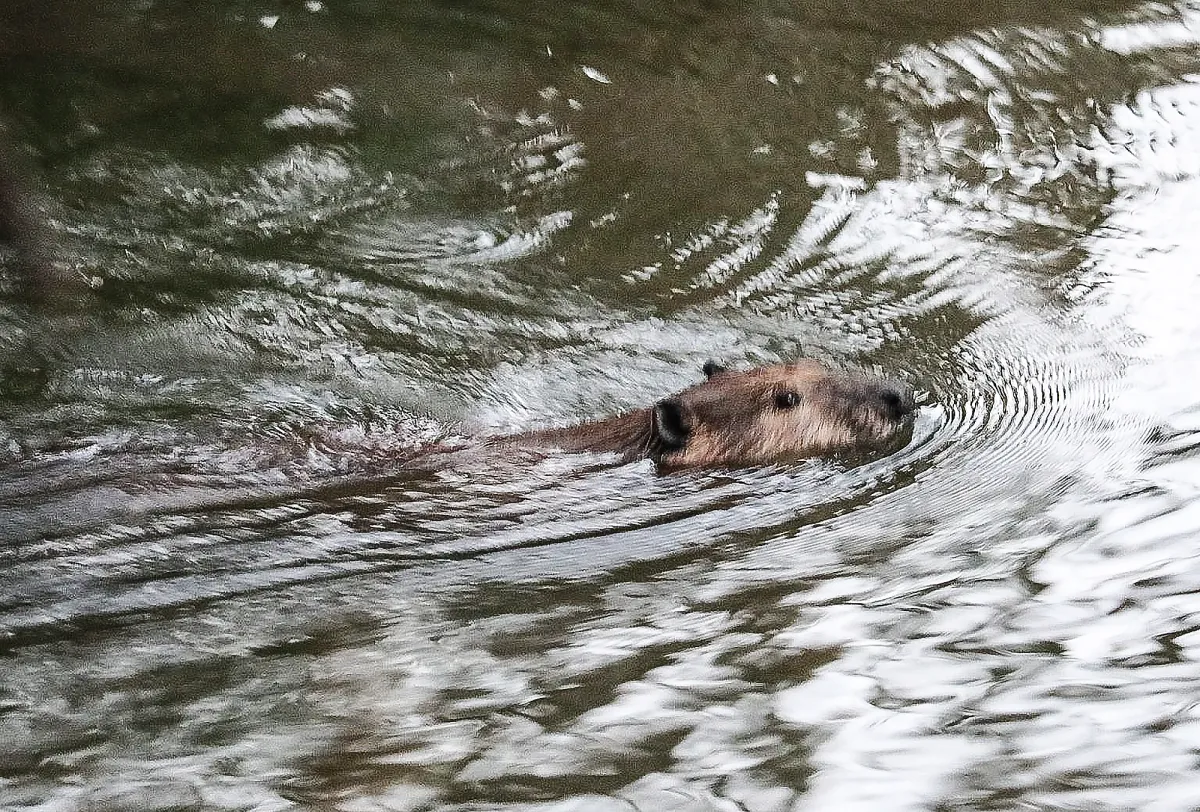 A California beaver mortality study published in January finally released the cause of her death – Baylisascaris infection, a parasite also known as racoon roundworms.
Local experts believe if Palo Alto continues to restore its creeks and rivers, beavers and other wildlife like foxes and trout can someday thrive in the region.
Sticking Around
The female beaver’s cause of death wasn’t necessarily uncommon, with various other California beavers suffering from the same virus most prevalent in raccoons, according to the mortality study.
It was likely that she ingested or came in contact with raccoon feces, which may be plentiful in suburban areas where raccoons remain resilient, said local historical ecologist and physician Rick Lanman.
“Consideration should thus be performed when handling beavers and planning translocations to mitigate the risks of unintended introduction of infectious disease agents,” according to the mortality study.
But there may be more to the story. Widespread extermination of beavers has caused local inbreeding and has likely weakened the animals’ immune system over time, Lanman said.
Maybe. We had at least 1 beaver death attributed to it. But CDFW also once speculated that a kit died of salt water poisoning and had no idea that beavers live in saline water so maybe not. Maybe as our population of beavers go up the vets at CDFW will have more and more practice at diagnosing them.
In the 1980s, Lanman said, the Department of Fish and Wildlife relocated two pairs of beavers in Los Gatos Creek before they migrated over the Lexington Dam, into the Guadalupe River, through downtown San Jose and finally into the south Bay Area.
“They’ve been using the bay to gradually move east and north,” he said, adding that the beavers have tended to migrate some miles before reappearing every decade.
Palo Alto got its chance at reintroduction when a beaver was first spotted in Matadero Creek in April 2022. Through multiple sightings via Leikam’s trail cameras, local researchers learned that there were two beavers, and thus, a chance that the two could breed and reinhabit the region.
The catch is – the beavers were likely inbred, reducing their ability to fight diseases.
“I believe all the beaver in the South Bay are descended from probably the two pairs of beaver released in the Lexington Reservoir in the 1980s,” Lanman said.
The mom beaver was taken to the Wildlife Center of Silicon Valley in November 2023, after a resident spotted her covered in a pile of leaves in a concrete channel of lower Matadero Creek, near the former Fry’s Electronics site.
Palo Alto Animal Control reported that she was not moving and seemed to be unaware of their presence. Wildlife Center of Silicon Valley Hospital Manager Ashley Kinney also said her fur, which should be oily for insulation, was dry.
Her condition appeared to be improving in their care before she died on Dec. 3 2023.
Leikam, who has long researched the path to restoring wild animal populations, believes there are other factors, aside from the raccoon parasites, that led to the female’s death, like a lack of water.
“When the female beaver took off upstream of Matador Creek, it was trying to find the source of this water, and along the way, she ran out because the creek, the concrete bottom, didn’t have any flowing water in it,” he said.
I guess all beavers spring from a smaller gene pool than there used to be. Apparently we had blonde beavers and red haired beavers and once upon a time a young disperser could meet up with someone from another colony after only a brief voyage.
Still, beavers are pretty hardy and Hope Ryden of Lily Pond wrote that she didn’t worry much about the bloodline for them.
The City of Palo Alto has plans in place to naturalize part of Matadero creek, removing concrete barriers, in the Ventura area near the former Fry’s Electronics. The project was part of a recent area plan for the Ventura area, which includes the Fry’s site. And while the naturalization proved popular with the stakeholders during the planning exercise, it remains in the conceptual phase and it’s not clear if and when the work will actually begin.
Leikam said that he hopes the city will consider naturalizing other parts of the creek as well.
Leikam and Lanman have long studied the negative effects of flood basins, concrete river barriers and freeways on local wildlife, saying animals only have thin, unprotected pathways to travel and breed.
“No animal can walk up those concrete channels,” Lanman said. “They’re exposed to hawks and owls and humans, all kinds of predators. They need a natural stream with riparian cover, shrubbery.”
Local flood basins may also change the flow of water and prevent species from swimming upstream, he said.
“Those concrete rectangular channels are not only blocking land mammals like gray fox or aquatic mammals like beaver from being able to go back and forth from the uplands to the baylands, they’re blocking federally threatened steelhead trout,” said Lanman, who has requested for years that the city install portals on the side of tidal gates for fish to swim through.
Beavers have the ability to improve local biodiversity, increase fresh water storage, contain wildfires and improve water quality, especially in drought-prone areas in the West, according to the new Stanford study.
“Beavers are naturally doing a lot of the things that we try to do as humans to manage river corridors,” wrote Stanford study author Kate Maher. “Humans will build one structure, leave it there, and hope it lasts for many decades. Beavers, on the other hand, build little, tiny dams where they’re needed and flexibly manage what’s going on with the water in their environment.”
The study hopes to create maps where local beaver populations could thrive in an effort to properly “bring back beavers.”
Leikam believes that if local authorities help connect disjointed natural habitats by removing concrete barriers and naturalizing urban environments, wildlife can thrive again. He and Lanman plan to submit an extensive proposal to the City of Palo Alto and other local agencies to remove all concrete from Matadero Creek.
If news about beavers can help your city be kinder to its creeks I’m all for it.