




You know how sometimes people know better than you and have all the advantages close to home and still mess up in a spectacular way? Well that’s what’s happening to our friends in Stow Vermont, where they hired SKIP LISLE to put in some Beaver Deceivers and now they are ripping them out again!!!
Skip must be steaming!
Beavers a dam dilemma for town public works
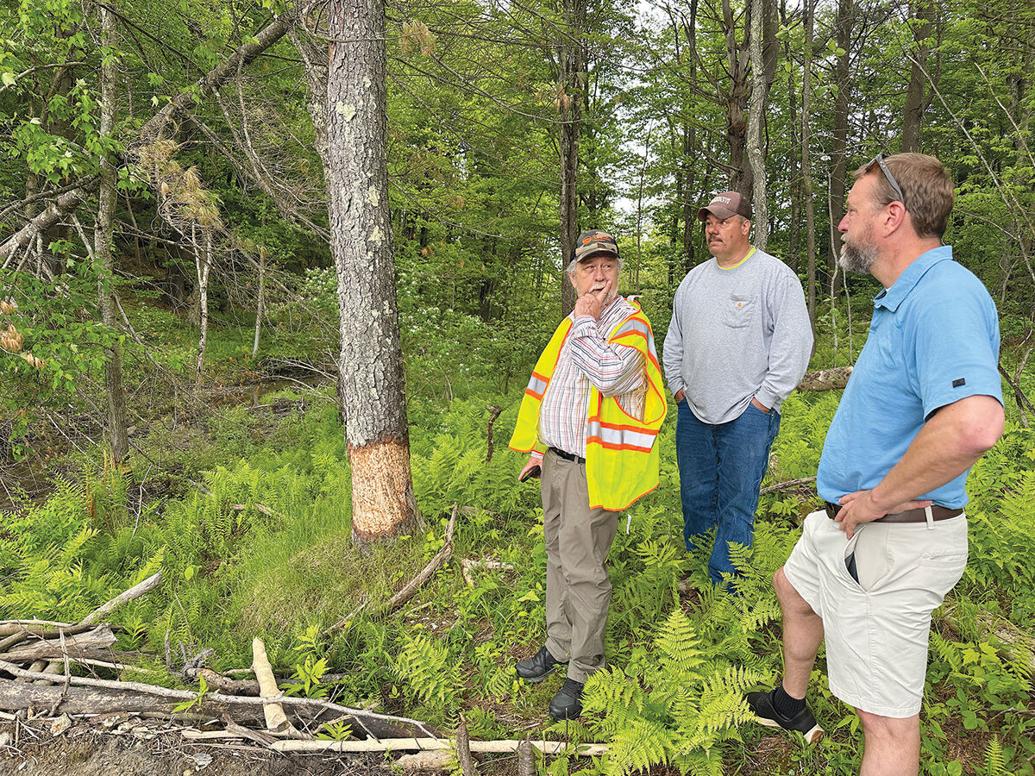 Last week, the selectboard voted to remove a “beaver deceiver” from the park, which was installed last summer to deter the industrious animals from damming up culverts. The board also reiterated its authorization to trap beavers in the area, if necessary.
The Memorial Park beavers have been busy for years, building dams that have exasperated an already-inadequate drainage system in the park. Culverts, of which there are several in Memorial Park, serve as a prime location for beaver dams, but their structures are notorious for blocking up the park’s stormwater system and worsening flooding events, which occur regularly in the area.
In response, the town hired Skip Lisle to install beaver deceivers in Memorial Park last summer. Lisle is a Vermonter who installs his deceivers throughout the country. The contraptions deter beavers from culverts by altering the water flow at the inlet, eliminating them as a prime location for dams. They’re also designed to collect debris without interrupting water flow, but their effectiveness in this category depends on who you ask.
Gee you had the best of the best doing what he does best. What’s the problem?
Lisle’s deceivers were successful in driving the beavers out of Memorial Park, but they’ve been building a metropolis up stream, including a dam at least 30 feet long and eight feet high, a hut and a sizable pond.
Over the weekend, during a period of heavy rain, the dam burst in one spot, releasing a rush of water that quickly overran the culverts, flooding the park’s baseball fields and reaching the cafeteria of the nearby elementary school.
This is far from the first time the park has flooded, and selectboard member Nick Donza urged the board to act, saying people are starting to get frustrated when little league games are canceled due to floods, or there’s water in the school.
The beavers were quick to patch up the dam and the pond filled up again almost overnight, but Harry Shepard, Stowe’s public works manager, doesn’t want to wait until the dam bursts again.
Sure you fixed the problem in the place where we paid you to fix it but it caused a DIFFERENT problem that flooded the school cafeteria! Why didn’t your solution prevent every other problem from happening!
 To curb the impact of another flood in Memorial Park, the town removed one of Lisle’s beaver deceivers, which Shepard said was collecting debris and worsening floods, and utilized a pump to reduce the water level of the pond. The town has plans to slowly disassemble the dam this summer.



“The issue with the deceivers is they compromise the hydraulic capacity of the culverts,” Shepard said.
Lisle was staunch in his disagreement of that assessment and accused the town of scapegoating his devices, one of which remains in Memorial Park.
Lisle said his deceivers were “mischaracterized” by Shepard to the selectboard. The deceivers aren’t the problem, he said, it’s the culverts, which are “too small and in a state of disrepair.”
Oh my goodness. That is the very petty kind of argument that I can completely imagine from public works. And its not the kind of delicate non-defensive distinctions that Skip does best either. I on’t know whether to call the Pope or get popcorn.
Shepard agreed the culverts are inadequate, but that’s the system the town is stuck with for now, he said. A multi-million-dollar project to renovate Memorial Park, including improving the park’s grading and stormwater system, is currently making its way through a gauntlet of zoning approvals, and might not even be possible considering Memorial Park’s state classification as a protected wetland. But that hasn’t eased Lisle.
“This is the dumbest possible thing they could have done,” Lisle said, adding the park has been flooding since long before his devices were installed. “These are valuable devices the town is now just disposing of.”
The deceivers cost the town about $17,000. When the selectboard voted to hire Lisle, it was part of a plan to entertain alternatives before the town resorted to trapping.
Oh My God. I can so imagine a certain businessman with an office near the creek picking up the phone and sening Dave Scola marching down to the dam and ripping out the flow device in a hot italian rage. We are SO lucky we barely escaped this drama in Martinez.
The town has employed other tactics over the years, like installing wire around the base of trees, but Shepard and some selectboard members have indicated that cohabitation isn’t really working out.
Last year, the selectboard said it would start trapping the beavers around Memorial Park if the alternatives failed, and during last week’s selectboard meeting, Donza asked, “Are we not there now?”
The town doesn’t need additional approval from the selectboard to trap the beavers, ultimately killing them, according to town manager Charles Safford. Trapping, if it occurs, would take place during trapping season in October. Safford added the town is following guidance from the Agency of Natural Resources in dealing with the beavers.
Brenna Galdenzi, president of Protect our Wildlife and a Stowe resident, has helped the town explore alternatives to trapping for years, and she doesn’t think the town did its best to assure the success of the beaver deceivers and she’s certain trapping won’t solve the problem either.
According to Galdenzi, the town should have cleared the beaver deceivers of debris more frequently. Shepard said there was never a discussion about maintaining the devices after they were installed. He ticked off a long list of tasks and projects for his staff, clearing the deceivers has not been a high priority.
Galdenzi said trapping isn’t a one-off action and, often, when beavers are removed from an area, a new family shows up and they can revive a dam almost overnight. If you trap once, Galdenzi said, you trap every year.
The selectboard was not unanimous in its vote to remove the beaver deceiver, with Paco Aumand casting the sole nay vote.
“I’m sensitive to the flooding issue,” Aumand said, “but I don’t think this solves our problem for this summer.”
Wow. You’re going to need a lot of children in beaver tales to stop this one. I would start by asking that whoever the city hires to trap issue a notarized guarantee that no other beaver family will move in and do the same thing again after this family is killed.
That should buy you some time.