




Three years before Martinez celebrated it’s first beaver festival, Durham Carolina marked it’s quietly quirky beaver-saving pride event.
The Queen Beaver Pageant has since been a joyous, campy, and watershed friendly event celebrated every year. During this time it has ranged from more or less dangerous to be a drag queen in North Carolina, and coincidentally more or less dangerous to be a beaver in North Carolina. But no matter, the contest has persevered.
A moment in Durham: ‘Free to Beave’
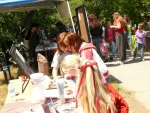
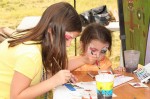
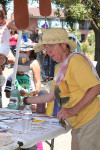
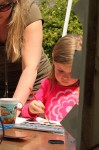
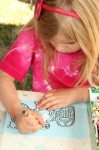
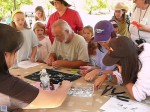
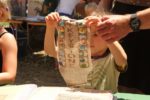
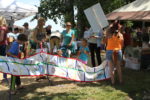
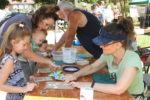
 At the edge of Duke Park, families unfold their lawn chairs as a warm June sun steams off the morning rain. Local singer Juliana Finch strums tunes about online dating, protesting, and Pride, while nearby, the Poetry Fox taps away on a typewriter as kids dressed as beavers call out words. Paper fans flap. Loco Pops drip. This is the Beaver Queen Pageant, Durham’s long-running celebration of spoof, sass, and beaver-based activism.
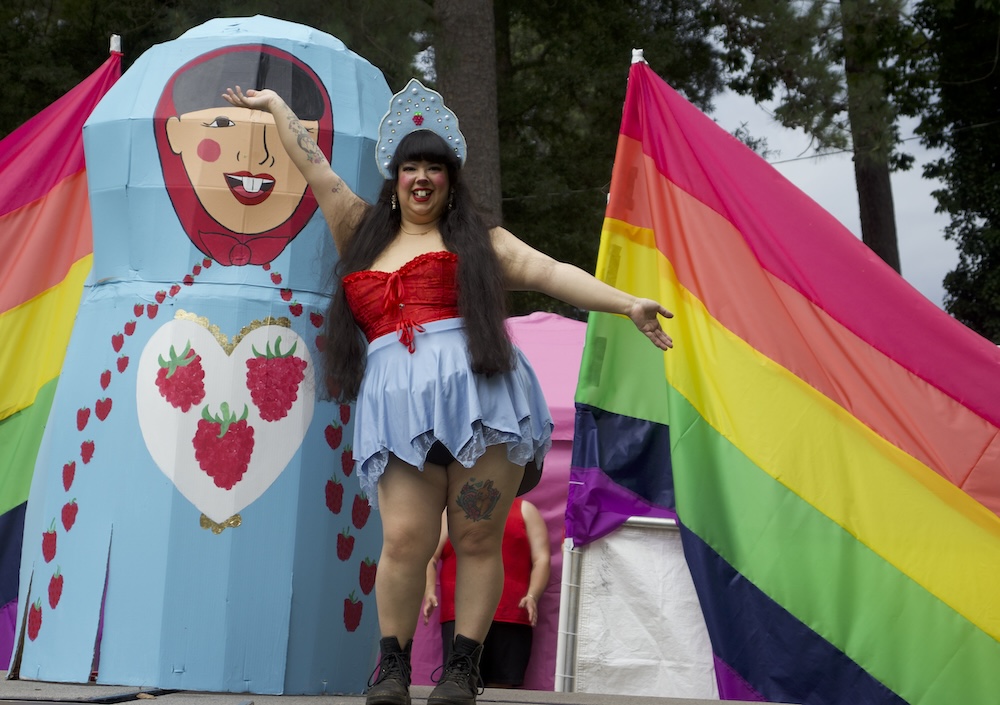
Themed “Free to Beave,” this year’s event opens with a burst of camp chaos starting with the intros of contestants. Ina Gnawten wears a long tail on which sits a platter full of cocktails. Madam Raspbootyn pops out of a Russian nesting doll that matches her red and blue outfit. Lady Violet Beaverton is in a Bridgerton-like dress covered in white and red roses. Finally, Captain Ellerbe & Bucky walk out together as a dynamic duo, peeling off Hawaiian shirts to reveal superhero costumes.
I’m so old that I can remember how shocked our fellow Worth-A-Dam champion Lory was to visit her grandaughter in Raleigh and find another beaver festival! She quickly realized this one was a little different than ours. But over the years they partnered with a watershed group and got a little more interested in actual beavers too.
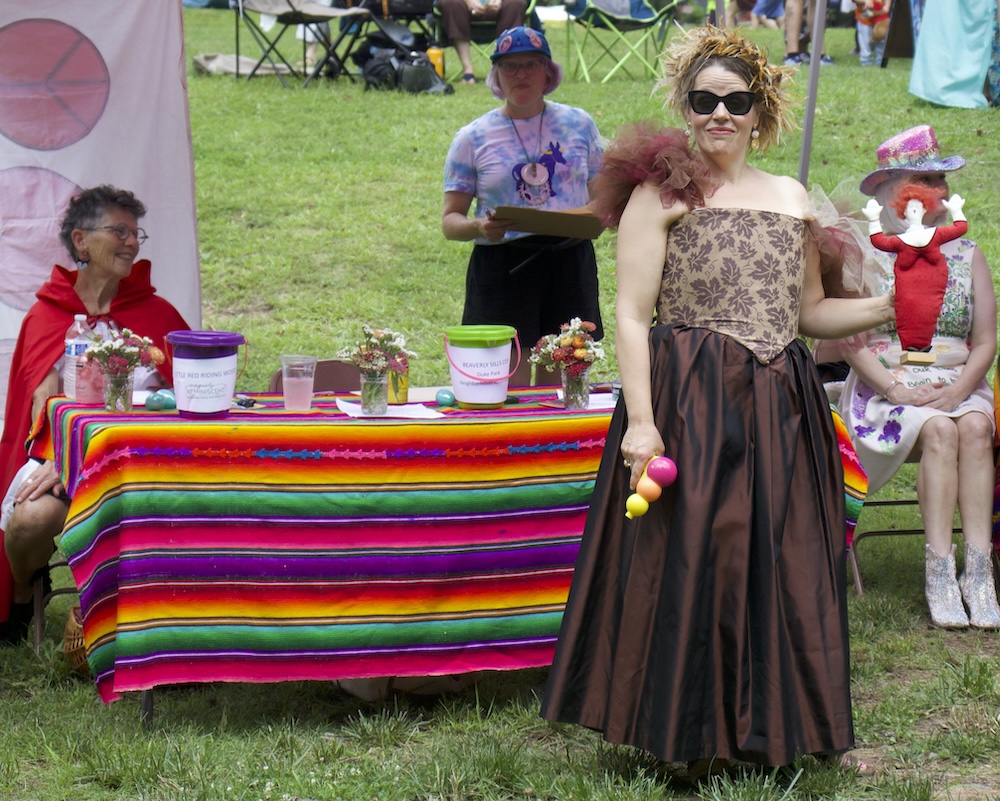
 Right before the talent act, rain clouds roll in, and a quick downpour halts the activities. Yet no one leaves. Attendees huddle under tents and trees, cheering every time the clouds pass. As the judges are introduced, the audience whoops as if rock stars entered the park. One girl wearing a beaver tail yells “We love you!” after each judge gets introduced.
The talent portion begins with a mock cooking demo of “Beef Bourgnawnion” by contestant Ina Gnawten, each ingredient met with dramatic “oohs” and “ahhs” from the crowd. Kids dash towards the stage, parents sometimes chasing them and sometimes not. One boy in beaver makeup and a small tail yells, “I’m gonna be a beaver when I grow up.”
How could you not love this festival and that little boy?
 Beneath the camp lies a deeper current. The first Beaver Queen Pageant sprang up in April of 2005, a year after a group of neighbors protested the planned removal of a den of beavers from a nearby wetland. The community saved the beavers and in doing so, started a tradition. What began as something small became an annual celebration of nature, neighborhood spirit, and the right to be as ridiculous as possible. Today, the pageant partners with Keep Durham Beautiful, with part of the proceeds going toward local conservation.
Now that I didn’t know. It started with actual beavers. What does that mean for Martinez?
If you ask Richard Mullinax, better known as Beverly Woody, the pageant’s first winner, none of this even felt possible back in 2005. He was roped into the very first pageant at the last minute, when only two other contestants signed up.“It was the high 90s. There were like 50 people, and crickets chirping as the sun went down,” he remembered. “I only agreed to do it if I didn’t win.”
However, he did win. Beverly Woody was crowned the first Beaver Queen following an amazing clog dancing routine. “You know,” Mullinax says with a shrug, “it’s classic Beaver Queen energy. It is normal to expect the unexpected.”
He now returns year after year as a judge.
Despite another rain delay, the event powers through. “You can’t plan for anything at the pageant,” says Cary Winslow, grabbing her strawberries and cream LocoPop. “That’s kind of the point.”
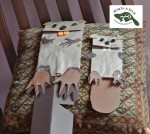
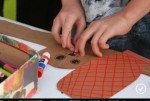
The voting booth line starts to get busy with many attendees voting for their favorite contestant. Votes cost $5 each, and attendees who vote 20 times or more can take home a custom beaver tail. “All I want now is to leave with a homemade beaver tail, ” says Anne Prichard, visiting from California but proudly cheering on contestants as they make their way through the crowd.
The crowd cheers as the final tally is announced: $6,000 has been raised.
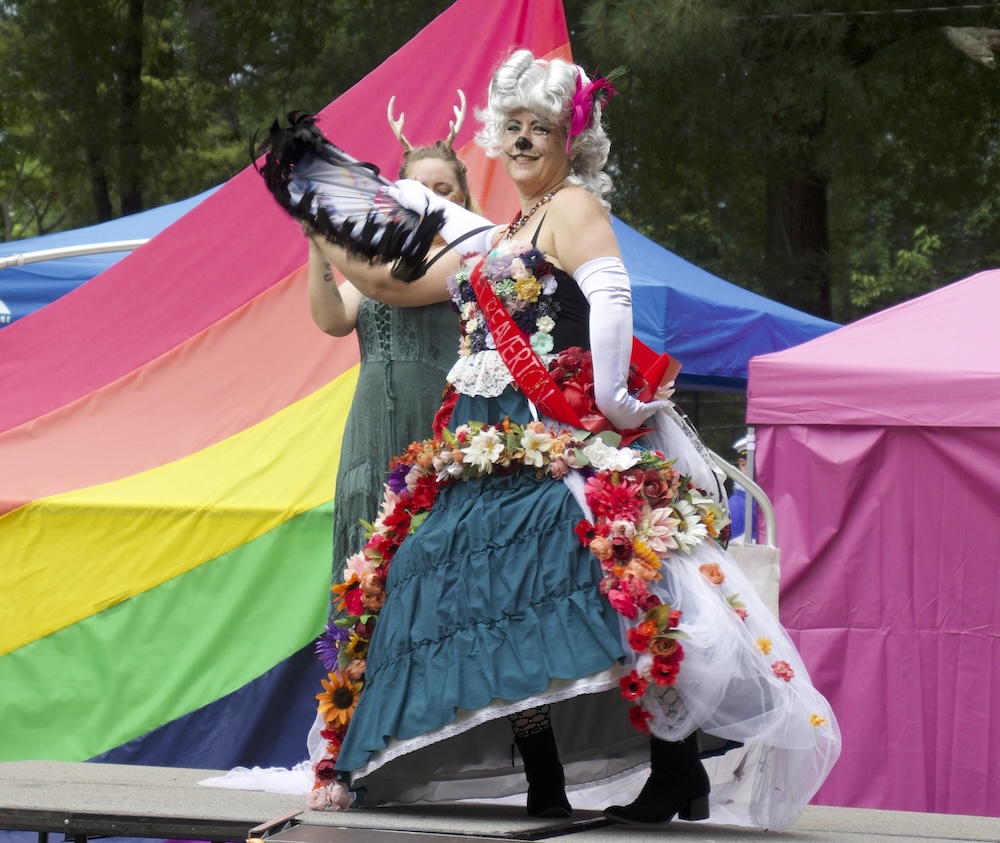
“Your 2025 Beaver Queen is Lady Violet Beaverton!” the emcee says. Her Regency-inspired dance, both refined and risqué, caught the eyes of the judges and the votes of the crowd. With her feathered fan waving and a smile spreading across her face, she is crowned and showered with compliments from the crowd.
Well, we take our beavers a bit more seriously here in Martinez. But as we all know by now, there’s no wrong way to Beeve.
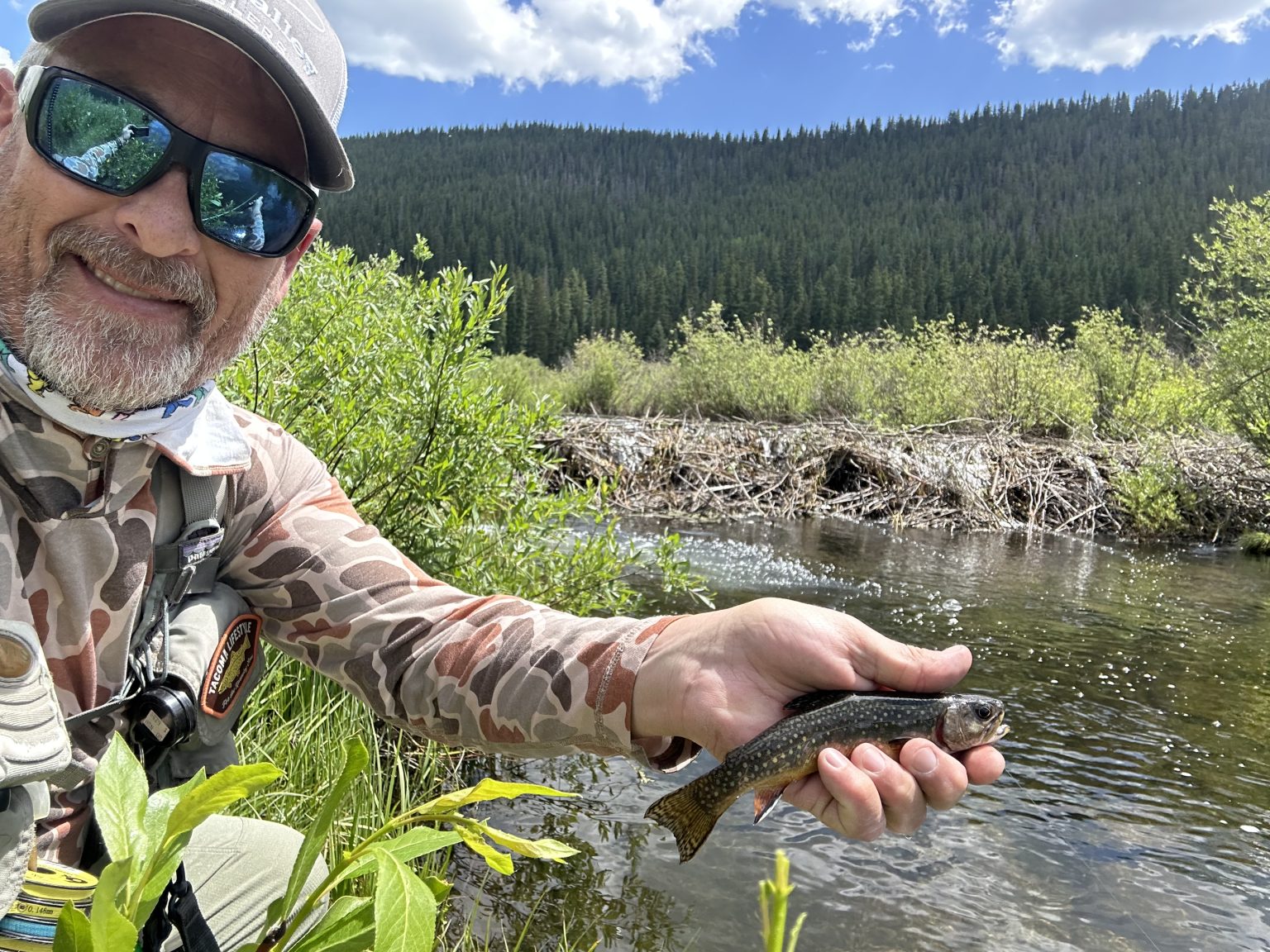
 From below the dam wading anglers can cast over and into the deep water the dam holds back. Present your dry flies along the willows growing on the edges or straight down the pool. The season of opportunity for feeding on bugs can be a short one for beaver pond trout. Any dry fly cast with finesse has a high probability for success.
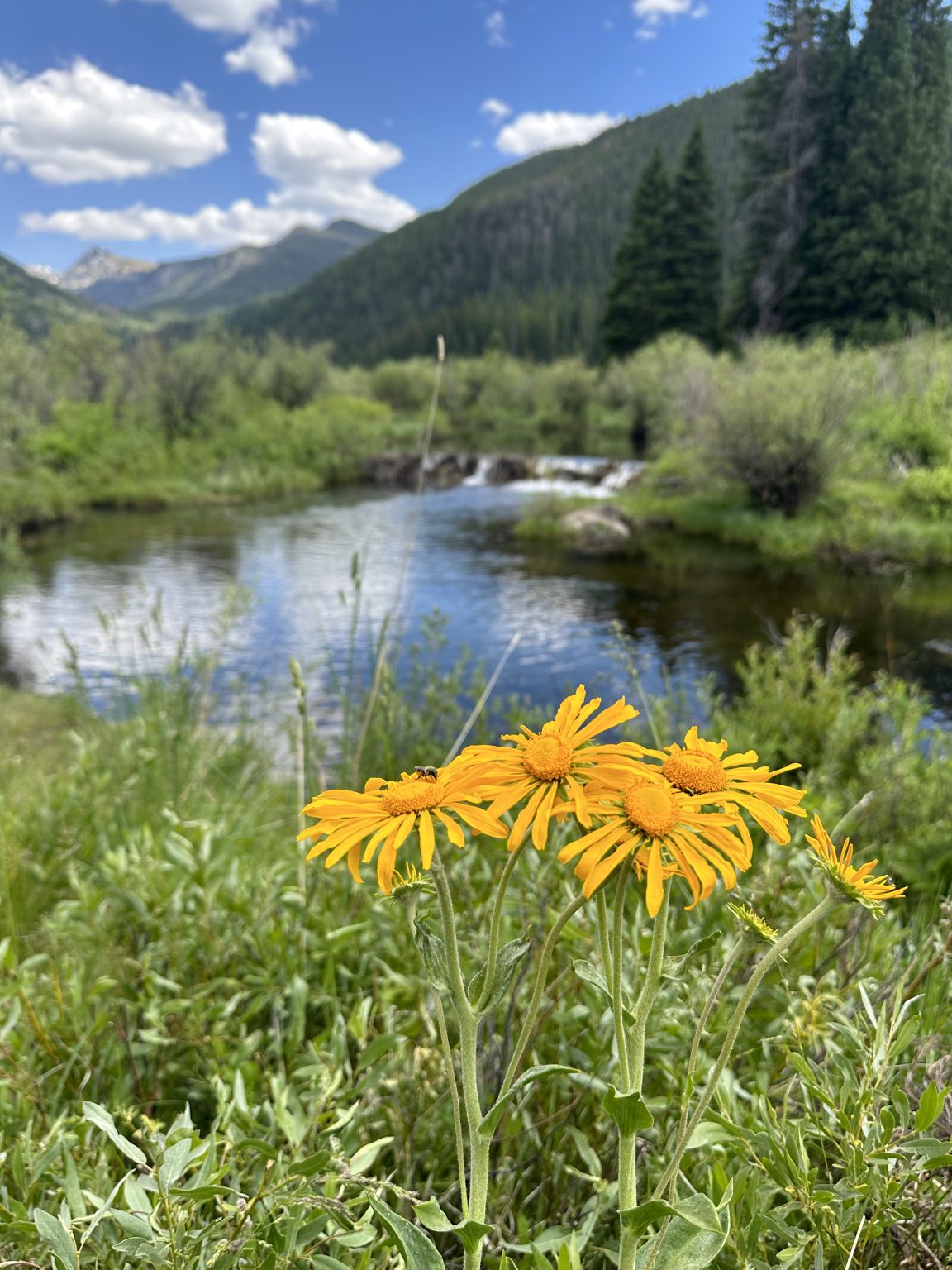 Appropriate gear is tailored to the fish. Most beaver ponds hold trout that are on a smaller scale compared to river trout. Brookies and cutts in beaver ponds are examples of rewarding small fish. Rods in the 3-weight size excel in beaver pond fly fishing. On a recent beaver pond outing, I used an Echo 3-weight Riverglass and Galvin 2.5 reel. Fiberglass enhances the connection to the fish while placing an emphasis on casting. Short rods help to present technical casts in tight places where an abundance of obstacles exist tempting to snag your flies.


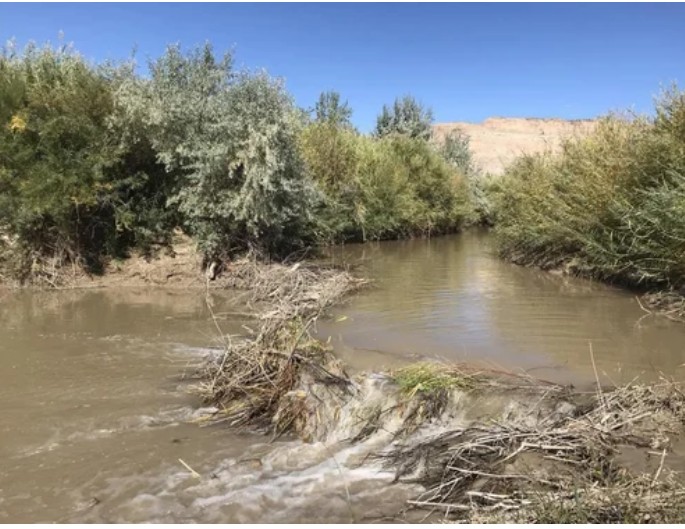 In other drying, struggling rivers in the area, researchers are bringing in beavers and even creating manmade beaver dams. They’re hoping that the critters will take over the job as the rivers get healthier.