




This headline caught my eye because it is the exact final statement a child delivers when asked to extol beaver benefits at our festival a few years ago. Just listen.
It’s nice to think hydrologists know as much as a nine year old.
Beavers Impact Ecosystems Above and Below Ground
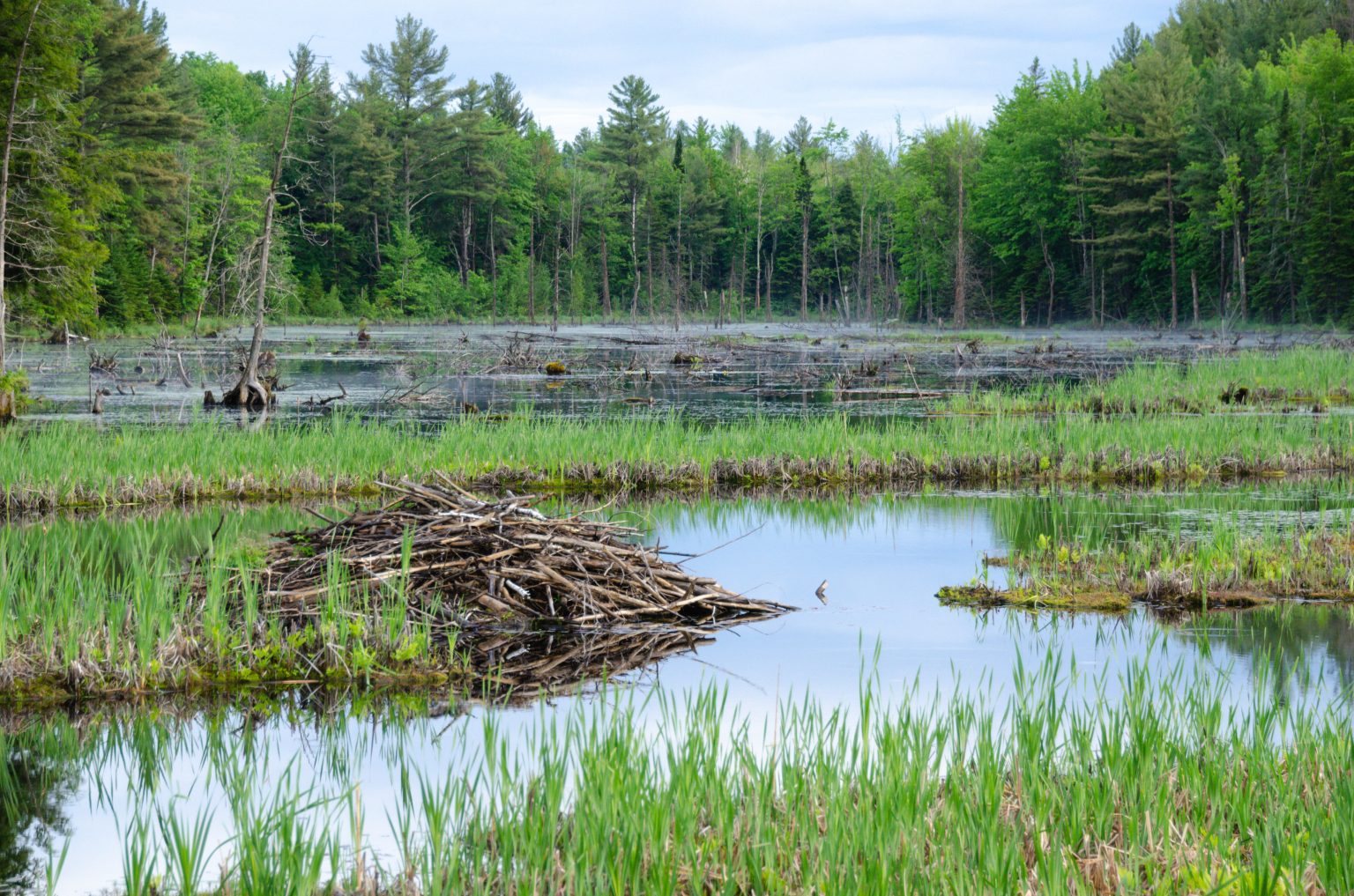
As ecosystem engineers, beavers build resilience into the landscape.
Above ground, we can see changes wrought by beaver ponds such as increases in biodiversity and water retention. But UConn Department of Earth Sciences researcher Lijing Wang says we have a limited understanding of how they impact what happens beneath the ground. In research published in Water Resource Research, Wang and co-authors study how water moves through the soils and subsurface environment and detail new insights into how beaver ponds impact groundwater.
Groundwater can be an important source of water for streams, especially late in a dry summer, it may be the only source of water sustaining a stream, says Wang, and researchers are interested in understanding if and how beaver ponds impact groundwater as these details are important to consider for water management and restoration efforts.
Wang explains that some initiatives have included building beaver dam analogs to mimic what live beavers do and these man-made structures similarly extend the wetland and make an area more drought and wildfire resilient, however there are no comprehensive studies that focus on understanding beaver-induced changes to the subsurface water.
“Our work here develops one of the first hydrologic models that helps us understand what happens from the beaver inundation to the subsurface system under different subsurface structures,” says Wang.
Once beavers catch on everyone will want them. Mark my words.
“Our results show that when the water reached the gravel bed, it does not stay there, it goes downstream. Thinking of the gravel bed as ‘a thick river’ underneath the stream bed, there’s more water flushed downstream in the subsurface than we thought. It’s not staying there and sustaining the local water table,” says Wang.
Though this research focuses on beaver ponds in Colorado, Wang says she is starting to focus on New England, and she has started monitoring local beaver ponds.
“In New England, we have different problems compared to the Rocky Mountains, where they have a relatively simpler river network. In New England, we have complex river networks with more tributaries, channels, and beaver dams, which give us more biodiversity, and sustains mature floodplains and wetlands overall.”
Understanding the intricacies between land use practice and its subsurface environment is critical for understanding exactly how beaver ponds will influence other aspects that we may not immediately come to mind, Wang explains, such as potentially negative changes to water quality and for this we need a comprehensive analysis.
As beavers slow the flow of water and create ponds, this changes the subsurface oxygen conditions and leads to lower oxygen, or anoxic, concentrations in the water. These conditions can then lead to the proliferation of anaerobic bacteria, whose activities in the sediment can mobilize heavy metals that would remain trapped in more oxygen-rich conditions. For these scenarios, location and history are key.
Well thriving beavers are actually the key.