This baby beaver’s lodge was being excavated when the workers heard a tiny little cry and out popped a vulnerable newborn baby beaver. Just moments before, the baby’s mother had swum out of the lodge trying to get away from the destruction of the lodge. We almost never suggest baby beaver reuniting because baby beavers are extremely prone to pneumonia and it’s often an emergency situation when one was found. But this was a rare case where we knew mom was right there and so we gave it a chance. The machinery was cut off and the baby was placed in a cardboard box next to the water. After just an hour, the crew returned to check on the baby beaver and there was a clear track where the momma beaver came up the bank, smashed the cardboard box down and retrieved the baby. The work was stopped and the remaining lodge was left alone. Moral of the story: Wild animal moms are incredible. They love their babies fiercely and, when given the chance, will do whatever it takes to get them back. While reunions aren’t always possible, they should always be a priority when they are. We can care for orphaned animals, but we’ll never be a true replacement for their natural mothers. Their love and instincts are real—and powerful. ❤️
Beaver-based restoration has been gaining popularity as a strategy for responding to growing wildfire risk in an ecologically-informed way. Raincoast connected with Jennifer Rogers from the British Columbia Wildlife Federation to learn more about their 10,000 Wetlands Project and how it might inform better fire response throughout British Columbia. This article outlines how beaver-based restoration is an effective, ecologically-informed tool in the arsenal of approaches to reduce wildfire risk.
Finally a solution we can get behind!
Though this is normal and instinctual beaver behaviour (behaviour that is increasingly understood by the scientific community to be essential to ecological functionality), many people feel justified in removing “nuisance beavers” from the landscape either by relocation or lethal trapping. However, the chance of another beaver colony (aka beaver family) moving into the area within the next few years is fairly high. As such, there is a much higher benefit to learn to live with and work alongside beavers, rather than fighting against them. After all, humans and beavers have more in common than most people might initially realize.
Mature beavers are monogamous and have an average of two to four offspring per year, called kits. Beavers live in family units (i.e., colonies) consisting of the breeding pair and their offspring from both the current and previous year. Between the ages of 20-24 months, young beavers leave to establish their own territories. A beaver family unit tends to be territorial, occupying areas of anywhere between 0.5 to 20km², with their territorial range depending on food availability and the density of the surrounding beaver population. Perhaps more than any similarity, the trait that may be most definitive of both beaver and human behaviour is the shared ability to reshape habitats to better suit their needs.
You would think we would understand eachother better since we have so much in common.
Beavers live in rivers, lakes, and wetlands, and in more modern times, ditches and stormwater ponds. They prefer slow-moving water, and the modulation of faster-moving streams is often the impetus for dam construction. Beavers also build dams to create better conditions for siting lodges, which are used for shelter, protection from predators, overwintering, rearing offspring, and food storage.
Though dams and lodges are their best-known constructions, beavers are also known to develop canal systems to:
more easily transport food and building materials throughout their territories, and
expand food availability by creating better growing conditions for the herbaceous, aquatic, and woody plants they depend on for their food supply and other needs.
Taken together, beaver-built infrastructure is designed to slow the flow of water, hold it on the landscape, and foster the growth of the types of plants that beavers depend on for survival. Some of these species include alder and cottonwoods (Alnus spp.), aspen and other poplars (Populus spp.), birches (Betula spp.), maples (Acer spp.), willows (Salix spp.), dogwoods (Cornys spp.), cattails (Typha spp.), water lilies (Nymphaea spp.), sedges (Salix spp.), and rushes (Juncus spp.). Many of these species are also early successional species, that is, they establish early and quickly after a disturbance. This means that beavers not only mitigate the impacts of disturbances, but can also help recover recently disturbed sites. This is explored in more detail later in this article.
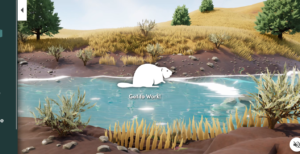
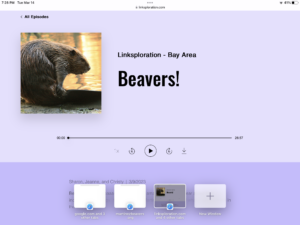
The week before the beaver festival I was invited to present about our beavers at the journaling workshop of John Muir Laws. The ideas is that the guest talks about their work in conservation of a species and then Jack teaches a virtual webinar to an untold number of students around the world and walks them through how to draw it.
It took a while for the video to drop but this week it appeared and I am so glad it will encourage beaver artists for years to come.
I was touched to watch him work from this photo because for those of you who don’t know that is our original mother beaver in all her glory. Before she got sick before her eye condition. She was young and healthy having brought at least 4 kits into the world. It was taken on May 3 2008 which means we hadn’t seen the next years kits yet although they were already born,
If there is a single beaver I will never forget and always be thankful for it is our original mom.
Now this is a class I would have liked to attend as a child!
Event to help children identified creek critters
BEAVERCREEK — The Beaver Creek Wetlands Association will be hosting a new adventure later this Summer.
A presentation titled “Exploring the Underwater World — A Macroinvertebrate Experience” will be held at the creek beginning at 10 a.m. on Aug. 10.
“We’re going creekin’ in Little Beaver Creek which means we’ll be turning over rocks, digging in the sand, and using nets to discover incredible unseen creatures that call the creek home,” said Beth Edsall, Outreach Director. “We’re talking macroinvertebrates — think aquatic insects — and tiny fish and all sorts of fascinating creek life.”
Attendees are invited to meet at the large shelter house located at E.J. Nutter Park before hiking to Creekside Reserve to access Little Beaver Creek.
“You’ll learn how to identify these amazing critters and even cooler, find out how scientists use them as a report card to determine the health of the creek,” Edsall said. “It’s a hands-on lesson in ecology that’s way more fun than any classroom. So — let’s see what wonders we can discover together.”
Now that sounds truly fun, I trust they’ll be turning all those rocks back over in after the kids leave, right?
Event organizers hope it will spark interest in children and teens between the ages of 10-15.
Program leader Kevin Riley will give an introduction before leading the attending group on a short hike of half a mile into Creekside Reserve to access Little Beaver Creek. Any critters found will be released back into the creek after the program.
Registration is required for this free program. Parents must sign BCWA’s Electronic Liability Form. A QR Code will be on site or sign ahead online by clicking the link at beavercreekwetlands.org.
Twice when I worked at day care I lead creek walks from the Junior high. I’m not even sure where we got in or out. But I know it was fantastic.
We defy augury. There is special providence in the fall of a sparrow. If it be now, ’tis not to come; if it be not to come, it will be now; if it be not now, yet it will come—the readiness is all.
Are you sitting down? This is going to come as a huge shock: Apparently it is impossible for a single model to predict where a beaver is going to build a dam! I know, shocking huh?
It’s almost like beavers have free will or something.
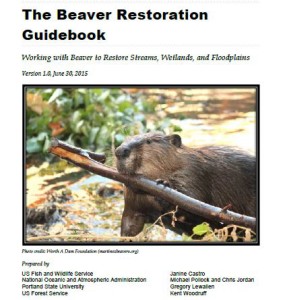
Understanding where and how many dams beavers (Castor canadensis) will build is an important habitat restoration question, especially as beavers are increasingly recognized for their ecosystem-scale benefits and as beaver-related restoration accelerates. Several models exist for predicting the dam building behavior of beavers in North America. However, not all of these models are applicable outside of the ecoregions where they were developed or validated.
Objectives
We review 11 existing North American beaver dam building and habitat suitability models, and we map the ecoregions where those models are intended to work.
Results
A variety of beaver capacity and suitability models exist across North America, but many ecoregions do not have validated models. Given the adaptability of beavers for using local building materials, applying models to new regions where the model has not been calibrated can be difficult and can produce inaccurate results.
Whoa It;s almost like actually watching beavers do things is more important than looking at models of what beavers are supposed to do.
Go figure!
Though recalibrating models to reflect local beaver behavior may sound like a simple fix, many of the models reviewed for this study require significant technical expertise to parameterize, run, and interpret. This is a barrier for people who want to integrate local observations into a model. To combat this, model developers should be explicit about what inputs and results they expect to change due to beaver behavioral adaptations. For example, models heavily based on food and building materials could provide examples of how flexibility in material use could influence results and could provide specific instructions on how to edit the model to reflect local material use. Changing inputs or parameters to reflect local beaver behavior needs to be clear and simple so that it can be applied in small-scale, local contexts.
In summary, beaver restoration and management decisions are increasingly based on the results of beaver dam capacity and habitat suitability models. These models are powerful tools for science-based wildlife management, but they underperform in a local restoration context without calibration that reflects behavioral adaptations of local beaver. To be accurate, the model calibration process must include the participation, collaboration, and input of local scientists and community members who have specific place-based knowledge of their beavers.
I appreciate the respect for field observation. But I am going to add something worse to the mix. Not only do beavers vary according to regional materials, they also vary according to individual beaver!!!
Seeing firsthand what beavers built after the act is useful, but if you missed out on who and how the dam was built you might not have seen that sometimes certain beavers do certain things.
Case in point We had on yearling that would only build with reeds. He eventually influenced the others who started to incorporate reeds too.
Beavers make their own decisions. They defy augury and models,






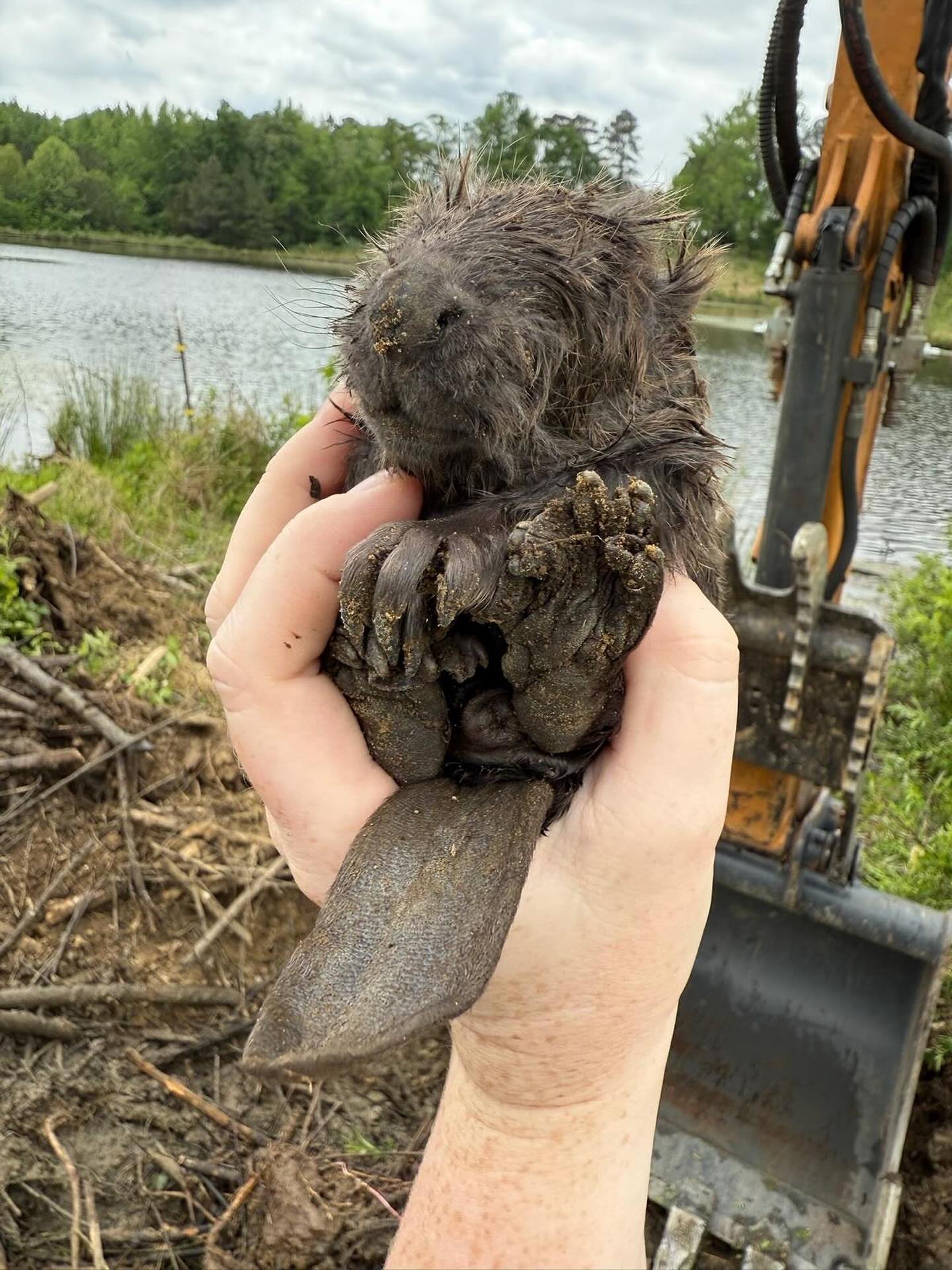
 This baby beaver’s lodge was being excavated when the workers heard a tiny little cry and out popped a vulnerable newborn baby beaver. Just moments before, the baby’s mother had swum out of the lodge trying to get away from the destruction of the lodge. We almost never suggest baby beaver reuniting because baby beavers are extremely prone to pneumonia and it’s often an emergency situation when one was found. But this was a rare case where we knew mom was right there and so we gave it a chance.
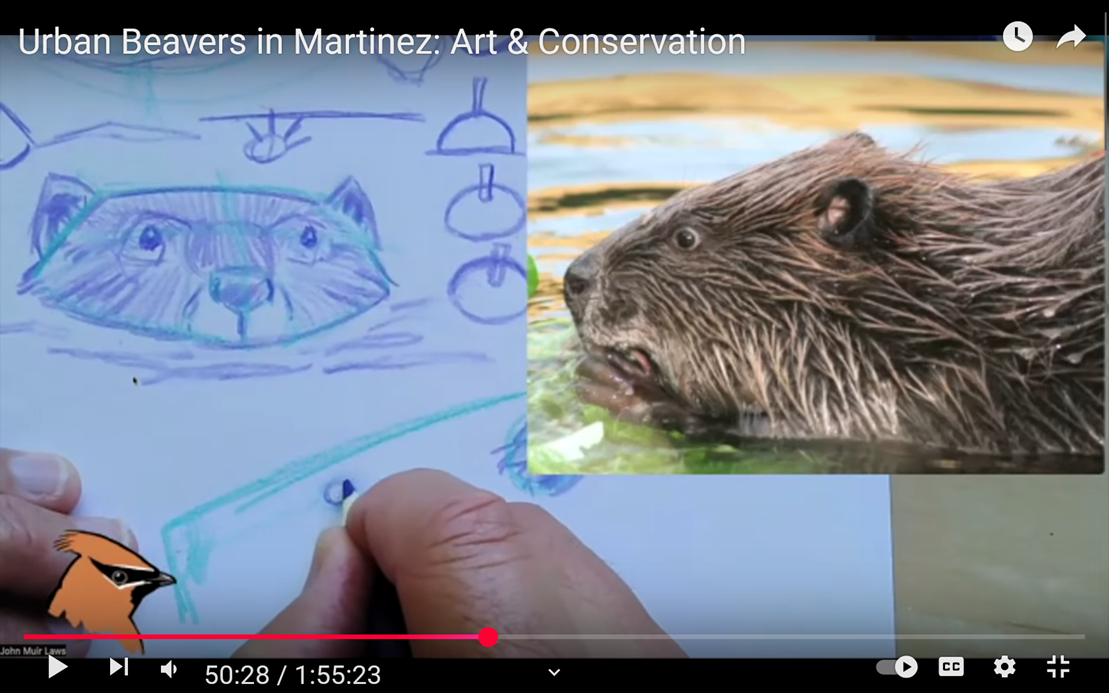 The week before the beaver festival I was invited to present about our beavers at the journaling workshop of John Muir Laws. The ideas is that the guest talks about their work in conservation of a species and then Jack teaches a virtual webinar to an untold number of students around the world and walks them through how to draw it.
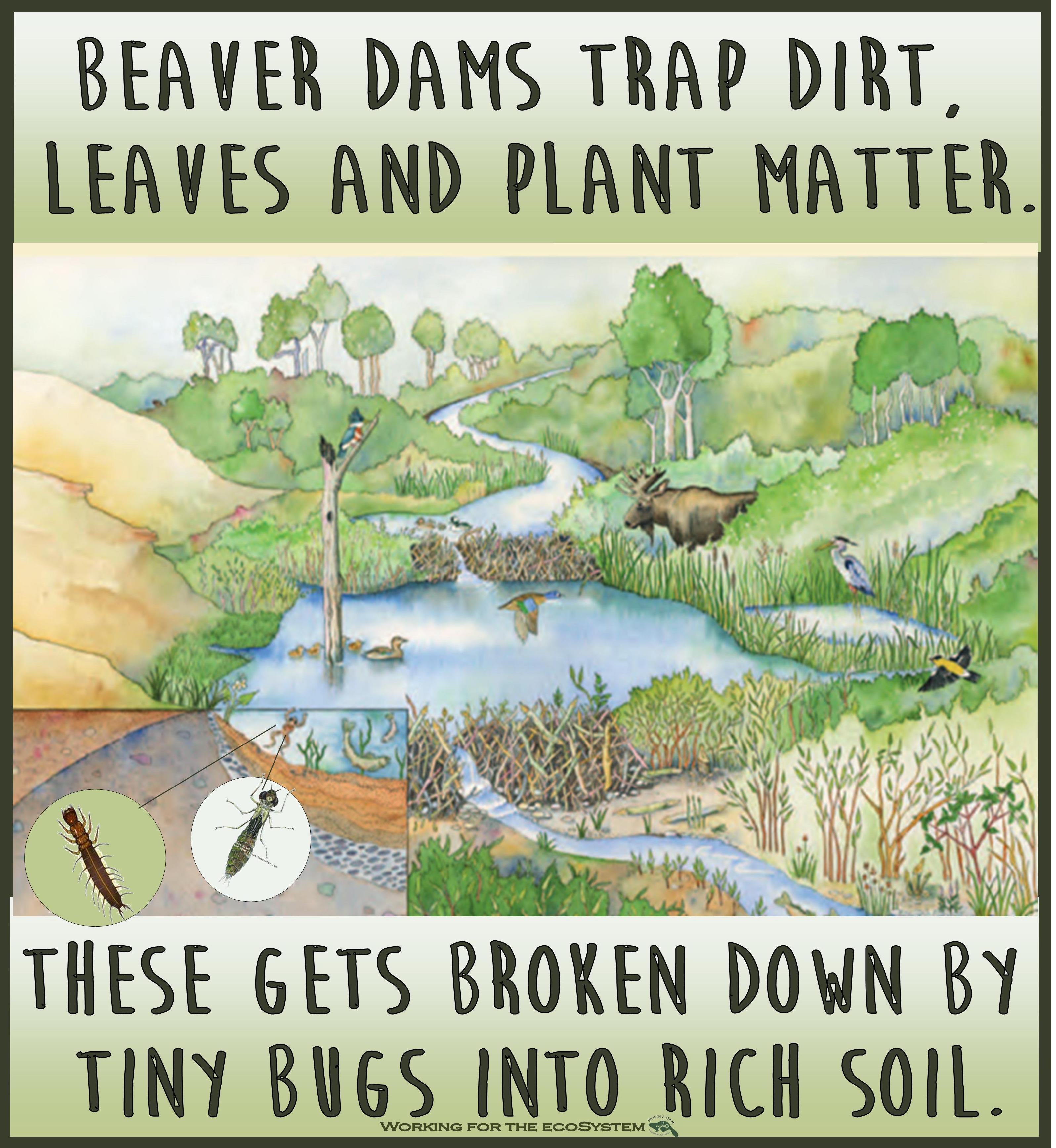 BEAVERCREEK — The Beaver Creek Wetlands Association will be hosting a new adventure later this Summer.
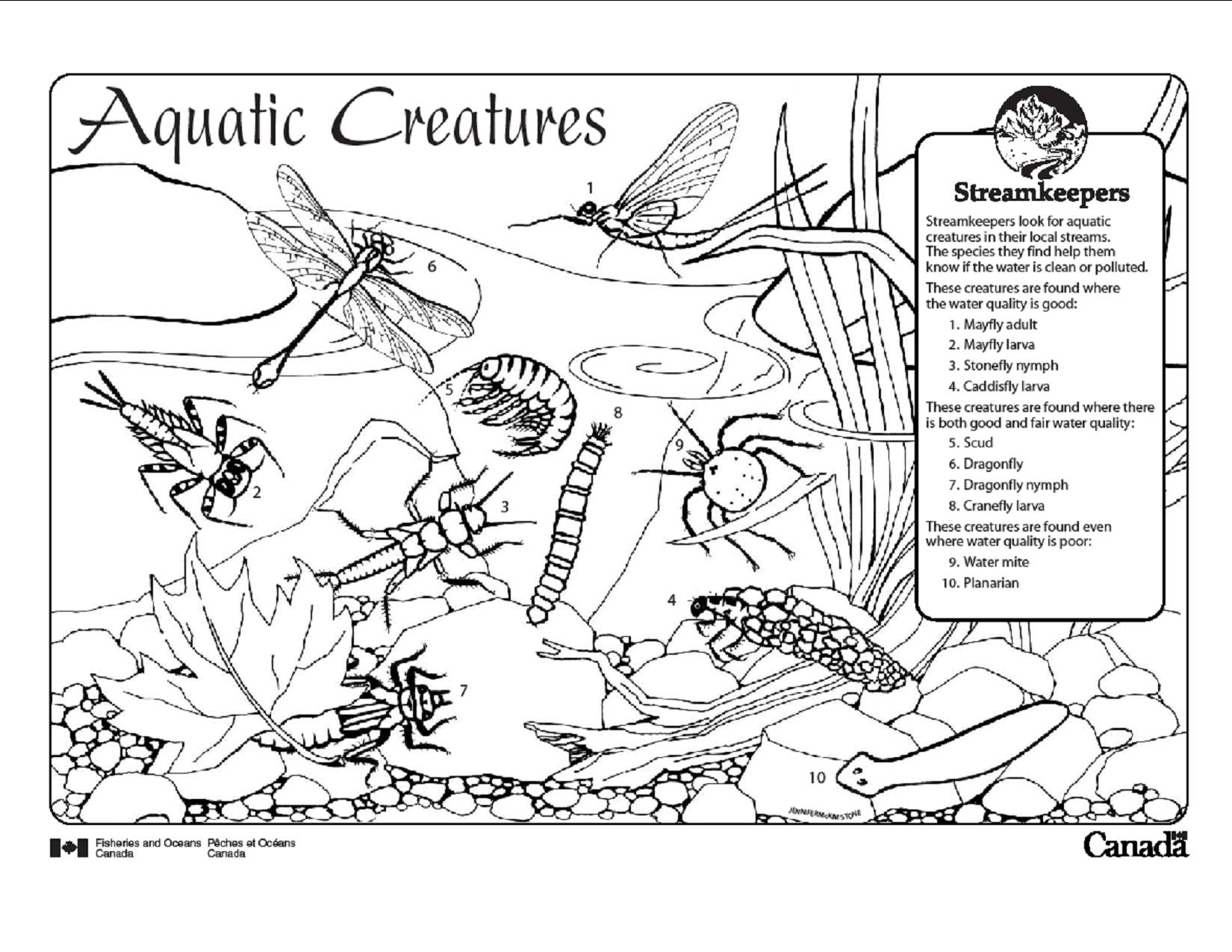 Event organizers hope it will spark interest in children and teens between the ages of 10-15.