


I wrote a nice article about the republication of Glynnis Hood’s manifesto but something about the code made the website abandon ship so I had to discard it. If you want to read about the article go here: 

I wrote a nice article about the republication of Glynnis Hood’s manifesto but something about the code made the website abandon ship so I had to discard it. If you want to read about the article go here:
Remember all those studies about beavers fixing dry patches of Nevada and making it green? Well beavers fix more than that I can tell you.
A long-term study spanning more than 50 years illustrates how the beavers that have returned to the Evo region in southern Finland have increased habitat biodiversity. This speaks to their significant role as ecosystem engineers, enabling a wider range of species in the area.
The paper is published in the journal Science of The Total Environment.Landscapes shaped by beavers provide favorable conditions for a number of species, including moose, voles and diving beetles. Beaver patches, or areas modified by beavers in nature—such as new and old inundated sites as well as beaver meadows formed after flooding—create diverse habitats that are at different stages of ecological succession, or the process of how species compositions change in ecological communities over time.
As a result, a habitat suitability index calculated for different species and groups of species grew almost tenfold over a 54-year period. Thanks to beaver activity, the landscape develops to support a wider range of species and improves habitat connectivity.
Well sure they stop fires and raise groundwater and increase biodiversity but what do beavers REALLY do for forests? Huh?
“While the positive effects of the changes brought about by beavers in the boreal region are significant, theirlong-term effects on biodiversity dynamics remain partly unknown. This is why long time series are needed to understand the far-reaching ecological effects of these changes,” says Senior University Lecturer Petri Nummi from the Department of Forest Sciences, University of Helsinki.
“Beavers are returning to many areas of Europe where they were once hunted to extinction. Whereas in our prior studies we observed patches shaped by beavers, this new study helps to understand the differences between landscapes in areas where beavers occur and where they are absent,” says University Lecturer Sonja Kivinen from the University of Eastern Finland.
Okay, you write down all the good things beavers do on a larger scale. We’ll wait here.
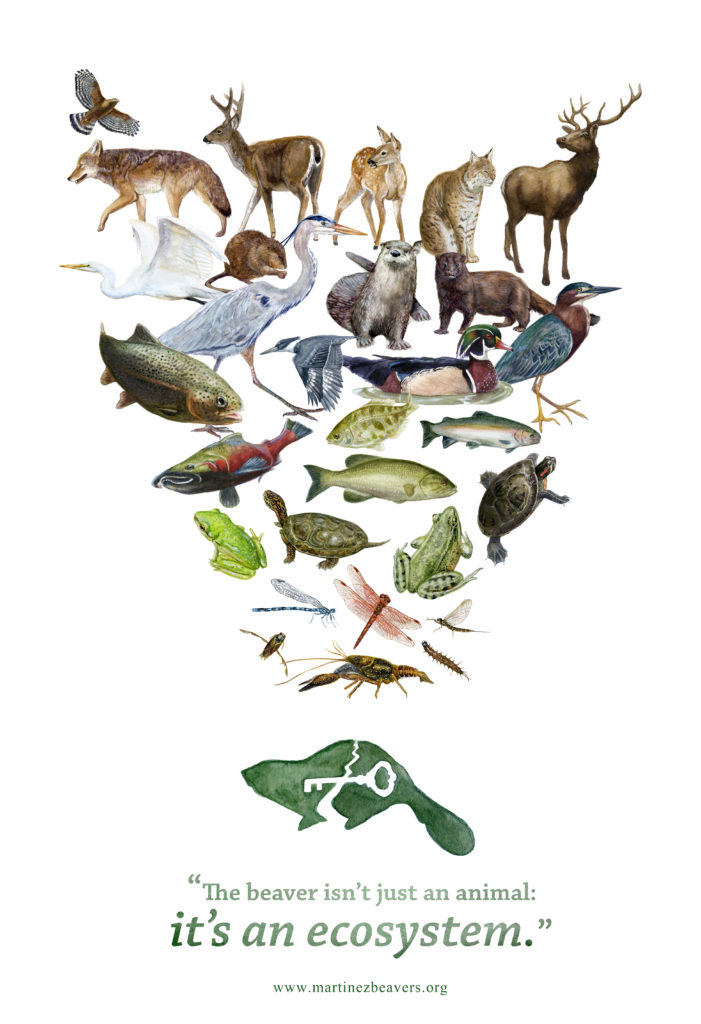
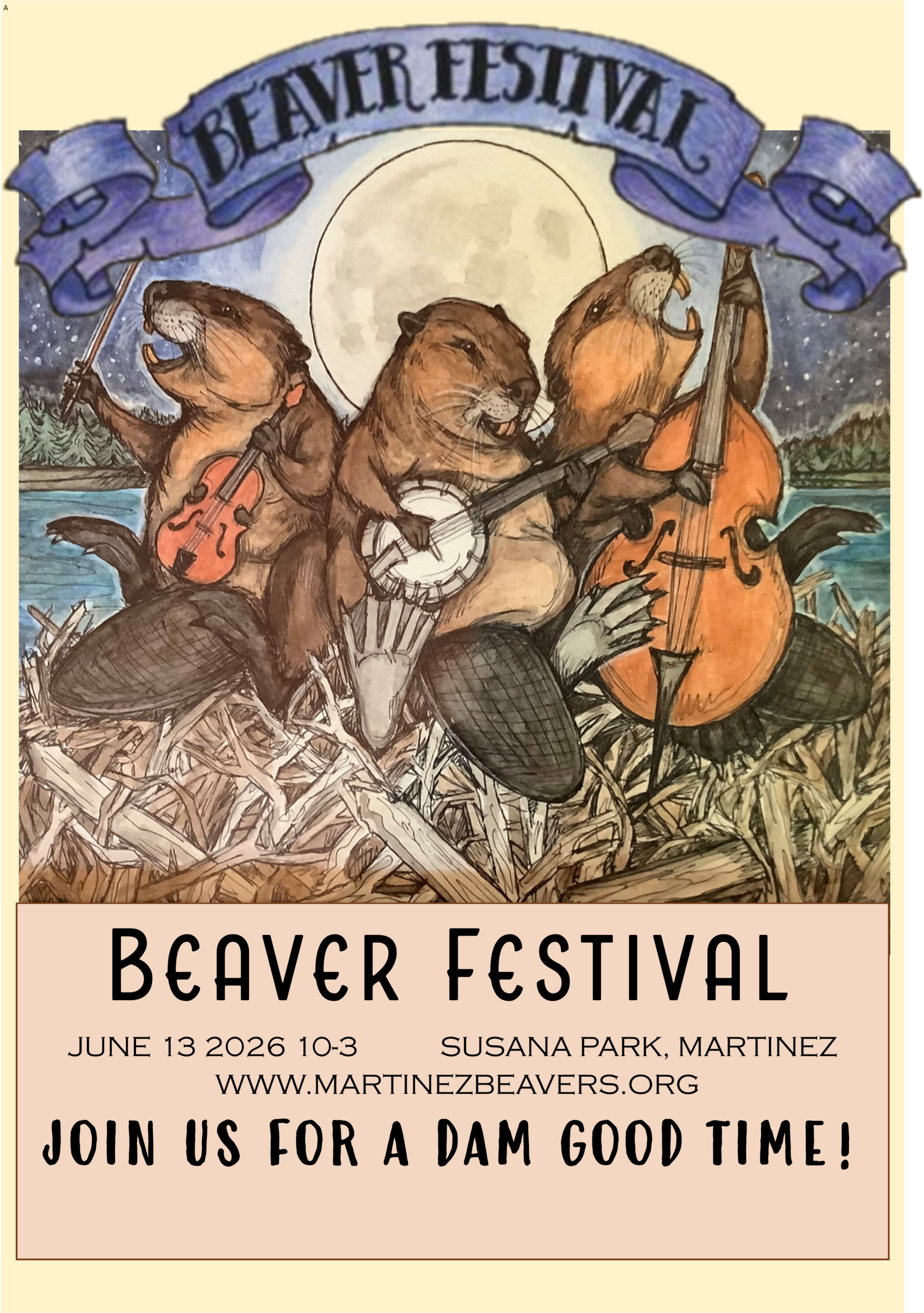
This poster illustrated for us from my design by Coyotebrush Studios was finished in May 2017. That sure seems like a long time ago.
I saw this article yesterday and it got me to wondering whether I ever saw kits learning from watching older beavers. Have you? I did once see the father trying to show the kit how they lay logs on the dam. But she was having none of it. She wanted to do it her way with reeds and no wood.
Was she being stubborn or incapable of social learning?
I think now about the two “useless bookends“. Two yearlings from the original mom that died that never had a chance to learn from her. They never did any work at all until they had a new mom.
One of the most effective ways we learn is through third-party imitation, where we observe and then copy the actions and behaviors of others. Until recently, this was thought to be a unique human trait, but a new study published in Scientific Reports reveals that macaws also possess this ability.
Second-party imitation is already known to exist in the animal kingdom. Parrots are renowned for their ability to imitate human speech and actions, and primates, such as chimpanzees, have learned to open a puzzle box by observing a human demonstrator. But third-party imitation is different because it involves learning by observing two or more individuals interact rather than by direct instruction.
Scientists chose blue-throated macaws for this study because they live in complex social groups in the wild, where they need to learn new behaviors to fit in quickly. Parrots, like macaws, are also very smart and can do things like copy sounds and make tools.
To find out whether macaws could learn through third-party imitation, researchers worked with two groups of them, performing more than 4,600 trials. In the test group, these birds watched another macaw perform one of five different target actions in response to a human’s hand signals. These were fluffing up feathers, spinning its body, vocalizing, lifting a leg or flapping its wings. In the control group, macaws were given the same hand signals without ever seeing another bird perform the actions.
I am sure I saw beavers learn from other beavers. But did I ever see third person learning?
What did YOU see?