




Skip to content
Worth A Dam

Because the beaver isn't just an animal; it's an ecosystem!

Menu
  • HOME
  • OUR STORY
  • EDUCATION

    • Teachers
    • EDUCATIONAL BEAVER GRAPHICS
    • California Beaver Summit
  • RESEARCH

    • THE ECOLOGICAL BENEFITS OF BEAVERS
    • PEOPLE ARE TALKING ABOUT BEAVERS
    • The history of beavers in California
  • SOLUTIONS

    • Protecting Trees
    • Protecting Culverts
    • California Beaver Help Desk
    • NATIONAL SOLUTIONS & BEAVER HELP
  • OUR BEAVERS

    • PHOTOS
    • VIDEO

Category: Beaver Behavior

BEAVERS GET NO RESPECT WHATSOEVER

heidi08 Beavers and trout, Tail slap August 27, 2020
FacebookFacebook
email articleemail article

Don’t you just hate it when you have the very best fishing hole and a bunch of beavers move in saving water and trying to make it better? Building their rotten little dams that create more nutrients and generate more fish?

Yeah, me neither.

Dammed if they do, dammed if they don’t: Beavers have claimed a popular kayaking and fishing spot, and residents are not happy

Texas Pond in Oxford is officially under new management. While the new owners are longtime residents, they are pursuing a development initiative. Locals have raised concerns that such aggressive building will have a negative effect on the pond’s recreational and scenic qualities. However, construction continues unabated, as the developers are protected under Massachusetts law.

As surprising as it might be, Texas pond is about an hour away from Mike Callahan. And if people were really worried about the beaver activity there are answers a phone call away. But that’s not the issue. It’s massachusetts so we know COMPLAINING is the issue, about the law that banned trapping lo these many years ago.

“It’s like a fortress,” said longtime resident Kathy Doiron, describing the dam, “it’s ruining the pond.” The water level of the pond has fallen dramatically and residents have noticed the absence of the once-flowing current. Residents believe the enormous beaver dam to be the cause.

Doiron has lived beside Thayer Pond for over two decades and can see a difference from even five years ago, as the area becomes more swamplike. An avid kayaker, she said getting to the river requires dragging a kayak over the dam, which may soon be impossible.

Kayaking isn’t the only curtailed activity. As herbivores, beavers don’t compete with anglers for fish, but the two are traditionally at odds. Beavers are famous for slapping the water with their tails to alert the colony of possible threats and any fish are scared away — along with any hope for a decent catch.

You know how it is. You sneak down to the pond at dawn and throw in your line. And then one of those rotten overgrown rats slaps its tail at you and scares away all the fish! It’s not fair! Never mind that the fish are there to eat the things that are sustained by the pond the beaver built. Never mind that there are more fish and more diverse fish now. You can’t catch them because of those darned slappers!

“The beavers are horrible,” said John Bottcher, who fishes regularly at Thayer Pond. “The damming there is really bad. It can definitely affect fishing.” When beavers impound an area, changes to water depth and temperature can impact the type of fish there.

The beavers have always been there, Bottcher explained, but “it seems like lately they’ve been putting in extra work.” While true that beavers are a natural part of New England waterways, over the last couple of centuries, they have had an intermittent presence in Massachusetts.

You know the media spends so much time writing down the ridiculous lies inexperienced fishermen spread about beavers it’s no wonder they go to the same diners over and over to interview trump supporters about the Covid hoax. They are used to being lied to. They think its their job.

“When beavers came back, they got right back to work and found we had built in places where they like to impound water,” said Colin Novick, executive director of Greater Worcester Land Trust, leading to what he referred to as a “user conflict.” Novick makes no pretense of neutrality, saying that the landscape was initially “managed by beavers,” who are taking up their original role in the ecosystem.

From an ecological perspective, that role is vital — beavers are considered a keystone species, having an outsized benefit to the environment relative to their population. Through impoundment, they create ponds and wetlands that foster biodiversity by providing habitats for various plants and wildlife. The fallen trees make a submerged canopy that gives fish a place to hide from predators as well as potential spawning areas.

A multitude of species, including humans, benefit from the presence of wetlands, as they control flooding damage by slowing water release. Wetlands also improve water quality by removing toxic chemicals and filtering out sediment.

Colin has a clue. I’m so glad someone does.  He’s the exectutive director and deacon at the local catholic diocese. Something tells me he and Mike have crossed paths before.

For the residents of Oxford, this is all well and good except “they’re creating dry lands, not wetlands,” said Doiron, citing the drop in water level. However, not everyone believes the beavers to be the culprit.

“We are in a protracted drought and water levels are dropping where they haven’t in decades,” said Jennifer Warren-Dyment, of the Oxford Town Manager’s office, describing a level two drought, with below average rainfall and above average temperatures. State reports indicate the drought began in late June, coinciding with the water level changes in the pond.

She said neither the Town Manager nor the Department of Public Works has received any complaints about beavers.

So wait. Rather than saying to yourself WHEW! There’s a drought! Good thing beavers saved the water or otherwise there’d be no pond at all and all the fish would be DEAD. You say DAMN THOSE BEAVERS for stealing our water! What is wrong with people? I ask you.

Besides the issues with recreational use of the area, residents have voiced health concerns due to the stagnant water, namely mosquito-borne viruses such as Eastern Equine Encephalitis. However, Novick clarified that it takes a special habitat for the mosquito that carries Triple E — “a cedar swamp, which is not going to magically appear just because beavers move in.”

First the slapping and now the mosquitoes! My head hurts from banging on the keyboard over and over. Hey do you know what those mosquitoes start out their lives as? Tiny little water dwellers. And you do know what eats those, right? I mean you must.
 
The situation at Thayer Pond reflects a larger debate about when and how wildlife should be reintroduced to an area. In the case of beavers, they are an integral part of an ecosystem that may become dysfunctional without their contribution. However, in bringing back a species, we also have to live with them, striking the balance between serving as stewards of the natural world and co-existing with it.
 
Just to be clear, these beavers weren’t reintroduced to this pond or landscape and I dare say beavers were back on the scene long before the condos were erected. The difference is that trapping has been curtailed in the time since 96 so you are having more situations that can’t be solved with a conibear.
 
Honestly, if I were you, I’d sit down by the pond for an hour. Watch the beavers, the fish, the birds and the wildlife that has grown around this pond and realize that those damn impoundments made it all possible.

WHERE HAS ALL THE WATER GONE?

heidi08 BDA's, Beavers and water July 30, 2020
FacebookFacebook
email articleemail article

I mean, as long as we understand these things. That’s what really matters. These researchers at Syracuse University are making sure we leave nothing to chance.

Where Does the Water Go?

Beavers play an important role in maintaining the habitat around streams throughout the United States. Beaver dams slow water velocity, preventing stream banks from eroding. Without these dams, the rushing water and sediment cuts the stream channel deeper into the ground, dropping the water table. If the water table drops too far below neighboring plants and shrubs, native vegetation dies off resulting in a barren landscape and a loss of biodiversity, further upsetting an area’s ecological balance.

To replicate the effects of beaver dams, a modern stream restoration technique known as “beaver dam analogues” (BDAs) has been developed. These artificial structures consist of wooden posts woven with vegetation to slow water velocity. The intention behind BDAs are to raise the water table in order to restore or maintain native vegetation and to slow water velocities to reduce erosion.

As populations of beavers have declined, municipalities, state agencies and private landowners in the western U.S. have installed BDAs, but have not necessarily monitored their effects, according to Christa Kelleher, assistant professor from the Department of Earth and Environmental Sciences. As a result, little is known about how these structures function in their surrounding landscape.

Yes yes,no one is researching the BDAs they are so excited about putting in but we’re here to change all that! Ladies and gentleman, may I present to you the amazing BDA researcher!

Through a grant from the National Science Foundation and in partnership with The Nature Conservancy Wyoming, Kelleher and collaborator Philippe Vidon, professor in the Department of Forest and Natural Resources at the State University of New York College of Environmental Science and Forestry, will investigate how BDAs affect the storage and flux of water along stream corridors. The team will look to answer the question: Where does the water go?

Topics Kelleher and her team will investigate include: if water in the stream primarily leaves as evaporation because the dams generate a large pond upstream; if water moves from the stream to recharge the groundwater aquifer (underground rock or sediment that holds groundwater); or if water simply moves around the BDAs into the surrounding land and then re-enters the stream through groundwater-surface water interactions.

“We will accomplish this by field observations and modeling to try to get at not just individual processes, but their interactions,” says Kelleher. “What we learn around these beaver dam analogues will be compared to similar observations and analysis along stretches of river that do not have these structures, to contrast our findings.”

Allow me to say that your important research of whether water in BDA’s get evaporated or hypoheic exchanges itself into groundwater, is the perfect foundation for MY RESEARCH. Which is what the fuck would happen to all that water if we didn’t kill beavers in the first place.

Please stay tuned or our dynamic conclusion.

[wonderplugin_video iframe=”https://youtu.be/QmBLSGy6g58″ lightbox=0 lightboxsize=1 lightboxwidth=960 lightboxheight=540 autoopen=0 autoopendelay=0 autoclose=0 lightboxtitle=”” lightboxgroup=”” lightboxshownavigation=0 showimage=”” lightboxoptions=”” videowidth=600 videoheight=400 keepaspectratio=1 autoplay=0 loop=0 videocss=”position:relative;display:block;background-color:#000;overflow:hidden;max-width:100%;margin:0 auto;” playbutton=”https://www.martinezbeavers.org/wordpress/wp-content/plugins/wonderplugin-video-embed/engine/playvideo-64-64-0.png”]

OUR FRIENDS AT BLUE HERON PRESERVE GET BDA’S

heidi08 BDA's July 25, 2020
FacebookFacebook
email articleemail article

Well, that’s the thing. When you’ve been around as long as we have, you get to watch the evolution of your friends. It was way back in 2014 that I was contacted by Nancy Jones the founder and then director of the Blue Heron Preserve in Atlanta Georgia, because they had some beavers in the area and they wanted to know what to do about them. Nancy came out for a visit and attended a festival in a separate trip, and when she was ready to bring on another director they sent Kevin McCauley out for a visit as well!

Well, they are still doing Georgia’s share of the heavy beaver lifting.

Beaver dams a low-tech solution to stormwater management in Atlanta park

Manmade beaver dams have just been installed along a creek in Atlanta’s Blue Heron Nature Preserve and could offer a time-tested, natural method to manage stormwater runoff.A

The effect of the manmade beaver dams is the same as natural beaver dams – water backs up behind the dam and forms a pond, where some water can soak into the earth and groundwater. Water that does seep through the dam flows downstream at pace slow enough to not erode creek banks.

Beaver dams are a modest method to clean streams, according to Ed Castro, president of ECL, the company that installed the dams at the nature preserve.

They’re so smart they even got the state to pay for the project with a clean water grant. You know it’s a pretty great day for beavers when a bunch of bureaurocrats write a check for the work they would do for free. Now if we could just get them to stop writing the other kind of checks. You know, the ones they pay to BMP or USDA to kill them.

Blue Heron’s system of dams was built with locust trees harvested from Castro’s tree farm in Newton County. They were nuisance trees and he was pleased to find a good way to repurpose them. The tree trunks became the upright poles in the dam, and branches and underbrush were woven in a horizontal fashion among poles that had been installed in pairs. Each dam runs 12 or so poles wide, depending on the width of the creek at a given point.

“The idea was to mimic a natural approach that a beaver might have,” Castro said. “We’d weave the poplar, the box elder – the biomass – in between the logs, mimicking beavers as they cut it down and start adding material, like a bird building a nest. They’re using a collection of natural resources and building it their way.”

Hey if you’re REALLY LUCKY some local beavers will move in and take over. Their funding stream is more reliable and consistent. And they stick around on the job and make repairs for free.

Good Luck!

GROOMING FOR SUCCESS: BEAVER VERSION

heidi08 Beaver Grooming June 1, 2020
FacebookFacebook
email articleemail article

A beaver grooming is a regular site to see and as likely to be photographed as a beaver chewing or a beaver building a dam. Maybe more likely, since grooming happens on land and people are way more impressed at beavers on land and likely to snap a photo. Grooming isn’t about vanity, it’s urgent beaver business. Life or death self care. If it didn’t happen every day, especially in the colder places, the beaver couldn’t exist.

You’ll be happy to know that such an important job comes with the exact right tools for the job. The so-called grooming claw which is a split nail on their back foot that is perfect for fluffing up that fur. We were recently treated to an excellent grooming profile from the Winterberry Website,

Beavers Grooming and Specialized Split Claw

Beavers groom frequently, both in the lodge and on land, to remove debris from the coat and to waterproof it with oil from anal glands. When the animal emerges from the water to groom, it may start with its face and head, or with its belly. It begins by raking the fur with its fingernails, and then gets some difficult to reach spots with its hind feet. The two inner toes on each hind foot are modified for grooming. The innermost toe nail opens and closes over the toe, like a bird’s beak, and functions like a coarse toothed comb. The second toe has a “split nail” or “double nail”. The former term is more commonly used but the latter term is, perhaps, more accurate. It really is a double nail: It has a true nail and an additional horny growth between the true nail and the toe. The additional horny growth has a finely serrated upper edge which serves as a fine toothed comb.

Of course a beaver grooming is a camera ready moment, but two beavers grooming eachOTHER, well that just resets the whole scale for cuteness. She says beavers mostly do mutual groom in the lodge, but we know that’s not exactly true.

[wonderplugin_video iframe=”https://www.martinezbeavers.org/wordpress/wp-content/uploads/2019/06/Mutual-Grooming.mov” lightbox=0 lightboxsize=1 lightboxwidth=960 lightboxheight=540 autoopen=0 autoopendelay=0 autoclose=0 lightboxtitle=”” lightboxgroup=”” lightboxshownavigation=0 showimage=”” lightboxoptions=”” videowidth=600 videoheight=400 keepaspectratio=1 autoplay=0 loop=0 videocss=”position:relative;display:block;background-color:#000;overflow:hidden;max-width:100%;margin:0 auto;” playbutton=”https://www.martinezbeavers.org/wordpress/wp-content/plugins/wonderplugin-video-embed/engine/playvideo-64-64-0.png”]


FOLLOWING UP WITH FRIENDS

heidi08 Beaver Art, Beaver Behavior, Beavers, Beavers elsewhere May 25, 2020
FacebookFacebook
email articleemail article

Follow-ups needed: Here is the chalk-masterpiece by featured artist Ray Cirinio at yesterday’s Santa Barbara festival. Pretty nice work. (Although the beaver has way too many whiskers for my inner critic. He’s not a walrus for pete’s-sake!) The hands are lovely and to form, though. Everything else is very convincing, because he’s probably actually SEEN the other things…hmm.I wanted to be regaled with hundreds of beaver illustrations this morning, but Ray seems to be the only one online so far. Let’s hope his work inspires many others. You can see what a large undertaking it all is. One of my favorite parts of working with Amy is being there when she has Jon help her lay out the grid for her initial artwork. It’s always soo auspicious!

My mother brought over the ‘actual’ newspaper from last weeks Oakley bruhaha. This is the front page of the local news section. That’s some pretty good product placement! Now everyone in the town knows they had beavers.
The folks in England have been working round the clock to promote the next phase of beaver reintroduction. One of them recently shared this lovely info-graphic illustration with I thought I should pass along. Pretty nice, isn’t it?

And since its memorial day I want to make sure you’ve all seen this, If you were alive in 1918 you either died or knew sometime that had. I’m sure my 1898 house could tell stories about wearing masks or social distancing in those days. We are all so very lucky to be reading this and not living it. This represents 1% of the total number that died from this virus.

← Older Entries
Newer Entries →

Search Past Stories

Hit enter to search or ESC to close

BEAVER FESTIVAL XVII

DONATE

‘HOPPERS’ COUNTDOWN


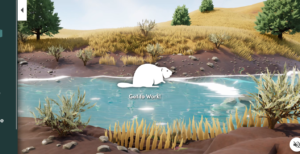
Beaver Interactive: Click to view

TREE PROTECTION

BAY AREA PODCAST

Our story told around the county

LASSIE INVENTS BDA

CONTACT US

URBAN BEAVERS

LASSIE AND BEAVERS

Ten Years

The Beaver Cheat Sheet

Restoration

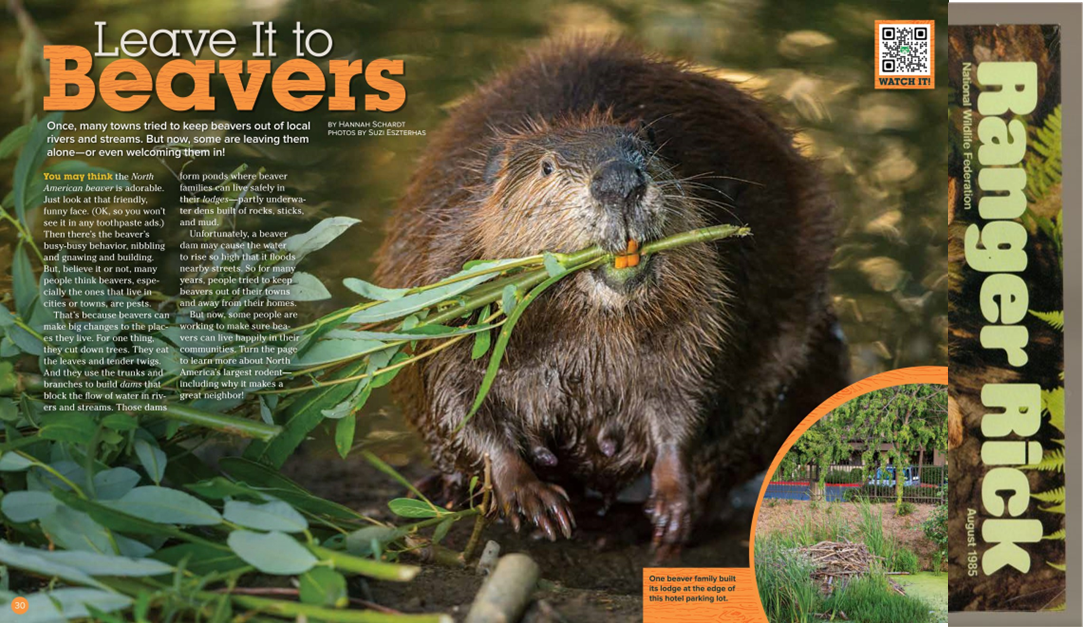
RANGER RICK

Ranger rick

Educate & Engage

Tattoos Journal
Kids Painting
Beaver Sketch

The meeting that started it all

https://vimeo.com/241579193?loop=0

Beaver Sites

  • Animal Protection of New Mexico
  • Beaver Ambassadors
  • Beaver Celebration
  • Beaver Deceivers, LLC
  • Beaver Insights
  • Beaver Institute
  • Beaver Solutions
  • Beaver State Wildlife Solutions
  • Beaver Trust
  • Beaver Trust
  • Beavers & Brush
  • Beavers Matter
  • Beavers Northwest
  • Beavers Wetlands & Wildlife
  • Bob Arnebeck’s Beavers
  • Bring Back Beaver – OAEC
  • CA Working Beaver Group
  • Corvalis Beaver Strike Team
  • De Rios y Castores
  • Ecosystem Engineers
  • Fairfield Beavers
  • Fox Creek Oregon
  • Grand Canyon Trust
  • Human – Beaver Coexistence Fund
  • Iowa Water Project
  • Methow Beaver Project
  • Norwegian Institute for Nature Research – Beavers
  • Partnering with Beaver: Utah
  • River Otter Beavers
  • Romance of the Beaver
  • Scottish Wild Beavers
  • Seventh Generation Institute
  • Sierra Wildlife Coalition
  • Southland Beaver
  • Stittsville Beaver Lodge
  • Superior BioConservancy
  • Taylor Creek Beavers
  • The Feasibility and Acceptability of Reintroducing European Beaver in England
  • The Fretful Porcupine
  • The Lands Council
  • Unexpected Wildlife Refuge
  • Watershed Guardians

Past Reports

March 2026
M T W T F S S
 1
2345678
9101112131415
16171819202122
23242526272829
3031  
« Feb    

Story By Year

Customized by Shoutreach Media

Worth A Dam is a fiscally sponsored project of Inquiring Systems Inc | Copyright © 2007-2025

WordPress Di Business Theme

close

Share the beaver gospel!

  • FacebookFacebook
  • email articleemail article