



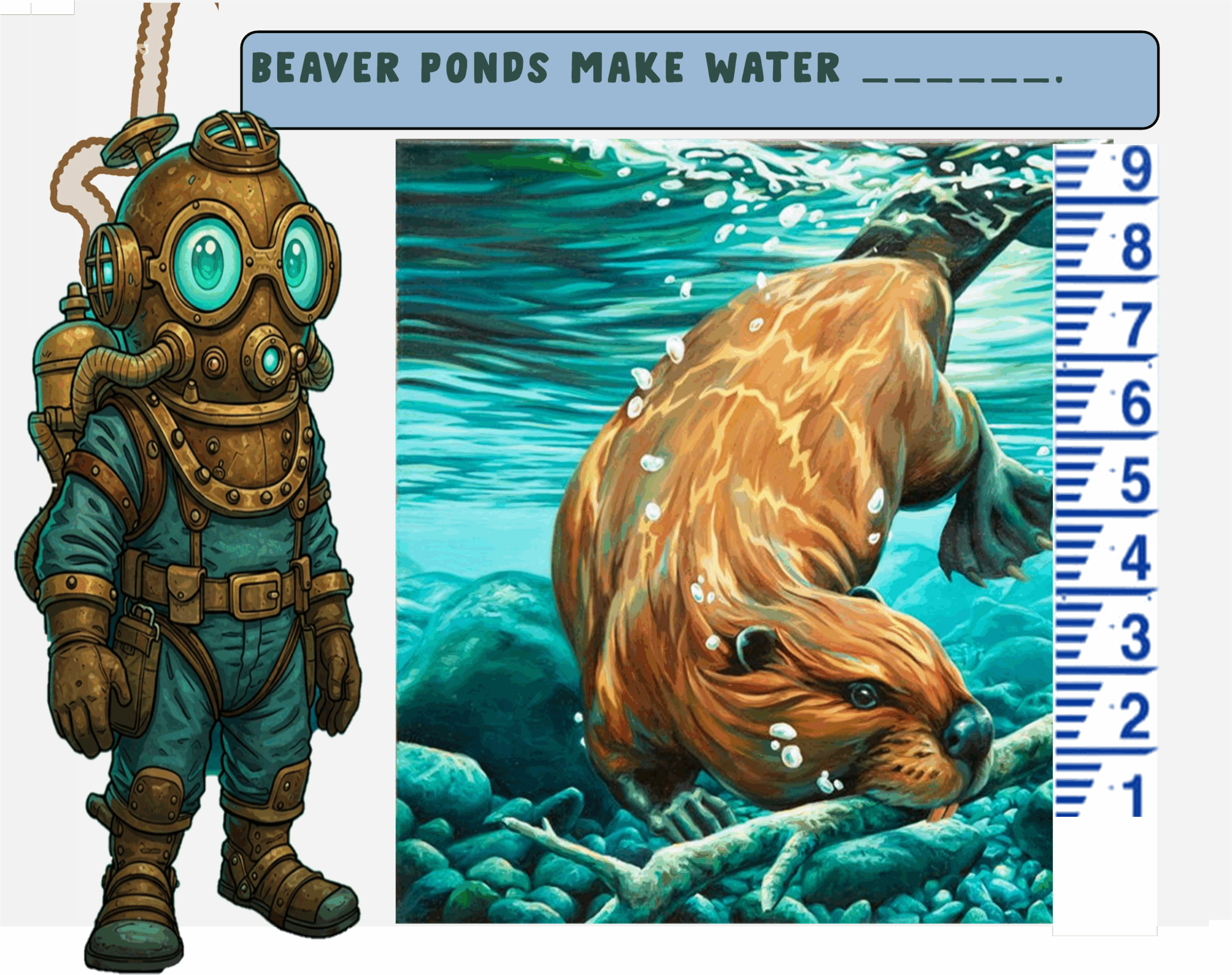
 The headline of this article interested me but I soon realized it had a very little piece of information it was phrasing over and over to pad out its argument. I’m still curious about the question. If a beaver lives in a fifty foot deep lake does it get mud from the floor for its lodge? What about a 150 ft deep lake? Do beavers ever get the bends? Do their eardrums pop from pressure?
How Deep Can Beavers Really Dive?
You can expect beavers to dive about 5 to 8 meters deep, using their ability to hold their breath underwater for up to 15 minutes. Their heart rate slows and blood flow prioritizes crucial organs, allowing efficient oxygen use during dives. These adaptations help beavers forage underwater and evade predators. While not the deepest divers among mammals, their underwater skills are indispensable for their survival and ecological role. Exploring their diving behavior reveals further fascinating details.
Although beavers aren’t marine mammals, they’ve developed impressive diving capabilities that support their semi-aquatic lifestyle.
You should know that beavers hold their breath underwater for up to 15 minutes, which enhances their diving ability considerably. This skill lets them avoid predators and spend extended periods foraging beneath the water’s surface.
Their strong swimming skills, reaching speeds up to five miles per hour, further improve their underwater efficiency.
Physiological Adaptations for Underwater Survival
While beavers can hold their breath for up to 15 minutes underwater, this ability is supported by several key physiological adaptations that enable their survival during extended dives.
When you observe a diving beaver, its heart rate slows, conserving oxygen for crucial organs like the brain and heart. Blood flow redirects to these areas, ensuring essential functions continue underwater.
Additionally, beavers have a transparent third eyelid that protects their eyes while allowing clear vision. Their muscles contain high levels of myoglobin, which store oxygen efficiently.
Together, these physiological adaptations optimize breath use and enhance underwater survival.
Comparison With Other Diving Mammals
Because beavers can hold their breath underwater for up to 15 minutes, they demonstrate a notable ability compared to many animals.
However, this capacity is relatively limited when you examine other diving mammals. Species like elephant seals can hold their breath for up to two hours, and whales and otters also exhibit remarkable breath-holding.
These differences stem from physiological adaptations, including higher myoglobin levels, which support oxygen storage during extended dives.
Such adaptations allow diving mammals to thrive in aquatic environments more efficiently than beavers, highlighting the variety of strategies animals use to survive underwater.
Did I mention beavers can hold their breath for 15 minutes? Here I as wondering about the pressure of the water and their eardrums popping and apparently if you just say the same fact over and over again that’s all you really need to get published.
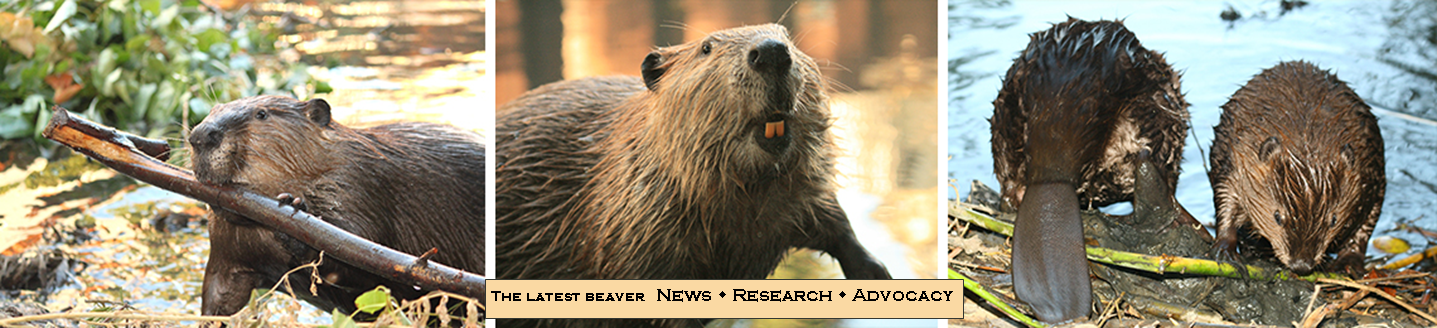
Beavers use their ability to hold their breath underwater for up to 15 minutes to access food sources and avoid threats. When they dive, they gather vegetation like aspen and willow, crucial for building dams.
These dams create wetland habitats that support diverse species and improve water quality. By altering water flow, beavers help sustain aquatic ecosystems and stabilize stream banks.
Their diving behavior plays a key role in maintaining healthy habitats, promoting biodiversity, and enhancing climate resilience. Understanding how beavers dive reveals their significant ecological impact on ecosystem balance and environmental health.
The fine key questions summary really was the icing on the cake:
How Deep Can Beavers Dive?
You’ll find beavers dive about 10 to 15 feet deep using impressive diving techniques. Their aquatic adaptations and beaver swimming skills boost underwater abilities, letting you appreciate how they explore habitats for food and building materials efficiently.