
Author: heidi08
Heidi is a child psychologist who became an accidental beaver advocate when a family of beavers moved into the creek near her home. Now she lectures about beavers nationwide and maintains the website martinezbeavers.org/wordpress which provides resources to make this work easier for others to do.
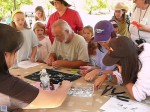
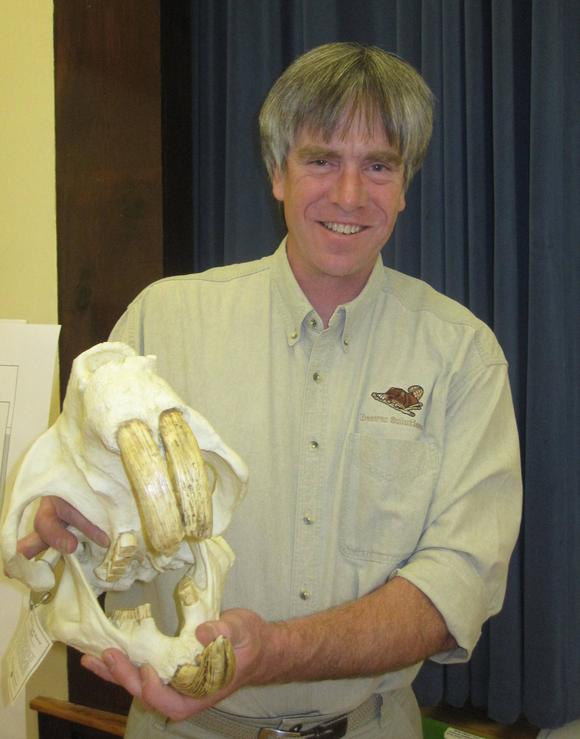
The first time I beheld a Castorides skull we were doing an exhibit with the curator of the Oakland Museum. it was so long ago I believe we had only held 1 beaver festival. I was LOVE STRUCK immediately.
Right away when I saw it I imagined attending the city council meeting with it on my lap. I could not get the image out of my head.
Well guess what is the new State Fossil of Minnesota?
Bear-Sized Giant Beavers Once Roamed North America, and They’re Now the Official State Fossil of Minnesota
It’s official: Minnesota’s state fossil is the giant beaver, an extinct creature the size of a small bear that roamed around the Twin Cities more than 10,000 years ago.
Lawmakers had approved the new state fossil earlier this year as part of a broader omnibus bill, which Governor Tim Walz signed into law in May. The bill—which included a short provision about the gargantuan Ice Age rodent—officially took effect July 1, report Dana Ferguson, Peter Cox and Clay Masters for MPR News. (Minnesota now has a state constellation, too: Ursa Minor, also known as the Little Dipper.)
I saw months ago that Emily Fairfax was on the dream team to make this happen and figured she would make it happen. I think a beer company had made a Castoroides brew.
“Minnesota has a deep connection to beavers—from our modern ecosystems to our prehistoric past,” Alex Hastings, a paleontologist at the Science Museum of Minnesota, said in a May statement. “The giant beaver fossil specimens in our collection have long captivated visitors of all ages, making this massive Ice Age mammal the perfect symbol of our state’s ancient natural history.”
The giant beaver’s journey to becoming Minnesota’s state fossil has been a long and winding one. The saga dates back to at least 1988, when a group of third graders first proposed making the massive mammal the official state fossil, according to Minnesota Star Tribune columnist Jennifer Brooks. Since then, the proposal has come up again and again. Each time, lawmakers have said no—but that changed this year.
I was so happy with the Skull copy I bought from the Bone room on Solano that I gave one to Mike Callahan who was helping our strategies at the time.
Fossil hunters have discovered nearly complete remains of the species in Minneapolis and Saint Paul and uncovered fossils in Freeborn County, which is located in the southern part of the state near the border with Iowa. The creature is known as “Ċapa” in Dakota and “Amik” in Ojibwe, the languages of two Indigenous tribes that have long lived in what is now Minnesota.
“What’s really fun about the giant beaver is that it would have actually been around when the first people were settling into Minnesota,” Hastings told MPR News’ Dana Ferguson in February. “So, the first inhabitants in this land would have been encountering the giant beaver.”
In 2021, the Science Museum of Minnesota made another push for the designation of an official state fossil when it asked residents to vote for their favorite contender. Other options included the scimitar-toothed cat, an extinct species of bison and a large, squid-like creature called Endoceras. But in the end, it was the giant beaver that won over the hearts and minds of Minnesotans.
To this day my favorite thing to say about the skull at exhibits is to point to it and say “This is the size of the problems the city thought the beavers were going to cause.”
And then point to our little castor candensis skull and say “But this is the size of the problems they actually caused.”
Lawmakers were finally convinced. While debating other important issues, like the state budget and fraud mitigation, they agreed to make the giant beaver the state fossil.
“It’s still a good time to remember our history and what we think is important to the state,” Jim Abeler, a state senator from Anoka, Minnesota, said at the proceedings, as reported by the Minnesota Star Tribune. “If you were going to have a state fossil, you’d want to have something as cool as the giant beaver.”
I gotta agree with you there.
When I did the class with Jack Laws a while ago we talked at length about his upcoming Bay Nature spot and what would be a good subject to draw. I repeated that the observation of beavers carrying their young was absent from an illustrations except ours.
He clearly took up the challenge.
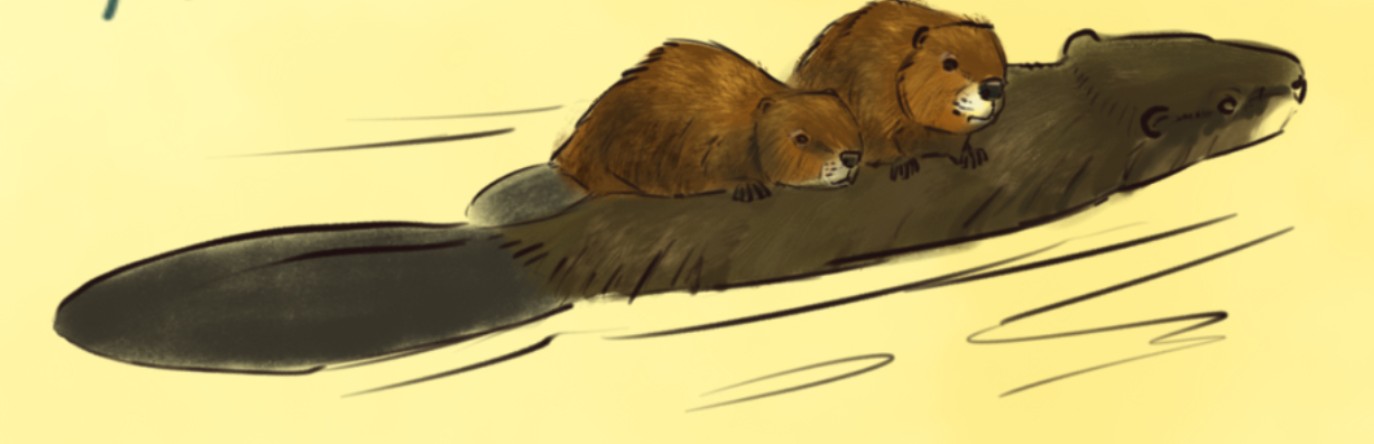
Drawing nature can raise terrific questions and chances to learn about wildlife and phenomena. John Muir Laws has been drawing and teaching nature journaling for more than 25 years. This month: how to find signs of beavers, which are making a comeback.

If you aren’t a subscriber of Bay Nature you really should be. Go here to sign up for your very own guide to the bay’s wild pulse.Love these clues.

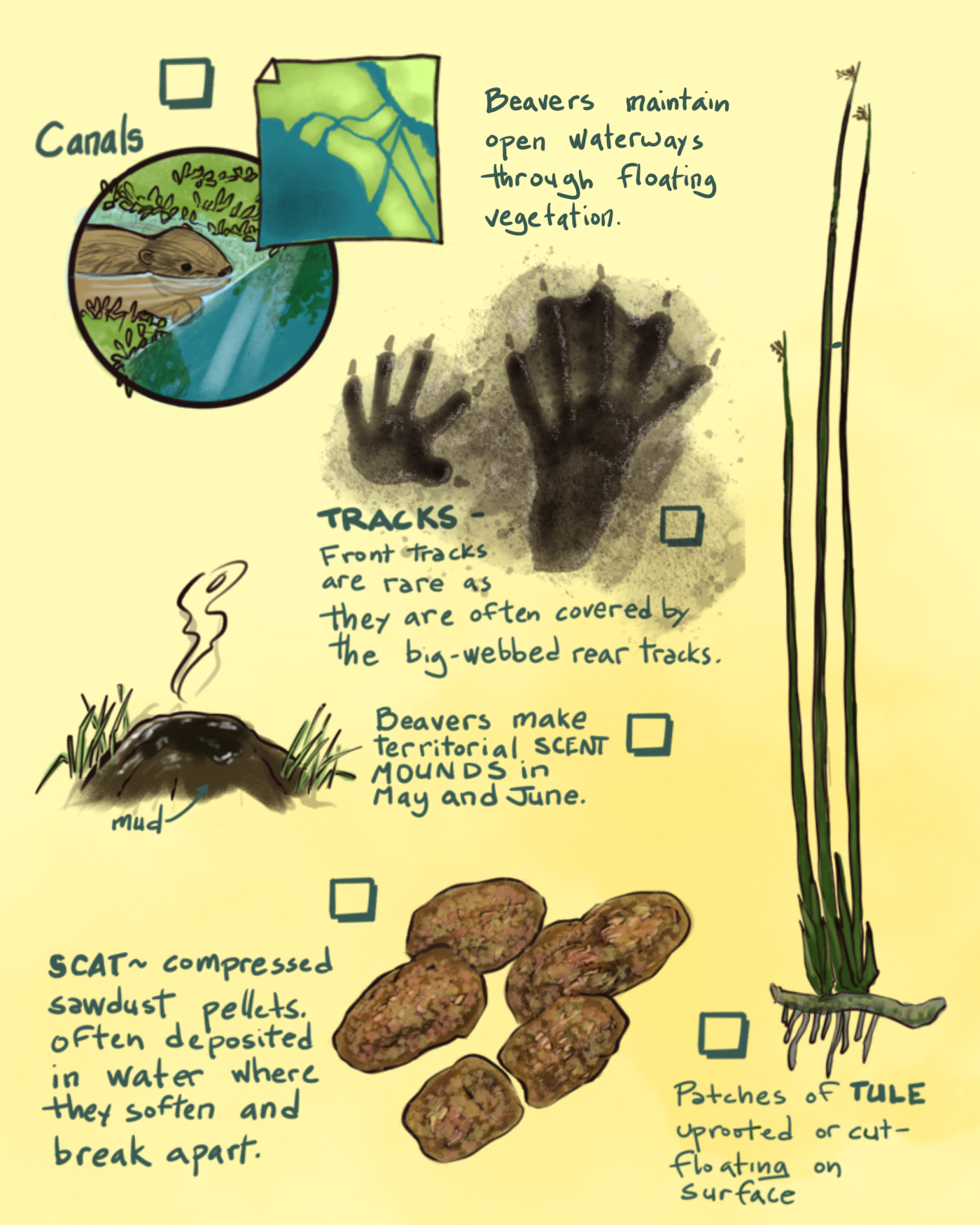

Hey look at that! We are the way to learn more! Thanks Jack for your talent and generosity as always!
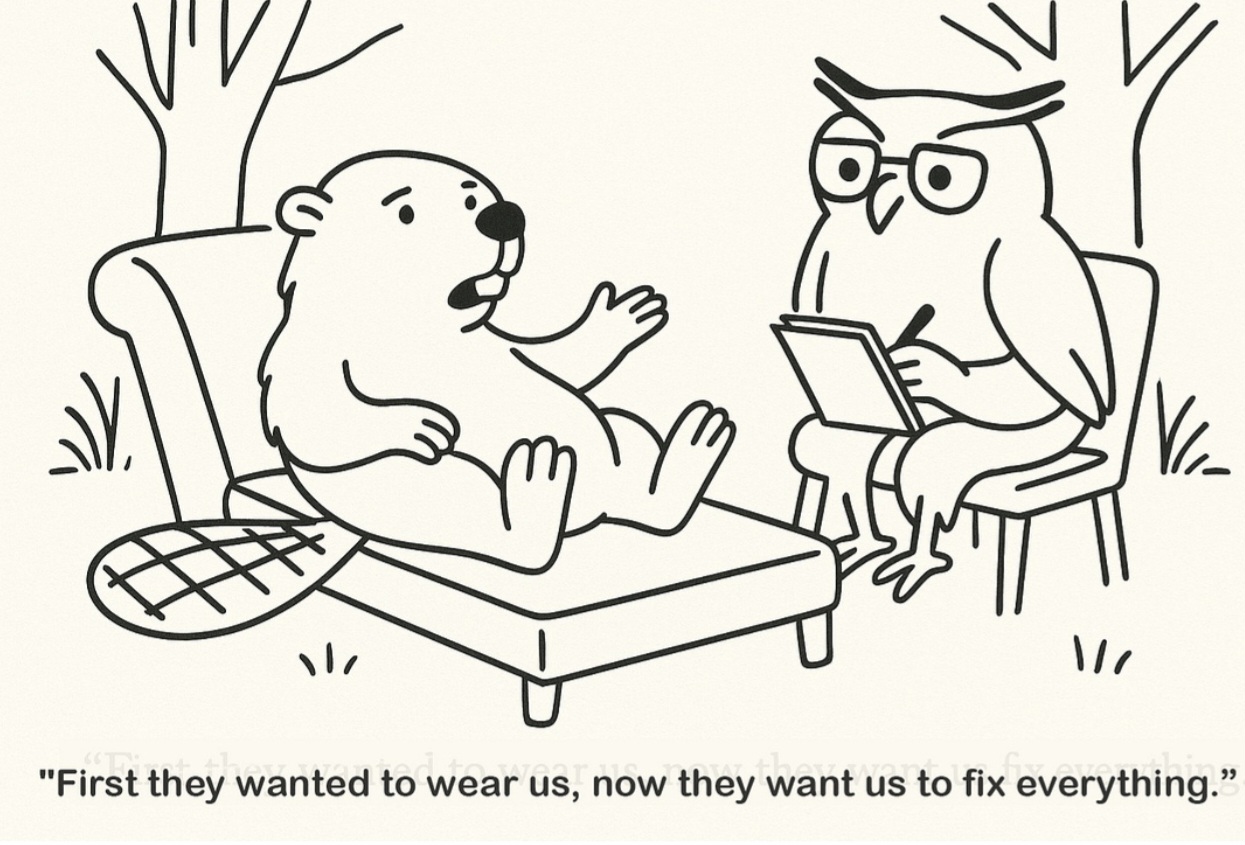
This story made me very happy. From New Hampshire.
Beaver: The Wetland Weaver
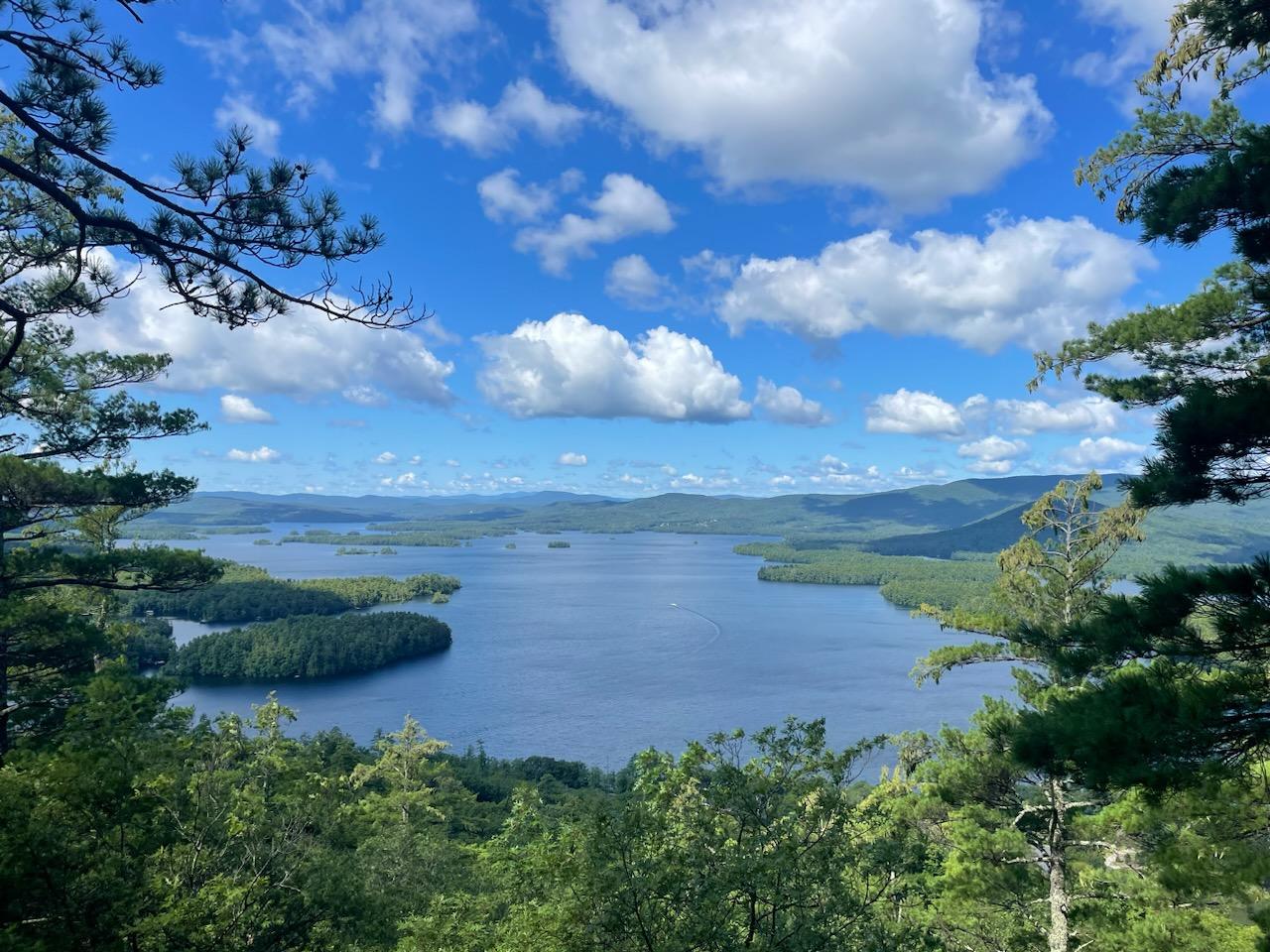
Are you curious about North America’s largest rodent species? Beavers live all around us and fundamentally shape our wetland ecosystems. Come join us at the Squam Lakes Association on Tuesday, July 8th, from 10am- 12pm, for a discussion about beavers and then a short kayak trip through Piper’s cove to observe the beaver dam. Participants will learn about how and why beavers make their dams and how these dams create important ecological niches for other wetland species. We will also discuss human/beaver conflicts and successes, including historic fur trapping and how ecologists are using beavers to restore degraded habitat.
This invitation should come with a warning. I seem to remember I was curious about beavers once and use to walk blocks from my home just to see them.
Participants should meet in the SLA building at 9:45 to fill out liability forms and then gather in the great room to talk about the basics of beavers. Next, we will go down to the docks and launch kayaks into Piper’s Cove, where we will go explore our own resident beaver dam and take a closer look at how they are constructed. This will be an about 0.5 mile round trip, but we will take our time and meander at the beaver dam, so it will be a very leisurely paddle. SLA will provide all boats, paddles and life vests. SLA members often spot these beavers in the cove, so hopefully we might see one while we are boating in! Participants should bring plenty of water, as well as snacks, sunscreen and bug spray.
For more information, or to sign up for this Adventure Ecology program, visit the SLA website (squamlakes.org) or contact the SLA directly (603-968-7336). The SLA also offers other Adventure Ecology programs throughout the year. These free programs are open to the public and cover a variety of nature and conservation related topics. The Adventure Ecology programs are presented by the LRCC AmeriCorps members at the SLA who perform important conservation work in support of the Association’s mission.
The Squam Lakes Association is dedicated to conserving for public benefit the natural beauty, peaceful character and resources of the watershed. In collaboration with local and state partners the SLA promotes the protection, careful use and shared enjoyment of the lakes, mountains, forests, open spaces and wildlife of the Squam Lakes Region.
Squam Lakes Association
10:00 AM – 12:00 PM on Tue, 8 Jul 2025
Just remember you’ve been warned.
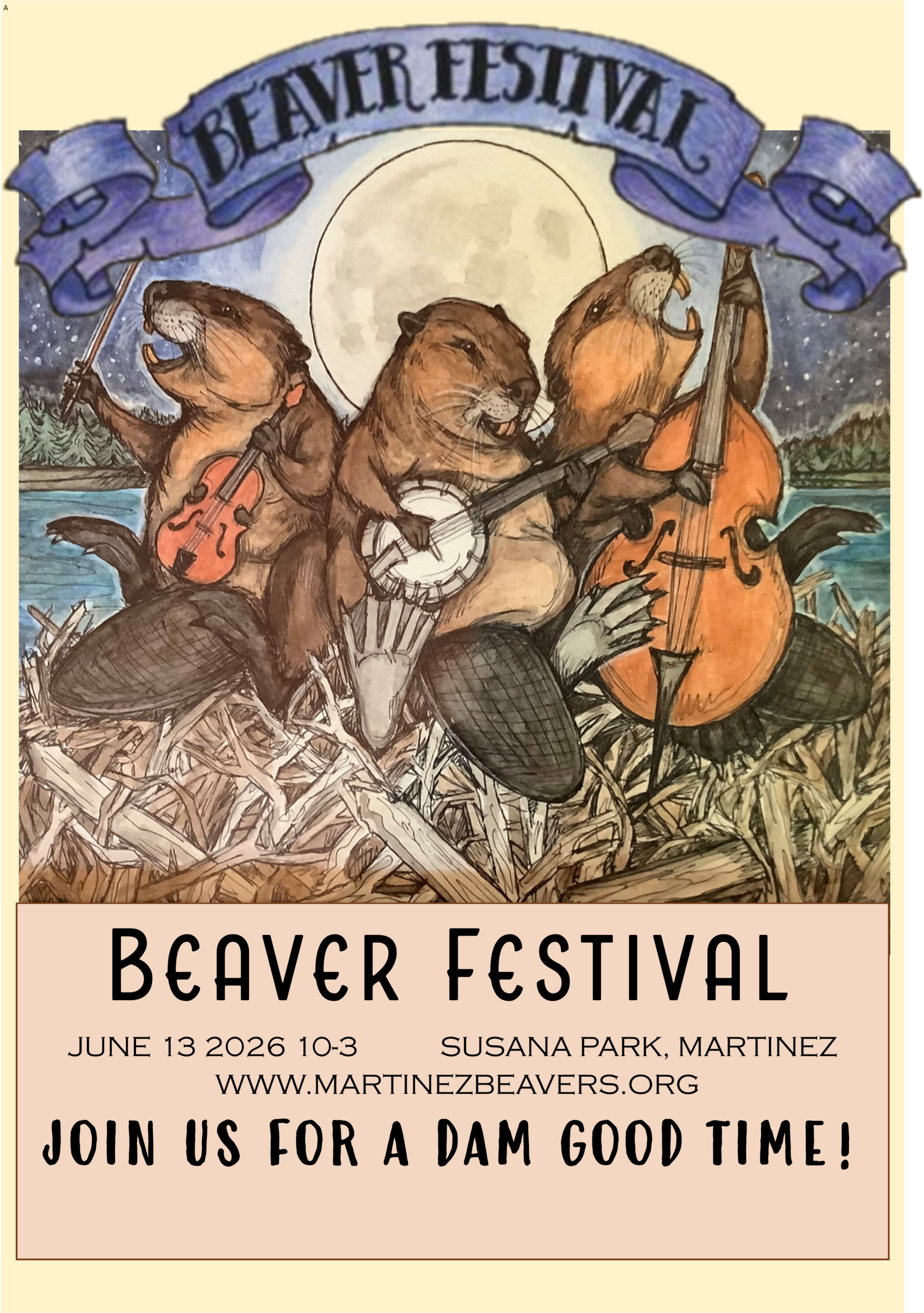
BEAVER FESTIVAL XVII
DONATE

Beaver Interactive: Click to view
TREE PROTECTION

BAY AREA PODCAST
LASSIE INVENTS BDA

CONTACT US

URBAN BEAVERS

LASSIE AND BEAVERS

Ten Years
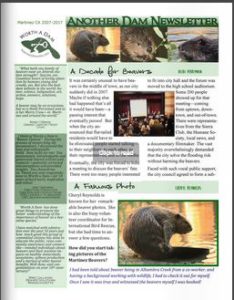
The Beaver Cheat Sheet

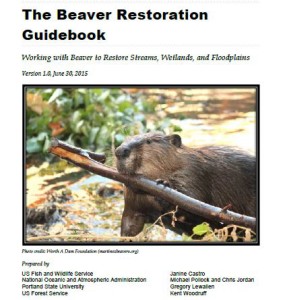
Restoration
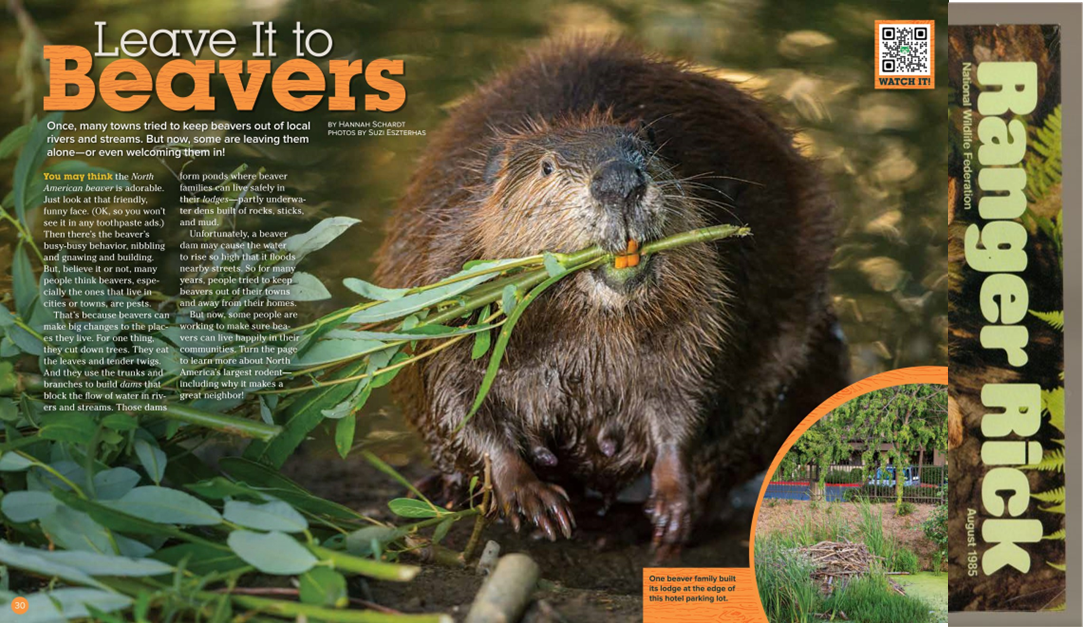
RANGER RICK
Educate & Engage