We defy augury. There is special providence in the fall of a sparrow. If it be now, ’tis not to come; if it be not to come, it will be now; if it be not now, yet it will come—the readiness is all.
Are you sitting down? This is going to come as a huge shock: Apparently it is impossible for a single model to predict where a beaver is going to build a dam! I know, shocking huh?
It’s almost like beavers have free will or something.
Jessie A. Moravek, Michelle Andruss, Alyssa Connaughton, Joe Miller, Mickki Garrity, Keitreice Kirksey, Emily Fairfax
Introduction
Understanding where and how many dams beavers (Castor canadensis) will build is an important habitat restoration question, especially as beavers are increasingly recognized for their ecosystem-scale benefits and as beaver-related restoration accelerates. Several models exist for predicting the dam building behavior of beavers in North America. However, not all of these models are applicable outside of the ecoregions where they were developed or validated.
Objectives
We review 11 existing North American beaver dam building and habitat suitability models, and we map the ecoregions where those models are intended to work.
Results
A variety of beaver capacity and suitability models exist across North America, but many ecoregions do not have validated models. Given the adaptability of beavers for using local building materials, applying models to new regions where the model has not been calibrated can be difficult and can produce inaccurate results.
Whoa It;s almost like actually watching beavers do things is more important than looking at models of what beavers are supposed to do.
Go figure!
Though recalibrating models to reflect local beaver behavior may sound like a simple fix, many of the models reviewed for this study require significant technical expertise to parameterize, run, and interpret. This is a barrier for people who want to integrate local observations into a model. To combat this, model developers should be explicit about what inputs and results they expect to change due to beaver behavioral adaptations. For example, models heavily based on food and building materials could provide examples of how flexibility in material use could influence results and could provide specific instructions on how to edit the model to reflect local material use. Changing inputs or parameters to reflect local beaver behavior needs to be clear and simple so that it can be applied in small-scale, local contexts.
In summary, beaver restoration and management decisions are increasingly based on the results of beaver dam capacity and habitat suitability models. These models are powerful tools for science-based wildlife management, but they underperform in a local restoration context without calibration that reflects behavioral adaptations of local beaver. To be accurate, the model calibration process must include the participation, collaboration, and input of local scientists and community members who have specific place-based knowledge of their beavers.
I appreciate the respect for field observation. But I am going to add something worse to the mix. Not only do beavers vary according to regional materials, they also vary according to individual beaver!!!
Seeing firsthand what beavers built after the act is useful, but if you missed out on who and how the dam was built you might not have seen that sometimes certain beavers do certain things.
Case in point We had on yearling that would only build with reeds. He eventually influenced the others who started to incorporate reeds too.
Beavers make their own decisions. They defy augury and models,

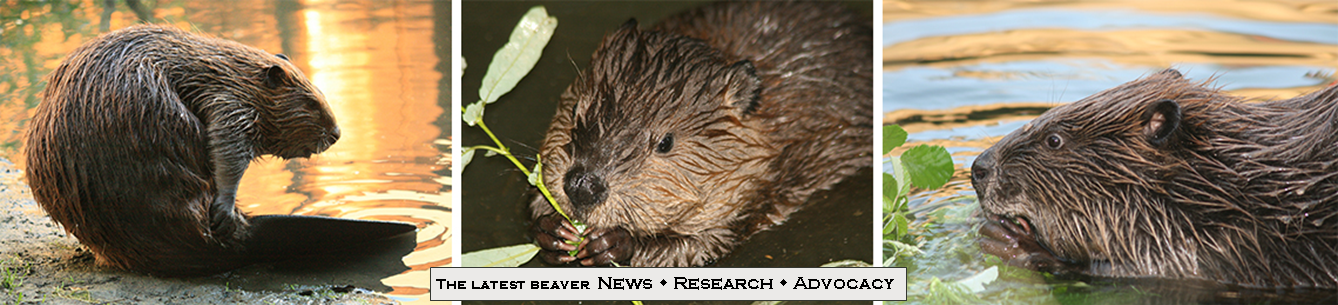
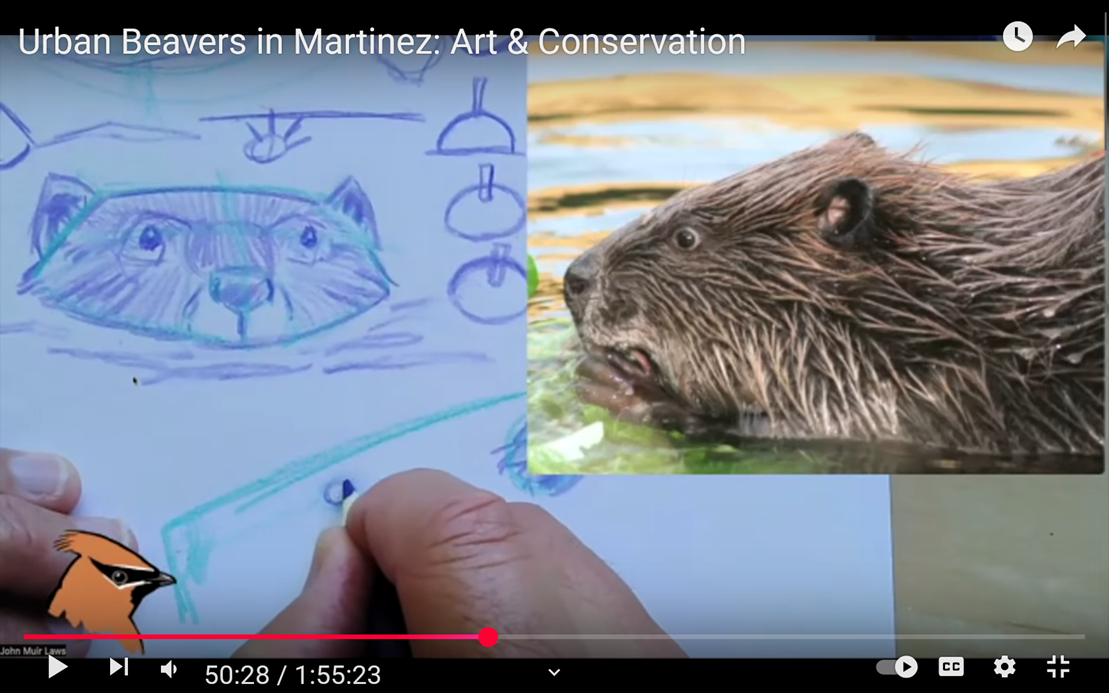 The week before the beaver festival I was invited to present about our beavers at the journaling workshop of John Muir Laws. The ideas is that the guest talks about their work in conservation of a species and then Jack teaches a virtual webinar to an untold number of students around the world and walks them through how to draw it.
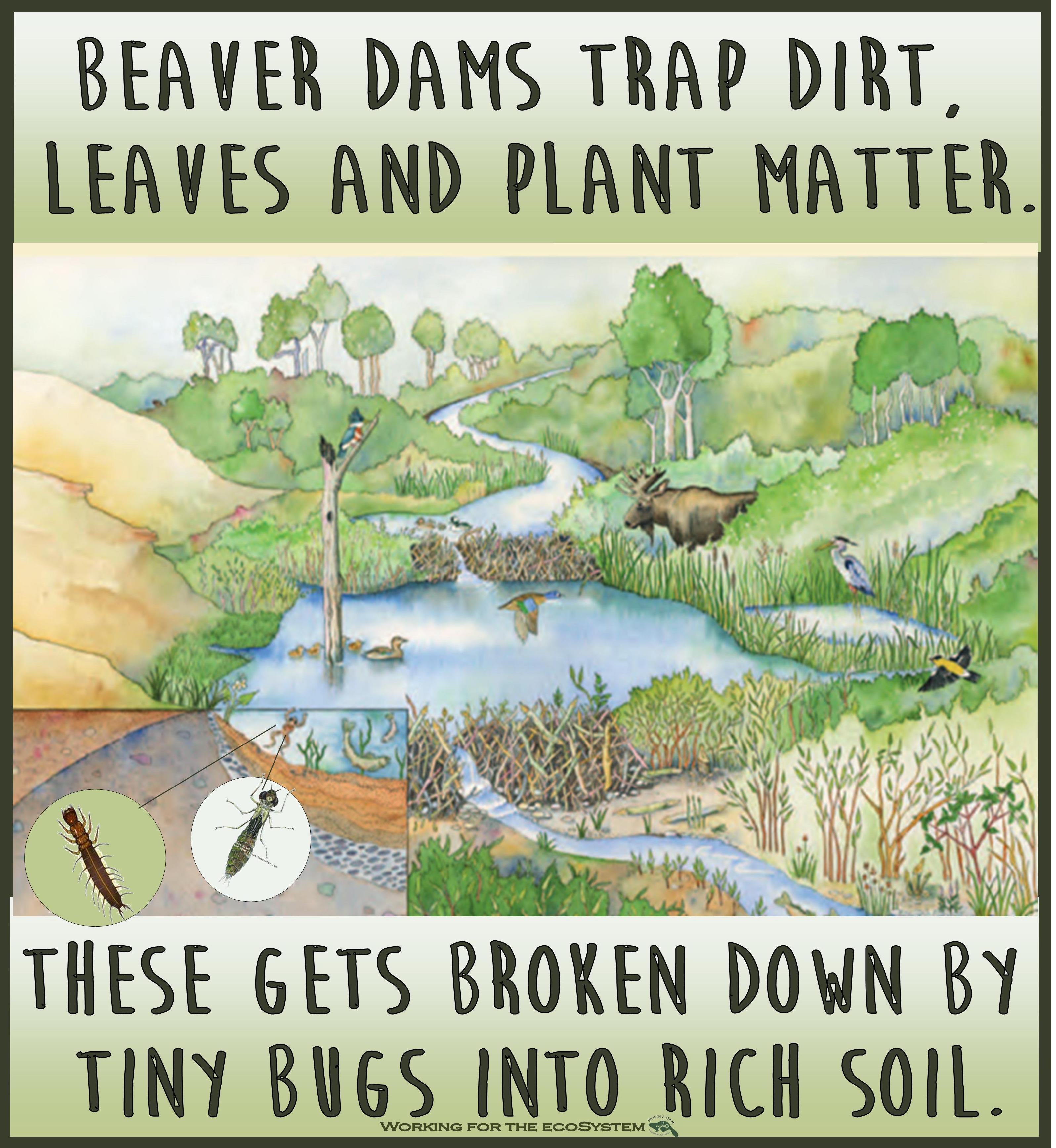 BEAVERCREEK — The Beaver Creek Wetlands Association will be hosting a new adventure later this Summer.
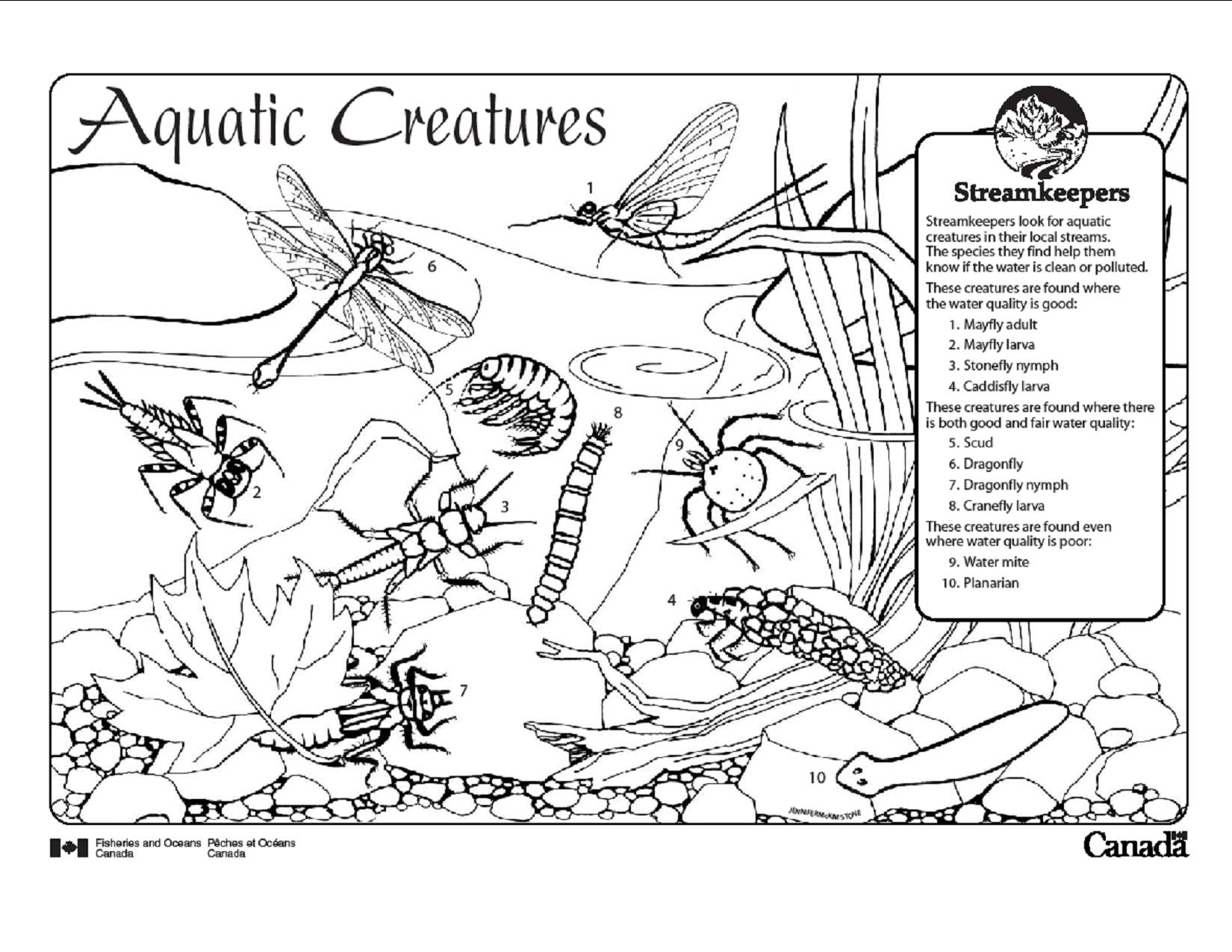 Event organizers hope it will spark interest in children and teens between the ages of 10-15.
 In a recent Humboldt County Board of Supervisors meeting, discussions took an unexpected turn as members delved into the local wildlife and environmental concerns, particularly focusing on the presence of beavers in the area. The conversation sparked curiosity and a bit of humor among the supervisors, as they debated the nature of a suspected beaver dam that had caught their attention.