
Author: heidi08
This made me very happy.
Beaver fever: Broaden your beaver bona fides at Beaver Bash in Washougal
Free event includes hands-on activities, entertainment, more
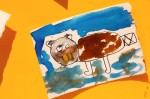
If you’re struck by a sudden desire to branch out this Saturday, look no farther than the Beaver Bash, where you can broaden your beaver “gnaw-ledge” (according to the event’s clever tagline) and celebrate the Northwest’s most iconic rodent.
Beaver Bash, set to run 10 a.m. to 2 p.m. April 18 at Reflection Plaza in Washougal, is the brainchild of Valentina London. The Washougal resident is a Washington State Department of Fish & Wildlife habitat biologist specializing in beavers. International Beaver Day on April 7 triggers a number of beaver festivals around North America, London said — and it’s high time these industrious natural architects had a local festival in their honor.
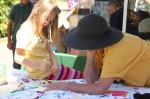
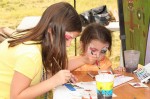
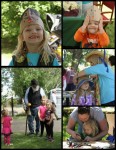
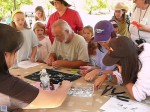
“We’ll have live music, a puppet show, lots of art projects and a keynote speaker, so there’s something for everyone — folks that are younger and folks that are older,” London, 30, said. “People will be able to learn about beavers and why they are awesome ecosystem engineers.”
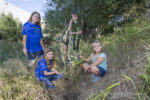
London, who works out of an office in Ridgefield, said she often partners with the Cascade Forest Conservancy (one of the event’s community partners) to help beavers in Southwest Washington or relocate them to areas where their tree-munching and dam-building skills can better benefit the environment.
Fantastic.Jacob Shockey will be the speaker. A tribal blessing to start the day. A tshirt screening where you design your own. And a driinking trivia night afterwards,
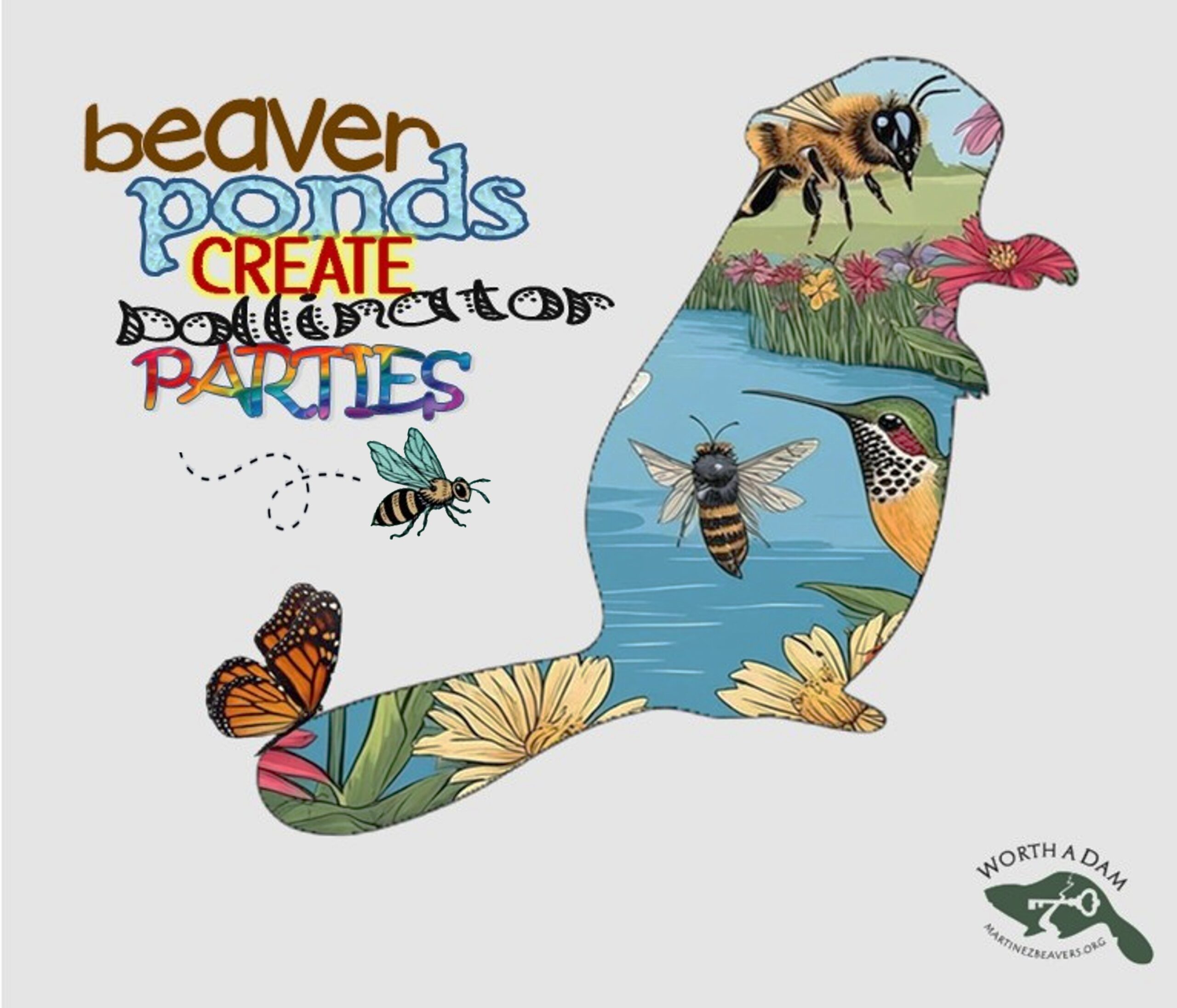
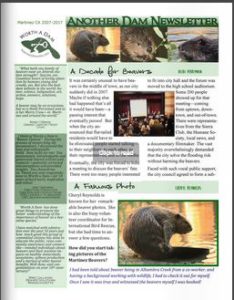
A quick Google search reveals a bevy of beaver-related activities and events in Washington and Oregon, but there are only two large-scale beaver festivals on America’s West Coast, London said, and they’re both in California: the Central Coast Beaver Festival in San Luis Obispo and the Worth a Dam Beaver Festival in Martinez, near San Francisco.
UM the ORIGINAL. That’s been around like 15 years longer.
“We have people that we know of coming from two-plus hours away for this event, because there’s nothing like it in Oregon or Washington currently,” London said.
The festival is organized by a seven-member committee, including London. Other members are London’s father, Travis London, a muralist and Vancouver Public Schools art educator; Kathy Huntington of the Washougal Arts and Culture Alliance; Mark Soutter and Amanda Keasberry of the Cascade Forest Conservancy; Soutter’s wife, Washougal artist Annie Soutter; and Hannah Schrager, owner of Good Year Farms. London said the Beaver Bash is fully funded by a grant from the East Coast-based Broad Reach foundation, which promotes “healthy ecosystems, coexistence, community resilience and human well-being,” according to its website.
“The main message we want to drive home is that beavers are friends, not foes,” London said.
We like that message.
The event is also the result of a lot of volunteer elbow grease and the involvement of many community partners, including the Camas Youth Council, Frog and Twig, Washougal Arts and Culture Alliance and Good Year Farms. The Cowlitz Indian Tribe will also get “lots of shout-outs,” London said, for its work with beavers and its beaver relocation program. Local businesses Compass Coffee, Danglicious Vietnamese Kitchen and Trap Door Brewing have agreed to stay open during the event and Kascadia Public House, 3307 Evergreen Way, Suite 301B (near Safeway) will host a Beaver Gnawledge Trivia Night after the festival from 3-5 p.m.
“The event has come together very beautifully and very organically with the community,” London said.
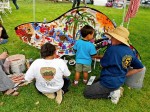
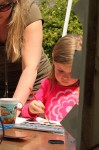
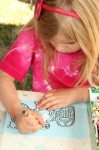
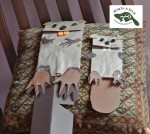
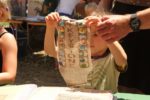
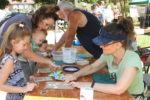
The committee made a special effort to get young people involved and teens will run the temporary tattoo booth and the “build a beaver tail” art station. The Washougal High School jazz band will perform at 11:15 a.m. Futhermore, London and Keasberry will speak to Canyon Creek Middle School’s seventh grade science classes during April about beavers and beaver ecology. The school is ideally situated for beaver education, London said, because there’s a wetland behind the school with a lot of beaver activity.
We like schools with beaver activities.
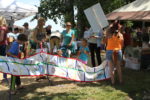
Sam Robinson, vice chairman of the Chinook Indian Nation, will offer opening remarks at 10 a.m., followed by a puppet show by Red Yarn. At 11 a.m., attendees can participate in a collaborative sidewalk mural led by Travis London. Keynote speaker Jakob Shockey, executive director of the Southern Oregon nonprofit Project Beaver, will offer a science-oriented presentation geared toward older teens and adults.
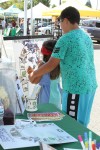
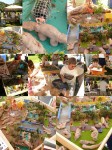
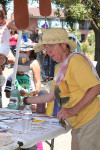
Other activities include beaver photo props, a mock stream, raffles and live music by Brenna Larsen and Anica Stemper. Attendees can also get free, custom-printed Beaver Bash T-shirts or use the on-site screenprinter to print their own T-shirts or posters — also for free. Even the snack bags will be free, London said.
There won’t be any vendors or food trucks on site because the planning committee wants to keep the focus on beaver education. However, as the festival expands, that may change.
“We’re expecting 100 people,” London said, “but we’re prepared for more.”
The first festival that was ever held nearly twenty years ago I was worried that no one would come or it would be a flop. I told myself, don’t worry, no matter how small it turns out to be it will be still be the biggest beaver festival ever.
And guess what, it was!
In this webinar, Dr. Grace Lindsay, an assistant professor of Data Science and Psychology at New York University and head of the Beaver Lab at Collaborative Earth, will demonstrate a specialized tool that allows users to upload dam locations and conduct guided analyses on ecological impacts using key remote sensing metrics like NDVI (Normalized Difference Vegetation Index). Beyond measuring current success, the discussion will highlight the future of this work: developing predictive models designed to help conservationists strategically plan restoration projects by identifying exactly where beaver dams will yield the most significant environmental benefits.
This article left me puzzled. Why on earth would anyone want to introduce nutria? California doesn’t even allow hunting?
Giant rodent that could devastate California wetlands was ‘deliberately’ reintroduced to population, experts fear
A destructive, invasive giant rodent may have been deliberately reintroduced in California, posing a serious threat to the state’s fragile wetlands, wildlife officials said.
The species, known as nutria, is a large semi-aquatic rodent native to South America that can weigh up to 20 pounds and consume vast amounts of vegetation.
A first-of-its-kind genomic study found that nutria discovered in Merced County in 2017 are genetically linked to a population in central Oregon – which suggests the invasive rodents were illegally reintroduced to California by humans decades after being eradicated in the 1970s, the California Department of Fish and Wildlife said Tuesday.
So a nutria in Merced has the same DNA as a nutria in Oregon and that means they were deliberately introduced? Um how did they get to Oregon in the first place?
Are their Nutria in Nevada or Arizona? Did you test their DNA?you know they swim right?
The motive behind the suspected reintroduction remains unclear, officials say. Some believe the nutria may have been released as a misguided attempt at vegetation control, while others suspect possible environmental sabotage, SFGate reports.
You know how it is. Some crazy hippie wants to create havoc on the area and releases a rodent which looks a lot like the other rodent Merced kills all the time. It happens so often!]
“Someone may have thought they could be an effective natural way to manage aquatic vegetation on their private property,” Buchalski said. “Also, some people just really like nutria…Or it could have been malicious in hopes that they would cause environmental damage. It’s hard to know.”
Who? Tell me who?
Regardless of intent, the consequences could be severe. Nutria are known for aggressively feeding on aquatic plants, often consuming up to a quarter of their body weight daily, which can devastate marsh ecosystems and destroy habitats for native species. Their burrowing behavior also weakens levees and irrigation systems, increasing the risk of flooding and infrastructure failure.
Since 2017, the state has removed thousands of nutria and spends about $5 million each year to control the population, while also setting up inspection stations at key entry points as a “first line of defense” against further introductions.
You know I went for a boat ride in Louisiana where the good old boys told us that they were called Nutria by the government so that people would think they were NUTRITIOUS and eat them.
Also Nutria is spanish for otter.
Also Wikipedia says that Nutria were purpose introduced from south america for their fur after by the Tobasco family.
In Europe the word for Nutria is Coypu. No telling who introduced them there.
Let’s just say when it comes to this animal’s background I’m a little SKEPTICAL.
Despite those efforts, officials warn that preventing additional human-assisted spread remains critical. The introduction and transport of nutria into California is illegal, and authorities stress that continued vigilance is necessary to protect the state’s ecosystems.
“The results of this study additionally will benefit future national and global genetic research on nutria,” Buchalski said in a statement.
Okay. If you says so Michael.