




Sweden has been doing a remarkably good job in beaver-research lately. It took them a while but they seem to be firmly on the beaver-train now. Just just look at this great thesis from Lovisa Hökby, a PhD student at SLU.
Beaver’s role in the spread of tularemia investigated: No increased risk found
Beaver dams have sometimes been identified as potential hotspots for pathogens and the spread of animal-borne diseases such as tularemia. But a new thesis from SLU clears the Swedish beavers of these suspicions. Beaver ponds do not pose a greater risk of disease transmission than other wetlands.
– Beavers build dams and create wetlands that promote biodiversity, but these same environments can also favour the spread of zoonotic diseases. Having now investigated and assessed the risks, we can see that beavers in Sweden do not appear to cause an increased spread of infection, says Lovisa Hökby, a PhD student at SLU and the author of the thesis.
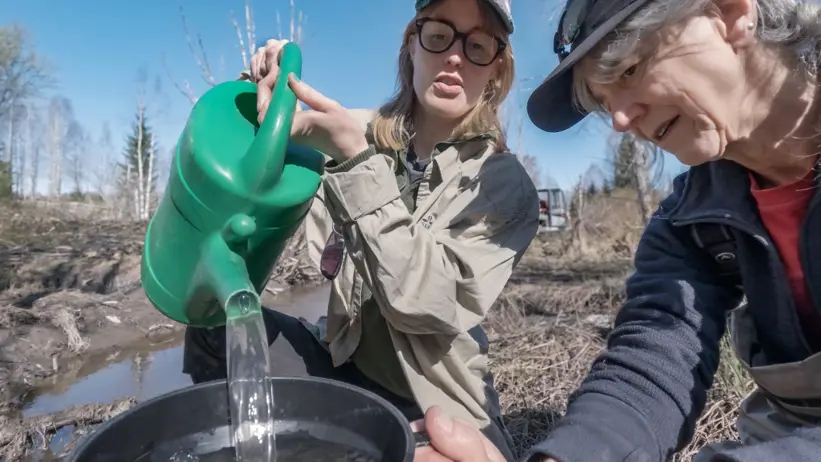 One of the pathogens she has examined is the tularemia bacterium. It can be transmitted to humans via mosquitoes, which are often abundant in stagnant water and ponds. Whilst working on her thesis, Lovisa Hökby collected water samples from both beaver dams and other wetlands in Sweden. The water samples, along with tissue and faeces from beavers, were then tested for a total of 21 different infectious agents, known as pathogens. These included the bacterium that can cause tularemia.
Well what did she find?
– The results show that pathogens occurred at similar prevalences in wetlands regardless of whether there were beavers there or not. Nor do the beavers themselves appear to play a central role as host animals. Most of the beavers we examined tested negative for all pathogens, says Lovisa Hökby.
There you go. Beavers and their ponds do not cause or carry Tularemia any worse than any other wetlands. And in fact since there is greater diversity at beaver ponds and lots of things that eat mosquito larva they may actually reduce its prevalence.
Click on the link at the headline to read the rest of the article or if you want to hear more or participate in her dissertation defense.
Thanks Lovisa.