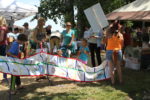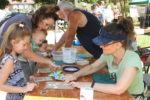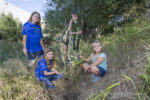





Great report from the North Coast.
Beaver-based restoration
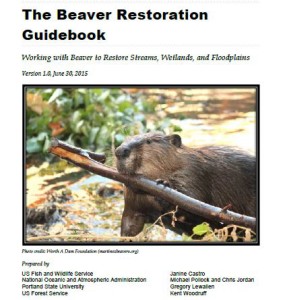
Beaver-based restoration has been gaining popularity as a strategy for responding to growing wildfire risk in an ecologically-informed way. Raincoast connected with Jennifer Rogers from the British Columbia Wildlife Federation to learn more about their 10,000 Wetlands Project and how it might inform better fire response throughout British Columbia. This article outlines how beaver-based restoration is an effective, ecologically-informed tool in the arsenal of approaches to reduce wildfire risk.

Finally a solution we can get behind!
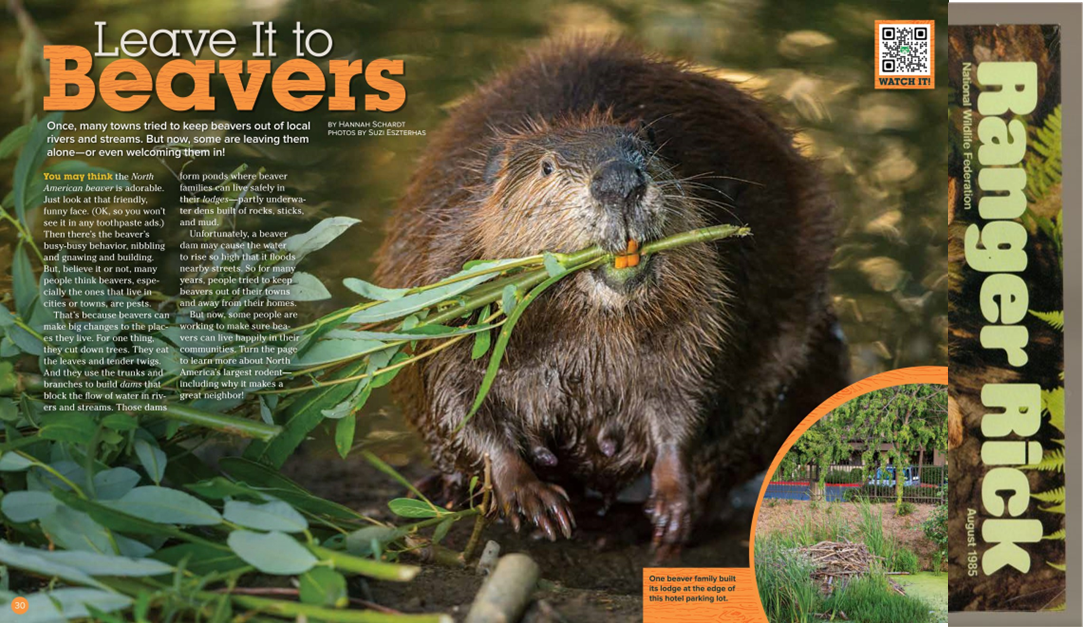
Though this is normal and instinctual beaver behaviour (behaviour that is increasingly understood by the scientific community to be essential to ecological functionality), many people feel justified in removing “nuisance beavers” from the landscape either by relocation or lethal trapping. However, the chance of another beaver colony (aka beaver family) moving into the area within the next few years is fairly high. As such, there is a much higher benefit to learn to live with and work alongside beavers, rather than fighting against them. After all, humans and beavers have more in common than most people might initially realize.
Mature beavers are monogamous and have an average of two to four offspring per year, called kits. Beavers live in family units (i.e., colonies) consisting of the breeding pair and their offspring from both the current and previous year. Between the ages of 20-24 months, young beavers leave to establish their own territories. A beaver family unit tends to be territorial, occupying areas of anywhere between 0.5 to 20km², with their territorial range depending on food availability and the density of the surrounding beaver population. Perhaps more than any similarity, the trait that may be most definitive of both beaver and human behaviour is the shared ability to reshape habitats to better suit their needs.
You would think we would understand eachother better since we have so much in common.
Beavers live in rivers, lakes, and wetlands, and in more modern times, ditches and stormwater ponds. They prefer slow-moving water, and the modulation of faster-moving streams is often the impetus for dam construction. Beavers also build dams to create better conditions for siting lodges, which are used for shelter, protection from predators, overwintering, rearing offspring, and food storage.
Though dams and lodges are their best-known constructions, beavers are also known to develop canal systems to:
-
- more easily transport food and building materials throughout their territories, and
- expand food availability by creating better growing conditions for the herbaceous, aquatic, and woody plants they depend on for their food supply and other needs.
Taken together, beaver-built infrastructure is designed to slow the flow of water, hold it on the landscape, and foster the growth of the types of plants that beavers depend on for survival. Some of these species include alder and cottonwoods (Alnus spp.), aspen and other poplars (Populus spp.), birches (Betula spp.), maples (Acer spp.), willows (Salix spp.), dogwoods (Cornys spp.), cattails (Typha spp.), water lilies (Nymphaea spp.), sedges (Salix spp.), and rushes (Juncus spp.). Many of these species are also early successional species, that is, they establish early and quickly after a disturbance. This means that beavers not only mitigate the impacts of disturbances, but can also help recover recently disturbed sites. This is explored in more detail later in this article.
Go check out the entire article here.