Another bloody battle at Gettysburg has ended. For weeks now there have been arguments about the beaver pond in the area with officials saying it was ruining the historically blood stained landscape and conservationists arguing it was bringing living things to a war zone and saving rare species.
Not surprisingly, the beavers lost.
Gettysburg Military Park beaver pond to be drained
This great article about the beaver progress being made in California finally dropped. I think I spoke with Lydia so long ago the Christmas tree was still up but I could be wrong. It’s been a long time coming.
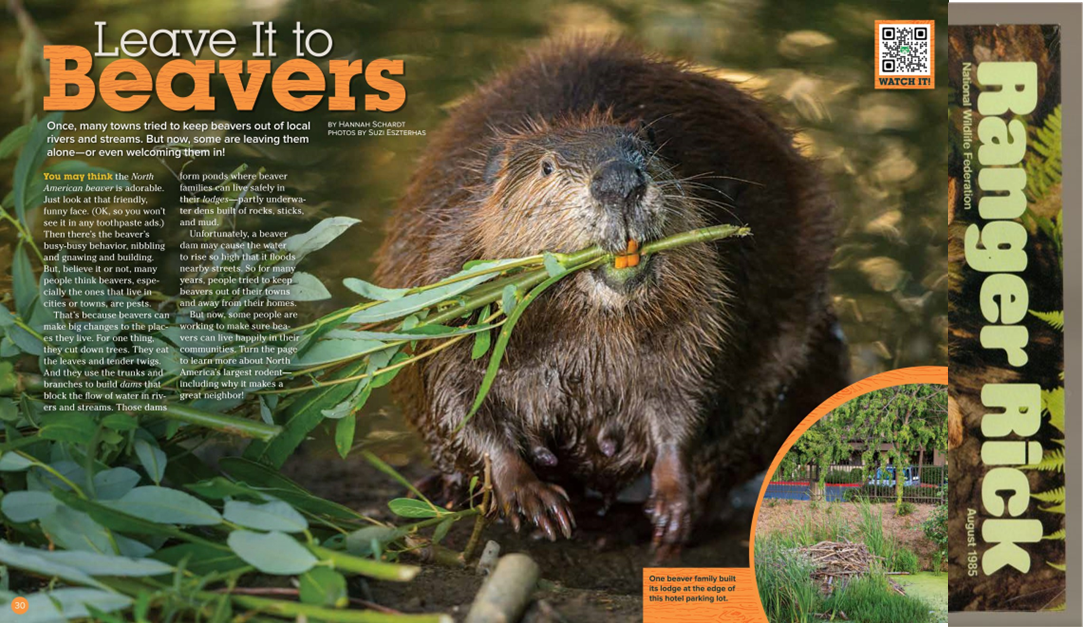
Leave It to Beavers
After decades of viewing beavers as pests, California is finally beginning to welcome them home. And not a moment too soon. With perhaps the world’s most intensely modified hydrology, the state leads the country in acres burned by wildfires and number of homes at risk from them, and according to one study, it is second only to Nevada for drought risk. California’s vaunted biodiversity is also imperiled. But these legendarily industrious architects are primed to help us out.
Oh I just get all cozy when I read a paragraph like that. Like I’m tucked into bed reading a favorite book and drinking hot chocolate.
Like humans, beavers have learned how to transform their environments to suit themselves. They build dams to create ponds that are deep enough to allow them to escape from predators. These ponds and surrounding wetlands are vital ecosystems that nurture numerous species, including endangered salmon, and can reduce water pollution. Now, important environmental efforts that have been siloed in the past are coming together around this ecosystem engineer. “Beaver conservation is important because it gets people talking who haven’t talked to each other before,” says Kate Lundquist, a director at Occidental Arts & Ecology Center, in Sonoma County, who works on policies for healthy watersheds and how beavers can contribute to them.
Good point. Bring different voices to the table is what it’s all about. Beavers reach across aisle all the time. If they can do it, so can we.
Beavers raise concerns, real and perceived, about flooding. In addition to damming natural waterways, they opportunistically dam human-made systems for flood control and irrigation. When they dam a culvert—a pipe that runs under a road to prevent flooding—the ensuing chaos is particularly costly. Beavers also don’t distinguish between trees in the wild and trees in landscaping. Traditionally, when beavers and landowners have come into conflict, the landowners have arranged for the beavers to be lethally trapped. The CSD in El Dorado Hills had removed beavers at least twice before. “They always come back,” says CSD president William Grava. “We can’t keep pouring money into getting rid of dams.”
I am especially fond of this part of the story because we made friends nearly 15 years ago with some very plucky seniors that wanted to save their beavers in El Dorado Hills. They even came to a festival and started a nature group at their HOA. They probably didn’t see success in their lifetimes but they surely paved the way for changes that took place later.
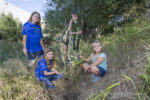
Enter the pond leveler, one of various devices that have effectively reconciled beaver and human infrastructure. Inserted into a notch in the El Dorado Hills beaver dam, the pipe brought the water level down by nine inches, ensuring that any excess stormwater would drain through it while keeping the pond at a beaver-friendly depth of at least three feet. The BeaverCorps trainees also learned how to wrap wire fencing around trees to protect them from being chewed.
Sometimes impossible things DO happen.
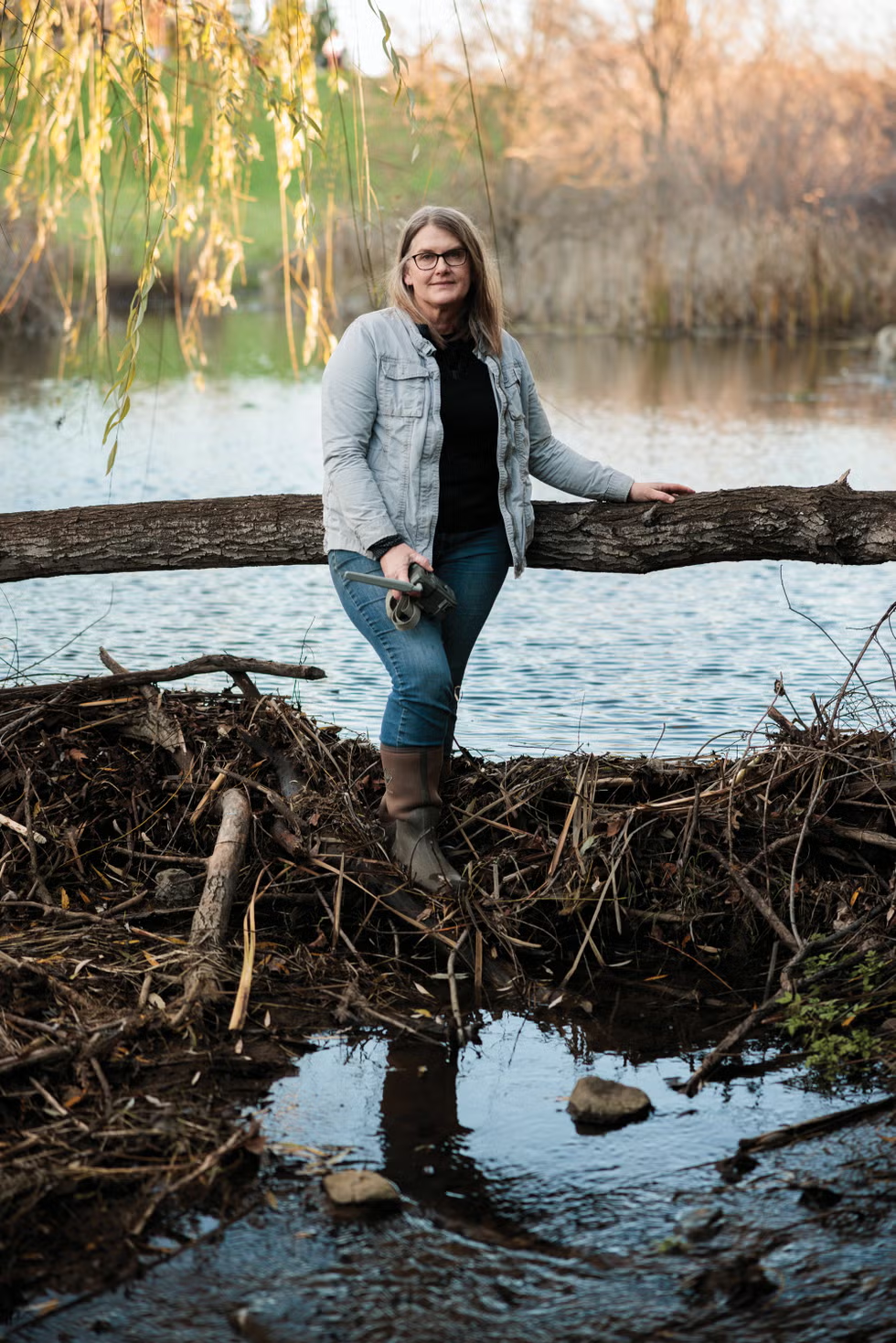
Trainee Cathy Mueller, a biologist, installed the additional pond leveler a few days afterward. Mueller and 13 other trainees are the first BeaverCorps cohort in California and are key to the state’s new focus on beaver coexistence. Since 2023, when landowners have applied for depredation permits to remove beavers causing problems, the California Department of Fish and Wildlife has encouraged coexistence measures whenever feasible. And it connects landowners with consultants like Mueller who can be found via the California Beaver Help Desk, a new website developed by the Occidental Arts & Ecology Center.
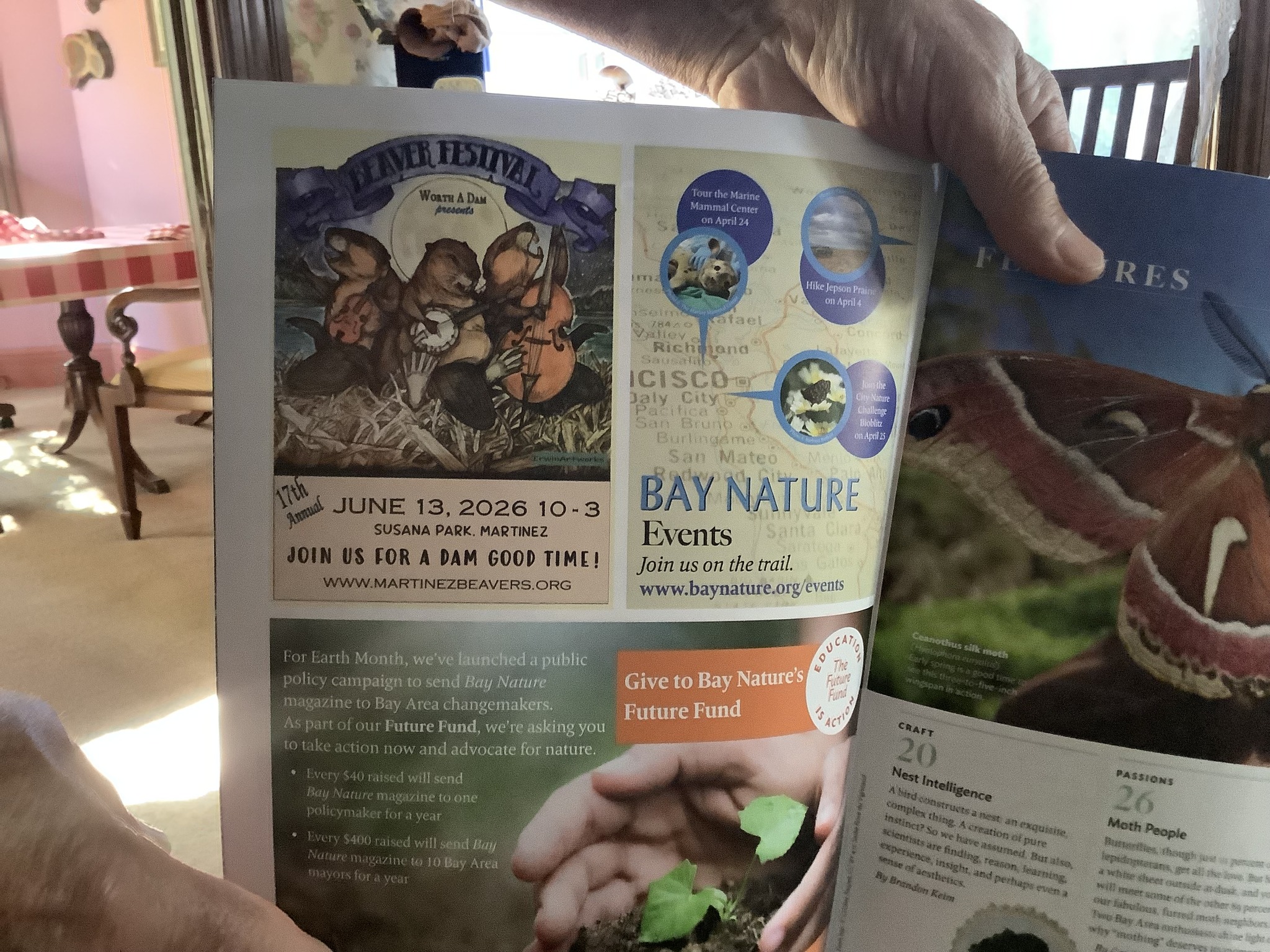
Unfortunately Cathleen can’t be at this festival because she is busy that weekend installing BDA’s but she was excited to be asked and is on board for future events. She wants to initiate a mini festival in El Dorado Hills!
Be still my heart.
This time around, Fish and Wildlife is relocating a limited number of “problem” beavers and prioritizing tribal lands to reestablish historic cultural connections to the furry creatures. The department also aims to release a statewide beaver restoration plan later this year, which will identify priority watersheds that could benefit from beavers (and from interventions like beaver dam analogues). Advocate Heidi Perryman, who led the movement to keep beavers in place after they showed up in downtown Martinez, in the Bay Area, in 2007, would like to see the state go one step further. “My fantasy is that California would institute environmental tax credits—you’re benefiting California so much by having beaver habitat on your land that you actually get a benefit on your taxes,” she says. “You’re changing fire risks and increasing biodiversity. These are the big things we should be thinking about.”
I am SO HAPPY this quote made it in. Someone start your stopwatches right now because I would like to know how long it takes before someone more important than me adopts this idea and calls it their own;. Teaching through osmosis. It’s a beaver thing.
“I tend to steer people towards the benefits and how lucky they are to have all the wildlife in their neighborhood,” Mueller says. “They don’t know that they have river otters and everything else that is there because of these beavers. There’s a kingfisher [a fish-eating bird with distinctive plumage] in that neighborhood, which I’ve only seen in wild places before. I have found kids a couple of times playing in the beaver ponds, which is really cool. They’re not looking at their screens. They’re out enjoying these ponds.”•
Oh you mean like they did in Martinez 18 years ago?
Some fads take the longest time to catch on. But we are SO GLAD WHEN THEY DO.
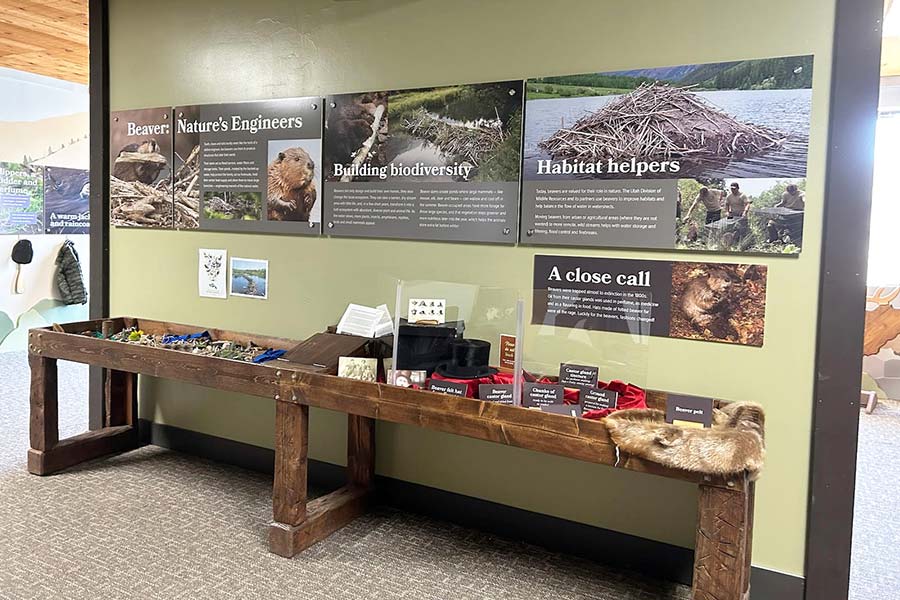
This looks like such a cool exhibit.
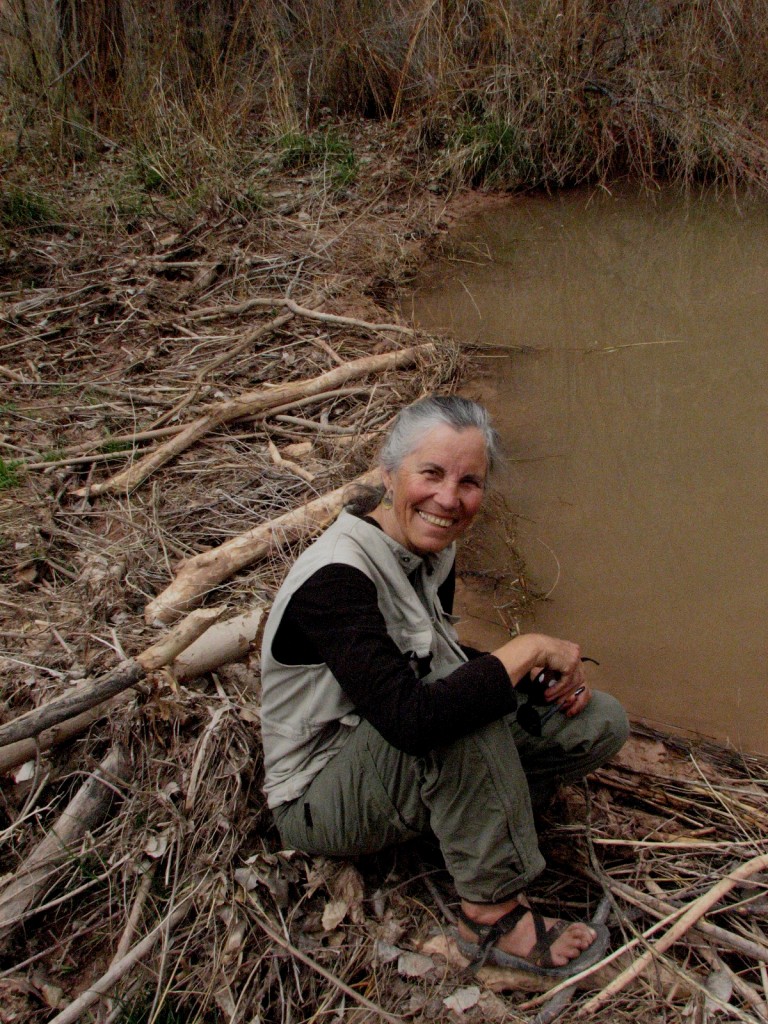
Mary Obrien sure made a difference in Utah, marching about the state with her bed roll of grit and good sense for years and years before Ben’s book was even an idea in anyone’s head. Her work with the Forest Service Beaver Management plan was the inspiration for the New Mexico Beaver Summit which was the catalyst for the California one which lead to all our changes at CDFW. She is the true beaver pioneer of the region and this very cool exhibit is a testament to her tireless hard work. Thanks Mary.