
Because the beaver isn't just an animal; it's an ecosystem!

Month: January 2026


This headline caught my attention and made me chuckle. Just because the article is making it seem like the NEW INVENTION is positively a first. I remembered the wise crack we used to say in grammar school when somebody excitedly told an old joke they thought was new.

“That’s so funny! Last time I heard that joke I laughed so hard I fell off my dinosaur and broke my wooden underwear!”

Conservation group has non-lethal solution to beaver dam
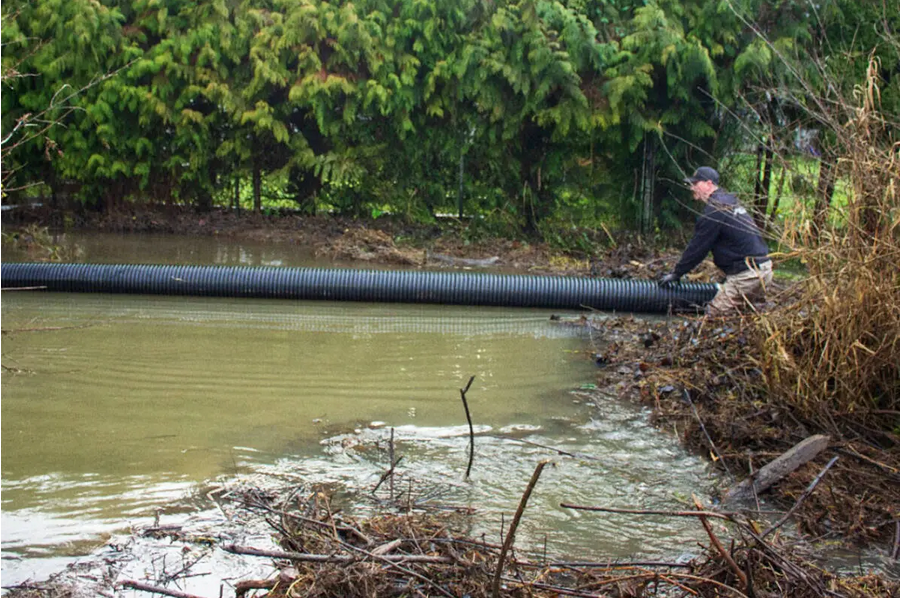
The Alouette River Management Society (ARMS) has come up with a unique response to a beaver nuisance. In late October, ARMS began receiving reports about an increase in beaver activity behind 126th Avenue.

While the dam wasn’t an immediate concern, heavy rains soon caused water to back up onto neighbouring properties. Also, the beavers had begun chewing some of the larger nearby trees, explained Kristen Munk, ARMS spokesperson. “Beavers often get labeled as destructive or as a nuisance, but they are one of the most important species for watershed health,” said Munk. “Their dams store water in the ground, recharge aquifers, slow floodwaters, trap sediment and pollutants, and create vital habitat for fish and wildlife. With increasing drought pressure in our region, their natural engineering is more valuable than ever.”

I try to remember that once upon a time 20 years ago in Martinez this was all new to us and no one believed it was possible. I remember the treasurer of Martinez told me she saw a documentary about Skip Lisle and flow devices on TV and was so exited to think it coufd fix our problem she taped it NS  then invited the mayor and the head of public works to come over and watch!.

Guess whether they came or called her back. Go ahead, Guess.

The traditional response follows a negative cycle, she explained.

1. Digging a hole in the dam to release water – which triggers the beavers to fortify and expand the dam.

2. Removing the dam – which causes the industrious animals to rebuild.

3. Trapping or relocation methods – often fatal, leaving beavers without food or shelter, especially at this time of year when their winter caches are essential for survival. In the local situation, ARMS wanted a different approach. With a collaborative effort between ARMS, the City of Maple Ridge,

The Fur-Bearers, Silver Creek Wildlife, and local residents, they moved forward with a non-lethal approach that addressed neighborhood concerns and supports a healthy watershed. A pond leveler was installed on Jan. 13. This long pipe goes through the beaver dam, allowing water to flow steadily without triggering the beavers’ instinct to rebuild. The top portion of the dam can be reconstructed by the beavers, allowing them to maintain their home, while preventing flooding on nearby properties. The larger trees are being protected with a cage around thier stumps. “This approach protects residents, the creek, and the beavers – a true win-win,” said Munk. “This project is a great example of how collaboration and coexistence lead to better outcomes for our community and our environment.”

Learning about beavers is a huge game of telephone, where each new believer whispers something into the others ear and it sometimes get heard and sometimes gets garbled,

Turns out some messages just take a little longer than others.

I’ve been watching this fight for a number of years now and I realize there is only one way the beaver argument changes, state by state, city by city, neighbor by neighbor, This made me happy to think that the spirit of Carol Evans and Jon Griggs are going strong three states away and long after their retirement.

From Foe to Friend: Ranch welcomes Beavers as ‘ecosystem engineers’

Most people associate beavers with alpine high country forests, but they are just as important in our Northwest Colorado desert landscape and never more so than now.

Local data show that northwest slope rivers have lost nearly 20% of their flows over the past 20 years, making it more important than ever to move fast to protect our watershed.

Our 4M Ranch, a regenerative ranch in Meeker, grazes cattle similarly to how the bison did, concentrating cows and moving them frequently to rest the ground. This method avoids the need for expensive fertilizer and weed related chemicals, resulting in significant improvements in pasture productivity, herd health and overall profitability.

Using nature-based solutions, including beneficial insects that target non-native plants like tamarisk and leafy spurge, along with putting beavers to work, helps restore natural riparian areas and keep water on the landscape longer.

Beavers nearly disappeared from Colorado in the early 1800s after being trapped almost to extinction. Today, they are making a strong comeback. Colorado is among several states leading efforts to reintroduce this 60-pound rodent and is finalizing a Beaver Restoration Plan to help revitalize populations statewide.

Oh the beaver and the cowman should be friends! Stop me if you’ve heard this one…

Beavers are a “keystone” species, meaning they can reshape ecosystems in ways that benefit many other animals. They are especially effective at restoring historic riparian areas and, once established, continue this work by maintaining and expanding their dams and the underground storage of water.

Beaver dams serve many purposes, including substantial water storage, groundwater recharge, wetland habitat for wildlife and birds, filtration of sediment and minerals, increased vegetation for wildlife and livestock, and critical protection for wildlife as natural firebreaks during wildfires.

Grazing management and beaver restoration go hand in hand in increasing native grasses and improving soil moisture.

Beavers are among the most effective water managers we have, and they work for free. Their dams spread water across valley bottoms instead of allowing it to rush away in muddy floods. This water soaks into the soil, raises the water table and keeps streams flowing longer into the dry season. In many places we’ve seen areas that were once dusty, deeply incised channels turning green again, with sedges, willows and wet meadows returning where bare ground once dominated.

I can’t even pick the best parts to highligh from those paragraphs. They are ALL good. How many readers does the Community Agriculture Alliance newsletter get? It deserves more.

Of course, beavers cannot do this alone without proper cattle management. When managed correctly, streambanks stabilize, vegetation recovers, and both wildlife and livestock benefit. On public lands, this work requires cooperation. BLM managers, permittees and conservation groups may not always agree on everything, but water is common ground.

As ranchers, our job is to leave this land in better shape and preserve it for future generations. In a hotter, drier future, that means rebuilding natural water storage in the soil and flood plains. Beavers and managed grazing are tools that fit this landscape. They do not fight the desert — they help it function. When done correctly, these practices help keep working landscapes alive for the next generation.

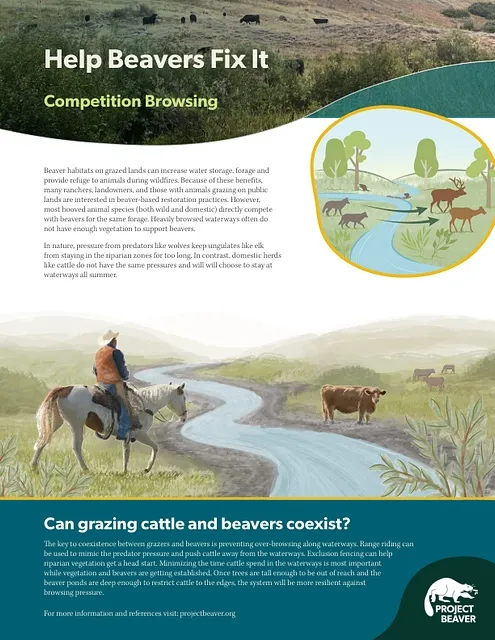
Now that makes me feel hopeful in lots of ways, not just for Colorado. Here’s the flier Project Beaver released on the subject.


Okay I know this isn’t the New York Times or the Smithsonian talking about a change to Federal Law, but believe me this is HUGE. Give it up for the tiny town of Bow New Hampshire that has lead the way for the future.

And it only took ten dead beavers, a puddle of fish, a gaggle of angry homeowners and three years to make it happen!

Lessons from Bow’s beaver dam conflicts shape new bill at State House

Eleana Colby knows all too well how the removal of a beaver dam can divide a community. 

In Bow, where she lives and serves as a select board member, disputes over beaver dam removal have flared at least twice in the past three years – pitting neighbors against one another and straining relationships with town officials.

Now, as a state representative, Colby hopes to ease those tensions with a new bill designed to bring clarity and communication to the process.

“I hope that we bring mutual respect to the table and the understanding that if you have a shared resource amongst your neighbors, that we bring back conversations and respectful dialogue,” Colby said.

House Bill 1530 would require landowners to notify neighboring property owners when a beaver pond crosses property lines and one owner plans to lower the water level or remove a dam. 

The bill would also call for an informational meeting, coordinated with the municipality, where neighbors can discuss the proposed work.

Read that again. The bill requires communities meet to discuss beaver dam removal so that people understand choices and consequences before hand.

The bill demands they act more like MARTINEZ.

That exact scenario played out in Bow in 2022. A pond on town-owned land was drained after concerns arose that a beaver dam had raised water levels enough to potentially flood a nearby bridge leading to a main trail network used by hikers, runners, and snowmobilers. The beavers were trapped and killed.

Abutters weren’t notified ahead of time. They only discovered what had happened when they were left staring at mud and debris where a pond once stood.

It was a horrible shock and upset to a town that lead to something WONDERFUL. Great work New Hampshire.

In situations where a beaver dam poses an immediate threat to life or property, landowners or municipal officials may still remove a dam or install flow devices without a permit or prior notification, as long as heavy machinery does not enter the water and no filling or dredging occurs in or near wetlands.

Is it foolproof? No. Will it always protect beavers? No. There’s an emergency override built right in, but its still a HUGE HUGE HUGE first step.

This financial prospectus this morning from Canada reminded me how huge.

January 10: NH Beaver Dam Bill Seeks Mediation; Insurance Risk Watch

New Hampshire’s House Bill 1530 puts process around beaver dam removal law. For Canadian investors, this small U.S. bill flags bigger themes: flood insurance risk, municipal mediation, and wetlands policy. The bill requires notice to neighbours and a town info meeting before lowering ponds or removing dams. Emergencies stay exempt. Canada’s vast beaver impoundments, including one the size of eight football fields, show the scale. Clearer rules can shift losses, budgets, and demand for mitigation services in Canada. We map the investment angles for insurers, contractors, and municipal suppliers.

Looks like their neighbors are paying attention.

Canada holds some of the world’s largest beaver impoundments. One dam spans about eight football fields and could be 45 years old, per Discover Wildlife. Scale like this shows why wetlands policy and municipal planning matter. A clear beaver dam removal law can protect habitat while setting steps for risk reduction, helping councils balance ecology and property protection.


Insurers, public works teams, and contractors watch policy cues that standardize field work. If U.S. towns adopt notice-and-meeting rules, Canadian municipalities may adapt similar municipal mediation models. That can feed better flood insurance risk modeling by improving data on timing, scope, and methods used. Consistent process often lowers volatility in claims, procurement, and project outcomes

Read that paragraph again. I just did and thought AM I DREAMING? Have I been hit in the head by a tornado tearing off the shutter? Are people actually talking about the potential fiscal consequences of removing a beaver dam?

HB 1530 is small, but the signal is clear: standard steps before changing beaver ponds can cool disputes and cut surprises. For Canadian investors, the key is how process affects timing, data quality, and costs. When towns notify neighbours and host briefings, teams record site risks, agree on methods, and keep emergency paths open. That tends to reduce variance in flood outcomes and procurement. Look for Canadian councils to adapt parts of this approach within existing wetlands policy. If they do, we expect steadier workloads for environmental contractors, more predictable municipal budgets in CAD, and clearer inputs for flood insurance models. Keep an eye on council agendas, RFP pipelines, and spring runoff forecasts. A practical beaver dam removal law, even abroad, can be an early cue for shifts in risk and demand at home. Investors should also review how insurers update underwriting guidance and how towns schedule seasonal works under new procedures.

Is it sometimes cheaper just to kill the beavers? Yes I guess so. But it is ALWAYS cheaper to talk about it first and get buy in from the community which could make you realize there are different costs you had not considered.

Seriously.

BEAVER FESTIVAL XVII

DONATE

‘HOPPERS’ COUNTDOWN


Beaver Interactive: Click to view

TREE PROTECTION

BAY AREA PODCAST

Our story told around the county

LASSIE INVENTS BDA

CONTACT US

URBAN BEAVERS

LASSIE AND BEAVERS

Ten Years

The Beaver Cheat Sheet

Restoration

RANGER RICK

Ranger rick

The meeting that started it all

Past Reports

Story By Year

close

Share the beaver gospel!