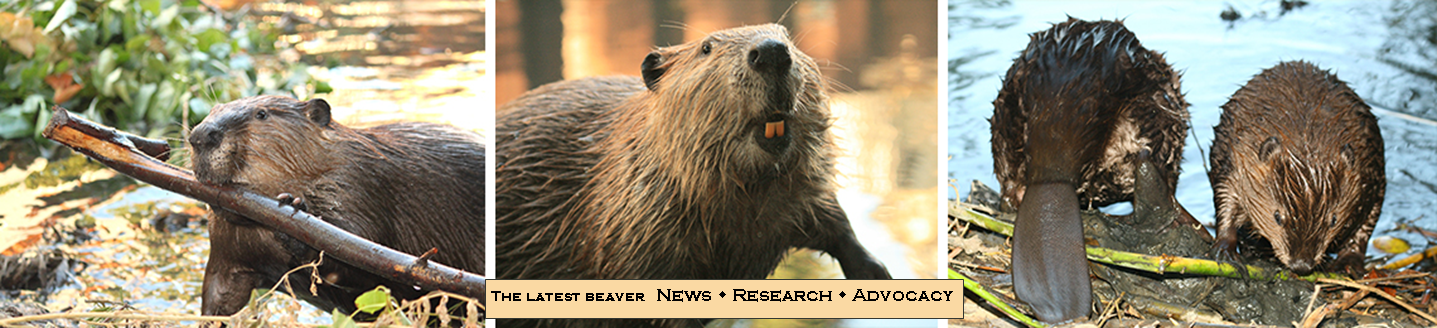
Made glorious summer by a new CPW Beaver Management Plan? Apparently it’s time for a NEW DEAL for beavers in Colorado but folks are undecided just how good that new deal should be.
Can Coloradans coexist better with beavers? State wildlife officials craft plan to manage industrious rodents.
DENVER — Depending on who’s talking, beavers can be any of the following: unsung ecological heroes, nuisance rodents bent on wreaking havoc, cute creatures brimming with charisma — or a hunting target.
Now it’s Colorado wildlife officials’ task to create a statewide management plan that acknowledges all the roles beavers play in the Centennial State.
As beavers become more popular and their ecological benefits better known, Colorado wildlife officials are, for the first time, compiling a statewide management plan for the tens of thousands of beavers that make Colorado’s waterways their home. Agency officials hope to expand beaver habitat so that as many beavers as possible can thrive in the state.
CPW last week released a draft of the new beaver management plan and is soliciting public comment on the 125-page document. The public has until Dec. 17 to comment on the draft and the agency will publish a final plan by the end of February.
So we guess beavers are good, but they still cause problems and how many does one state really need actually? I have to say that Colorado is having a Martinez moment, Considering that they are the home of Enos Mills and Ellen Wohl they should do MUCH MUCH BETTER than us.
The interest in beavers was clear at the sold-out, two-day Colorado Beaver Gathering last month in Boulder — a follow-up event to the sold-out, three-day BeaverCON conference held in town the year before. The growing interest in the species and the proliferation of beaver-related advocacy groups are part of the expanding curiosity that Wright says is prompting CPW to develop a comprehensive beaver plan.
The new plan will aim to balance the species’ irreplaceable role in wetland ecosystems with the fact that beavers’ eagerness to build can sometimes obstruct human infrastructure. The small community of recreational beaver hunters, too, must be considered.
One of the agency’s goals is to create consistent guidelines and support across the state to deal with those beavers that cause trouble by blocking irrigation ditches, road culverts and water treatment operations, or by creating unwanted ponds on people’s properties.
If we are going to admit that beavers matter, then I guess we should make some kind of rules about how to treat them.
This paragraph blew my mind:
A relatively small number of beavers are intentionally killed by humans every year, but the state does not collect data on either beavers hunted for sport or those killed for damaging property.
Under state law, landowners can legally kill a beaver without a permit or needing to report the kill if a beaver was causing damage. CPW kills approximately 90 nuisance beavers a year across its properties, according to the draft management plan. That includes state parks, wildlife areas and hatcheries.
The idea that ALL OF COLORADO with all of its waterways and development kills roughly NINETY beavers a year so you don’t really need to count them is the most laughably unbelievable statistic I have ever read.
The state of Colorado has about 360.00 square miles of water in its rivers and lakes, which works out to be about half as much as California. Knowing that OUR state gives permission to dispatch around 3000 beavers a year you have to assume the ninety estimate is about a tenth of all the beavers that are killed for being in the wrong place at the wrong time.
Not to mention the OTHER thousand you allow to be taken by trapping.
CPW issues a voluntary survey to those with furbearer licenses. Survey data from recent years show that approximately 1,500 beavers are hunted and killed every year.
That data void is something CPW hopes to fix with the management plan. And those who hunt beavers agree that better data is needed.
The Colorado Trappers and Predator Hunters Association last year submitted a petition to the Colorado Parks and Wildlife Commission asking for more robust data collection on the hunting of several species, including beavers. The association would like CPW to require hunters to present every harvested beaver to agency staff and report where the animal was killed.
I”m not as worried about the trappers as I am about the depredation. Call me crazy but its a hell of a lot easier to count a pelt than it is to count the numbers of beavers killed for a subdevelopment o a parking lot.
Skeptics of the plan wonder if CPW has the money and staff capacity to implement the new solutions the plan suggests. Already, the agency is stretched thin, said Gates, who serves on several CPW stakeholder groups. Beavers remain prolific across the state, and CPW’s current method of managing the population has worked, he said.
“It’s a solution in search of a problem,” Gates said.
CPW You are doing something BRAND NEW and planning it more carefully than any western state in the past 20 years. My advice for you is to take your time, COUNT the dead beavers and the live beavers, and get it right.
Good Luck Colorado.