Dear sweet maddening San Diego. The site of the only remaning folk in California that don’t believe beavers are NOT native. The site of beaver-resistant Camp Pendleton where they can let Trump fire weapons on the freeway but not let beavers build in their creeks.
And where beavers are constantly “re-discovered” in the San Margarita.
 “Bike bells,” reads the sign in the trees. “Borrow a bell and return it at the end of your ride. Remember to warn horses and hikers as you approach.” Blue metal balls hang off the edge of the sign, ready for borrowing. This is the kind of place the Santa Margarita Preserve is: super casual, completely natural, untouched by development. My buddy Tim and I are up here near Fallbrook; we’ve come because we want to lay our eyes on some real, live beavers.
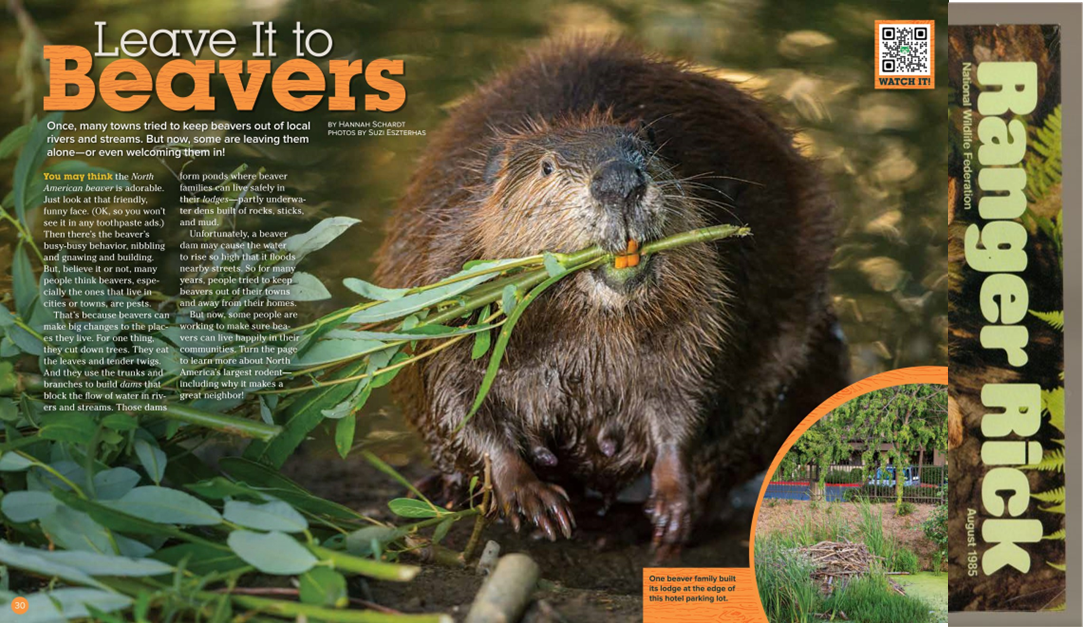
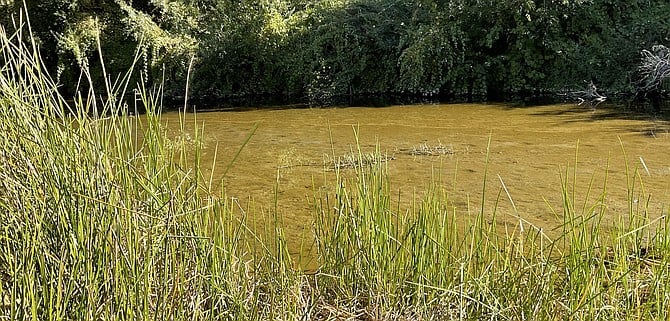
Word is that a colony of the cuddly critters — the only one in the county — is alive and well on this river. Further word is that if the beavers are going to come out from their “lodges” — the stick houses they build, partly underwater, to protect them from enemies like coyotes — it’s in big wide pools like this one here.
For maybe centuries, beavers have been all but absent from California. But now, we’re hearing that they are back. Or maybe they never quite left, and just managed to stay out of sight.
Um its nice that you are interested in beavers. But No. Beavers have never been absent from California. And it’s only been about 6 months since I last got an email about the uncanny beavers in the San Margarita. But okay, enjoy your beaver safari.
I look out over the lovely winding river, searching for a “V” track wake on the water’s surface. That would be the only trace a swimming beaver would leave.
“Don’t talk,” I whisper to Tim. “They’re shy.”
“Wouldn’t you be, if your relatives had been massacred to extinction?”
“Shh. You’re talking.”
“So are you,” he says.
We stand still — and it is very still out here — for something like five minutes.
“Nothing,” I say, finally. “No one home.”
“Probably gone a lodge meeting,” says Tim.
I’d like to laugh, but dang. These beavers are just now coming back from the brink after being hunted almost to extinction over the last 350 years. It wasn’t just people. Mountain lions and coyotes have always loved to swipe beavers out of the water.
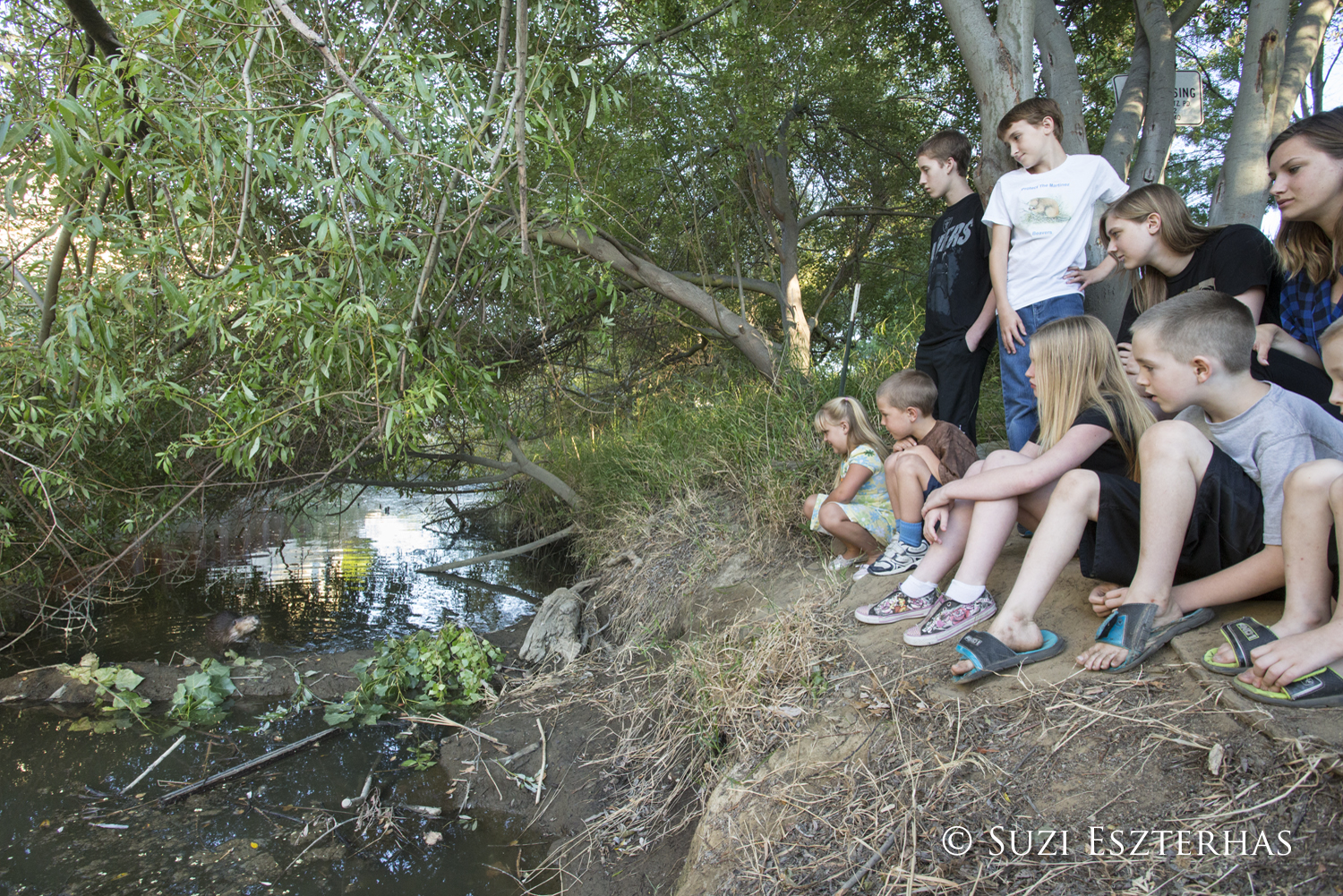
Believe me, I probably know better than any human alive what it sounds like when people are waiting for beavers to appear. And I know full well that depending on what conditions the are used to they aren’t always shy. Martinez had buses, trains and homeless shouting and our beavers went about their business.
“There were 100-200 million spread across the continent before European colonization,” says Jim Miller, co-editor of Bluedot San Diego. “Now maybe a tenth, 10-15 million, survive in North America.” He says they were almost wiped out for their pelts — dense, waterproof underfur that made them ideal for turning into felt for top hats and coat linings in rainy Europe. Folks also hunted them for their castoreum, a secretion from the scent glands used for perfume and medicine. The Hudson Bay Company made a killing from killing beavers over a stretch of three centuries.
But now they’re back, says Zachary Kantor Anaya, the South Coast Regional Director for Wildlands Convservancy who patrols this stretch of the Santa Margarita regularly. And you can see them — if you’re quiet and patient and lucky. Wildlands Conservancy has purchased a significant stretch of the Santa Margarita river, and Anaya says the beavers seem to congregate along a five-mile stretch just north of Fallbrook.
Well the estimate is between 60 and 400 million. So really any number you make up is fine.
How many of them inhabit the river? “That’s a good question, and I don’t have a good answer, but I would estimate that three to four are active and alive on our [five-mile] property.” Anaya listens for the loud thwack as they slap the water with their tails and swim away. And he’s seen them. “They will swim about and poke their heads up, and create a nice wing-shaped wake as they move about in the river and go and find a select piece of wood to chew on.” And of course, there is the matter of improved real estate. “With the dams they build they raise the water table. There are a couple of dams in our vicinity, so we know they’re here. If I’m quiet enough, they’re able to feel comfortable, and swim around. And yes, they are as cute as they look in the pictures. Big beaver teeth gnawing on branches, and that nice soft coat.”
Well if you have beavers you know they came from other beavers. And if you look at the calendar you can know how long they’ve been there and how many kits you’ve seen over the years right? My guess is based on the fact that I’ve been hearing about beavers in the San Margarita for 18 years now and that there are enough for Camp Pendleton to trap out regularly that there are quite a few more than you’d think.
They’re lucky to have the Santa Margarita river. “You think of say the LA River, the San Diego River…a lot of these rivers are channelized with concrete to help water during flood events to flow out to the ocean. With the Santa Margarita River, you have the last example in Southern California of an intact, dam-free river system, complete with willows and sycamore forest.”
Anaya adds that part of the reason for the river’s beauty is that people have left it alone. Another part is that beavers have gotten busy. Beavers have felled trees and created dams. Those dams slow the water flow, thus creating ponds and raising the water table to provide a welcome habitat for fish, amphibians, waterfowl, and insects — and a safe zone for themselves. Deep ponds mean they can dive down to escape predators like coyotes, plus a green valley that can make it through drought times. In short, the dams help create a lush ecosystem that allows the ancient ecology of San Diego to thrive.
Small wonder that Anaya wants everybody to start a letter campaign: “Dear State of California: Reintroduce beavers to the San Diego, San Dieguito, Sweetwater and San Luis Rey rivers!’”
Oh honey. They don’t need to RE-INTRODUCE beavers to the san Margarita river. They JUST NEED TO STOP KILLING THEM.

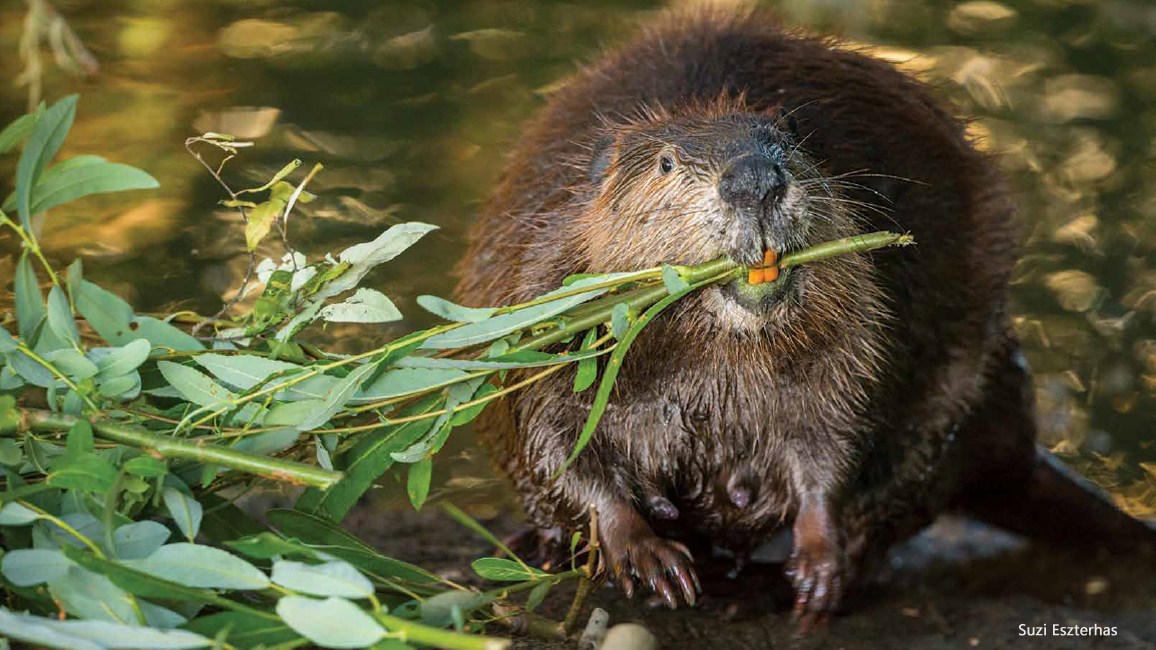 Beavers are making a comeback in Oregon. No, we’re not talking about the beleaguered OSU football team—but the fuzzy, semiaquatic rodent species: the North American beaver.