
My 91 year old mother has received bundles of wildlife calendars over the years as a response to various donations in the past. The other day she said to me, “You know what’s odd? these calendars have all these lovely photos of bears and wolves and whales, but never of beavers, why is that?”
Why indeed. I guess times are slowly changing.
Beavers: The ultimate ecosystem engineers

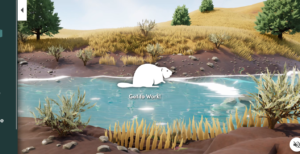
Many wetlands started as beaver-dammed streams. As the beaver pond grows, it provides for an increasing number of plants and animals. Frogs splash at the edges, fish dart beneath the surface, and many species of birds find refuge in these lush habitats. But there’s an invisible benefit too – these waterlogged areas are amazing at trapping air pollution. Studies show beaver-made wetlands contribute to clean air and water worth, providing services worth hundreds of millions of dollars. Though to the beavers, it’s all in a day’s work.
During a heavy rainstorm, some streams and rivers overflow their banks, but a beaver-engineered stream system handles floodwaters with ease. Their dams work like aquatic speed bumps, creating winding paths that slow rushing water. This prevents soil from washing away and allows rich nutrients to settle to the bottom. Over time, this activity gradually raises the stream beds and reconnects them to the surrounding land that used to flood naturally. And during dry spells, beaver dams release stored water slowly, keeping streams flowing when they might otherwise dry up. Perhaps most impressively, these structures function like a free water treatment plant, cleaning water by trapping dirt and filtering out pollutants like nitrogen and phosphorus.
Yes they do WWF. They do that all the time and have done for thousands of years without a single donation. Although sometimes they need a few helpers to let people get out of their way.
Recent studies have also found that areas with beaver activity burn much less severely during wildfires—suffering only one-third the damage compared to similar areas without beavers. In the western United States, where landscapes are subject to drought and wildfires, fires often burn everything except areas surrounding beaver complexes. There, even during dry spells, water continues to soak into the ground, refilling underground water supplies and keeping plants moist.
Putting this ingenuity into practice, World Wildlife Fund is working with ranchers in the Northern Great Plains to recreate beaver habitat by constructing dams—Beaver Dam Analogs—that mimic the crafty rodent’s water management systems to store water, a particularly precious resource in this arid habitat. Some landowners are even seeing beavers return thanks to the more favorable conditions provided by these human-made dams.
By protecting beaver families and welcoming them back to our waterways, we can benefit from their natural building skills to create landscapes that better withstand severe weather, support wildlife, and suppress wildfire, one carefully laid stick at a time.
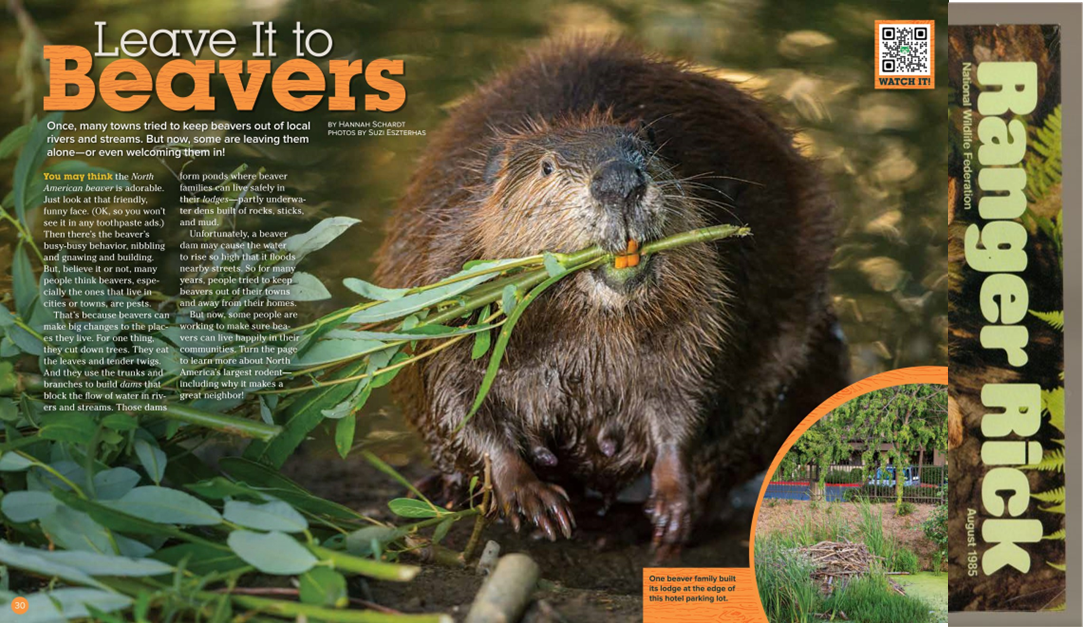
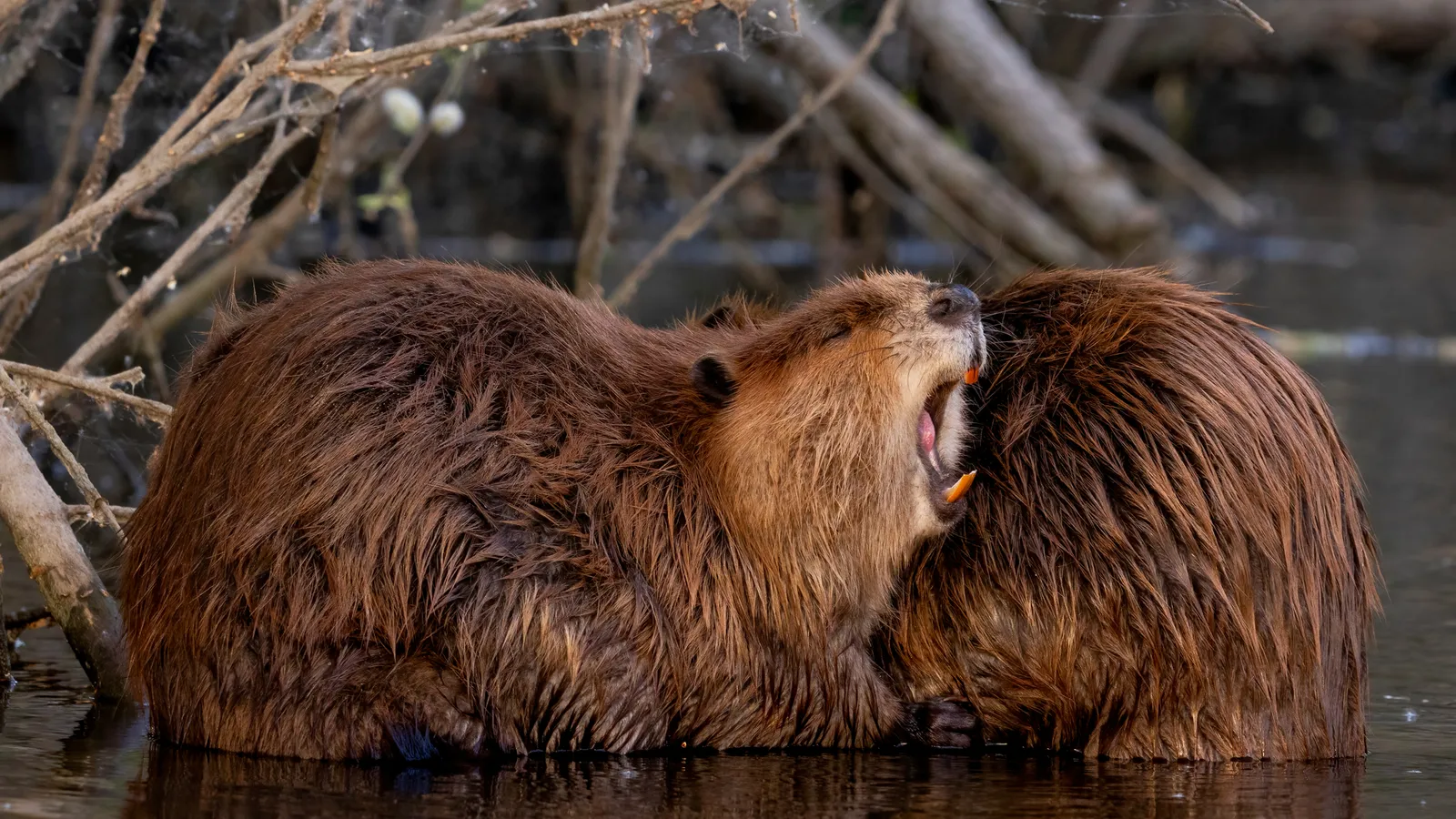
I like THAT photo! Maybe you could put that in the next calendar? Just a suggestion.You know saving beavers means saving lots of other wildlife too. I’m thinking you might even want to update your logo. Think of them like pandas of the water,