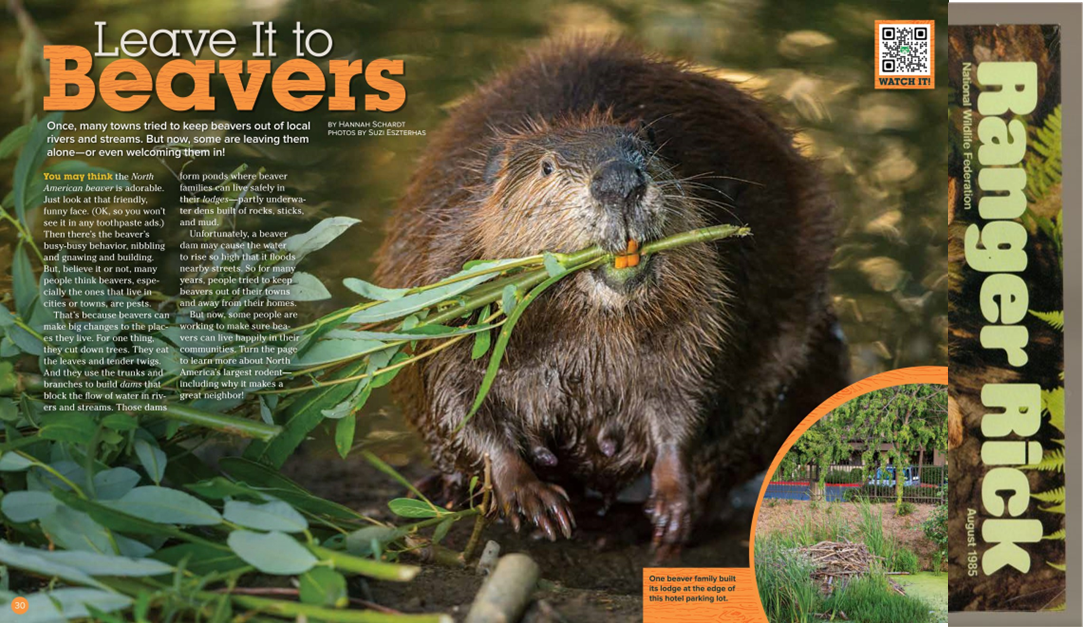
This might be the best beaver article I ever read. Especially since Rhode Island has always been a VERY hard place to be a beaver. I’m especially fond of the fact that she worked as a social worker, because, as we have all learned the hard way. changing minds is all about the humans.
Before you accuse me of making this up just know this, I had nothing to do with this in any way,
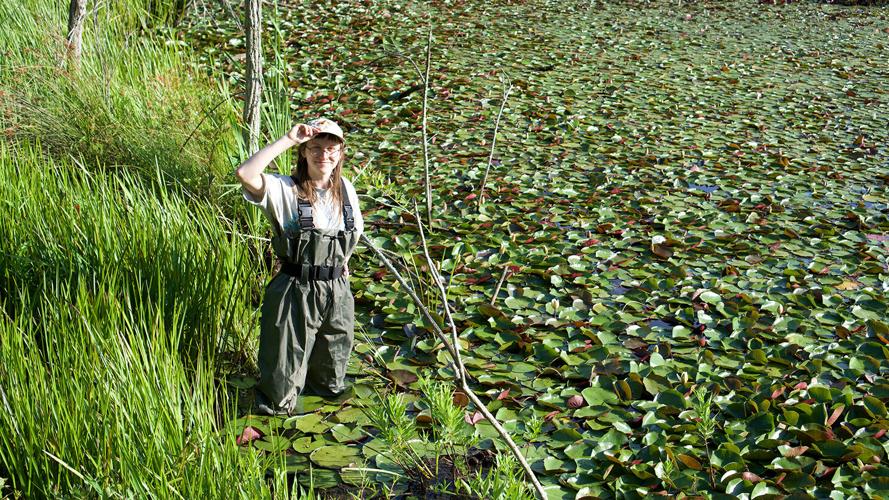
EXETER – When Molly Hastings wades into the pond behind her home, she says the water ripples with life.
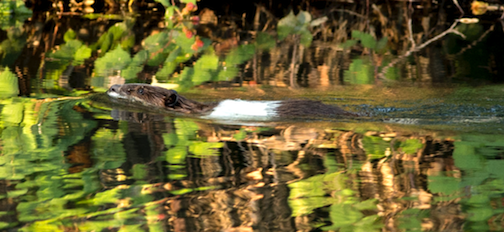
Fish dart past her ankles, a snapping turtle leaves a winding trail in the mud, and a great blue heron lifts off from the cattails. At twilight, a family of beavers glides into view, rolling lily pads as one would a cigar and nibbling them as if they’re hot dogs.
“It’s teeming with life,” Hastings told The Breeze. “The beavers come out at dusk, the otters play in the blueberries, and there’s always a heron. The day we decided to buy this house, there was even a bald eagle in the swamp cedar.”
The reason for it all, she eventually found out, was the presence of a thriving beaver colony. And it set her on a path to eventually create RI Beaver Management, a private business focused on installing and maintaining flow installation devices to mitigate some potential problems created by beaver activity.
Hastings moonlights as a social worker in Woonsocket, but humane beaver management has quickly become a passion project this year.
Can’t you just tell this is going to be a great story? Are you comfy? Get some more coffee and tuck back in because this is a great read about a wonderful woman.
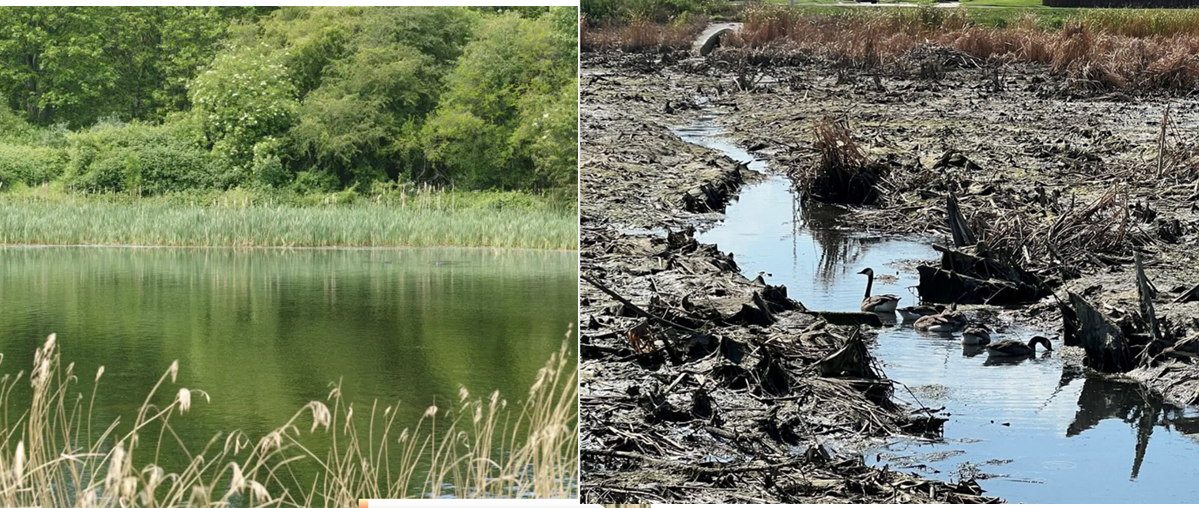
When she and her partner purchased the property in Exeter, the pond continued to rise higher each week, held back by an 8-foot beaver dam. Nervous about flooding, Hastings called the Rhode Island Department of Environmental Management, and she was told the only option was to have the animals killed.
“I thought that was crazy,” she said. “Part of the appeal of the house was the pond and all the wildlife. It didn’t feel right to just shoot them.”
Searching for alternatives, Hastings discovered a small national network of scientists and builders pioneering coexistence between people and beavers.
“Beaver believers,” she joked.
What a great story. I think it’s a hallmark movie and they should play it every christmas.
She reached out to Skip Lisle, founder of Beaver Deceivers International in Vermont, who designed (and trademarked) the first “Beaver Deceiver” flow device: a pipe-and-fence system that drains water through a dam without the beavers noticing.
“Skip was so kind,” Hastings recalled. “He said, ‘Molly, you’re going to love the beavers.’ And he was right.”
Soon she learned that the only regional company doing similar work, Beaver Solutions in Southampton, Mass., was run by Mike Callahan. Hastings enrolled in Callahan’s training program over the summer, earning certification as a Beaver wetland specialist, and founded RI Beaver Management, the state’s first business dedicated to less-lethal beaver control.
She now designs and installs flow devices, site-specific constructions that regulate pond levels using culverts, fencing, and a bit of “gentle trickery.” The systems prevent flooding while allowing beavers to keep building and maintaining the wetlands that benefit the ecosystem.
“When installed by a professional, they have a very high rate of success,” Hastings said. “A Massachusetts study found that towns using flow devices saved thousands of dollars annually while retaining hundreds of acres of wetlands that would otherwise be lost to trapping.”
That 2019 analysis from Billerica, Massachusetts, found that less-lethal management saved taxpayers about $7,700 a year while preserving more than 380 acres of wetlands, providing an estimated $2 million in ecological benefits annually.
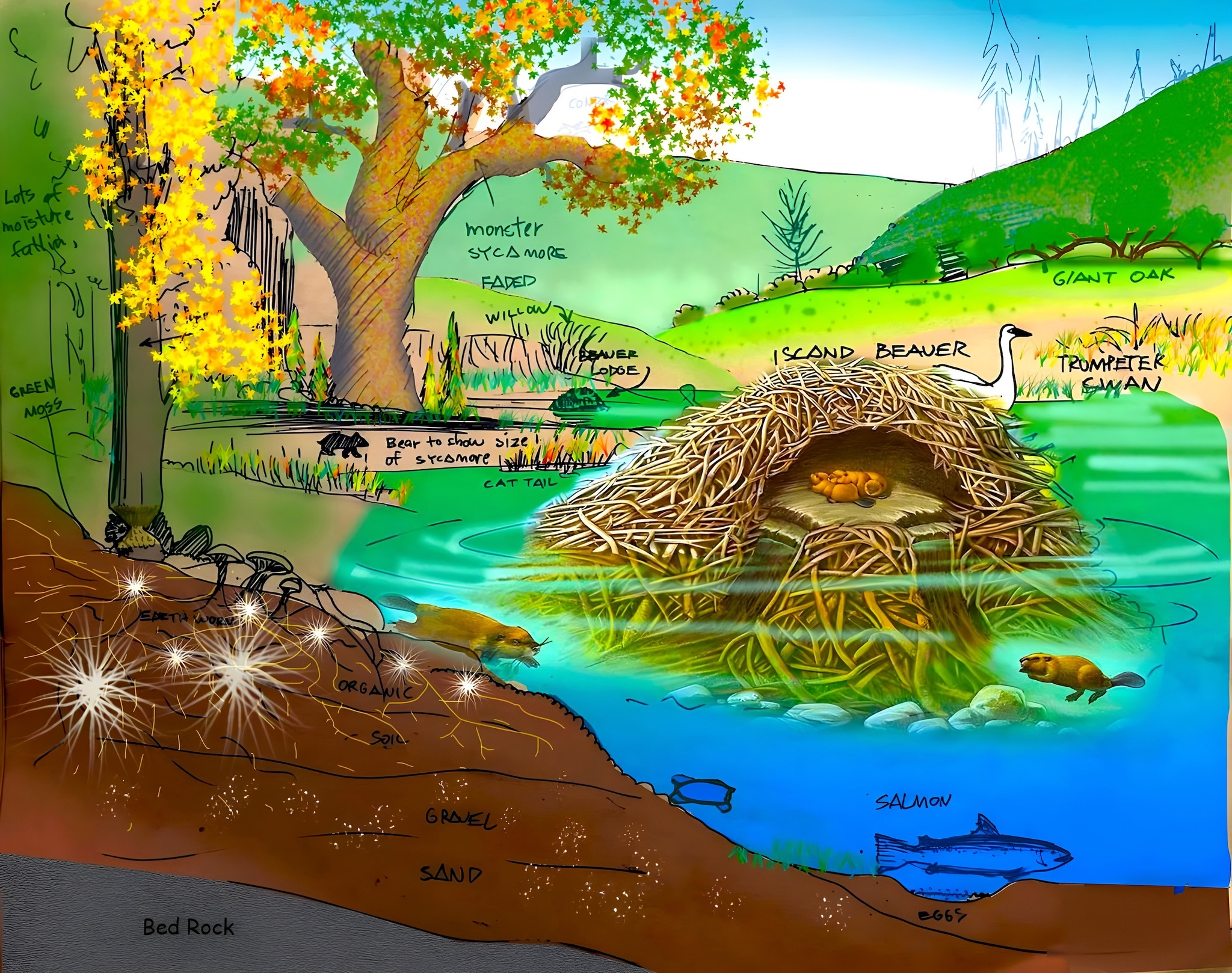
Those ecological benefits are significant. According to the Beaver Institute, beaver-created wetlands filter pollutants, stabilize the water table, replenish groundwater aquifers, reduce downstream flooding, and even buffer wildfires. Their habitats are as biologically productive as coral reefs and rainforests, supporting fish, amphibians, waterfowl, and countless insects.
“Beavers were North America’s original engineers,” Hastings said. “They improve water quality, increase biodiversity, and make our landscapes more resilient to drought and flood. They’re not pests. They’re partners.”
Still, Rhode Island has been slow to adopt such approaches. As The Breeze previously reported, communities like Cumberland and North Smithfield have wrestled with beaver-related flooding for more than a decade and continue to do so.
“There’s a lot of skepticism,” Hastings said. “But people and towns wind up spending money on trapping every year anyway. Flow devices are cheaper, more effective, and humane.”
Her story is so the same and so DIFFERENT from Martinez. Skip Lisle. Mike Callahan. Reaching around for answers. But the library looks SO different today than it used to. When I was looking 20 years ago there were three sites on the entire internet that discussed coexisting with beavers,
How many thousands are there now? And books. And films. And articles like this.
She’s now preparing to present her work to the Rhode Island Woodland Partnership later this month. That organization brings together conservation groups and land trusts across the state. Her goal is to help landowners, municipalities, and nonprofits manage their waterways sustainably.
“Right now, Rhode Island’s cultural carrying capacity for beavers is low,” Hastings said. “People think of them as nuisances.”
The installation process, she explained, begins with a phone consultation, followed by a site visit and Wetlands permit application with DEM. Once approved, she installs the device, often in chest-deep water.
The Beaver Institute now offers cost-share grants to help landowners and municipalities fund these installations, making the approach more accessible. Similar coexistence programs have gained traction nationwide, including in Maryland, where beavers are being reintroduced to help restore the Chesapeake Bay watershed.
“When you see what beavers create, and how much life surrounds a beaver pond, it changes everything,” Hastings said. “There’s a better way to do this.”
For more information, visit ribeavermanagement.org.
Molly, the beavers and wildlife of Rhode Island thank you. And as for me, I’d like to buy you a beer.
Thanks for making a great story happen.