
 As Lake Powell recedes, beavers are building back
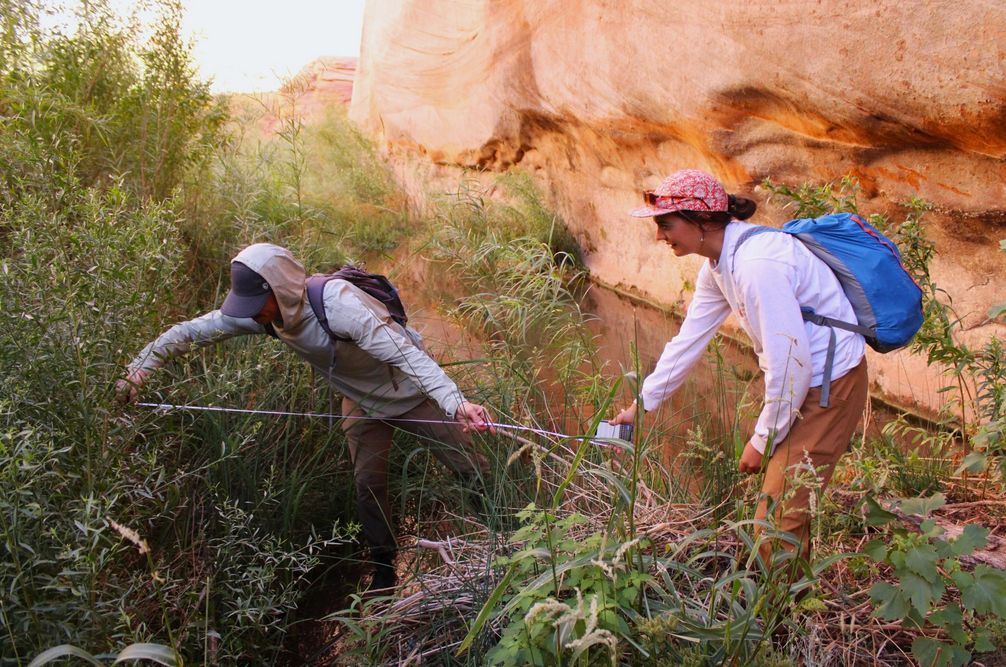
To hike up this narrow canyon, Eric Balken pushed through dense thickets of green. In the shadow of towering red rock walls, his route along a muddy creekbed was lined with bushes and the subtle hum of life. The canyon echoed the buzzing and chirping of bugs and toads. But not long ago, this exact spot was at the bottom of a reservoir.
“We would have needed scuba gear 20 years ago,” Balken said. “We would have been 150 feet underwater
As director of the nonprofit Glen Canyon Institute, Balken has tracked the rebirth of these canyons for years. They were once home to Lake Powell, the nation’s second-largest reservoir. But as the Colorado River is strained by drought and steady demand, Powell has shrunk to record lows. In the wake of that shrinking, a sprawling web of canyons like this one are seeing the light of day for the first time in decades.
I always knew the Beaver Bench could get deeper. I just never guessed HOW much deeper and how fast it would happen.