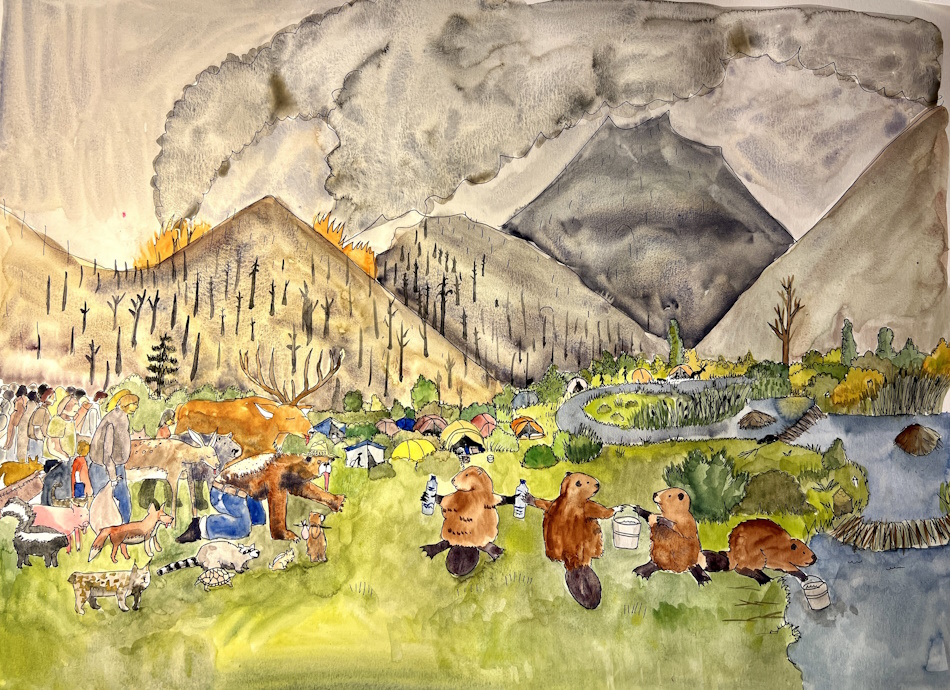
Suzanne Husky is a committed artist whose watercolors goes beyond simple aesthetics to become a powerful tool for ecological and historical awareness.
Through works of great finesse and beauty, she captures the details of rivers, wetlands and natural habitats, while telling their stories of destruction and resilience.
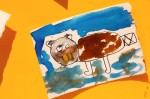
Her art illustrates with poetry and precision the crucial role of the beaver in the restoration of aquatic ecosystems, mixing art, science and environmental advocacy.
Her paintings invite contemplation but also reflection, revealing the impacts of human activity and the hope that nature can be reborn thanks to keystone species.
Her work embodies the very essence of Eco-synthesis, where each work is both a testimony and an invitation to rethink our connection to the living.
Suzanne Husky stands out from a certain form of contemporary art that could be described as gratuitous provocation or derision towards the viewer – this “art” that sometimes seems to be reduced to symbolic gestures devoid of depth, like taping a banana to a wall.
Her work is part of a tradition where art seeks to awaken the senses, emotions and intellect. Through her watercolors, she restores the artistic gesture to its primary vocation: to capture and transmit a truth, to touch the soul and to inspire awareness. She reminds us that art can and must be meaningful, far from any superficiality or mockery.
Her work is a sincere dialogue between the artist, nature and the viewer, where each line and each color tells a profound and universal story.
Suzanne Husky is a founding figure of this new movement in painting, artelligence, which synthesizes complex historical, scientific or social realities into a transcendent artistic expression.
There aren’t many times in the world a famous beaver article is followed up by another beaver article that says EXACTLY what I want people to know about the first one. Consider this my last birthday present for turning 60. Not bad for a girl who just got out of the hospital.
California is a poster child for the impacts of climate change — a state beset by shifting weather patterns that bring inconsistent snowfalls and years-long droughts. Many of its forests teeter on the edge of destruction, wherein a single spark could ignite yet another record-breaking fire. And the state must simultaneously muster — and store — enough water from often-scant annual precipitation for both the U.S.’s largest population and a yawning expanse of hydrologically intensive agriculture.
“I think we’re in kind of an idyllic [stage of] beaver literacy,” advocate Heidi Perryman said. “People have begun to hear a lot of good things about beavers, and they’re very hopeful that beavers can fix everything that we’ve messed up.”
But the view of this animal as wholly positive is “no more accurate” than earlier beliefs that they’re always a nuisance, Perryman added.
Perryman, a child psychologist in the San Francisco Bay Area town of Martinez, calls herself an “accidental beaver advocate.” When a pair of beavers turned up in Martinez’s Alhambra Creek in 2006, town leaders wanted to get rid of them for fear that their dams would cause flooding.
But Perryman was taken with Martinez’s new rodent residents, and she wasn’t alone. A groundswell against killing them surged, and the beavers stayed.
Perryman reckons that, for years, she spent five hours a week watching the beavers after their arrival in Martinez, learning about their behaviors, discovering their personalities, and eventually documenting more than two dozen individuals. She posted blogs, photos and video on a website linked to the nonprofit she still leads, Worth a Dam.
As the beavers changed the watershed with their engineering, other wildlife flourished, Perryman said. “We had mergansers and heron and otter and mink, things that we had never seen in our creek before because of the dams that beavers maintained.”
The town is seen as a model for coexistence, and it still hosts an annual beaver festival even though the beavers have moved on, no longer living in Martinez.
Now, with two pilot relocations –– the one to Tásmam Koyóm and another on the Tule River Reservation in Sierra Nevada foothills that began in 2024 –– there’s another tool that sidesteps the lethal removal of beavers that come in conflict with humans.
Though exact numbers are hard to come by, Perryman estimates that the state allows killing of 1,000 to 3,000 beavers each year through the “depredation permits” CDFW issues to landowners when beavers cause damage, according to her public records requests.
“It’s still remarkable how many times California turns down the opportunity to coexist with beavers,” Perryman said.
All the feels. Thank you so much John Cannon for listening and taking what I said seriously. Not bad for a girl who just got out of the hospital.
Perryman said she understands why moving beavers is so enticing.
“It really appeals to people because it’s so much nicer to relocate things than to kill them,” Perryman told Mongabay. But, she added, “It’s really important for people to do relocations thoughtfully and carefully … It’s not without risks.”
Rather than concentrate on those risks, Perryman said, the focus today is more often on how beavers can help, which can be rife with unrealistic expectations. That view has made her skeptical of California’s translocation efforts.
“You don’t get to relocate beavers and have them stay just where you want them or have them only build dams where you want them or have them only take the trees you choose for them,” Perryman said. “They do their own thing, and our fortune is that we can be smart enough to learn how to coexist with them and [benefit from them].”
Most experts agree that finding ways to live with beavers should be the primary aim, before trying to move them.
“Translocation is kind of the final piece,” the OAEC’s Dolman said, “if and when you’ve exhausted everything [else].”
R. Kyle Pagel, a scientist with the state’s beaver restoration program, echoes that sentiment. CDFW starts with encouraging coexistence strategies when there’s conflict, such as coating tree trunks with sand-containing paint to discourage beavers from cutting down trees.
Only after those efforts fail should relocating the beavers — or killing them — be considered. The answer is, in part, pragmatic: The thinking is that once they’re gone, the “problem” is solved, but a spot that’s suitable for one family of beavers is apt to attract another, Pagel said.
It is better to fix the problem than to kill the problem. And better to solve the problem than move the problem.
Researchers like Emily Fairfax say they want to return more beavers to their historical range. The animals once lived across much of the state, but rampant trapping for fur markets up through the beginning of the 20th century “ruined beaver populations,” Fairfax said.
“I think we owe it to the beavers to do whatever we can to help them reestablish in the watersheds.”
I’m really not so sure how I feel about this sentence. On the one hand we do owe beavers a LOT. But on the other hand beavers are already reestablishing themselves in the watersheds. And we can’t seem to stop killing them when they do.
I’m not sure how much more of our “help” beavers can take?
Given a chance, Fairfax said, beavers can adapt, if not always in predictable ways. She was a physicist before diving into the watery world of beaver ecology, and she said pinning their behaviors down is next to impossible, from the materials they use for their lodge to their choices of food. “They break every single rule,” she said. “You can’t write a law to describe them.”
A big part of the problem is shifting our approach from controlling nature to partnering with it, she added. “We dammed the Mississippi. We’ve built levees. We’ve dammed the Colorado. We know how to control nature,” Fairfax said. But teaming up with nature is “a lot harder.”
“Working with beavers requires letting go of some control,” Fairfax added. “It will be messy and frustrating.”
Well I agree with that 100 percent. Beavers do their own thing. They don’t build where we want them to or what we want them to. They aren’t lego sets that we just need to install everywhere.
And for the record, beavers DO adapt. But they can’t adapt to everything we have thrown at them for a five hundred years. Sometimes we are going to have to give them a little help first.
A kit peers up at the camera in Martinez, California. Image by Heidi Perryman/Worth a Dam.
Just so you know, of all the photos in the article of ungroomed beavers in cages or being released onto tribal land THIS one is the best. And it was taken 8 blocks from my house in the community that worked to save them.
Look what dropped last night. I will adapt a permanent link for the website but I thought you’d want to check it outright now. It goes state by state with the best and brightest ideas.
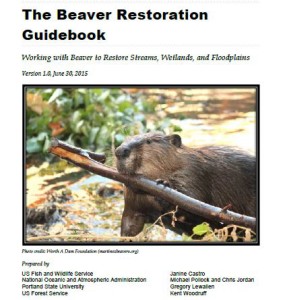
Beavers provide many ecological benefits, from building drought and wildfire resiliency to acting as a natural disturbance regime on the landscape. While traditionally managed by states as a furbearer species, effective beaver management can happen at any jurisdiction and has the potential to also support and steward watershed health and biodiversity through education, coexistence measures, relocation, and when necessary, trapping or lethal removal.
This report strives to inform beaver conservation and management processes by providing approachable and realistic examples that achieve desired management outcomes while simultaneously elevating watershed restoration via human-beaver conflict resolution and education. This report can be a resource at any stage of the plan or program development process, from plan development to enacting, growing, or strengthening existing beaver management plans or programs.
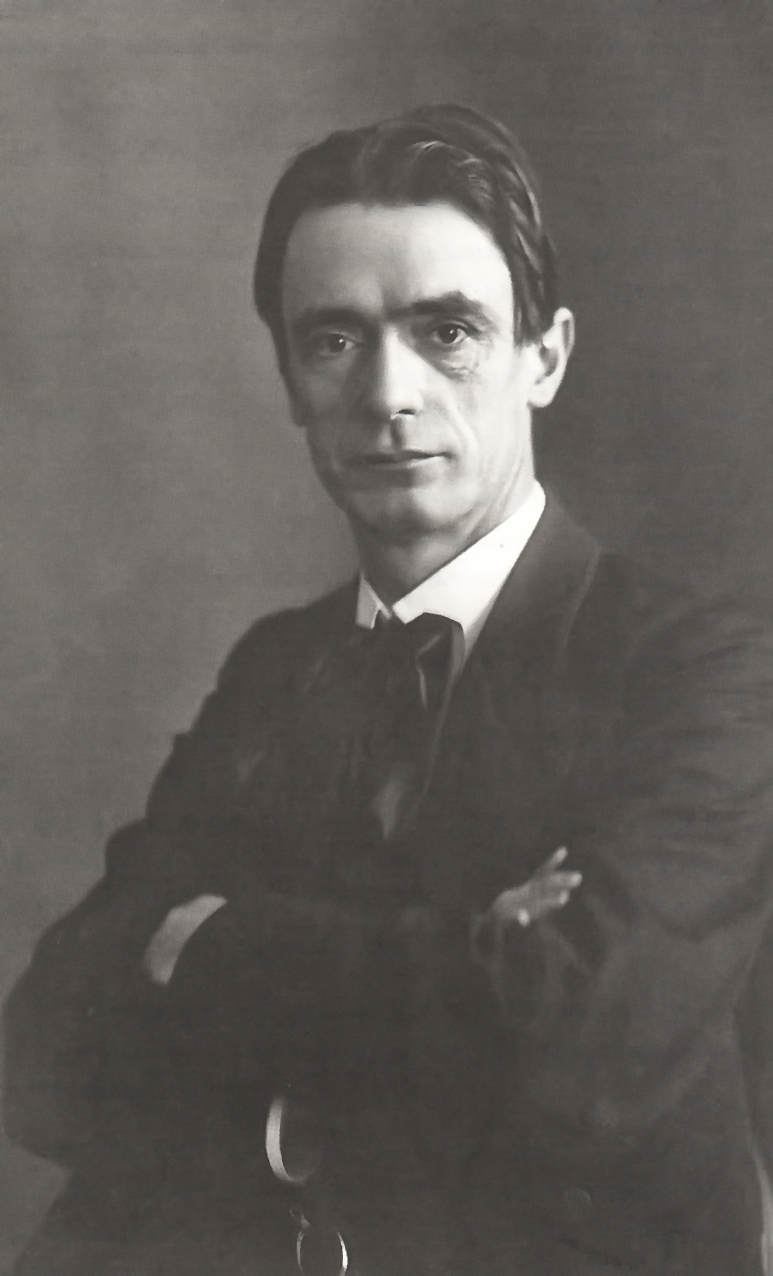
From a popular spiritual occultist in 1922: One might say he knew as much about beavers as RFK knows about vaccines.
“We must say to ourselves, the beaver is an extremely stupid, phlegmatic animal! It is stupid and phlegmatic to the highest degree. Wonderful. But where does it spend the summer? It stays in the ground in its solitary burrow, allowing heat and light that comes into the burrow to penetrate its body, so that it actually absorbs all the summer sunlight and warmth. When this absorption is completed in the fall, the beaver begins to look for other beavers, and together they become clever. It employs a cleverness that it does not possess as a single animal. Now, suddenly, as they gather together, the beavers become clever. Naturally, as single animals they could never construct all those beaver villages. The first step of choosing a suitable site is already clever.
This clearly illustrates what I pointed out last time: the cleverness that is in a creature must first be gathered, just as water is collected in pitchers. What does the beaver do while as a single animal it lives like a hermit in its summer house? The beaver gathers sunlight and the sun’s warmth for itself—or so we say, because all we can perceive is the sun’s light and warmth. In truth, the beaver gathers its intelligence. Along with sunlight and warmth, intelligence streams from the cosmos down upon the earth, and the beaver gathers it for itself; now the beaver has it, and it builds. With the beaver you can see in reality what I recently presented to you as a picture.
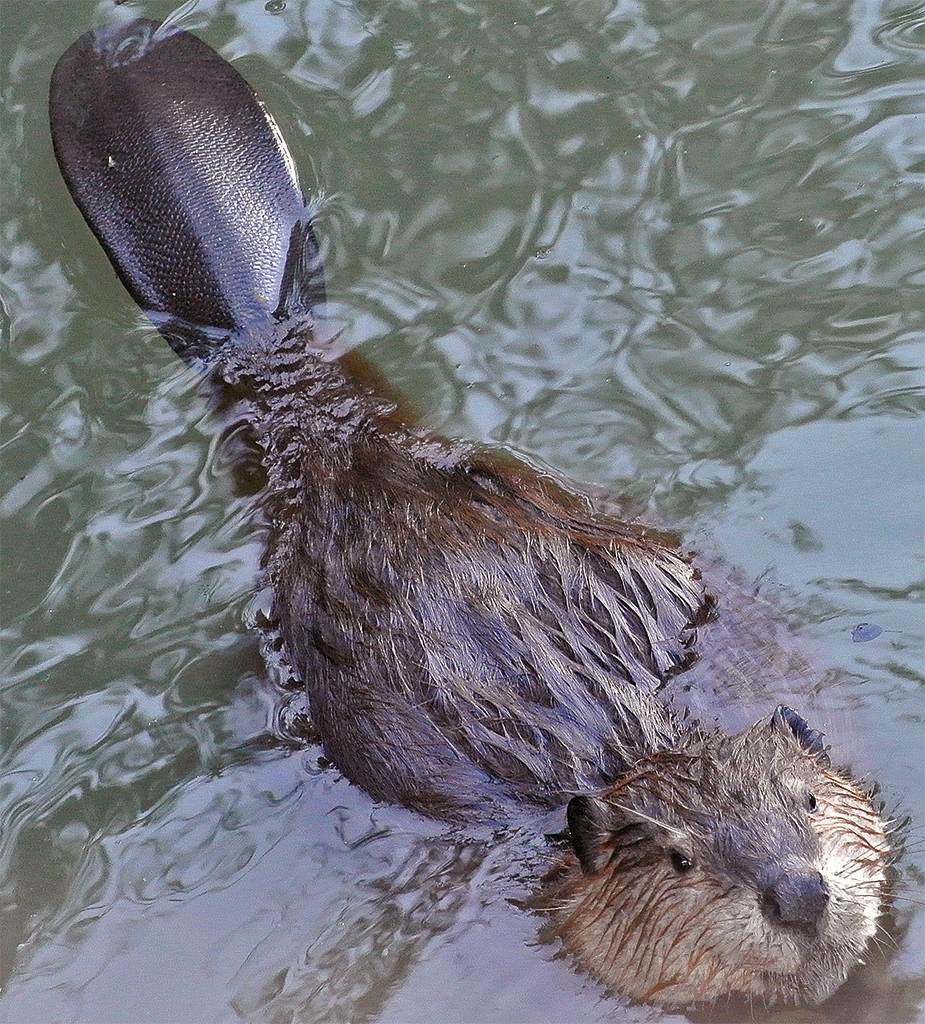
Something else now becomes comprehensible: the beaver’s tail. Compare it with what I said about the dog’s tail, the dog’s tail being its organ of pleasure and therefore the soul organ of the dog. The dog wags its tail when it is happy. In the beaver’s case it is so that within its tail, which the animal does not use as a tool but which is formed most ingeniously, the beaver has its accumulated intelligence. With it the animal directs itself. This means that the beaver is really directed by the sun’s warmth and light. They are contained in the tail and have become intelligence. This is really the communal brain of this beaver colony.”
RUDOLF STEINER
10 January 1922
Health and Illness II, GA 348
The Power of Intelligence as the Effect of the Sun—Beaver Lodges and Wasps’ Nests
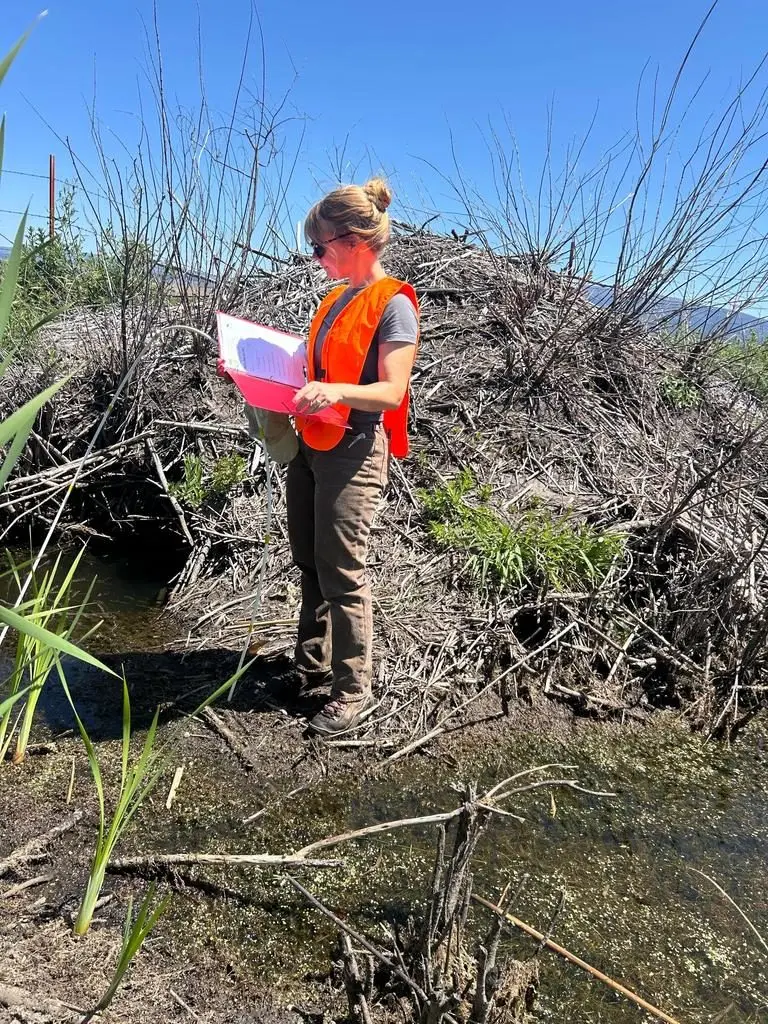
Join us in the field this autumn as we launch a new, community-powered beaver monitoring project in the Malheur National Forest!
Difficulty level: Moderate (walking on uneven terrain and in water, bending, field data entry)
Itinerary: Volunteers can sign up for one or multiple days. Carpooling from Bend will be available for multi-day participants, or you can meet us on-site in the Malheur National Forest.
Tasks: Volunteers will join trained staff to walk stream segments, identify and record beaver sign (lodges, dams, chews, slides), document habitat features using standardized protocols, help input data using a tablet. This monitoring effort was developed with the US Forest Service and Oregon Department of Forestry, and your contributions will directly inform statewide beaver and watershed management.
What you’ll need: A positive attitude, a strong work ethic, and a collaborative mindset. Plan to bring clothes and food to keep you comfortable throughout the day, as well as camping equipment if you aim to camp.
We’ll provide survey tools, training, and waders if needed!
About the Project: For over a century, beavers in Oregon were treated as pests, rarely studied or protected. However, beavers are now recognized as a wildlife species whose ecological role must be considered in management decisions. However, we still lack basic data on where beavers are, how they use their habitat, and how their populations are changing. This project aims to change that. We’ll be surveying over 100 stream reaches in Eastern Oregon; filling critical knowledge gaps while building public participation in wildlife conservation.
Why Join? This is a unique opportunity to: see active beaver habitat, learn how to identify subtle (and sometimes dramatic) signs of beaver activity, contribute to science-based conservation in real time and build friendships and stewardship skills on public lands.
RSVP to Reserve Your Spot! We’re aiming for 4 participants per day, so grab a friend, pick a date, and come experience the power of community science in action.
What a fantastic to monitor your beaver populations! No satellites or drones just boots on the ground, You’ve only got a week left to sign up. You know that guy you like in biology class? Ask him to join you and see if you can spend saturday together walking streams. He might look great in waders too.


 “We must say to ourselves, the beaver is an extremely stupid, phlegmatic animal! It is stupid and phlegmatic to the highest degree. Wonderful. But where does it spend the summer? It stays in the ground in its solitary burrow, allowing heat and light that comes into the burrow to penetrate its body, so that it actually absorbs all the summer sunlight and warmth. When this absorption is completed in the fall, the beaver begins to look for other beavers, and together they become clever. It employs a cleverness that it does not possess as a single animal. Now, suddenly, as they gather together, the beavers become clever. Naturally, as single animals they could never construct all those beaver villages. The first step of choosing a suitable site is already clever.
 Join us in the field this autumn as we launch a new, community-powered beaver monitoring project in the Malheur National Forest!