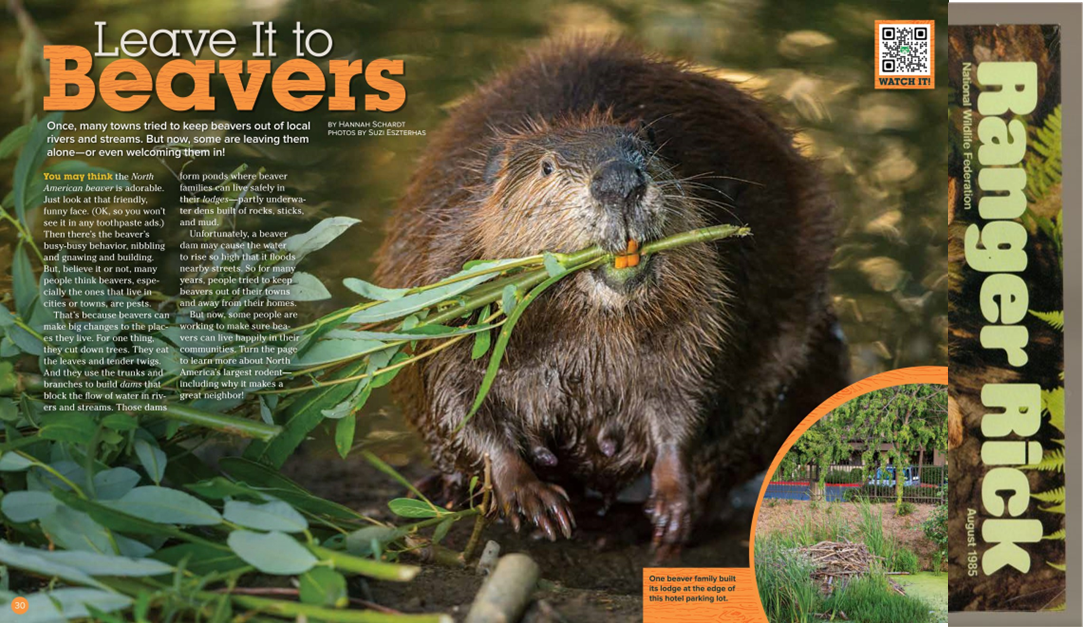
The Sierra club has a nice report on a beaver restoration project in Bandolero. It doesn’t specifically say that beavers are moved in family groups but it does quote what they learned from Methow a lot so they well might.
Beavers Build Back Better
Ecologists are relocating “nuisance” beavers to fix degraded landscapes across the West

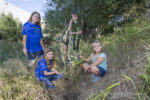
Once it was decided that the beavers would be a key part of the restoration process, it was just a matter of testing out relocation methods. The canyon’s steep terrain and series of waterfalls make vehicle access impossible, so volunteers carried the beavers on their backs. It’s demanding work: Beavers can reach up to 70 pounds and move around within their transport containers. Workers and volunteers are required to have a partner to switch off with, as well as hiking poles to keep their balance.
The beaver relocation process involves close coordination between Bandelier and New Mexico Department of Game and Fish wardens, who respond to calls from landowners dealing with nuisance beavers damaging their property. Rather than euthanizing the animals (the previous standard practice) wardens can now trap the beavers and meet the Bandelier team for transfer.
Once at Bandelier, staff hike the captured beavers roughly 2.5 miles up Frijoles Canyon to the release site, where the animals then disperse both upstream and downstream to establish new territories. The program has created a win-win situation for landowners with nuisance beavers, who generally prefer that these animals be relocated rather than killed.
How would like to hike up rocky canyon with a 70 lb beaver on your back? Sounds delightful! You know the beavers are thinking hey if you’re going to make me do this its the least you could do!
Once beavers are in an area like the Frijoles Canyon, they’re able to raise the water table and create floodplain connectivity. After the Las Conchas Fire removed vegetation and created water-repelling soils that caused destructive flash floods, the beaver dams helped fundamentally change how water moved through the canyon. Instead of rapid runoff and channel entrenchment, the beaver dams slowed water flow and allowed groundwater to saturate the surrounding soils. As a result, the ecosystem is now better at retaining water both during flash floods and drought periods. It’s a huge step in restoring the natural hydrological function of the region that took a hit when beavers were originally trapped en masse in the 1800s.
The team in Bandelier is not the only one to implement beaver-assisted ecosystem revival. Alexa Whipple has been doing this work since 2019, when she took over as director of the Methow-Okanogan Beaver Project in Washington state. Early efforts to relocate beavers to remote headwater systems did not go as planned at the beginning, as the environments were too depleted to support them. It took over a decade of trial and error for researchers to figure out best practices for relocating beavers to places where they would have a real chance of survival.
Now, Whipple’s organization combines relocation with habitat restoration and community coexistence programs, recognizing that moving beavers is only successful when the receiving ecosystem can sustain them and neighboring communities understand their value.
Relocation is not as simple as leading beavers into any source of water. Some critical factors determine how much success beavers will have to survive in an area, including water depth, protection from predators, food resources, and available woody vegetation for creating dams. Equally important is the community buy-in and acceptance of beavers.
I like the deference to Alexa and the acknowledgement that beavers aren’t as easy to move as chess pieces.
The irony is, while beavers could help secure long-term water availability, their short-term impacts on agricultural infrastructure can create immediate conflicts. This is why, perhaps, the relocation process has had such a hard time getting off the ground. “There is this generational amnesia of what a healthy condition looks like,” said Whittlesey. “North America had like 200-plus million beavers . . . the hydrologic systems ubiquitously were governed by beaver.”
Whipple and her team at the Methow-Okanogan Beaver Project address this human component directly, working to find common ground with people in the community and build rapport while educating people about the importance of beavers in the ecosystem. She said that they have found some buy-in as her community increasingly recognizes the dangers that water scarcity and wildfires can bring in an already degraded ecosystem. “Our most committed volunteers help us with our beaver husbandry when we relocate beavers and hold them in a facility while we try to capture an entire family. . . . We check on them twice a day, feed them every day, change their water. It takes a lot of people to keep them healthy.”
Just remember there are no nuisance beavers. There are only Beavers.