
Because the beaver isn't just an animal; it's an ecosystem!

Month: May 2021


I tagged this a week ago but there was too much beaver news to squeeze it in. It deserves sharing, because good beaver news from Virginia? It’s been a while!

Can humans and beavers resolve their conflicts?

Coexisting with nature in Rappahannock sometimes produces struggles for county residents. Take, for instance, the sometimes embroiled relationship between the landowner and the local beaver.

Although beaver behavior is seemingly destructive, it provides many environmental benefits. “What they’re doing is important for water quality,” says Claire Catlett, Rappahannock Field Representative for the Piedmont Environmental Council. “When they build a dam, they are essentially slowing water down but they’re also spreading water out.” 

The redistribution of water allows for the growth of new trees, which in turn provides new food and lumber for the beavers. The new trees act as a natural water purifier, filtering toxins from the water. “Trees play an important part in ecosystems,” Catlett says. “Especially along streams, they filter pollution with their roots.”

Good job Claire! We like anyone who tells the truth about beavers. Especially a field representative from the environmental council!

Beaver dams also create wetland habitats that are vital to a variety of animals and plant life. In addition to allowing hundreds of plant and animal species to thrive, wetlands offer flood and erosion control and remove pollutants from surface water runoff. Because they slow runoff and protect surface water, dams have also proven to recharge aquifers deep underground. 

Bill Fletcher is one Rappahannock landowner who has witnessed the positive influence of beavers returning to his property over the past year. “I’ve had a number of springs come back on the farm,” says Fletcher, who had the idea of implementing a government-funded program to install Beaver Dam Analogues (BDA) in the streams of Virginia farms.

Ooh we like Bill even better than Claire if that’s possible. A farmer who has appreciated what beavers are doing for his landscape; How exciting!

It would revolutionize the ecology of the area,” Fletcher says. “And it would allow us to retain more water in the aquifers. It would help every individual farmer and it would also help the Chesapeake Bay and the Rappahannock River.”

Fletcher has been reaching out to various state conservation foundations in hopes of bringing his project to fruition. BDAs have been shown to work successfully in other areas to raise groundwater levels, create healthier downstream ecosystems and even turn some intermittent streams into perennial streams.

That’s it! Go preach the beaver gospel far and wee because god knows they need to hear it. Someones folk listen with different ears when farmers speak.

Still, sometimes the benefits of beavers aren’t enough to convince landowners to let them stay. But there are many programs designed to help resolve human-wildlife conflicts. The Clifton Institute in Warrenton is a nonprofit organization with a mission of conservation and restoration of natural habitat of plants and animals, and provides one such service. The institute also provides environmental education and performs ecological research in the Piedmont area.

Alison Zak, an education associate for the Clifton Institute, says there are two main categories of human-beaver conflicts. “One is tree chewing,” she says, “and the other is flooding, which is usually when beavers are clogging up a culvert.”

“If the landowner has a nice spot, killing one pair of beavers is just creating an opportunity for a new pair looking for habitat,” she explains. “There’s almost always a way to address a problem without killing the beavers.”

WOW! I’m not sure the last time I read an article from Virginia that hit EVERY beaver point. Maybe never? It even had a section about wrapping trees to prevent chewing. Pretty incredible. There aren’t even any good points they left out. I think I have to look up the Piedmont Environmental Council.


[wonderplugin_video iframe=”https://youtu.be/JMOBxjIvLBE” lightbox=0 lightboxsize=1 lightboxwidth=960 lightboxheight=540 autoopen=0 autoopendelay=0 autoclose=0 lightboxtitle=”” lightboxgroup=”” lightboxshownavigation=0 showimage=”” lightboxoptions=”” videowidth=600 videoheight=400 keepaspectratio=1 autoplay=0 loop=0 videocss=”position:relative;display:block;background-color:#000;overflow:hidden;max-width:100%;margin:0 auto;” playbutton=”https://www.martinezbeavers.org/wordpress/wp-content/plugins/wonderplugin-video-embed/engine/playvideo-64-64-0.png”]


Yesterday was a “Bring out your dead” dead kinda day reviewing depredation permits. A hell of a lot of people killing a hell of a lot of beavers. But I found a few tidbits among the wreckage to keep me interested. Our past winners our keeping up with their feverish pace, and there were 24 unlimited permits granted. So that’s still happening. But oddly there were 31 permits denied. Which we’ve never seen before. About half of them note the damage was not verified. But whether that means anything remotely responsible is anybody’s guess.In the meantime we should be thinking about LIVE BEAVERS. And I have just the article to get us hopping. How about a beaver app that you can download to your phone?
iBeaver: Crowd-sourcing data on North America’s Busy Beaver

Help us gather data with a new app! 

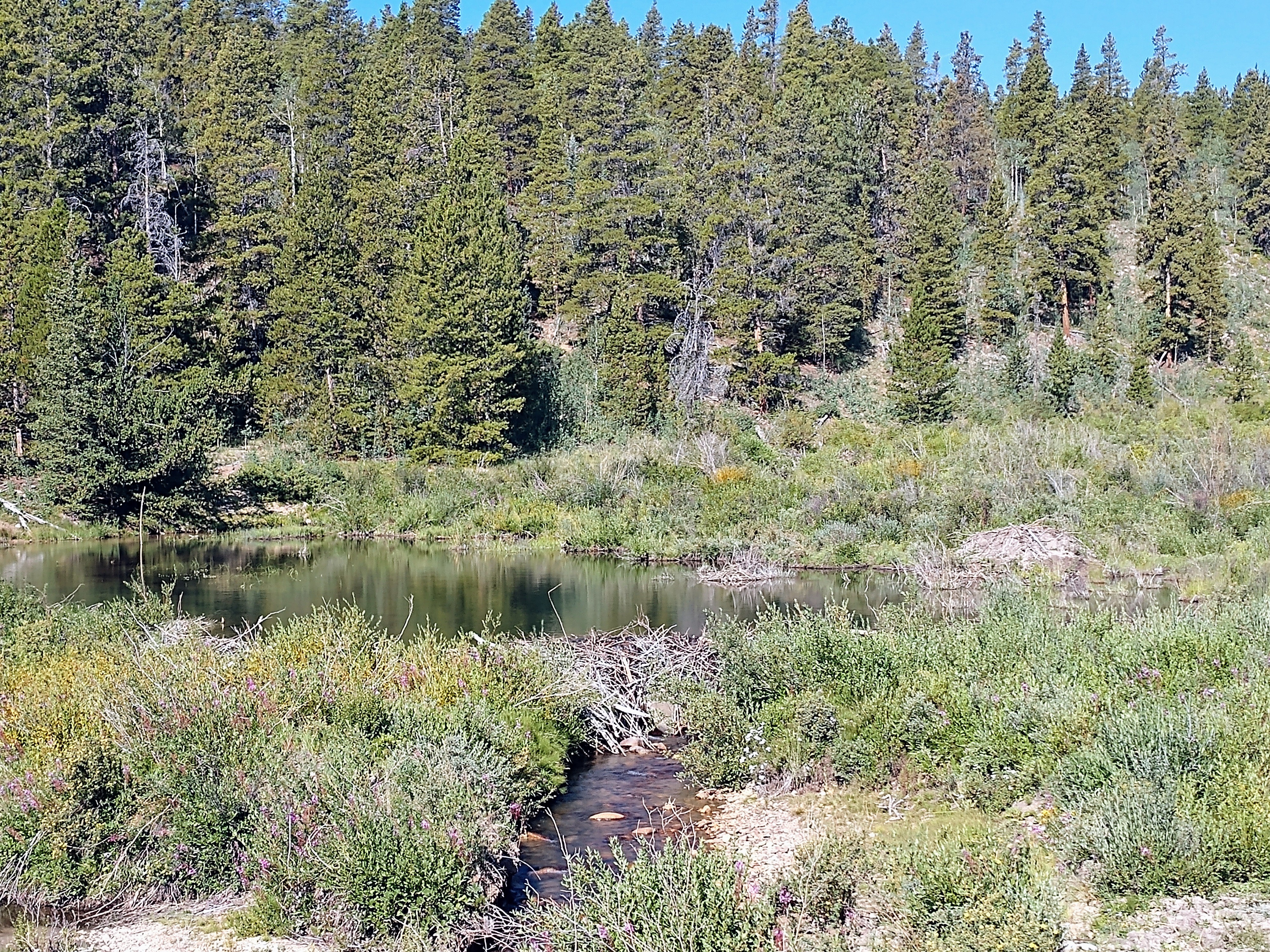
A beaver dam, pond, and lodge in the mountains of Colorado

Beaver are the classic keystone species and ecosystem engineers. Their dams can alter landscapes in positive ways by creating, enhancing and maintaining wetland and riparian habitats for an array of species such as fishes, amphibians, reptiles, mammals, waterfowl, shorebirds, songbirds, plants and invertebrates. These wetlands also provide important ecological services that benefit humans, like groundwater filtration, carbon sequestration and flood attenuation. 

Since then, beaver populations have rebounded in many U.S. rivers and streams, but they still haven’t re-inhabited their full historical range or are not present at the density that they were prior to trapping. There are lots of efforts currently working toward increasing our understanding of beaver distribution, but they are mostly specific to a certain region or project. Because of this, we saw an opportunity to develop a broader data collection app that could be used by almost any group or individual interested in beaver across the country. We then aimed to make the data publicly available

Well that certain would be useful. Nice to make it nationally available, although I might use a little caution in states like Idaho and Wyoming where there are plenty of fur trappers looking for a tip.

Defenders’ Center for Conservation Innovation (CCI) specializes in finding innovative applications of science, technology and policy for advancing wildlife conservation. So naturally, a collaboration between CCI’s mapping team and our beaver experts in our field conservation department seemed like a great place to start developing a nationwide beaver data collection tool. Our team decided to use Esri’s Survey123 platform to create iBeaver, a data collection tool that can record the location of a user’s observation and then prompt them to answer a series of survey-style questions to gather more information. This survey is relatively straightforward for the user, regardless of experience or skill level, with explanations and visuals to clarify what a user should be looking for. Over time, the information collected will fill in the knowledge gap of where beaver are, where there is and is not good beaver habitat and where there are beaver-human conflicts on the landscape that might need resolution.

iBeaver joins a myriad of other data collection platforms and software that promote community involvement in scientific data collection, often referred to as “community science”. Community science gathers data for scientists and nonscientists to use, which they otherwise wouldn’t have the time or capacity to gather individually, all while also getting people outside and connected to the natural world. It’s a great way for everyone to contribute to a larger effort, protecting the biodiversity of our planet, while also having some fun and learning along the way.

How cool is that. It almost makes me want a cell phone! HAHAHA. But still, pretty darn nifty to be able to hike along and use your phone to enter beaver data.

The whole thing is so cool and NEW I couldn’t resist entering the laurel creek beavers. A very complete process it is too, with lots of questions about other wildlife you may have observed in the area. The mapper showed another California entry on the border of Nevada What are the odds we know the woman who saw those beavers?

The data collected through this community-driven tool will inform our understanding of the current distribution of beaver. Plus, these data will be shared publicly and can be used to inform policy on wildlife and water use, identify areas where troublesome beaver can be relocated and find areas that don’t currently have beaver but do have wildlife and water that would benefit from their presence. These data would also give us a better sense of beaver populations as they change through space and time and provide lots of other fun, interesting and useful applications which help our natural world. You can check out the data collected with iBeaver in our web map, Castor Mapper. 

We need your help to build up our dataset to do all these wonderful things! So take your smartphone and get outside! You can access the survey at this link, and you can fill it out in your web browser or through the Survey123 application that you can download wherever you get your apps. We thank you for your community science contribution and wish you happy trails as you search for beaver in your neck of the woods.

Go enter your local beavers RIGHT now! Let’s show them why the beaver population is worth paying attention too! Great Work Defenders of Wildlife and Center for Conservation Innovation!


Just received the new listing of depredation permits for 2020. 210 permits in all. I’ll be wading through them morosely today, but this is one that stands out. For the Creekside park beavers in Brentwood.

WirId IncidentDate IncidentId Initial Incident Category BehaviorObserved Permit Issued Permit Issued Date PermitStatus NumberTakeAllowed Inc Latitude Inc Longitude Zip Code County
WIR-2020-000786 2020/03/02 00:00:00 29074 Depredation Beaver/s have built dam across flood control channel/creek using trees planted for restoration in an urban interface area. We feel that pedestrian liability could also be an issue given nearby park and trails. Yes 43930 Issued/Active 5 37.9824897 -121.6911668 NULL Contra Costa Yes  

Yes definitely. Watch out for that pedestrian liability on trails. Beavers might attack someone. You never know. Or a tree  could fall several hours after it was chewed and hit Timmy in the head. Better kill them all. It’s the only safe plan.

What I realize, looking at the entire list. Is that there are SO MANY CATAGORIES required to fill out for other species like bobcats or bears, like where it was killed or whether it had an ear tag or what gender it was, but with beavers, MEH, just kill it. We don’t care where. We don’t really care how. And some of the time we don’t even care how many. Just getting rid of problems. Who cares?

I can see I’m in for a VERY FUN DAY. The good news is that yours will be a whole lot better when you listen to Glynnis Hood on yesterday’s CBC’s “The Current” with Matthew Galloway. I took the liberty of clipping out her 7 minutes from this hour long report. Enjoy!

The Current with Matt Galloway