Yesterday’s conference was a revelation on so many levels. I met powerful, persistent creek advocates who cheerfully personified Brock Evans phrase ‘endless pressure endlessly applied’. I saw the results of advances in political circles and environmental lawyers elected to water districts. I saw friendships and alliances that have endured across decades and watched as new important contacts were developed. And I sensed, rather than saw, the simmering impatience of the people who’ve done this constant, prodding stewardship – pushing, pulling and nudging their officials into more responsible treatment of water, fish and wildlife.
The story was excellently represented by the drama of the Searsville dam.
This attractive slab of concrete is in the Jasper Ridge preserve on San Francisquito creek. It is owned by Stanford University and the sight of one of the oldest field stations in the country. The dam was built over over 100 years ago and is part of the enormous water reserves for the university. Pesky steelhead-hugging types point out that its an old structure located directly on top of a major seismic fault and it prevents perfectly healthy steelhead from living their anadromous life. Stanford says the dam is essential because it traps tons of sediment that would otherwise be a problem for the residents of Palo Alto, is perfectly earthquake proof and note that its adjacent wetlands support the richest bird and bat habitat in the state.
So yesterday started out with a presentation by the suits – literally. Stanford sent its emissaries to explain how they needed the dam and they understood that some people didn’t like it but they were going to study the issue very carefully for the next ten years to see what were the alternatives might be. They had developed an HCP (Habitat Conservation Plan) to protect threatened species in the area. A woman explained the HCP carefully outlining the endangered species on the rare property and the definition of ‘Take“.
Are you familiar with this concept? concept
‘Take‘ is defined in the Fish & Wildlife regulations as
“Take means to pursue, hunt, shoot, wound, kill, trap, capture, or collect or to attempt the foregoing. 50 C.F.R. §10.12.If you are building a shopping mall or digging a gas line or laying a new road and you kill 35 ground squirrels and crush some burrowing owls that’s considered ‘take‘. If an animal is listed under the endangered species act there is ZERO acceptable ‘take‘ without a plan to show how your activities are going to benefit that species eventually – hence the HCP. (Of course with beavers the acceptable ‘take’ is infinity.) So a hearty portion of the Stanford presentation was focused on ‘take‘ and what they are doing to make up for the rainbow trout they prevent from going out to sea and becoming steelhead. (Steelhead listing on the ESA was upheld recently in a major ruling from the ninth circuit)
So that’s the ‘take‘. What about the ‘give‘?
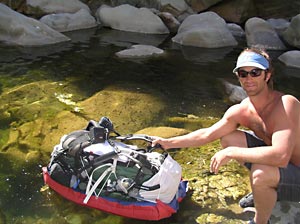

Meet Matt Stoecker: Steelhead Champion Extraordinare. He has been waging a David’s battle against the Stanford Goliath since the Clinton years, and has an endearing habit of donning his scuba gear or snorkel to photograph the steelhead he defends underwater. He is the force behind the group “Beyond Searsville Dam” and a remarkably cheerful, reasonable, and unassuming guy. His generous, inspiring speach was sprinkled with olive branches and toe-holds for the Stanford Folk, but he also didn’t hesitate to challenge their misstatements and point out where they were being less than genuine. He was, in short, the perfect advocate: passionate, cooperative, confrontational, and ready for a marathon.
Of course, I invited to come film our steelhead swimming with beavers and he was very keen to consider it. He said he got charged by a beaver once underwater for following the fish too close to the underwater entrance to the lodge. He was suddenly presented with a flash of fur and teeth! Matt backed off and the beaver, (who is more accustomed to charging than follow through), allowed him to leave unscathed. (Of course, he noted that beaver dams provide some of the best steelhead habitat, which came as no surprise to us!)
I can’t even begin, on the smallest ‘smolt’ of a scale, to imagine how much patience, courage and tenacity it takes to fight a battle like that. When I think of the many faces at the conference, the people who tirelessly protect their little stretches of creek from plastic bags and commercial runoff and grazing cattle; when I think of people like Jeff Miller working to overcome the Calaveras Dam on Alameda Creek and picking up steelhead on the way to work where they were trapped on one side of the bart station to drop them into the water on the other side; when I think of the conference organizer who pulled together all these unique creek powers and knew enough to include a few politicos who wanted credit-points; I realize how profoundly these people have ‘given’ of themselves. They give their time and their attention and their passion and their resolve. They give their funds and their friends and their energy day after day. They hold their tempers when the situation requires it and light fires when nothing else will work and learn from each other how on earth to tell the two circumstances apart.
I realize, in all this, that we are just infants.
Worth A Dam was very well received by the Santa Clara Creeks Coalition. Beavers were the unspoken elixir of the day for much of the time, a knowing wink or elbow. If we get rid of dams what will trap silt? (Beavers) If we get rid of dams what will slow winter flow? (Beavers) If we get rid of dams what will raise the water table? (Beavers) If we get rid of dams what will create wetlands? (Beavers) If we get rid of dams how can we possibly manage California’s ‘flash’ rain cycle where we get too much rain some years and nothing at all in others? (Beavers. Beavers. Beavers!) And by the end of the day, Rick’s presentation on historical prevalence and where beavers belong was the perfect lead-in for my talk about the effects of beavers in Martinez.
Suffice it to say there are some new believers out there tonight. Just another day in the endless ‘Give‘ and ‘Take‘ of advocacy.
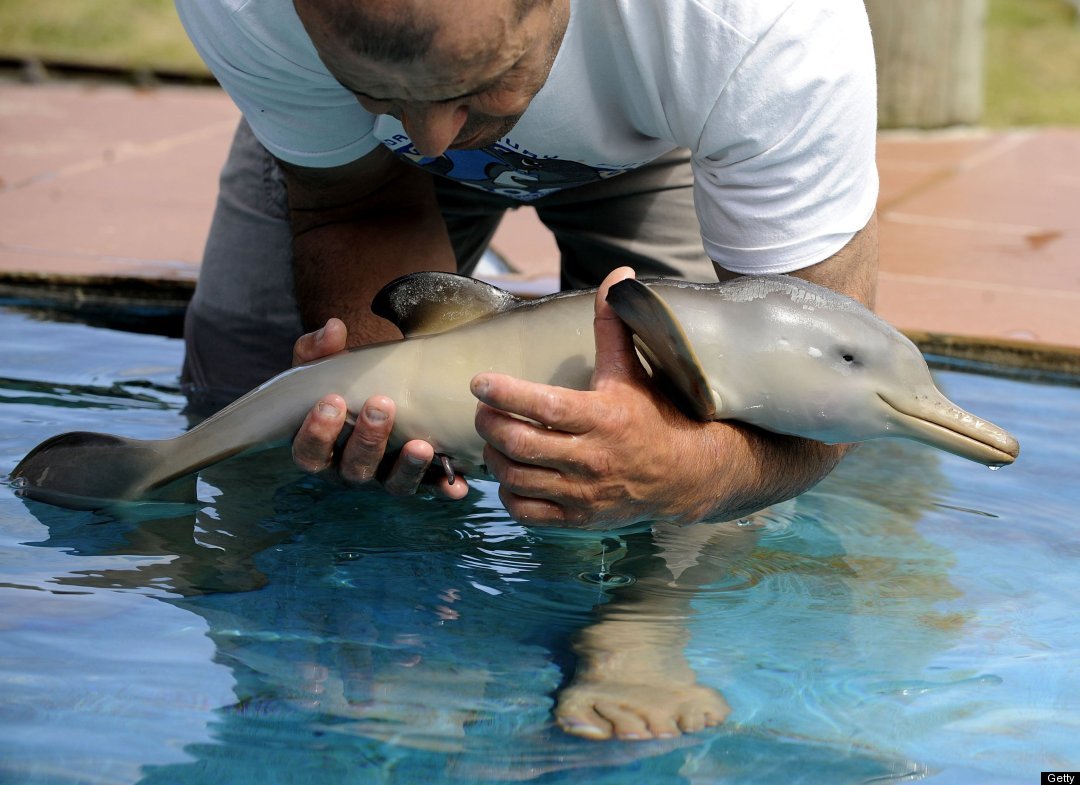
Richard Tesore, Director of the marine fauna reserve ‘SOS Fauna Marina’ holds a baby doplhin in a pool in Punta Colorada, department of Maldonado 100 km east of Montevideo on November 5, 2010. The little dolphin of about 10 days, was found by tourists, apparently showing marks of a fishing net. (MIGUEL ROJO/AFP/Getty Images)

