




Because the beaver isn't just an animal; it's an ecosystem!


FacebookFacebook
email articleemail article

If you can’t listen to me about why beavers matter, then you should at LEAST listen to salmon. They have some pretty strong opinions on the matter. NOAA too.

Working with Nature’s Engineers to Build Coho Salmon Habitat

NOAA partners managing an innovative pilot program in Oregon are constructing dam starter structures for beavers to finish building, creating slow water areas for juvenile Coho to thrive.

Analogs provide a solid foundation from which beavers can start building their dams. Photo: Upper Nehalem Watershed Council

On the Oregon coast, NOAA and partners are leveraging the strong engineering skills of their beloved state animal to restore important habitat for threatened coho salmon and other species.

Supported by NOAA, our partners at the Wild Salmon Center and Upper Nehalem Watershed Council are embarking on a pilot project. It will assist beavers with building dams in key areas of tributaries where juvenile migrating fish grow. Once built, beaver dams create slower moving sections of streams for juvenile fish to use as habitat.

Isn’t that a lovely sight to behold! A bunch of scientists teaming up with a bunch of nonprofits to lure beaver into a stream and make things easier for salmon It’s nice when everyone teams up to do the right thing. And we know who’s eager to play on the team soon just as soon as the set up the bases.

Similar to estuaries and river delta habitats, the slow-moving pools of water behind beaver dams offer juvenile salmon critical time for feeding and growing before their trip to the ocean. Unlike man-made barriers to fish passage, adult salmon are able pass beaver dams when they migrate back upstream to spawn.

With these pilot projects, NOAA and partners are building foundation structures, called “analogs.” They are placed in areas where beavers once lived, and where the stream grade and size are optimal for juvenile salmon habitat. Think of them as the foundations of a home.

The  slow-moving pools of water created by beaver dams provide habitat for threatened coho salmon and other species.

Once we introduce the analogs to ideal areas, beavers find them and build out the rest of their new homes. Rows of wooden posts intertwined with tree branches and straw give our furry restoration partners a solid foundation from which to start building their dams. We also ensure they have plenty of food sources by planting willows and other tasty foods beavers like while removing invasive plants from the areas.

The key to success for salmon, a certain famous NOAA scientist once explained to me, is that you have a safe place to get fatter so that when you finally do make your way downstream to sea you are big enough that

    • 1) more things fit in your mouth to eat
    • 2) you yourself fit in fewer mouths to eat.

The keys to salmon success are not complicated. Survival is paramount and beaver ponds give them a better chance of surviving. More salmon with more of a chance means better outcomes. It’s that simple.

These innovative but simple projects are turning back the clock to times where beavers freely built dams along streams and rivers in Oregon watersheds. Modern development has straightened stream channels and increased the amount and speed of water flow. This makes it hard for juvenile salmon to rest during freshwater stages of their early lives. This habitat loss for beavers and salmon has created population declines for both species.

Simple solutions that bring complexly beneficial results. Beavers dams are the ‘seat belts‘ of the stream system. They keep salmon safer and help keep the water from getting away or going causing problems by going too fast. What they do isn’t rocket science. They aren’t based in complex chemistry or mechanical physics. They don’t drive the car or power the vehicle.

But we all stand a better chance of reaching our destination when they’re in place.


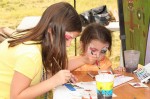
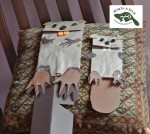
Yesterday Jon finished hanging our ‘directional signs’ for the beaver festival. I think these will look cute scattered around the park, suggesting that you’re going to find good things for the environment whichever direction you go. Which is true.


FacebookFacebook
email articleemail article

I know we all think it’s terrible when beavers are crushed and drowned in conibear traps. Dogs and otters often meet horrifying and gruesome ends in them as well. I’m sure no beaver lover has a soft spot for traps anywhere near their heart.

But it could be worse.

Winnipeg man stunned after beaver shot and killed outside his home

James Malzahn was in his backyard at his St. James home Monday evening when he heard a loud noise coming from Truro creek nearby.

“I heard a loud bang and first I thought maybe it was a car that backfired, then I was thinking possibly a firecracker or something,” Malzahn said.

The Winnipeg man is calling for change after a beaver was shot and killed by a City of Winnipeg contractor right outside his living room window Monday night.\

‘I left the back of my house and walked to the living room to look out the side window and at that point I saw a man in a reflective vest holding a rifle.”

As it turned out, a contractor had shot the beaver that had been roaming the creek beside Malzahn’s home.

Winnipeg is about 150 miles north of the border of Minnesota. It is in Manitoba which is considered the “Wild West” of Canada, and the rules can get a little looser than most of the country. Still shooting a beaver in town is probably going to cause a stir.

Just a hunch.

If they have to remove it it would be nice if they did it and allowed it to live,” he said. “But the way that it was done was a little surprising, to be using a firearm in the city.”

The City of Winnipeg said it doesn’t relocate the animals because beavers are territorial and will physically compete for suitable habitat and moving wildlife can also increase the risk of spreading disease.

“We can’t stress enough that beavers are only removed when we have no other options for mitigating damage or danger,” a spokesperson said in an emailed statement.

“Some examples of property-based damage or danger are dams in drains that could flood City infrastructure or private property, and excessive damage to trees.”

Ahh the old “we only killed him because he needed killing” argument. We’ve heard it so many times before. I wonder why, since its perfectly safe to shoot unarmed animals on city streets. he felt the need to wear a reflective vest?

Was he worried about traffic?

There are about 100 beavers living along Winnipeg rivers and streams at any given time and one beaver is able to damage hundreds of trees yearly, according to the city, which attempts to protect some trees by wrapping them.

“The City recommends that homeowners whose property has experienced beaver activity wrap their trees with stucco wire which is available in most building supply stores in 2” x 2” mesh size 48” in width using the full width of the roll for the height of wrap around the tree and allowing enough looseness for the tree to grow,” the statement read.

Malzahn, who moved to the area because he wanted to enjoy the wildlife, said he understands some beavers need to be removed, but hopes the city will find another way to get the job done.

“If you have to get rid of them it would be nice to do it in a more humane way and definitely not with firearms.”

It’s certainly nice that they advise homeowners to wrap trees. And I’m glad this kind of random beaver shooting is alarming to residents. But I couldn’t disagree more strongly with Mr. Mazahn.

If beavers are going to be killed it should be in the most disturbing and visibly horrific way possible.

Let me explain.

Killing beavers silently underwater or hauling themed away and euthanizing them in in some gas chamber at animal control is the very worst possible idea. People should KNOW that beavers are being killed. It should be upsetting and unsettling to anyone that sees or hears about it.

People have to think its bad or they will never, never stop it.

Take Scotland for instance. Even though they were officially named a ‘protected species’ the generous farmers have very kindly decided to continue shooting them and killing pregnant females that show up as lead stories in a number of papers with photos I cannot share on this site. This has shocked the entire countryside and really upset people.

If, on the other hand, farmers had killed them in some more subtle way – no one would ever know. If, for example, they had shot them with poison darts and thrown the accumulated bodies in a pit, or weighted them with bricks so they sunk to the bottom of the pond, no one would be upset.

Instead they get letters like these.

READERS’ LETTERS: Our land and soil need expert custodians

The core problem with our land and soil reserves encompasses much more than a problematic relationship between farmers, conservationists, Scottish Natural Heritage and beavers.

The farmers’ union has stated publicly that a limited number of harvests remain due to erosion of soil, the destruction of the mycelium, the constant pounding by large machinery and the annual soakings in both fertiliser and pesticides.

Current practices increase the frequency of flooding downstream while our wildlife – from mammals, birds, reptiles, amphibian and invertebrates – are forever decreasing from loss and corruption of both food and habitat.

At the lower end of our food chain, and vital to our soil health, lie worms and insects. The worm population has dropped by up to 40% and invertebrates by 70%.

The presence of beavers helps remedy most of these issues and the idea their numbers should be left to an unaccountable demographic with short term economic interests is simply unworkable and wide open to abuse.

Argue on the merits I always say.

History instructs us that when commercial activities clash with the welfare of other living things, disaster follows. Birds of prey, wildcats, pine martens and many other species stand testimony to that. Indeed, beavers themselves were extirpated for that very reason.

It has taken many years and a lot of effort to try to both protect this array of creatures in the face of continuing persecution of the type beavers are now experiencing. To once again open the door to laissez-faire-style culling would be a retrograde step.

What is required is a tightly-regulated body consisting of scientists, conservationists, farmers and government to implement and strictly police a system where the agricultural and the natural world co-exist for the general benefit of us all.

This can be done by regenerating the soil, developing new farming systems in line with today’s hi-tech industries, protecting our biodiversity and providing a suitable income for farmers.

Any short to medium term subsidies can be directed accordingly with the focus realigned from production to the health of the environment and the sustainability of the soil on which the produce grows.

Self regulation and commercial interests make poor bedfellows.

George Murdoch

Well said, George. Farmers got the UK into this mess they are unlikely to be the ones to get them out of it. Thank them for their excellent service in growing vegetable and killing beavers as inhumanely as possible, and then use the horror they’ve created to teach people how to do it better.

It’s the only way.


FacebookFacebook
email articleemail article

Do you remember that popular kid who you really really wanted to be in your play but he never came to rehearsals and refused to help with the curtains. And then when he finally showed up after the performance has started you were torn between jumping up and down with joy that he came and suddenly launching into your own performance of “the little red hen” and angrily sending him away?

Well, the popular kid just got here.

Lawsuit Launched to Protect Endangered California Salmon Harmed by Federal Beaver-killing

SACRAMENTO, Calif.— The Center for Biological Diversity today launched a lawsuit against the U.S. Department of Agriculture’s Wildlife Services program for killing California beavers and harming native salmon, southwestern willow flycatchers and other endangered wildlife that uses habitats created by beavers.

In California last year, Wildlife Services killed nearly 1,000 beavers using firearms, traps and snares.

“California’s beavers need to be protected, not persecuted,” said Collette Adkins, a Center attorney and biologist. “Beavers are nature’s engineers, building dams and ponds that help endangered fish and frogs. Our federal government needs to stop shooting and trapping native beavers whose ponds are safe havens for other wildlife.”

Of course this is an echo of the suit already launched by EPIC and the Western Environmental Law center 6 months ago and sure they’re late to the fight, but yes, make room for CBD at the table because they’re turning their full firepower on and going after Wildlife Services. Of course you and I both that the vast majority of beaver depredation happens outside the auspices of WS but this can’t hurt. Point out how important beavers are to salmon. Make the case to the public that killing beavers is the same as killing salmon. Yes let’s all welcome them on board.

Last year, in response to a similar litigation threat, Wildlife Services agreed to stop killing beavers, river otter, muskrat and mink in Oregon.

Numerous studies show beavers benefit endangered salmon and steelhead by building ponds with natural cover and food for the fish. Endangered frogs and birds, including Oregon spotted frogs and southwestern willow flycatchers, rely on wetland habitats formed by beaver dams.

But Wildlife Services kills beavers without considering the impacts to other animals that rely on their dams and ponds to survive.

For example, over a 10-year period in Sacramento County, Wildlife Services killed more than 1,000 beavers, even though federally protected Chinook salmon and steelhead live there and use habitats created by beavers.

Oh i like that. Tie it directly to Sacramento county, which btw has been number 2 in beaver depredation every year we’ve looked at records. Sacramento county with its precious levee system that is constantly accusing beavers of tunneling through their retaining walls.

“Not only are beavers ecologically important, they’re smart, hardworking and adorable,” said Adkins. “My heart breaks for the thousands of beavers needlessly shot and trapped by Wildlife Services.”

Wildlife Services has never analyzed how its killing of beavers affects California’s endangered wildlife, even though the Endangered Species Act requires such study.

Her heart breaks? Hmm that’s an odd thing to say in court, but okay. Yours and mine don’t break. They get steely like flint with resolve. Our hearts get less gullible, less patient. And very very observant.

Today’s notice letter starts a 60-day clock until the Center can file its lawsuit to compel Wildlife Services to comply with the Endangered Species Act.

Well bring the fatted calf because CBD has decided to help beavers in California and regardless of how long it took them or why they delayed they’re here now and this argument just got a heckofalot more interesting.


FacebookFacebook
email articleemail article

Well, California may not be ready for anything like Wyoming, but South Windsor is about to get a whole lot more like Martinez.

Let me explain.

Hearing set Thursday on beavers

SOUTH WINDSOR — With the possibility that more beavers will move into Nevers Park, Mayor Andrew Paterna is hosting a forum Thursday night on how to manage the large rodents and their activities that cause flooding and tree damage.

Attendees can hear from Christopher Vann of the state Department of Energy and Environmental Protection’s Wildlife Division, the Humane Society of the United States, and Michael Callahan from Massachusetts-based Beaver Solutions LLC, which provides advice and methods on how to coexist with beavers.

Hey. I’ve seen that movie! Don’t a whole lot of people show up and demand the town save beavers? Then some city plants stand up and say the town needs protection from flooding and everyone boos. Am I thinking of the right one?

Nearly 2,100 people have signed an online petition created in April by Abbe Road resident Stephen Straight that called for town officials to meet with Callahan and implement his solutions. There is almost no doubt that beavers will return, Straight said.

“We need to stop all trapping NOW and work toward coexistence with the next beavers,” Straight’s petition states. The beavers harm no one, he added, and South Windsor residents and visitors should be able to enjoy these creatures as they go about their work.

I bet you didn’t know Martinez would be a model huh, and that other cities would follow in our footsteps? Apparently standing up for beavers is the hot new thing. it’s so cool everyone wants to try it now.

Other residents, including Carrie Morse of Maine Street, agreed that the town should have explored other options before deciding to have them trapped and killed.

Straight hired Callahan after the beavers were trapped and removed in April. The system would cost the town around $2,000 for materials and installation, Callahan said. Several residents, including Straight and Morse, have said they’ve pledged to donate to the effort.

“People really care,” Morse said. “I hope our officials realize the importance of preserving our wildlife and ecosystem.”

Nicely done Steve! I’m thinking that you have just become eligible for the Worth A Dam scholarship. It’s lovely to think of your community taking this on and your beavers benefiting because of it. To paraphrase the old Chevron commercial: Do people really show up to a meeting like this just because they care about beavers?

People do.

Ahhh memories! Like the corners of the mayor’s mind. If I live to be 102 that will remain one of my very favorite days on the face of this earth. Maybe our beavers are MIA at the moment, but by golly our hearts are still in the right place.

Oh and you can stop watching dash-cam police videos forever now. It’s been done. This is way better than a white bronco on the freeway. There’s no competition anymore. Ever again.
See for yourself.


FacebookFacebook
email articleemail article

You remember the office party We threw for Montana yesterday when it published that awesome article about why beavers shouldn’t be trapped for sport because they were valuable to the state? The conference table is still scattered with paper cups from the champagne  we sneaked in through the lobby but it’s time to celebrate again. Find a cleanish one because we’re going to party hard today at this news from its downstairs neighbor. This was released yesterday by the Wyoming Game and Fish in Department.

The bulletin has 10  seriously glowing pages outlining the benefits beavers bring to the ecosystem and water table. It even discusses flow devices and wrapping trees. It’s a update of an article originally written in 1993 by Tom Collins of the Wyoming Game and Fish Department through the Wyoming Cooperative Fish and Wildlife Research Unit. Updated by Justin Joiner and Jim Wasseen in 2019. Remember those names because something tells me those officers are going to be our new best friends.

I’m just going to excerpt a few stunning paragraphs at random, but you need to read the entire thing yourself, from cover to cover. I mean it. Then close your eyes and just try imagining a bulletin like this coming from CDFW. I dare you.

This is the opening paragraph:

Many land managers have realized that beaver can play a very cost-effective role in riparian habitat man-agement and enhancement. With the exception of humans, a single beaver can modify its environment more dramatically than any individual of any species in North America. Beaver are occasionally referred to as “grassroots conservationists” because of their water impoundment and conservation efforts in our nation’s watersheds. Without beaver on our Wyoming head-waters, downstream flooding would be more severe each spring, and water conservation would be a much more serious concern. The manpower and monetary costs of providing the benefits beaver provide would be staggering.

It just gets better from here. Honestly, if you go pour through it you’ll be rewarded with some of the best beaver photos I’ve seen – I’m still trying to find their source. This was my favorite but I’ll show you Ben Goldfarb’s soon.

“…even in areas where beaver are a nuisance, management practices can sometimes be employed to preserve existing land uses while maintaining the benefits beaver provide.”

Prepare to have your jaw dropped and your eyes popped. This is an amazing document and considering the source a uncanny and incredible document. This is the kind of document that I would  burst into tears over if I it had anything whatsoever to do with our efforts. i asked Joe Wheaton if he knew about it and he said yes they had sent him edits along the way and that they wanted to do this after his workshop there last year.  All I can say is that the world is dam lucky to have Dr. Wheaton on the job.

“Beaver ponds stabilize water-sheds by moderating high flows and reducing downstream flood-ing; maintaining more constant summer flows; storing water during flooding and releasing wa-ter during droughts. Ponds retain sediment and organic matter, thus improving fish habitat, and the increase in water surface area produces a corresponding increase in total aquatic productivity. These ponds also provide important pool habitat for certain fish species, additional recreational opportunities (fishing, wildlife viewing, etc. and diverse scenery.”

Here’s Ben’s favorite photo – it’s a beaver stepping into a BDA and saying, “thanks guys for getting this started for me, I think I’ve got this from here“.

Do you think every other fish and game in every other state is kicking themselves that Wyoming got their first? Me neither. I think it’s probably more like the outraged republican response to that lone GOP congressman who called for impeachment. This is heresey and everyone is quick to point it out.

But wow, Just wow. This might be my very favorite part.

BEAVER CONTROL AND MINIMIZING BEAVER DAMAGE

Where beaver are in conflict with existing land uses, land managers can exercise options other than elimination of the beaver population. The riparian habitat benefits lost with total beaver control often outweigh the elimination of a nuisance problem. Since beaver fill a key role in perpetuating riparian habitat, each case should be evaluated on a site-specific basis. Without this consideration, the land manager may incorrectly interpret and react to the problem.

For example, a landowner once requested assistance in removing an estimated 200 to 300 beaver on a three-mile stream segment. During review, a wild-life biologist discovered that the area was marginal beaver habitat and only one colony was present. The landowner was seeing beaver cutting activity over the entire stream segment, much of which was old. The more recent activity from the single colony was re-stricted to about one mile of stream. It is likely that this colony’s home range was large because of marginal habitat. Multiple dams and/or dwellings were thought to reflect a larger beaver population than actually ex-isted. The landowner failed to realize that no direct relationship exists between the number of dams and dwellings and the number of beaver in an area.

So the land owner complained that there were 200-300 beaver living in his 3 mile stream and he asked for help in getting rid of them. He had no idea that beavers will chew trees in more than one area and that the number of dams and lodges can’t tell you the number of beavers. Staff determined there was a single family on site.

I need to sit down. i’m feeling faint.

Now I am tearing up because if you saw how many depredation permits we have reviewed with outrageous complaints about beavers based on zero zero possibility that they could be true, and no one from CDFW goes to check  or verify they just hand out the permit that says “hey kill as many as you can find, thanks.”

But Wyoming checked.

TREE REMOVAL

Removal of valuable trees, ornamentals, or entire tree stands by beaver is another concern of land managers. Ornamental damage is usually associated with rural homes and occasionally with urban situations. Techniques such as exclusion fencing and/or wrapping have successfully deterred beaver from cutting ornamentals.

Oh Oh Oh. Exclusion fencing and wrapping trees recommended by the wyoming game and fish department. I’m beyond faint. I feel positively convulsive. Why can’t california have this?

CONCLUSION

Because of their ability to dramatically alter their environment, beaver can play a key role in riparian habitat management. Several agencies and numerous publications are available which provide the land manager with proven riparian habitat management techniques
 

Oh sure, just go around writing smart things about beavers and checking outrageous lies while California fish and wildlife just sits and picks its nose and learns NOTHING despite all the smart thinking that goes on around us. Just continue showing how skilled and responsive you can be to wildlife and riparian structure and we’ll just watch enviously while our entire state burns from the top to the bottom.

Still, it’s wonderful that wyoming has learned so much and is able to share its knowledge. We’re happy for you.

Really happy.


BEAVER FESTIVAL XVII

DONATE

Beaver Interactive: Click to view

TREE PROTECTION

BAY AREA PODCAST

Our story told around the county

LASSIE INVENTS BDA

CONTACT US

URBAN BEAVERS

LASSIE AND BEAVERS

Ten Years

The Beaver Cheat Sheet

Restoration

RANGER RICK

Ranger rick

The meeting that started it all

Past Reports

June 2026
M T W T F S S
1234567
891011121314
15161718192021
22232425262728
2930  

Story By Year