




Skip to content
Worth A Dam

Because the beaver isn't just an animal; it's an ecosystem!

Menu
  • HOME
  • OUR STORY
  • EDUCATION

    • Teachers
    • EDUCATIONAL BEAVER GRAPHICS
    • California Beaver Summit
  • RESEARCH

    • THE ECOLOGICAL BENEFITS OF BEAVERS
    • PEOPLE ARE TALKING ABOUT BEAVERS
    • The history of beavers in California
  • SOLUTIONS

    • Protecting Trees
    • Protecting Culverts
    • California Beaver Help Desk
    • NATIONAL SOLUTIONS & BEAVER HELP
  • OUR BEAVERS

    • PHOTOS
    • VIDEO

CALIFORNIA SCHEMING

heidi08 Attitudes towards beavers, Beavers and salmon June 7, 2019
FacebookFacebook
email articleemail article

There has been an interesting  response to this second punch from the Center for Biological Diversity threat to sue Wildlife Services over trapping beaver in Salmon habitat. It trails a similar suit from EPIC and the Western Environmental Law association by almost 6 months, but its making the right kind of waves at the moment.

Environmental group threatens to sue over beaver killings in California

Noting that nearly 7,000 beaver were killed in California from 2010 to 2017, the Center for Biological Diversity has asked the department to consult with other federal agencies about how beaver killing affects endangered species.

The center sent a letter to the agriculture department telling the agency it plans to sue if it doesn’t consult with other federal agencies.

When beavers build dams and create ponds, the rodents create rearing habitat for young salmon that in some cases are endangered species, said Collette L. Adkins, a senior attorney for the Center for Biological Diversity.

Okay, we knew that much. So what’s new?

Tanya Espinosa, a department of agriculture spokeswoman, said her agency already consults with federal agencies before killing beavers.

If that sentence is true I will eat a bug. What does “consult with agencies” even mean?” What agency? How do you consult? With whom? Is there any record of this alleged consultation? Do you send an email to Bob in Fish and Wildlife?

Adkins acknowledged Wildlife Services has begun consulting with other federal, but she said they had not yet completed a biological assessment of the effect beaver killing has on endangered species.

Elsewhere, the counties that had the highest number of beaver killings were Sacramento, Placer and Yolo. The three counties combined had 3,092, the center’s table of figures shows.

Now THIS I believe.

The Shasta County Board of Supervisors voted last year to terminate a contract with Wildlife Services after it received a letter from Animal Legal Defense Fund in Cotati objecting to the agency killing the animals without first doing an environmental study into the effects of its work.

Wow. This is news to me. Is it news to you? Of course this is the argument Mitch Wagner used in his lawsuit about trapping beavers in Lake Skinner lo these many moons ago, but it never really “caught on” so to speak. How did I miss this news? Oh right, the day before the festival last year that’s how. I looked up the case and found this:

On June 29, the Animal Legal Defense Fund sent a letter to Siskiyou County Agriculture Commission Jim Smith and the Siskiyou County Board of Supervisors, which states, “Under [the California Environmental Quality Act], Siskiyou County has a duty to review the impacts of activities that affect California’s environment, including wildlife. Through repeated renewal of its contract with Wildlife Services without adequate environmental analysis, the County has failed to follow the legal procedure mandated by CEQA.”

WS also alleges on its web page that it “conducts environmental review processes to comply with the National Environmental Policy Act.”

So basically ADL scared the county board of supervisors enough that they dropped their WS contract rather than risk being involved in a lawsuit. Okay. Of course the article doesn’t mention that they still continued to kill beavers – just by not using APHIS. But I guess its a kind of chipping away at the problem I guess. You have to start somewhere.

A “First they came for Wildlife Services” kinda thing.

Shhh this is my favorite part.

A California Department of Fish and Wildlife website says people can take steps to protect trees and reduce flooding from beavers.

Fencing material can be placed around individual trees or groups of trees can be fenced off to keep out beavers, the state said.

There also are devices that can be placed in beaver dams that allow some water to pass through dams and reduce the amount of flooding, Adkins said.

While some want beavers removed in some areas, a group of federal biologists recently re-introduced beavers to Sugar Creek in Siskiyou County’s Scott Valley.

The project, which included building a beaver dam, was completed by officials with the U.S. Fish and Wildlife Service and the National Oceanic and Atmospheric Administration fisheries officials. Officials said bringing beavers back to the stream would improve habitat for coho salmon and other fish.

You see? When the beaver revolution finally comes to California it will begin in the North, because Scotts Valley is just about the smartest beaver region we have to offer. Hmm but even with that I not believe beavers were introduced though. I think the reporter misread the article about building BDA’s to encourage beavers to introduce themselves. Unless there’s some tribal land we aren’t hearing about, moving beavers is still illegal in the golden state. Here’s what fish and wildlife wrote about the project they undertook last month.

‘We became beavers’

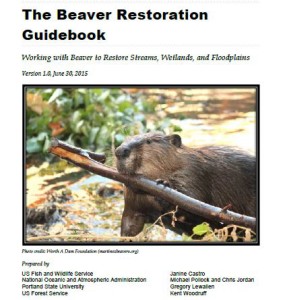
Partnering with the Scott River Watershed Council, the Service designed a project to simulate what beavers had not been around to do for decades. In essence, the biologists became the beavers by implementing an innovative technique called beaver dam analogs, developed by Michael Pollock, an ecosystems analyst with the NOAA Northwest Fisheries Science Center.

Analogs are rows of wood posts pounded upright across a creek with willow branches woven between them to simulate a natural beaver dam. These analogs are low cost because heavy equipment use is minimal and they are ecologically beneficial since the design allows for beavers to improve on or abandon them over time as they would a dam of their own design.

A series of analogs were constructed at the Sugar Creek location, since beavers had once occupied the area. Remarkably, in the fall of 2018, as if answering an advertisement in beaver realty world, a family of beavers moved in and started expanding the analog.

If you build it, they will come: A little over a year after the Sugar Creek analogs were completed, a beaver family moved in and began improving on the structures. Credit: Charnna Gilmore/Scott River Watershed Council

I wish it were true, but even if it’s not I’m still glad this reporter from Redding has moved the story forward.

THIS JUST IN: BEAVERS DO NOT EAT FISH

heidi08 Beaver Book June 6, 2019
FacebookFacebook
email articleemail article

Well, well, well. Author Ben Goldfarb is making waves in the UK. This morning he headlines the Belfast Telegraph who wrote about his presentation in Wales. The CS Lewis thing seems to be hitting people kinda hard.

CS Lewis misled public over diet of beavers, says writer

An environmental journalist has blamed the Belfast-born author of the Chronicles of Narnia tales for anglers’ opposition to re-introducing beavers to the UK

Speaking at this year’s Hay Festival in Wales, Ben Goldfarb – author of Eager: The Surprising, Secret Life of Beavers and Why They Matter – criticised CS Lewis for giving the misleading impression that beavers eat fish.

Fish-eating Mr and Mrs Beaver are key characters in The Lion, the Witch and the Wardrobe. Mr Goldfarb said that the impression given to generations of fans had led to real world consequences in attitudes towards the beaver.

The reintroduction of the species is opposed by many anglers who fear they will eat the supply of fish. Mr Goldfarb said Lewis “totally blew that one” after noting that beavers did not eat fish.

“He said: They’re totally herbivorous. That’s one of the funny things about beaver reproduction in the UK: every British schoolchild reads Narnia and they grow up thinking that beavers are going to eat all the fish. That is biologically inaccurate.

“They have a few species of tree that they most like – that’s willow and the whole poplar family – birch, aspen, cottonwood”.

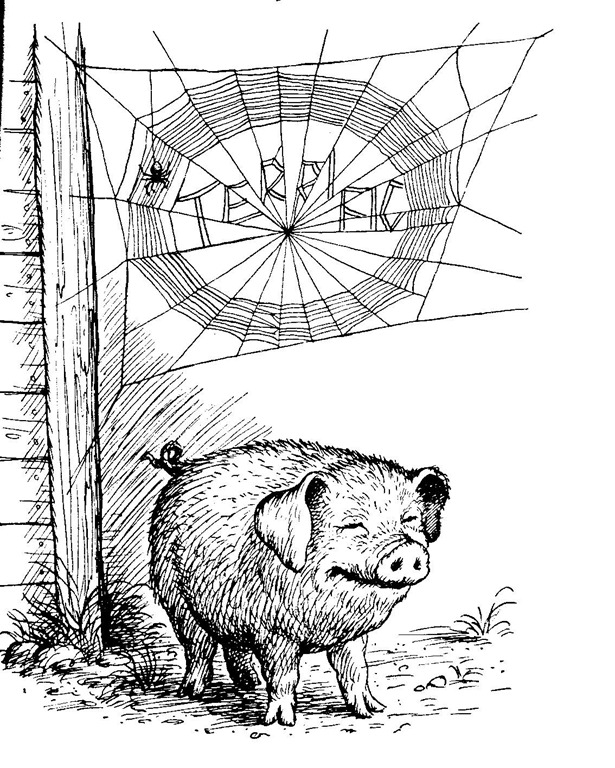
I don’t know how serious this is. I mean would America be upset if we found that Orb-weaving spiders can’t spell? Or that lions don’t lead revolutions? The country hadn’t seen a single beaver in nearly 5 centuries. Of course some creative soul is going to make things up about them. I mean for crying out loud an American paper once published that they lived on the moon, walked on their hind legs and discovered fire for pete’s sake. Popular science published an account of them making the canals on Mars.

Eating fish is small potatoes by comparison.

The Daily Mail had a more contextual look:

Environmentalist BLASTS C.S. Lewis’s ‘Chronicles Of Narnia’ For ‘Miseducating’ The Public About Beavers

The beavers themselves not only fish — wThe beavers themselves not only fish — which, apparently, real beavers do not do — they fish with human fishing implements, cut holes in the ice to ice fish, and decorate the inside of their dams with fishing accoutrement. They also cook over a hot stove, serve dinner on plates, eat with flatware, wear clothes, and talk. If there are lingering concerns about what people might learn about beavers from the works of C.S. Lewis, it seems “they eat fish” is the least of anyone’s worries.hich, apparently, real beavers do not do — they fish with human fishing implements, cut holes in the ice to ice fish, and decorate the inside of their dams with fishing accoutrement. They also cook over a hot stove, serve dinner on plates, eat with flatware, wear clothes, and talk. If there are lingering concerns about what people might learn about beavers from the works of C.S. Lewis, it seems “they eat fish” is the least of anyone’s worries.

I have to say I agree, I hope they paid as much attention to the  other things Ben said. Ahem.

Now if you wanted a real beaver bedtime story, I would recommend this heart-melting series of moments. Apparently instinct can not be ignored.

Furniture be dammed.

MOURNING VS. MOVING ON

heidi08 Beaver Behavior June 5, 2019
FacebookFacebook
email articleemail article

Admit it. You need this. We all do.

How crazy cute is that? This entire thing should come with a warning label. You can tell even that vet who handles baby sloths and baby cheetahs is like, jesus christ this kit is CUTE. Must pick up again! My favorite shot might be the snoozing parents at the end. They look so mellow.  “Yeah, great, take the brat off our hands for a while so we can catch up on our beauty sleep. Perfect.

Although, I admit, I’m surprised to see a beaver sleeping on his back. Who knew?

The entire argument is relevant at the moment because a Derek Gow recently mentioned that there were photographs of a beaver burying a dead kit and a discussion of whether this meant the mother was mourning or just discouraging predation, so of course I asked to see the photos and Derek introduced me to Angus Christof of the Beaver mapping program in Switzerland,

Some of his researchers viewed a beaver give birth to live kits and then deliver a stillborn kit which she proceeded to bury. He thoughtfully speculated that this may have something to do with mourning and prepared a excellent educational poster of the incident with references. I’m not sure I can share it yet, but I will summarize something of our conversation. He thought predation and disease might play a factor but also loss.

My thoughts – based on being quite possibly the woman who adores beavers the most on the entire planet and credits them with extraordinary powers in almost every way – my thoughts are that beavers do not mourn like humans do. My observations about beavers over the years watching family members react to kit death or adult death or new birth and remarriage is that beavers are enormously pragmatic. They engage when the member is there. And they disengage when the member is dead or dying.

Actually it is one of the things I love best about them. Their  adaption to new situations and carrying on. Whether that means taking branches off the lodge to reinforce a dam in crisis, or stopping in the middle of repairs to munch a tasty branch. Beavers are unflappable.

I thought of our young kits in 2010r and of the most affectionate display I ever saw when this kit was anticipating his sick mother coming closer to him before she had gotten very ill. He lifted up his tail in joy or greeting like a dog. It is the only time we have ever observed this particular behavior. It still makes me cry to watch it. He obviously wasn’t getting enough from her and thrilled about the idea that he would soon get her attention.

Kit raises tail from Heidi Perryman on Vimeo.

But even as attached as those kits were to their mom, in the next few days, as mom got sicker, and stopped going into the lodge and clearly wasn’t eating, the entire family just moved on. They stopped interacting with her or seeking her out. They went about their business being beavers and just left her alone. 

To us that were wracked with grief at the time over losing mom it appeared indifferent, but I understand in retrospect it was purely pragmatic. I think to their minds, (and to ours if we had been able to face it), she was already gone. The mother was gone even though she was still there. They didn’t dwell in the past or panic about the future, they just moved on.

I’m going to show you how they moved on and how essentially pragmatic it was. These clips are taken the night mom died and show a kit, approaching a yearling who had never taken much interest in parenting, and the way that their relationship is changing. I think the strongest proof of beavers handling this differently than humans do is that through the entire 4 part scene you can year the camera-woman (me) weeping in the background like a sentimental fool while their interaction is much more real life compelling. At one point the kit whines, which must trigger some kind of response in the yearling because he is much softened by the last scene.

Beavers move on.

1st approach from Heidi Perryman on Vimeo.

2nd approach from Heidi Perryman on Vimeo.

3rdattempt with whining from Heidi Perryman on Vimeo.

Kit is adopted from Heidi Perryman on Vimeo.

EXCITING BEAVER TIMES

heidi08 Beaver Behavior, Beaver Book, Beavers, Festival June 4, 2019
FacebookFacebook
email articleemail article

These are exciting times in the beaver-verse. Ben Goldfarb addressed the Exeter University panel of 400 people gathered for the three day beaver conference. Derek Gow posted a 360 shot of the impatient crowd last night, and the Times is running an article this morning.

I wish I knew how to embed it but here’s the link so you can go see for yourself – it’s cool to look around the room and see them hanging from the rafters to hear about beavers, but try this link

A FULL HOUSE

I hope we get some rumors soon about how its all going and you can be sure I’ll pass them along.It’s what I do. The Times article is behind a firewall and I’m too cheap to be able to share, but here’s a taste of what we’re missing.

How CS Lewis gave beavers a bad press

David Sanderson, Arts Correspondent

June 3 2019, 12:01am, The Times

If only CS Lewis had not had Mr Beaver sitting at a hole in the ice until he had “whisked out a beautiful trout”.

The author of The Chronicles of Narnia has been lambasted for giving generations of schoolchildren the misleading impression that beavers are pescatarians.

The writer Ben Goldfarb said that it had directly led to widespread opposition to the reintroduction of the species in Britain, including among anglers, who he said had been “miseducated by CS Lewis”.
Instead of blaming Mr. Lewis how about naming the thousands of trappers that hunted beaver to extinction on every corner of the UK and Europe so that the Brits spent 400 years not knowing the animal or knowing what they ate?
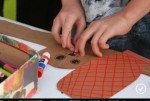
In other exciting news the beaver festival made the cover of the June Diablo Gazette, which of course we are very happy about. Amy’s photo is so inviting I’m tempted to be there myself!
Such a great photo! Her husband really captured just the right image don’t you think?


THOSE WHO CAN’T RECALL THE PAST

heidi08 City Reports, History, In the News June 3, 2019
FacebookFacebook
email articleemail article

Beavers are showing in all the best neighborhoods and more and more often people who live creeks and streams know enough to be excited about it. This article is so close to being positive I should have my head examined for being annoyed by it, but it grates like chinese water torture after the 15th day. Especially because it doesn’t even reference what it wrote itself about this issue 5 years earlier!

Maybe we should make a game out of it. Play “spot the line that bothers Heidi” or something and give free tshirts to the winners.

Beavers’ re-introduction to South Bay going swimmingly

Okay stop. The headline already is irksome. Beaver reintroduction is illegal so no one “reintroduced” beavers to the south bay.

A newly discovered den on Los Gatos Creek. Documented sightings of beavers and dams from Sunnyvale to Coyote Creek. Evidence that a new generation of beaver kits is about to be born. It has been a good spring for the South Bay’s recently returned and now blossoming population of buck-toothed river rodents.

On May 24, Ibrahim Ismail, a student and teaching assistant at De Anza College, was conducting a lab with his class on Los Gatos Creek when they discovered the den. This was very near the spot where an individual beaver was captured on a camera-trap in 2014, the first seen on this watershed in a century and half. Ibrahim has spent a lot of time there in recent months.

He says he and his class were looking for tracks in the creekside dirt and watching three beavers swimming up and down in the creek. “And then we found what looked like a mountain of mud and sticks and twigs and large branches,” he says. “And in the back of my mind I’m like, ‘Wow, that really does look like a den.’ But I’ve been up and down this area so many times, and I’ve never seen any new activity.

“And then we saw all three beavers dive, and we could see through the water that they dived under and then crawled into the log pile.”

Okay relax. This is my favorite part of the article. A nice story about someone watching beavers. There’s nothing really annoying. Let’s just bask in the idea that beavers are welcome somewhere they show up. And this, This doesn’t bother me either.

Holmes, whose passion as a fly fisherman led him to found the Friends of Los Gatos Creek, which later became the SPCCC, understands that beaver can dramatically improve the ecology of a creek. That’s why conservationists throughout the region and the state are excited to witness the return of the beaver to watersheds throughout Northern California.

That’s perfect. You should be very happy about this paragraph.

The first colony of beaver to reappear in California set up camp on Alhambra Creek in downtown Martinez in 2010. Since that time many long-absent species including steelhead trout, river otter and mink have returned to the watershed. Holmes says he has witnessed evidence that the dam that was recently discovered on Coyote Creek is having a similar effect.

OW OW OW! The stupid it hurts us it hurts us! It hurts us!

Nasty reporters with their pretend facts and not even checking their OWN newspaper to see what they said before.  Now I know the paper has been purchased and regrouped since then, and changed its name several times but Google is still the same. It was 2007 the first article appeared on our beavers in the Contra Costa Times. You not only got the date wrong by three entire years, but by the birth of 11 entire beavers.

Kate Lundquist began researching the beaver with her colleague Brock Dolman because of the critter’s habit of improving habitat for other riparian species. Lundquist and Dolman, who work at the Occidental Arts and Ecology Center, were at the time working toward the recovery of another totemic California animal, the Coho salmon.

Lundquist had learned that biologists in Oregon and Washington were re-introducing breeding pairs of beaver to creeks and rivers in their states, where they were creating pools that were helping the Coho. No such program exists in California, where beaver re-introduction is not permitted.

“The Coho are blinking out in this state,” she says. “They are very endangered.”

Beaver re-introduction is not allowed in California because for a century it was believed that the beaver was not native to the Sierra, the Coast Range or most of the rest of the state.

Okay, we’re generally happy that a reporter is talking to Kate and talking about salmon. Even though if he had talked to me I could have corrected that 201o thing, and reminded them that they wrote about beavers in the south bay 6 years ago, but okay. As long as the message gets out I certainly don’t have to be the one who tells it.

Lundquist and Dolman, conservationist and wildlife biologist respectively, later proved that was a fallacy in a peer-reviewed study published in the journal of the California Department of Fish and Wildlife, which details evidence of beaver going back more than 1,000 years.

Lundquist says that by the time the two primary surveys of mammals in California were taken in 1937 and 1942, the beaver population had already been slaughtered.

“They had been trapped persistently since the 1700s,” she says, “and when the mountain men arrived in the 1830s, they finished them off.”

Lundquist and Dolman’s paper is a work of “historical ecology.” Its key finding is a piece of physical evidence: an ancient buried beaver dam that was discovered in the Red Clover Valley in Plumas County in the late 1980s. Carbon dating shows that it was built in three phases—the most recent layer in 1850, the layer beneath it in 1730, and the base layer in AD 580.

My mouth keeps opening and closing again.  I want to complain but I don’t even know where to begin. Neither Brock nor Kate were authors on the paper about carbon testing the beaver dam. That was wikipedia Rick, who by the way  started his very own think tank at the time called The Institute  for Historical Ecology which I guess is where you got that name. Kate wasn’t author on the Sierra paper either. But sure, it takes a village, right?

Back in the South Bay, Ismail reports that there may be even more good news. A few weeks ago, while tracking the Campbell colony, he took note of some changes.

“I noticed that one of them has started to grow, and her body’s changing. And we are 90 percent sure that she’s pregnant. So in the next month and a half or so, we should have a new set of kits. And hopefully we’ll be getting some of those on camera.”

Now now, It’s June, And if your rare south bay beaver had kits I’ll bet you all the money in my pocket that they’d be born already. And I’d like very much to know how you can tell the beavers apart so that you are certain this one is ‘bigger’ and not just a different beaver. Of course if they talked to me I could tell them that.  And could tell them our history tracking beaver family dynamics over a decade.

Here’s the thing. It’s very good to have beaver benefits and our nativity work discussed in the news and to get California thinking.  That part I’m very happy about. Never mind that 6 years ago the Mercury News published a story about beavers in San Jose talking about their history in California with lead author Rick Lanman talking about this very subject.

Family of beavers found living in downtown San Jose

SAN JOSE — A family of beavers has moved into Silicon Valley, taking up residence along the Gd yards from freeways, tall office buildings and the HP Pavilion represents the most high-profile Bay Area sighting since a beaver family settled in Martinez in 2006. The discovery of those beavers sparked national headlines when city leaders at first tried to remove them and then backed down after public outcry.

The appearance of the furry mammals in downtown San Jose is believed to be the first in 150 years.

“Whether these beavers came from the bay or Los Gatos Creek, I don’t think we know,” said Rick Lanman, a Los Altos physician who has published scientific papers on California beavers. “As long as we keep improving our environment, we are going to see more recolonization. It is a really cool story.”

Just to clarify. this is the exact same paper talking about the exact same research and being excited about beavers showing up in the South Bay 6 years earlier.

But that’s fine. Tune in next week when the Mercury news reports on the important  new discovery of fire.

I know. I’m too picky. An article that doesn’t frustrate me appeared in the Mt Diablo Audubon Newsletter this month. Let’s end on a friendly note.


← Older Entries
Newer Entries →

Search Past Stories

Hit enter to search or ESC to close

BEAVER FESTIVAL XVII

DONATE

Beaver Interactive: Click to view

TREE PROTECTION

BAY AREA PODCAST

Our story told around the county

LASSIE INVENTS BDA

CONTACT US

URBAN BEAVERS

LASSIE AND BEAVERS

Ten Years

The Beaver Cheat Sheet

Restoration

RANGER RICK

Ranger rick

Educate & Engage

Tattoos Journal
Kids Painting
Beaver Sketch

The meeting that started it all

https://vimeo.com/241579193?loop=0

Beaver Sites

  • Animal Protection of New Mexico
  • Beaver Ambassadors
  • Beaver Celebration
  • Beaver Deceivers, LLC
  • Beaver Insights
  • Beaver Institute
  • Beaver Solutions
  • Beaver State Wildlife Solutions
  • Beaver Trust
  • Beaver Trust
  • Beavers & Brush
  • Beavers Matter
  • Beavers Northwest
  • Beavers Wetlands & Wildlife
  • Bob Arnebeck’s Beavers
  • Bring Back Beaver – OAEC
  • CA Working Beaver Group
  • Corvalis Beaver Strike Team
  • De Rios y Castores
  • Ecosystem Engineers
  • Fairfield Beavers
  • Fox Creek Oregon
  • Grand Canyon Trust
  • Human – Beaver Coexistence Fund
  • Iowa Water Project
  • Methow Beaver Project
  • Norwegian Institute for Nature Research – Beavers
  • Partnering with Beaver: Utah
  • River Otter Beavers
  • Romance of the Beaver
  • Scottish Wild Beavers
  • Seventh Generation Institute
  • Sierra Wildlife Coalition
  • Southland Beaver
  • Stittsville Beaver Lodge
  • Superior BioConservancy
  • Taylor Creek Beavers
  • The Feasibility and Acceptability of Reintroducing European Beaver in England
  • The Fretful Porcupine
  • The Lands Council
  • Unexpected Wildlife Refuge
  • Watershed Guardians

Past Reports

June 2026
M T W T F S S
1234567
891011121314
15161718192021
22232425262728
2930  
« May    

Story By Year

Customized by Shoutreach Media

Worth A Dam is a fiscally sponsored project of Inquiring Systems Inc | Copyright © 2007-2025

WordPress Di Business Theme