




Because the beaver isn't just an animal; it's an ecosystem!


FacebookFacebook
email articleemail article

Exactly what kind of beaver reporter am I? I can’t believe I let you down and didn’t tell you what was happening right now on the missouri river where a dougout canoe called the Belladona Beaver is retracing the steps of Lewis and Clark in magnificent style.

The plucky adventure is the combined effort of author, historian and bush expert Thomas J. Elpel and the great-great-great-great-great grandson of Mr. Meriwether himself who spent a year hollowing out a canoe that from a massive tree (they couldn’t get a cottonwood big enough so used a douglas fur) and are now making their way down the missouri just the way their forefathers did.

Missouri River Corps of Rediscovery #1

Our little fleet consists of three modern canoes plus my dugout canoe, and six men to pilot them down the river—not so respectable as Columbus, Capt. Cook, or Lewis and Clark, but still viewed by us with equal pleasure as we embark on our own journey of discovery.

Scott, Chris, John, Josiah, Adam, and I launched from Missouri Headwaters State Park near Three Forks, Montana on June 1st to begin our six-month voyage downriver to St. Louis. Friends and well-wishers came to see us off, and seven other paddlers joined us for the day in their own canoes and kayaks.

Why??? You might ask when you see how darned much work it took to hollow out this log and get things this far, Why would men forsake their couch and cable TV just to paddle  a journey in a tree.

But WHY NOT is a better question. To follow the footsteps of an ancestor that basically made America as we know it possible. To use your own hands to create a canoe from a tree as heavy as our history. Of course following the footsteps of the beaver. This time literally inside a beaver canoe.


The whole journey is being reported on their website which starts aptly with a quote from the famous Meriwether Lewis journal account. You can follow for yourself here. Not for the feint of heart or timid of hand. But fortune favors the brave and destiny waits for no man. June 11th they posted their third report from the river where they are boldly embracing their history by finding wild morels and catching trout after a full days paddle. Honestly you have to vibrate on a very rare frequency to commit 2 years of your life to this, but I am sure they will learn and see things we can never never understand.

As an example of the need to be made of sterner stuff to than we can hope for – just reading about their first portage getting around the Toston dam makes me queasy.

We never actually weighed Belladonna Beaver the dugout canoe, but optimistically claimed that it weighed 500 lbs. In actuality, four men cannot even lift the front of the canoe, and the total weight might be considerably more. By weighting down the back, lifting the front, and winching from a tree, we succeeded in getting her head out of the water and on the grass. Switching to the next tree, we pulled Belladonna across the grass on PVC pipes as rollers, then towed her forward with a rope from the truck and ultimately used a car jack to get her head high enough to load onto the canoe trailer.

One of the many disadvantages of not using the plentiful cottonwoods of their forefathers is that the wood dries more slowly and probably takes on more water, in addition to being full of knots and very hard to carve. No matter. They are more than men up to the challenge. Let’s hope they see some actual beavers on the journey to capture the spirit more firmly,

I’m sure we’ll be checking in on them again soon. Here is a video if their test run last year on the Maria river.


FacebookFacebook
email articleemail article

I’m sure you all played the game of “Telephone” as a child, where one kid whispers a secret into the ear of a classmate seated in a ring and they pass it to the next one and it eventually makes its way all around the circle to the very last person who tells outloud what garbled message they heard.

Usually its transformed by them from something benign like “Emily is very smart” to something incomprehensible and outrageous like “He has manly farts” or something similarly hilarious. And everyone collapses in a heap of giggling.

Well, I think that might be how this article got written.

There are beaver myths that hardly raise an eyebrow, like saying they eat fish for instance or that they aren’t native to California. And then there are beaver myths that really get your attention – that stop the train in mid tracks and just make you scratch your head and go “huh?”.

This nice article from sonoma had one of those.

Threatened beavers return to Sonoma

When a Sonoma Valley woman saw a tree in her yard felled and chiseled by V-shaped gnaw marks, she was surprised and not quite sure what had caused the damage. Soon she learned it was the work of something she never expected to find near her home: a beaver.

“I really now understand the phrases ‘busy beaver’ and ‘eager beaver.’ We wake up in the morning and look out and think ‘wow’ look how much they did overnight,” she said. Every day that passed more of the tree disappeared developing into an hourglass shape where the beaver noshed, and late last week the tree was down.

The woman asked not to be identified by the Index-Tribune in order to protect the beaver and their habitat from the beaver-curious.

What a nice beginning to the article about our neighbors getting the very best kind of neighbors. I’m surprised she didn’t know what was eating her tree but I’m happy she is glad to have beavers back in Sonoma.  So far so good. This is where it starts to get dicey.

Beaver are prey animals and easily spooked, said Richard Dale, executive director of the Sonoma Ecology Center. He said he’s seen beaver in the daytime, but as soon as they detect his presence they slap their tails and disappear.

Well I guess is some areas. They can also become habituated to human presence as we well know. I guess Richard will find that out soon enough.

Indication of their activities are usually more evident, such as the gnaw marks the local woman found. Dale said they make diagnostic V-shaped marks on trees, which they eat and use to build lodges where they hide for safety. They’ll use pretty much anything to build the lodge but typically they are made of sticks, rock and mud.

V shapes on trees? I mean I know they nibble trees before feasting and they sometimes make prominent V shapes in the water when they swim, but V shapes on trees?  I guess if they try tilting their heads this way and then that way that would make a V?

It gets better. Brace yourselves.

They eat bugs, deciduous tree bark and cambium – the soft tissue under the bark – and are partial to willow, cottonwood, maple and a couple other tree species.

They eat BUGS?

Bugs and Cottonwood trees? What kind of Bugs exactly? Lady Bugs? Worms?  Mosquito larvae?

I read that and thought maybe it’s a typo, maybe they meant to say “Buds” like new juicy flowers shooting up from the ground. I’m pretty sure there aren’t any animals that eat both bugs and the cambium layer of trees. Maybe honey badgers?

Sonoma clearly needs to come to the beaver festival and learn from the smart people who have been living with them for a decade. Oh and bring Mr. Dale along too. I can give some clues about talking to the media.

“They’ve been part of the ecosystems for thousands of years. Many systems are dependent on them,” said Dale, who has been studying them for about 25 years. Dale said beaver sightings in town are rare, but he recalls hearing of occasional sightings north of the city since the early 1990s.

“I was blown away when I saw them,” he said of the recent sightings.

While some people consider them a nuisance, beaver are called “keystone species” or “grassroots conservationists” and are considered vital to riparian habitats. They will build lodges in three different ways – open-water lodge, bank lodge or bank den, or burrow – and one colony may have several lodges scattered around their home range.

The lodges extend wetlands, elevate water tables and allow for recharging of aquifers and wells, and provide “habitat for other critters,” Dale said. In areas where there are beaver lodges vegetation and watersheds stabilize, and downstream flooding and silt runoff is reduced.

Well sure beavers are valuable to the landscape. They clean up all those BUGS no one else wants around. And their lodges extend wetlands. Because you know how beavers always build those LODGES to block the water.

Geez Perryman, cut them some slack. It’s not like there have been beavers on the landscape for the last 150 or there are any expertly maintained websites where they could learn better. Right?

For those times when a beaver is destroying valuable plants – such as vineyards – there is “beaver deceiver” technology out there, Lundquist and Dale said. Wrapping trees with wire will protect the bark, and if the lodge is in a place where too much water is backing up, there are simple cost-effective ways to release some of the water from the pond beavers have created.

You all know how a beaver deceiver protects trees and vineyard right?

Oy.

Upload Files


FacebookFacebook
email articleemail article

This report caught my eye the other day and I’ve been looking at my finances ever since to see how many attempts to save beavers I can afford. I’d say I have a good decade to play with, and hey with a few gofundme campaigns maybe longer than that,

Up to a $50,000 fine or a year in jail for tampering with beaver traps

There are some serious consequences for messing with the beaver traps in Lamont County.
 
According to the Wildlife Act, anyone caught interfering with the lawful hunting — including trapping — of wildlife by another person with the intention of preventing or impeding it may be charged with an offence.
 
“A person that is convicted through the courts is liable to a fine of up to $50,000 or they can be imprisoned for up to a year,” said Terry Eleniak, an agricultural fieldman with the county. “The biggest thing is we caution people not to take these traps lightly,” Eleniak added. “Even though they are within our proximity and our watercourses, people can get hurt if they tamper with them.”
 
You want me to take them seriously? Oh I do. Dead serious. That doesn’t mean I wouldn’t mess with one if I could or stick something in to trigger it.
 
When are we going to start charging beaver trappers with the expense of every salmon they killed by depriving smolt habitat and every mink and otter that would have been in the area for other trappers if they hadn’t killed the beavers? Not to mention all the expense of water the town had to purchase from another city because of the drought and the cost of all those farms wells going dry.
 
This could get expensive. I hope you brought your calculator.
 

FacebookFacebook
email articleemail article

Don’t you just LOVE that beavers expression? He looks so pleased with himself. Like “Look at me, I’m eating a tree!”. How does he get these shots anyway? We never ever saw our beavers chewing down a tree and not even the homeless reported seeing it at night. They are pretty darn cautious when they do it. I guess he is crazy patient.

Do you think that little square at the top of his mouth is a tooth or a bit of woodchip that got stuck for the moment? It’s awfully big for a top tooth, and there appears to be only one of them? I’m guessing chip. At the bottom you can just see the ridge of his bottom teeth which in beavers are much longer.

I just think if you could show this photo to everyone seeking a depredation permit because beavers chewed their from yard maple, people would think twice about killing the animal for doing something that made him so very happy. And maybe feel proud that the tree they planted brought a beaver such joy!

Maybe if this photo was on a card CDFG could send them the first time they ask, with a caption on the bottom like

“Thanks for the memories”


FacebookFacebook
email articleemail article

Indiana had a story that got my attention this week, and no, it wasn’t about Mayor Pete.

Seems some beavers are going to be killed in swamp nature preserve because they’re making things too swampy. The preserve features the increasingly rare Overcup Oak, also known as the swamp oak and the water oak which is known to thrive in swampy conditions but who’s seedlings need sunlight and dry ground to start out.

The overcup Oak is so named because its cap almost entirely cover its acorn. And it’s one of the trees that used to flourish all acrossed the beaver flooded south, but now has become inseasingly rare, Rare enough apparently that they’re willing to kill beavers to maintain it.


Indiana cracks down on destructive beavers at preserve

MOUNT VERNON, Ind. (AP) — Wildlife officials are culling beavers and demolishing their dams in a swampland nature preserve in southwestern Indiana to protect a species of oak tree rarely found in the state. Overcup oaks thrive in swamps, but beaver dams in the Twin Swamps Nature Preserve have elevated water levels so high that the trees have been damaged or killed, the Evansville Courier & Press reported.

Now, the state has stepped in to combat the threat at the 500-acre (200-hectare) property in Mount Vernon.

“It’s actually altering the very habitat the nature preserve was designed to protect,” said Tom Swinford, the program manager at the Indiana Department of Natural Resources. “We had to take action.”

Hey you know what else kills Overcap Oaks? DROUGHT! FIRE! Gosh I hope when you kill all those swamp maintainers you don’t actually endanger them even more. Here’s what the SF guide has to say about it.

Fires brought on by severe drought in some areas may decimate large numbers of overcup oak seedlings and damage the bark of older trees, exposing them to disease produced by the heart rot fungus.

Hmm that doesn’t look good. I hope Twin swamps has some kind of plan to save water now that all the beavers are dead.

Swinford said beavers thrive in the southwestern nature preserve because they’re a tough species that don’t have many predators to keep their natural balance.

“There will always be beavers at Twin Swamps,” he said.

Hmm are you sure about that?

Beavers are great at making wet and swampy lands where cypress and wateroak can thrive, I sure hope you have a plan about how to replace the wetland after all the beavers are dead. I guess you can always change the name to twin-gulch preserve?


BEAVER FESTIVAL XVII

DONATE

Beaver Interactive: Click to view

TREE PROTECTION

BAY AREA PODCAST

Our story told around the county

LASSIE INVENTS BDA

CONTACT US

URBAN BEAVERS

LASSIE AND BEAVERS

Ten Years

The Beaver Cheat Sheet

Restoration

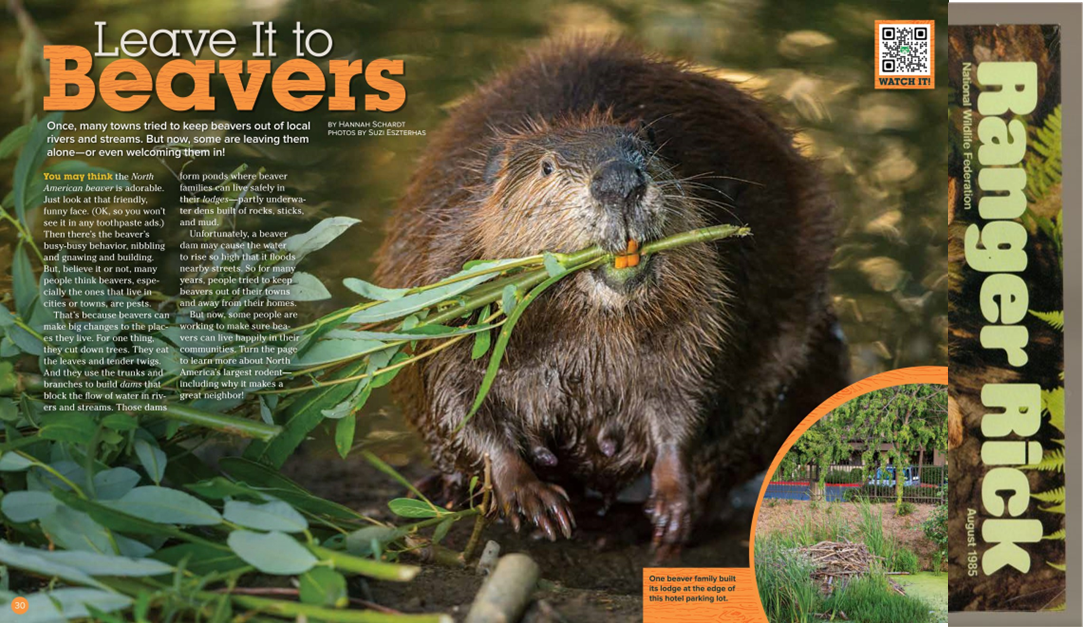
RANGER RICK

Ranger rick

The meeting that started it all

Past Reports

June 2026
M T W T F S S
1234567
891011121314
15161718192021
22232425262728
2930  

Story By Year